
Minamoto no Yorimasa Aiming an Arrow — History & Facts
A single arrow, loosed in the darkness of 12th-century Japan, changed the fate of a war—and became legend. In 1180, during the Genpei War, the samurai Minamoto no Yorimasa faced the supernatural terror of the nue, a chimera said to haunt the Emperor's palace with its cries. Katsushika Hokusai’s Minamoto no Yorimasa Aiming an Arrow, created in 1847, captures this moment of mythic courage.
The tale was so celebrated that it inspired countless retellings in poetry, theater, and art, each seeking to capture the instant when Yorimasa drew his bow to defend his lord and his world from chaos. Hokusai chooses the moment of taut anticipation: Yorimasa, poised and focused, draws his bowstring back, his gaze fixed on an unseen target. The composition is charged with tension—the samurai’s armor rendered in crisp, angular lines, the bow a graceful arc that divides the space. The darkness behind Yorimasa hints at the lurking presence of the nue, while the sharp white of his sleeve catches the viewer’s eye, emphasizing the purity of his intent.
Unlike earlier depictions, such as those in Ukiyo-e prints by Kuniyoshi, Hokusai’s Yorimasa is solitary and introspective, the hero’s struggle as much internal as external. The precise medium of this work is uncertain, but its style and date place it among Hokusai’s late-period explorations of heroic and supernatural subjects. While there is no record of a specific patron, such images were often produced for a burgeoning urban audience fascinated by tales of valor and the supernatural. The painting’s whereabouts for much of its history remain unclear; it is one of several known treatments of the Yorimasa legend by Hokusai, whose fascination with legendary warriors spanned his career.
Today, Minamoto no Yorimasa Aiming an Arrow stands as a testament to both the enduring power of Japanese legend and Hokusai’s lifelong quest to capture the drama of the human spirit.
More Artworks by Katsushika Hokusai

The Great Wave off Kanagawa
Katsushika Hokusai
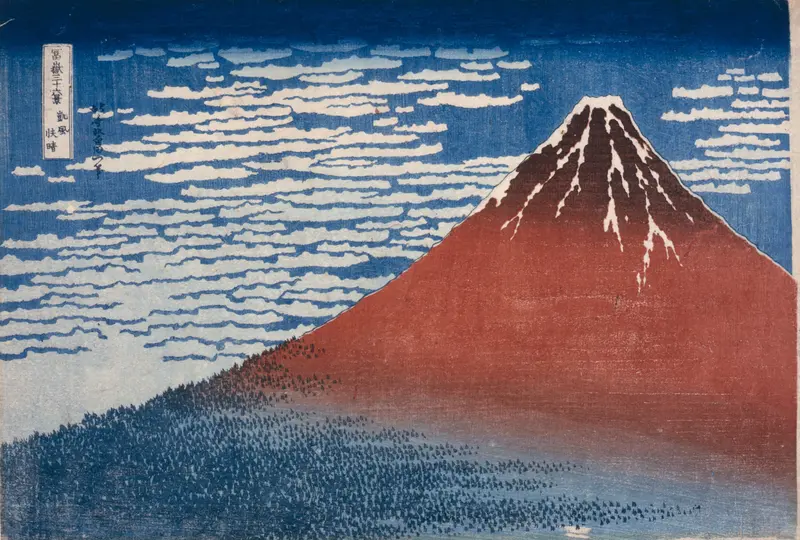
Fine Wind, Clear Morning (Red Fuji)
Katsushika Hokusai
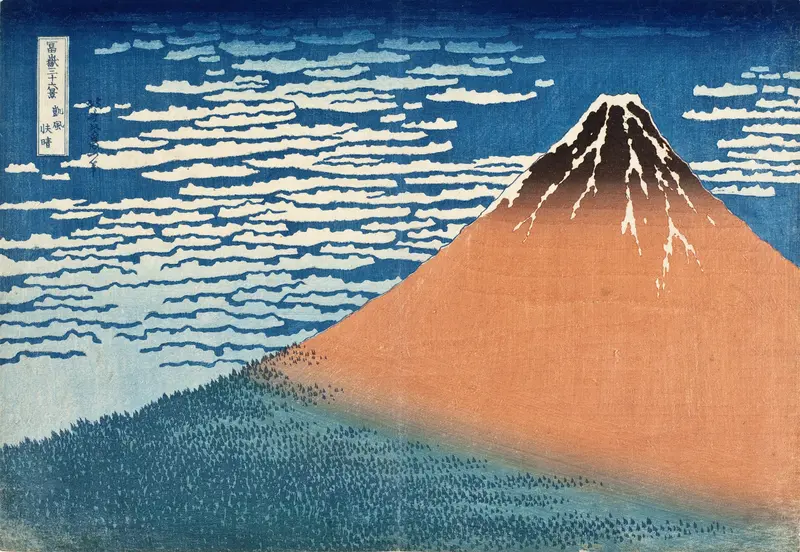
South Wind, Clear Dawn
Katsushika Hokusai
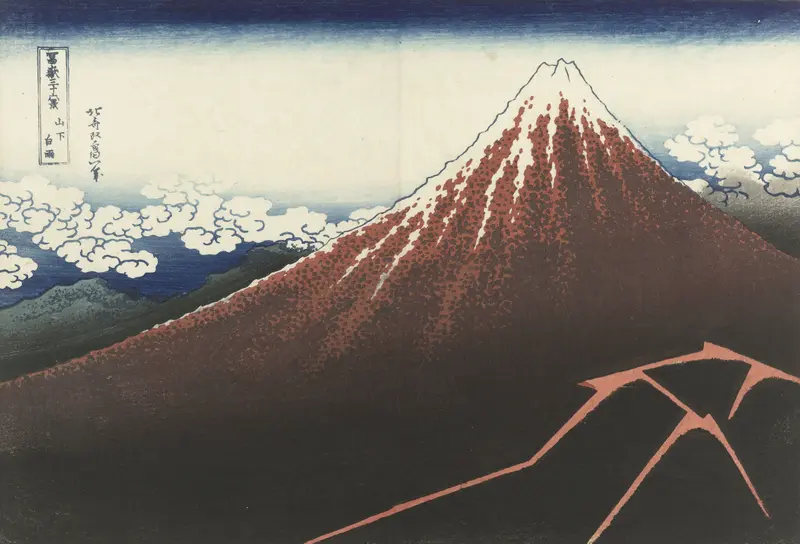
Rainstorm Beneath the Summit
Katsushika Hokusai
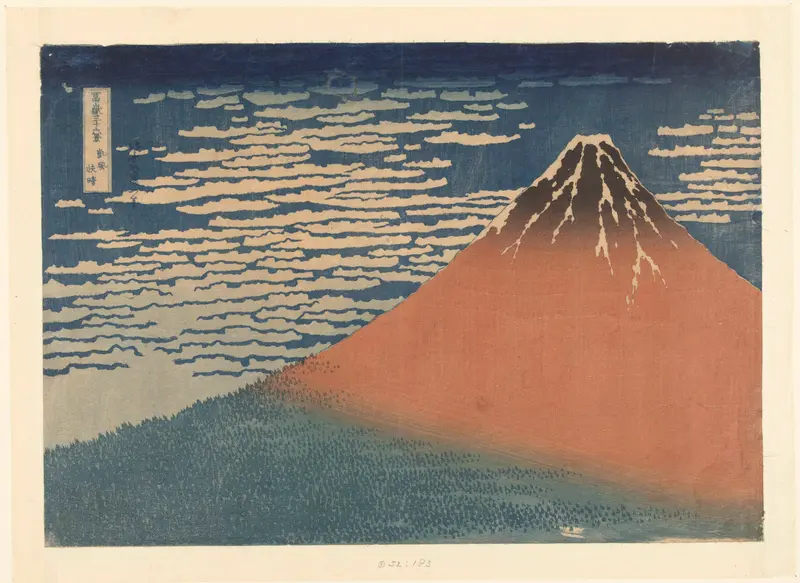
Clear Weather with a Southerly Wind
Katsushika Hokusai
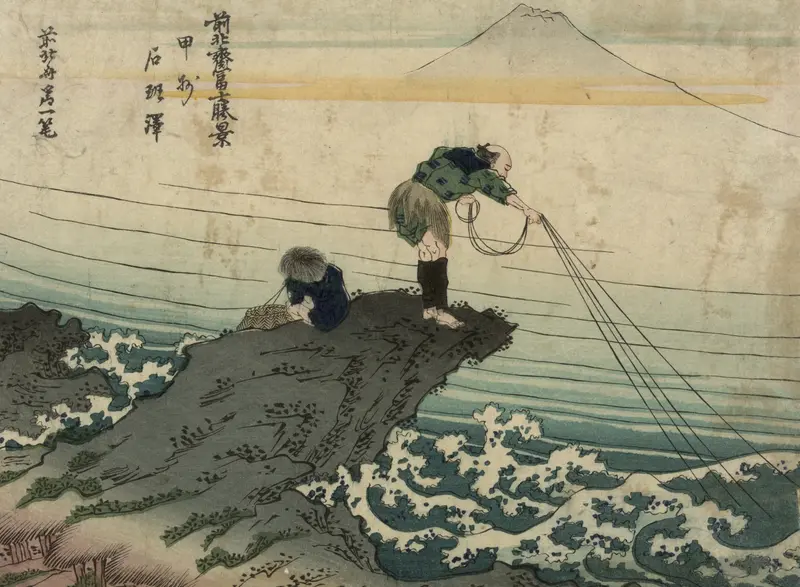
Kōshū kajikazawa
Katsushika Hokusai
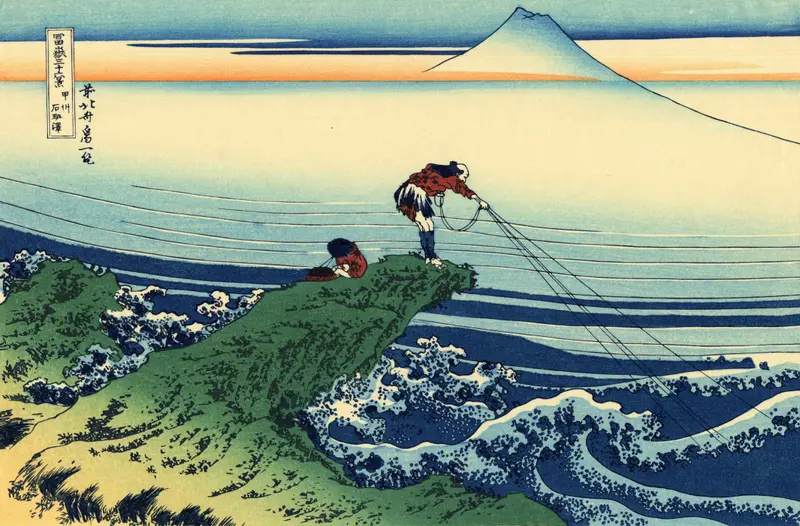
Kōshū kajikazawa 2
Katsushika Hokusai
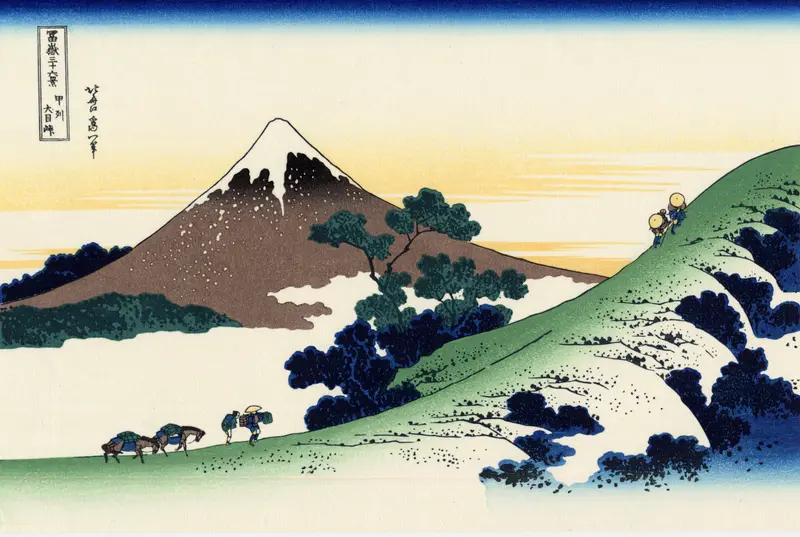
Inume Pass in Kai Province (Kôshû inume-tôge)
Katsushika Hokusai

Yoro Falls in Mino Province (Mino no Yoro no taki), from the series "A Tour of Waterfalls in Various Provinces (Shokoku taki meguri)"
Katsushika Hokusai
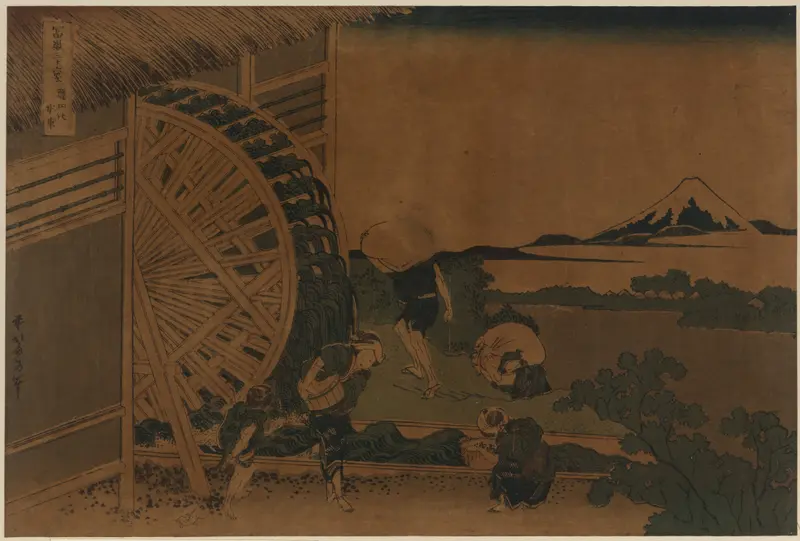
Onden no suisha
Katsushika Hokusai





