Moresque Ornament from the Alhambra No. 5 — History & Facts
What first draws the eye in Moresque Ornament from the Alhambra No. 5 is the sheer exuberance of pattern—sixteen distinct designs, each a world of geometry, color, and symmetry, locked together in a page that feels almost musical in its rhythm. The central panels pulse with intricate interlacing lines, their yellows, greens, and blues weaving a visual labyrinth that rewards slow looking.
Around them, smaller tiles radiate out like a mosaic sunburst, each variation playing with the same limited palette but never repeating itself. The effect is both orderly and dazzling, a reminder that ornament can be as intellectually engaging as it is decorative. This is not mere surface: every line and angle is a deliberate act, a coded language of form. Works like this chromolithograph, published in early twentieth-century London but rooted in the study of the Alhambra’s Moorish decoration, belong to a remarkable moment in design history.
In the Victorian era, artists and architects such as Owen Jones scoured the past for principles that could guide modern taste, and Islamic ornament—mathematically precise, endlessly inventive—became a touchstone. These plates, printed in 1910 and now preserved in the Polona Digital Library, were intended as teaching tools and sources of inspiration, not only for scholars but for the rapidly industrializing world of design. History has kept few traces of the individual artisans who first devised these patterns in medieval Spain, but their visual logic survives here, inviting the viewer to lose themselves in its ordered beauty.
More Artworks by Owen Jones

Greek Ornament No. 1
Owen Jones
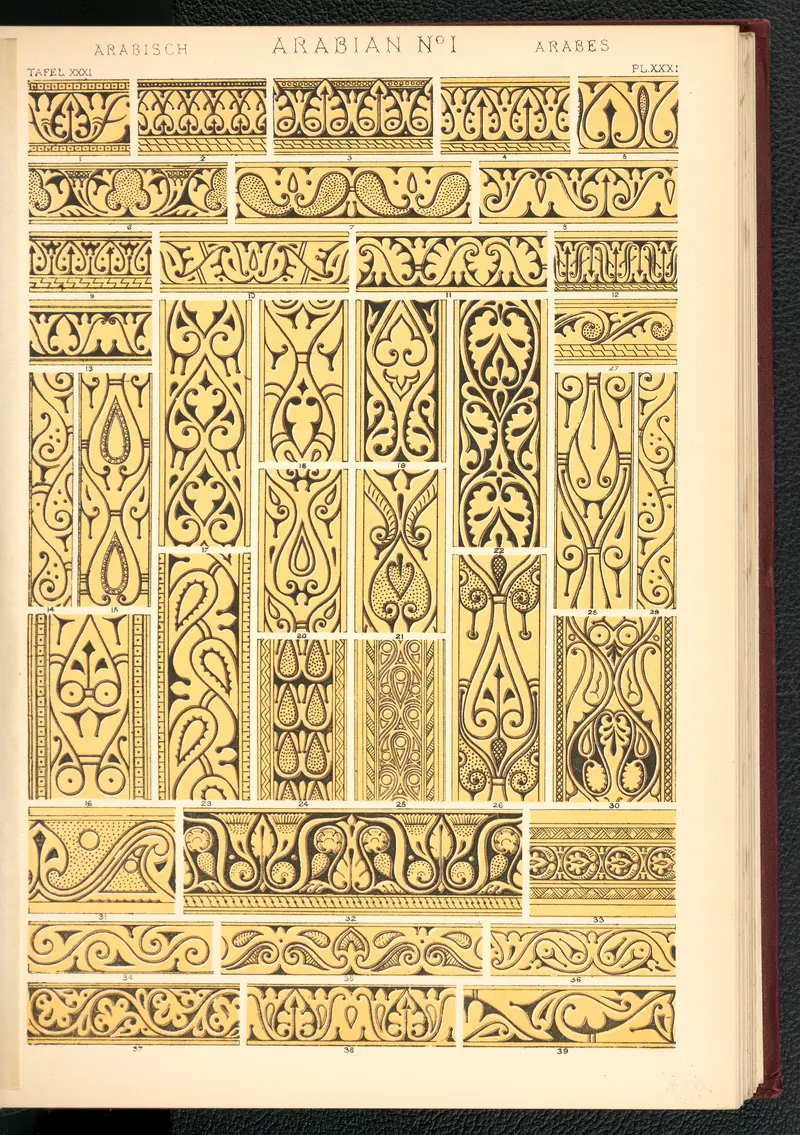
Arabian Ornament No. 1
Owen Jones
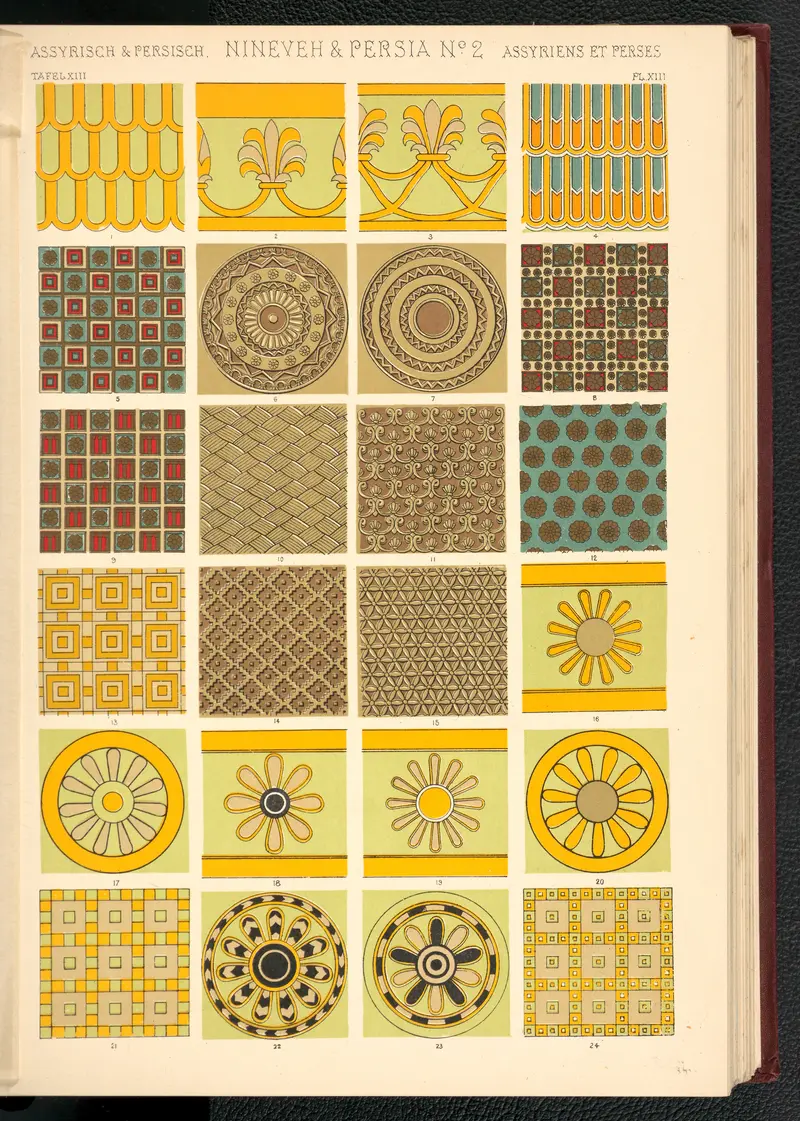
Assyrian Ornament No. 2
Owen Jones

Egyptian Ornament No. 3
Owen Jones
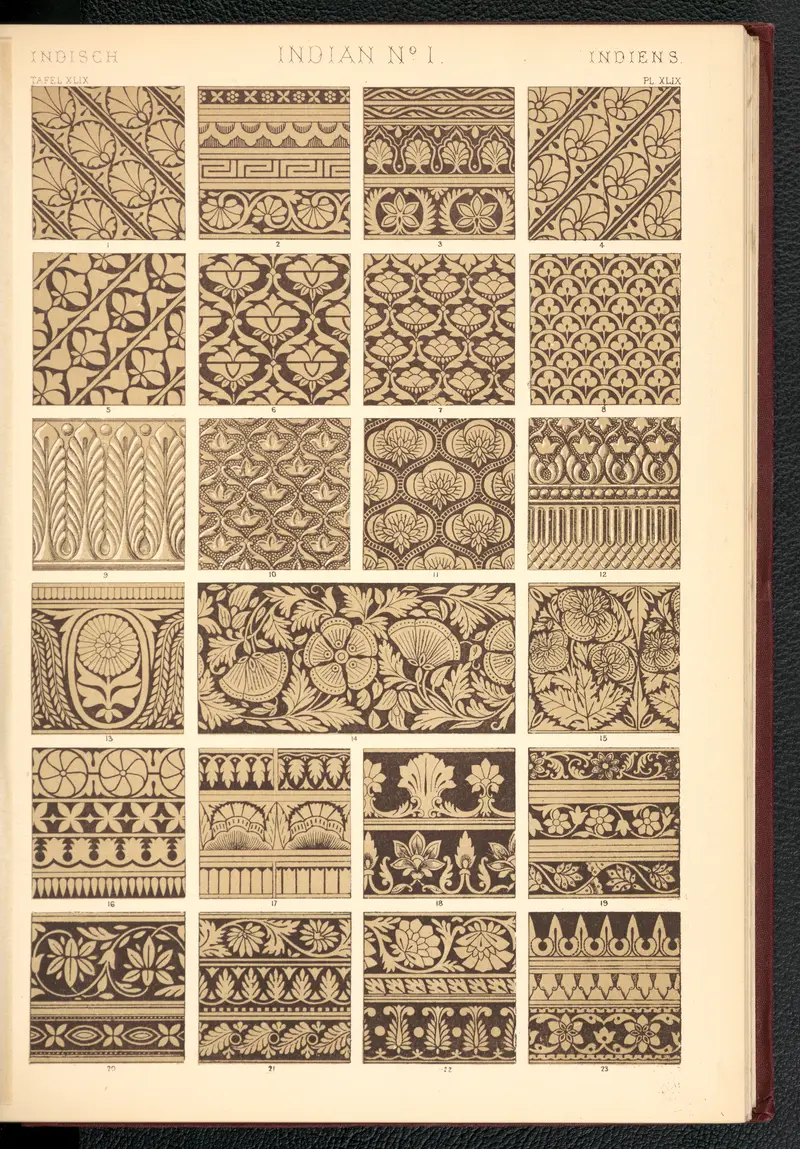
Indian Ornament No. 1
Owen Jones
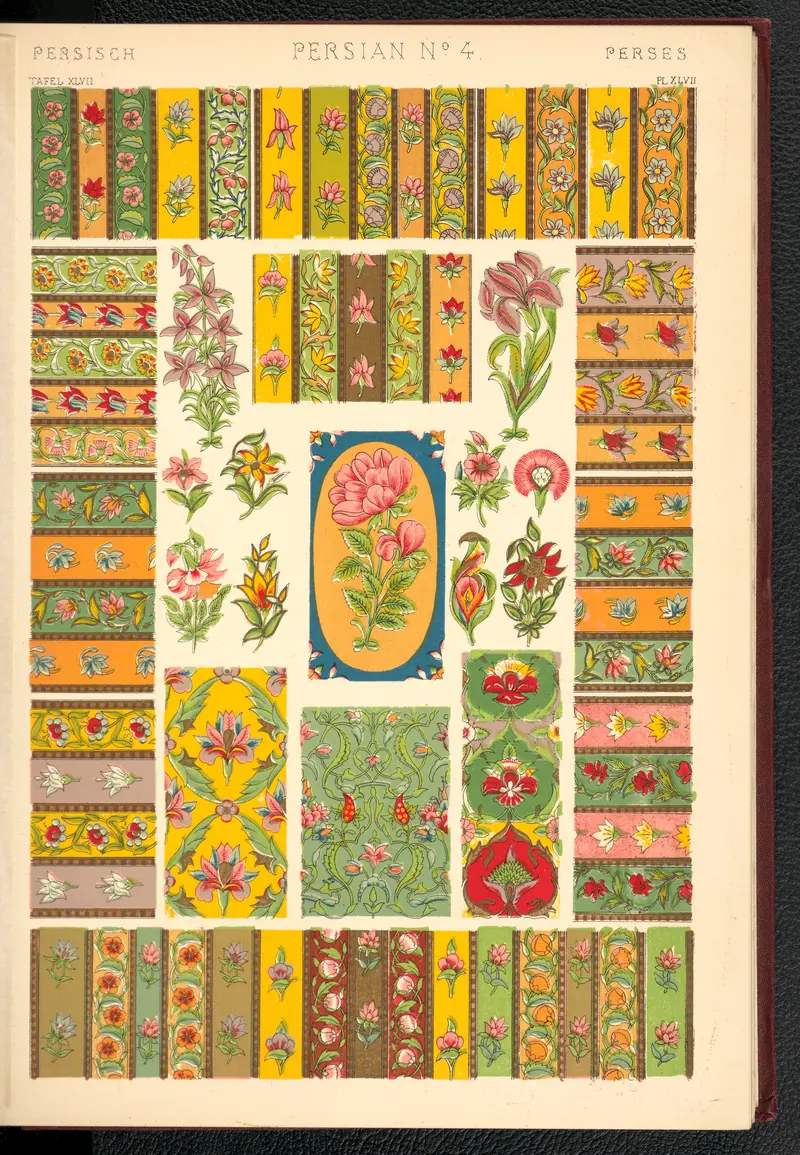
Persian Ornament No. 4
Owen Jones
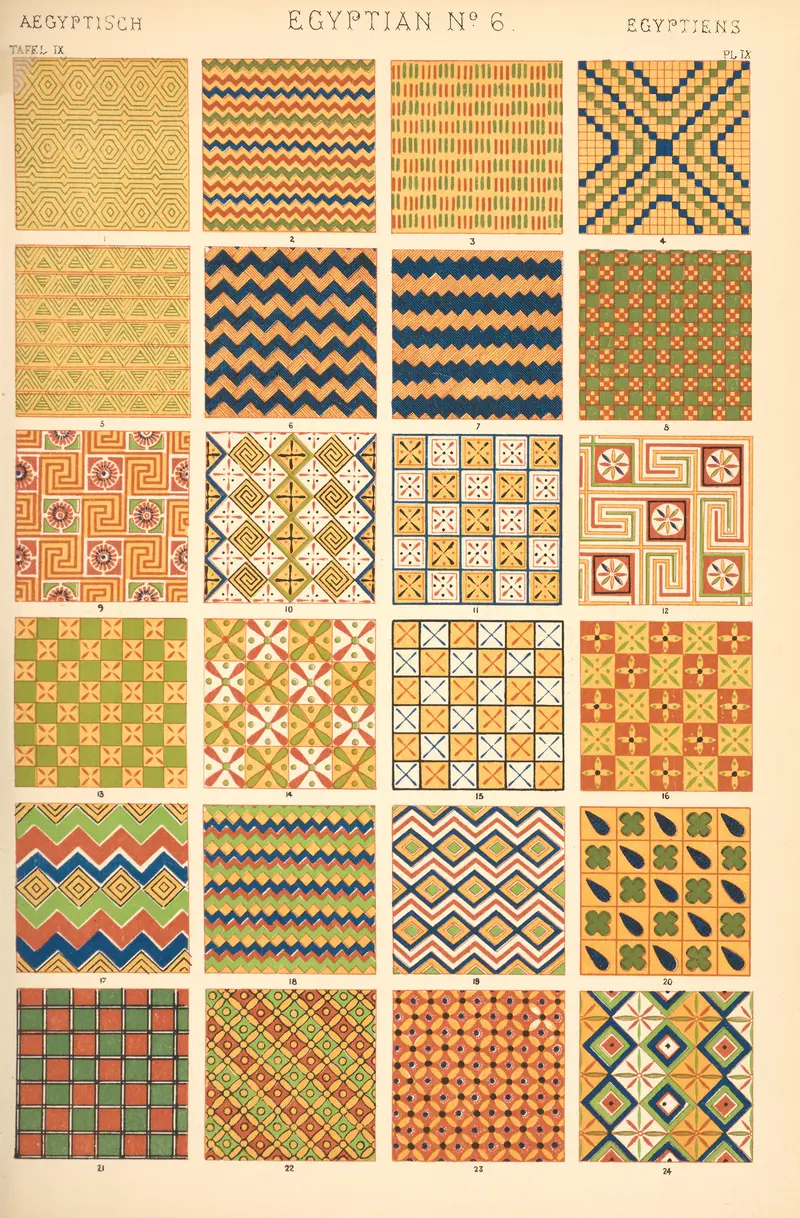
Egyptian Ornament No. 6
Owen Jones
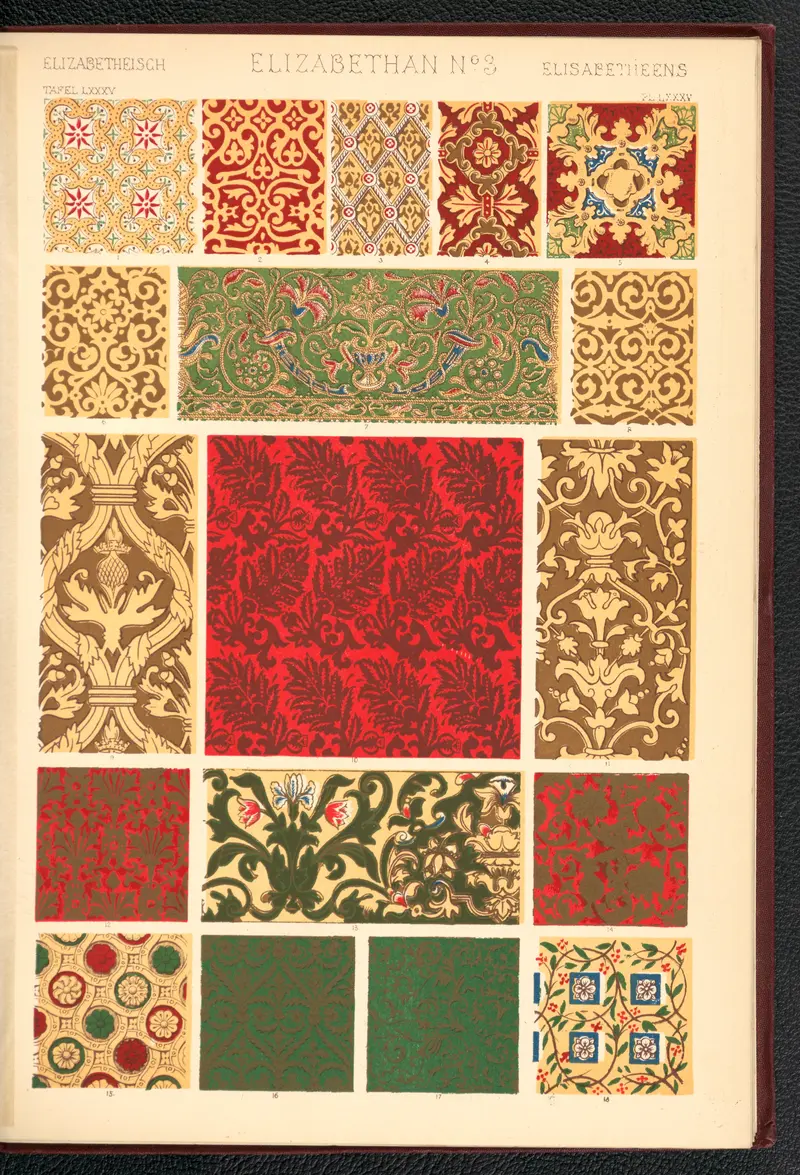
Elizabethan Ornament No. 3
Owen Jones
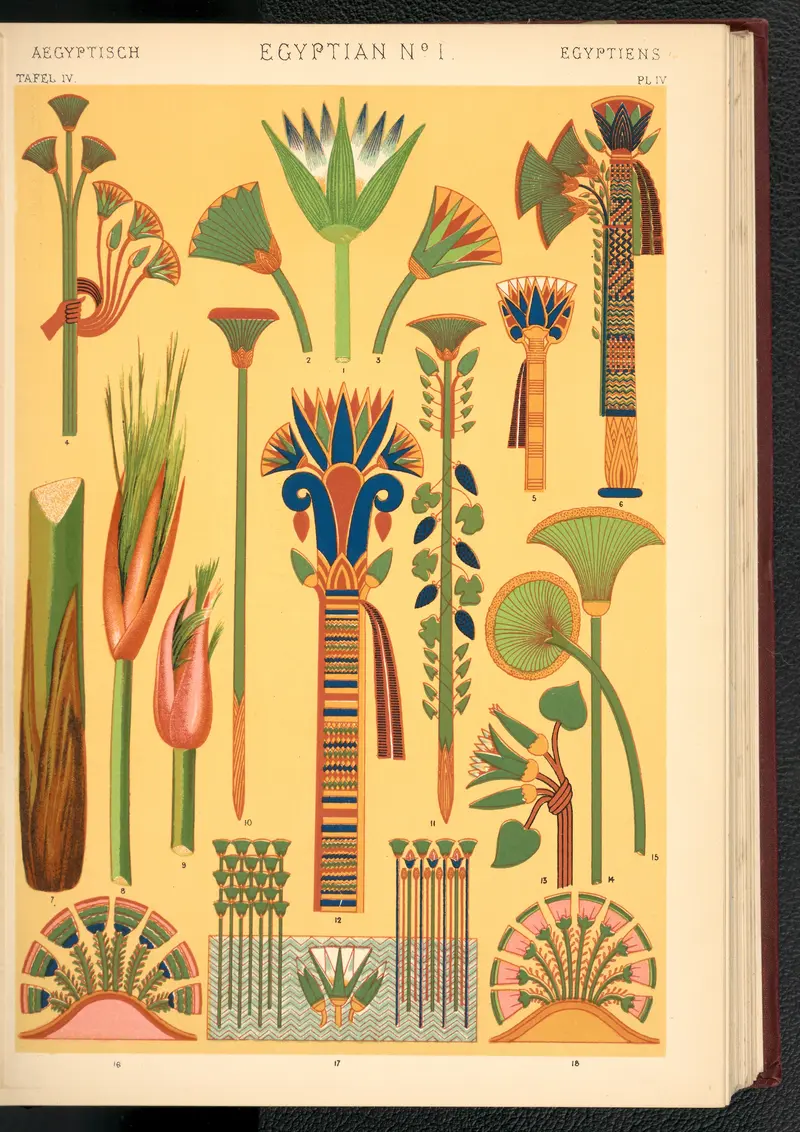
Egyptian Ornament No. 1
Owen Jones
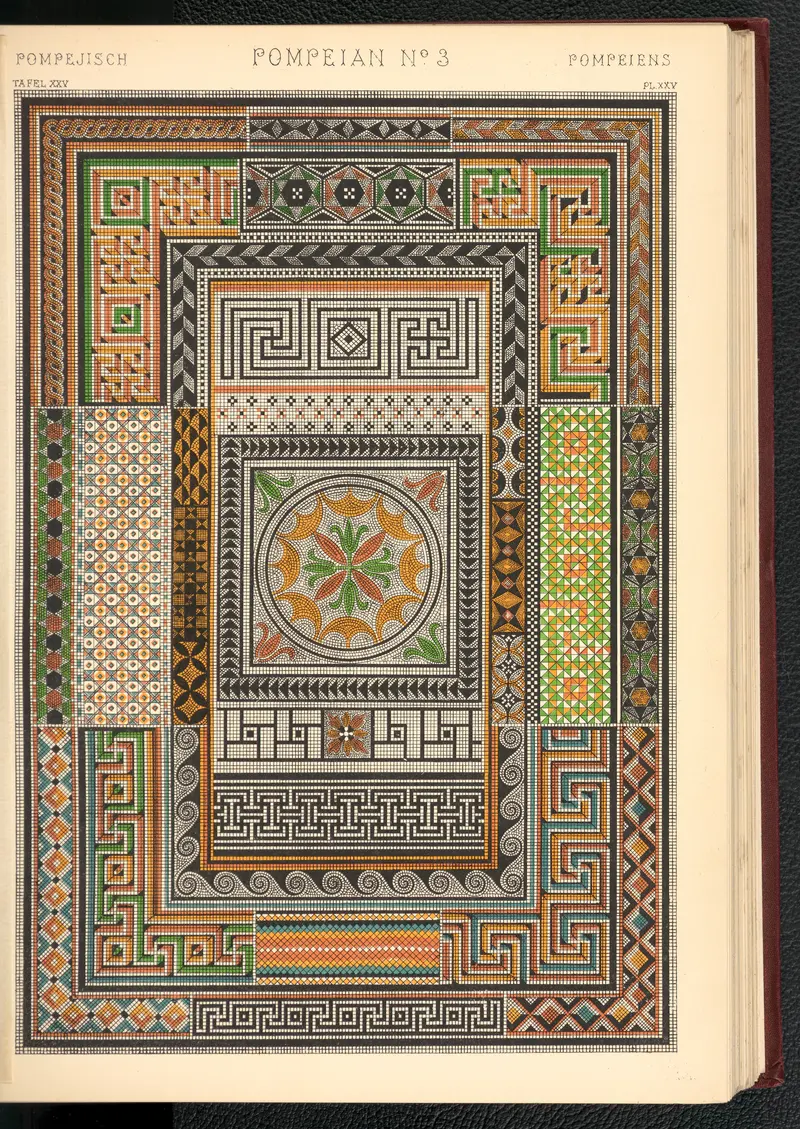
Pompeian Ornament No. 3
Owen Jones