
Mother and child — History & Facts
What first draws the eye in Mother and child is the play of light across the girl’s hair, a golden halo that sets her apart from the darker, patterned world around her. The mother’s steady gaze anchors the scene, her presence both protective and quietly reserved, while the child’s upward look hints at a private conversation or a moment of reassurance. The open window, with its view of Paris rooftops and distant dome, floods the space with daylight, making the interior’s deep reds and blues feel even more intimate.
Every object—the top hat on the chair, the bold textiles, the fan on the wall—feels carefully chosen, suggesting a life attentive to both comfort and style. The painter’s brushwork is lively, especially in the carpet and drapery, where color and pattern seem to vibrate with the energy of everyday life. Painted in 1887, this work belongs to a period when artists across Europe were exploring the private sphere, often turning to scenes of domestic intimacy as a way to reflect changing ideas about family and individuality. In the late nineteenth century, such images were both deeply personal and quietly radical, as they invited viewers to value the ordinary moments of women and children.
Akseli Gallen-Kallela, known for his later mythic and nationalistic works, here captures a fleeting Parisian moment—perhaps during his own formative years in the city. While little is recorded about the specific journey of this painting, its presence in a modern collection (as documented by Tomi Aho) reminds us that even the quietest scenes can hold the pulse of an era. Look again at the mother’s hand: it is both a gentle anchor and a silent promise, holding the child—and the viewer—in its grasp.
More Artworks by Akseli Gallen-Kallela
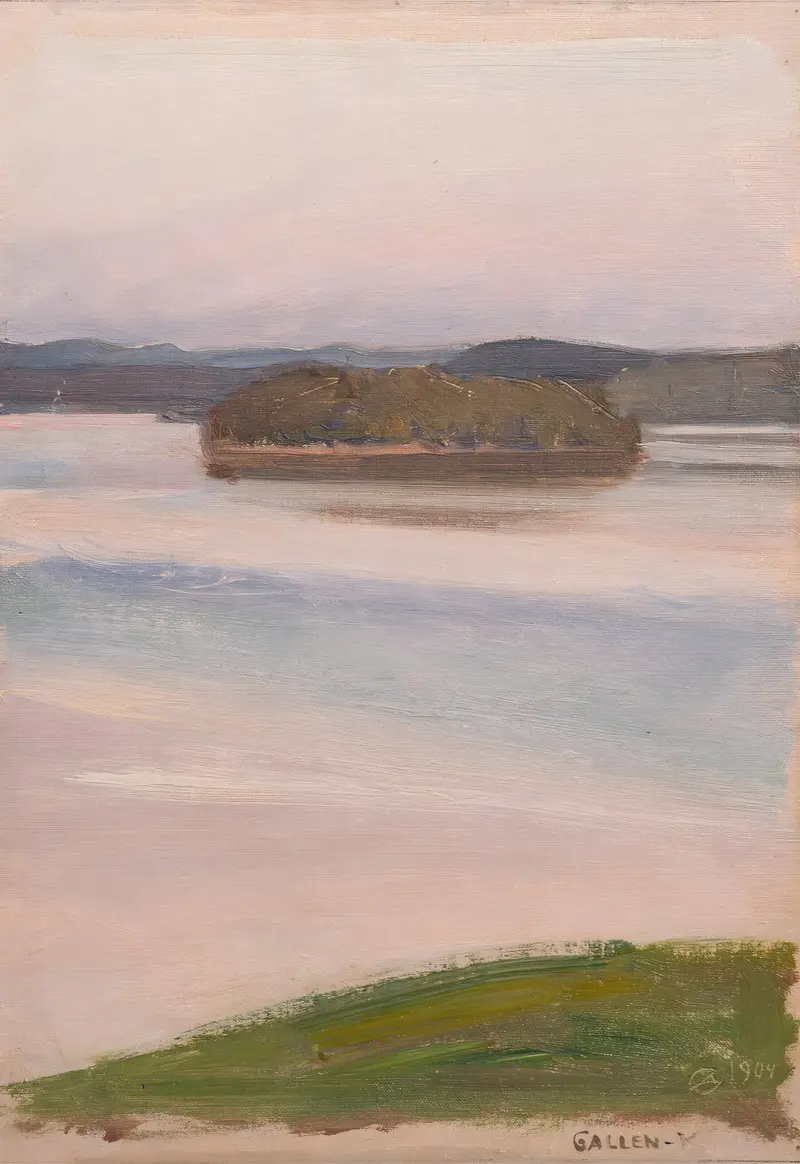
Lake Keitele
Akseli Gallen-Kallela
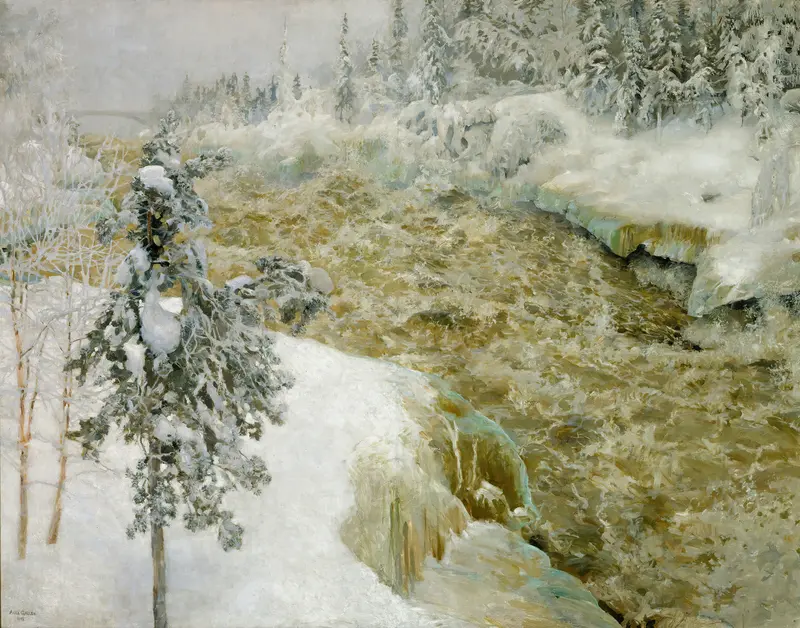
Imatra Falls in Snow ; Imatra in Winter
Akseli Gallen-Kallela
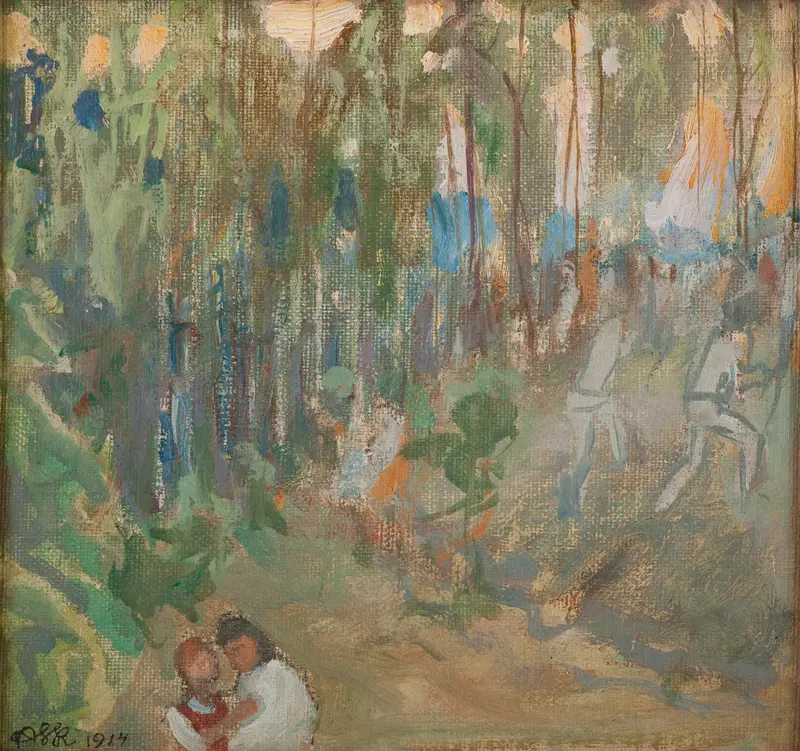
Vainovalkeat
Akseli Gallen-Kallela
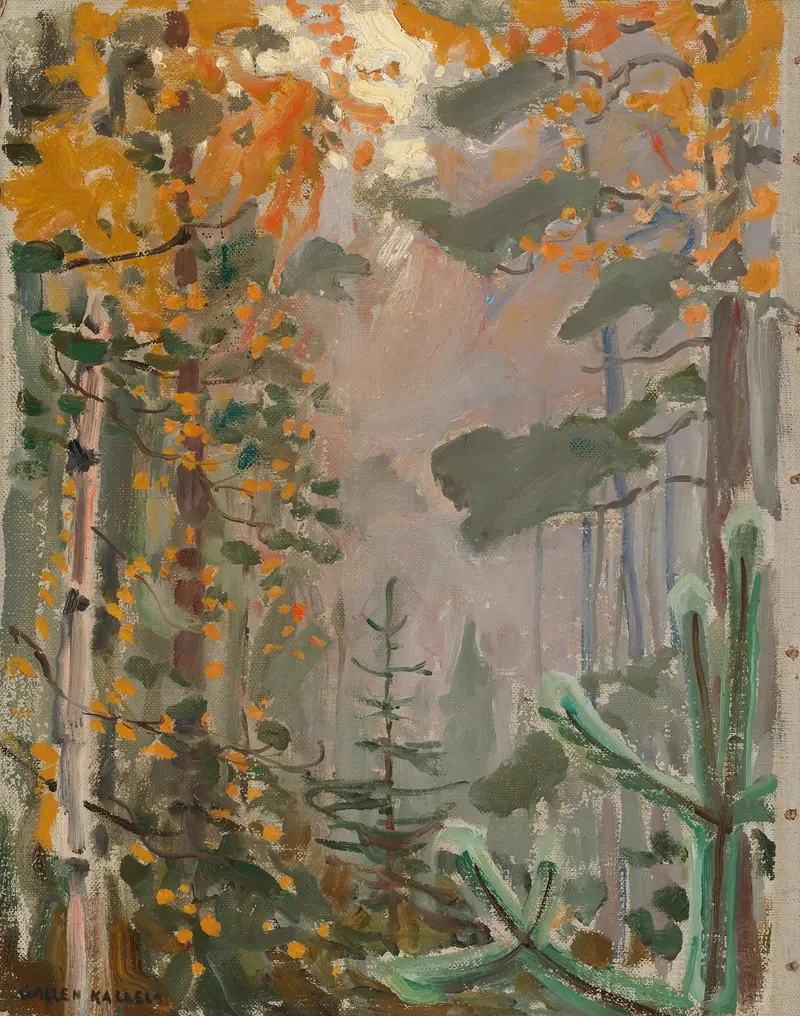
Autumn Landscape
Akseli Gallen-Kallela
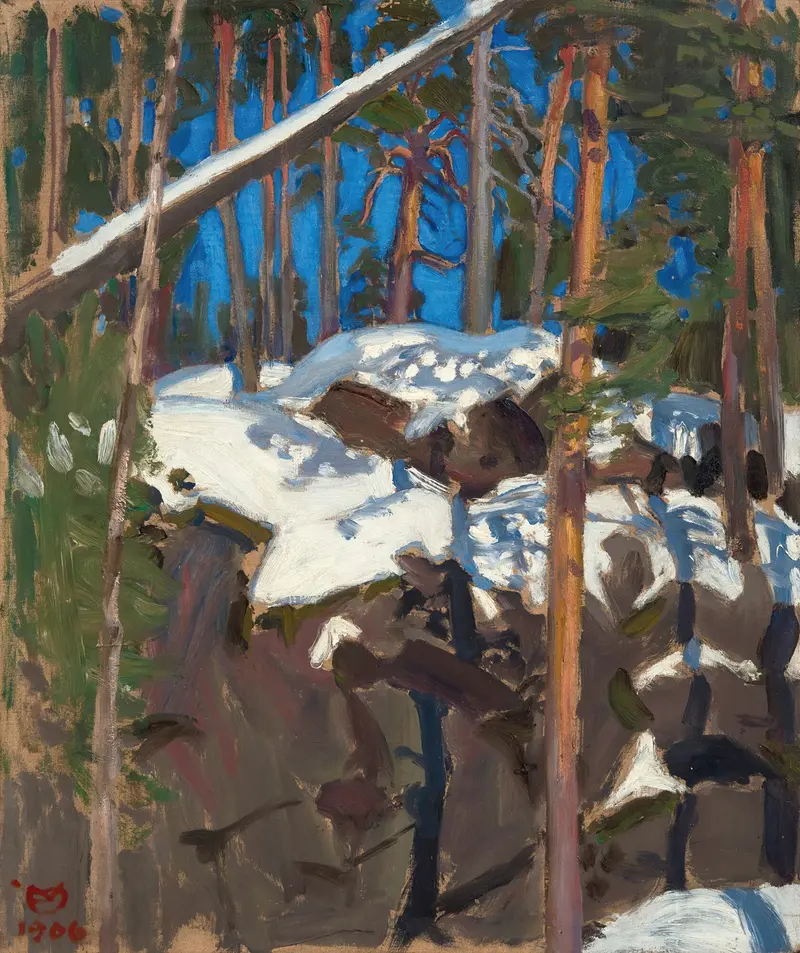
Spring Sun At Konginkangas
Akseli Gallen-Kallela
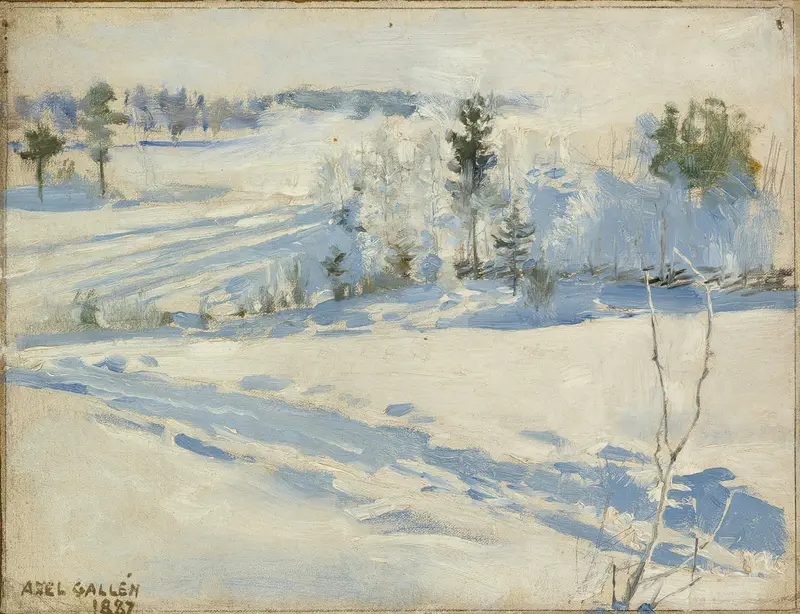
Winter Landscape
Akseli Gallen-Kallela

First Snow
Akseli Gallen-Kallela
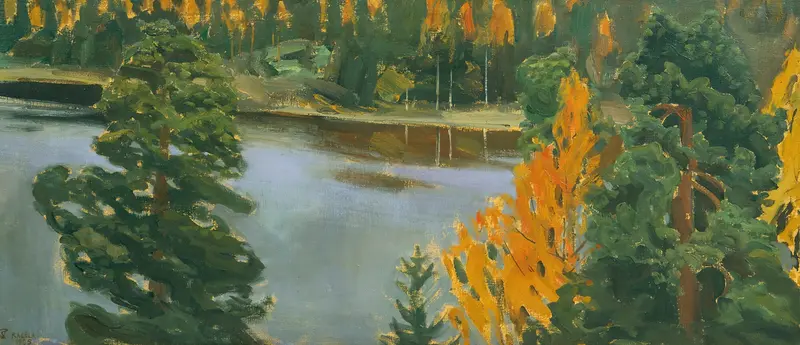
Lake View In Autumn
Akseli Gallen-Kallela
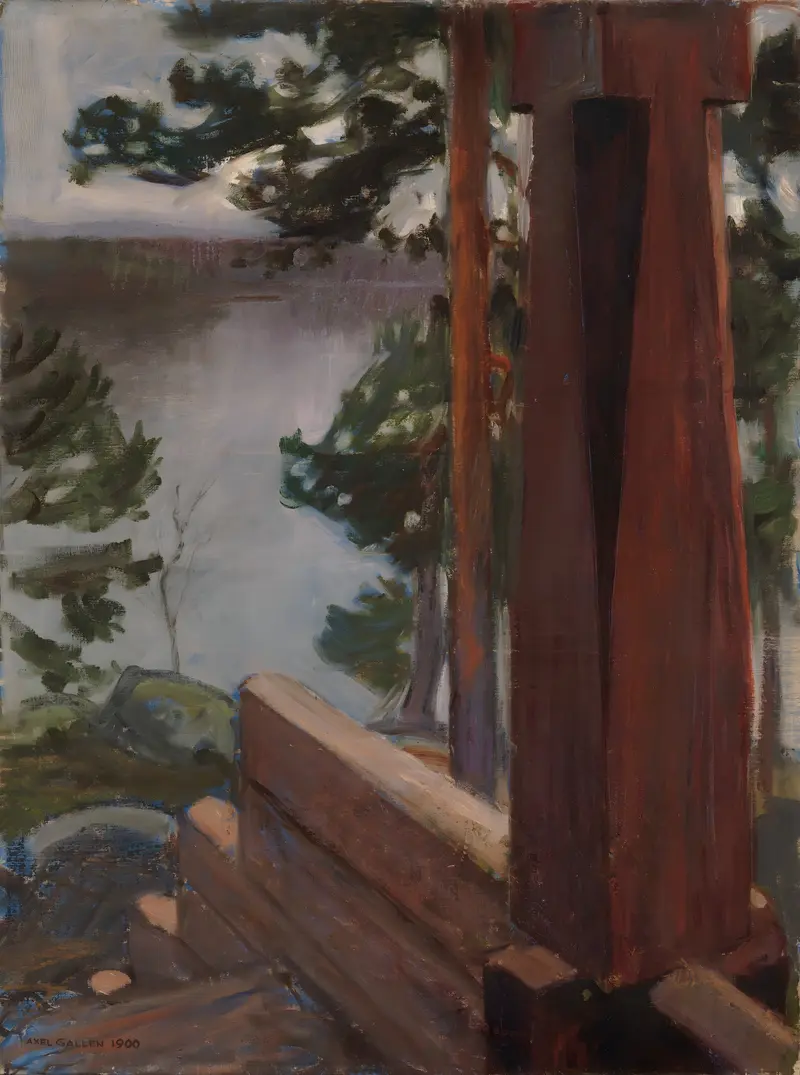
The Kalela Porch
Akseli Gallen-Kallela

Light Behind The Clouds
Akseli Gallen-Kallela
More Genre Scene Art

Banquet of the Officers of the St George Civic Guard
Frans Hals

Rembrandt and Saskia in the Scene of the Prodigal Son
Rembrandt van Rijn

Bal du moulin de la Galette
Pierre-Auguste Renoir

Quadrille at the Moulin Rouge
Henri de Toulouse-Lautrec

A Burial at Ornans
Gustave Courbet

When Will You Marry?
Paul Gauguin