
Peasants Resting — History & Facts
When Jules Breton exhibited Peasants Resting in 1882, critics immediately recognized its quiet radicalism: here was a painting that elevated rural laborers to the dignity of classical heroes, at a time when France was still roiled by debates over the rights and futures of its working class. Breton, himself the son of a landowner in rural Courrières, was often accused of sentimentalizing peasant life, yet he insisted his aim was "to show their beauty, their patience, their strength." The painting quickly became one of Breton’s most discussed works, with its serene mood and monumental figures sparking both admiration and controversy in the Parisian press. The scene unfolds in the golden haze of late afternoon, as a group of field workers pause amid the harvest. Their bodies, heavy with fatigue, are arranged with a quiet dignity: a woman leans back on her elbows, her face turned to the sky, while a man sits beside her, hat in hand, gazing into the distance.
The tools scattered at their feet—sickles, baskets—speak of the day’s labor, while the ripening wheat and distant horizon evoke both the abundance and the hardship of rural life. Breton’s use of warm, earthy tones and careful attention to the workers’ hands and faces recall the realism of Jean-François Millet, whose The Gleaners similarly honored the rural poor, though Breton’s figures are more idealized, their rest imbued with a sense of peace rather than struggle. While the exact provenance of Peasants Resting is not fully documented, it is known that Breton’s rural scenes were highly sought after by collectors in both France and the United States during the late nineteenth century. The painting marks a high point in Breton’s career, when he was celebrated as a leading figure of the Realist movement and regularly exhibited at the Salon.
Today, Peasants Resting remains a touchstone for those interested in the representation of rural life in art, and it continues to be displayed in major museums, where its blend of realism and idealism invites viewers to reflect on the dignity of everyday labor.
More Artworks by Jules Breton

The Song of the Lark
Jules Breton
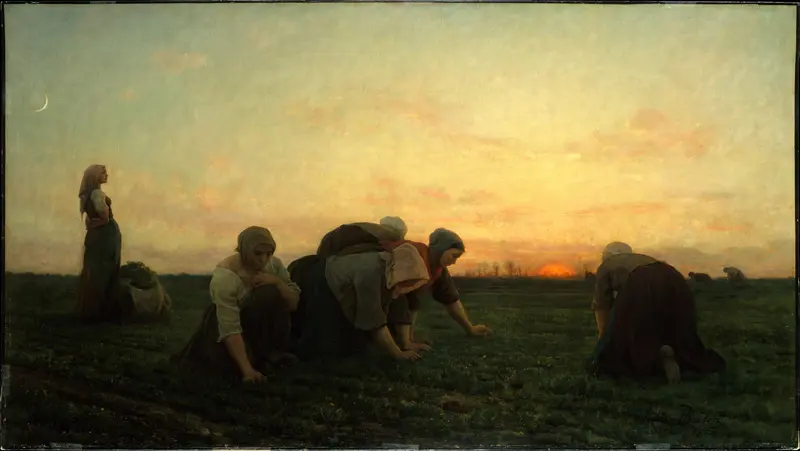
The Weeders
Jules Breton
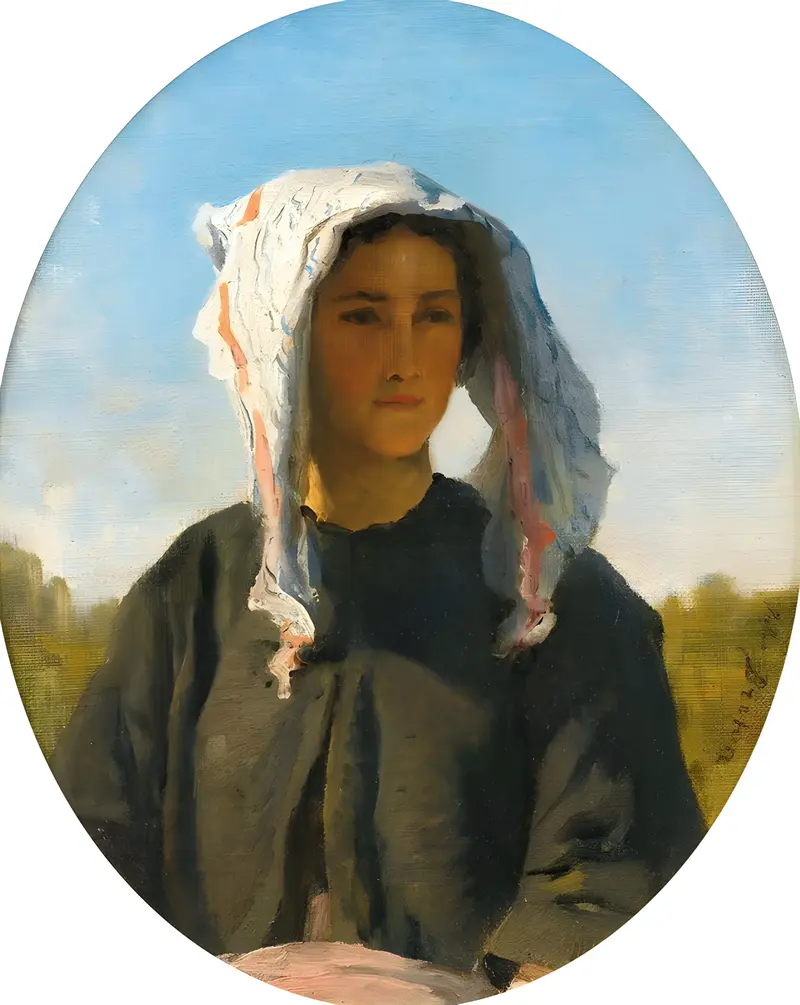
Portrait de jeune Paysanne Bordelaise
Jules Breton
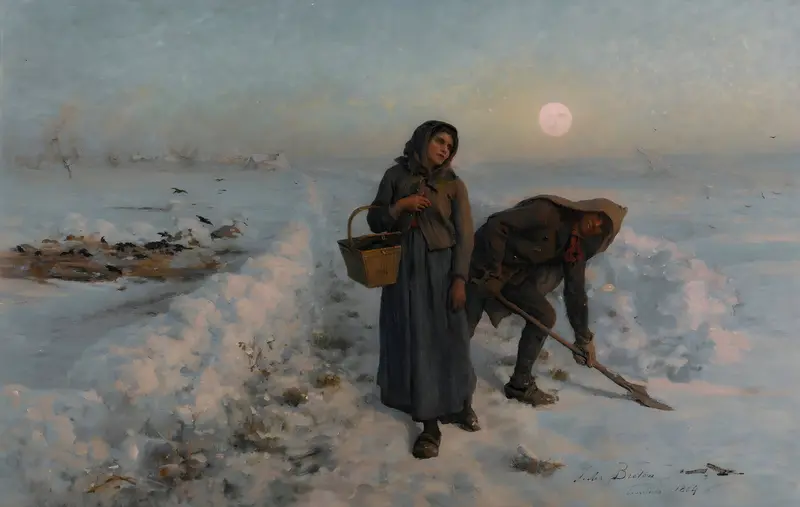
Sur la route en hiver; artois
Jules Breton
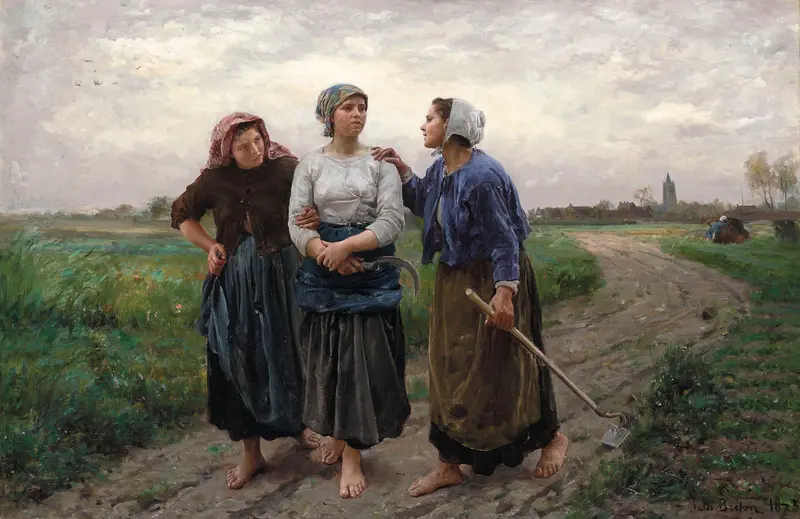
Les amies
Jules Breton
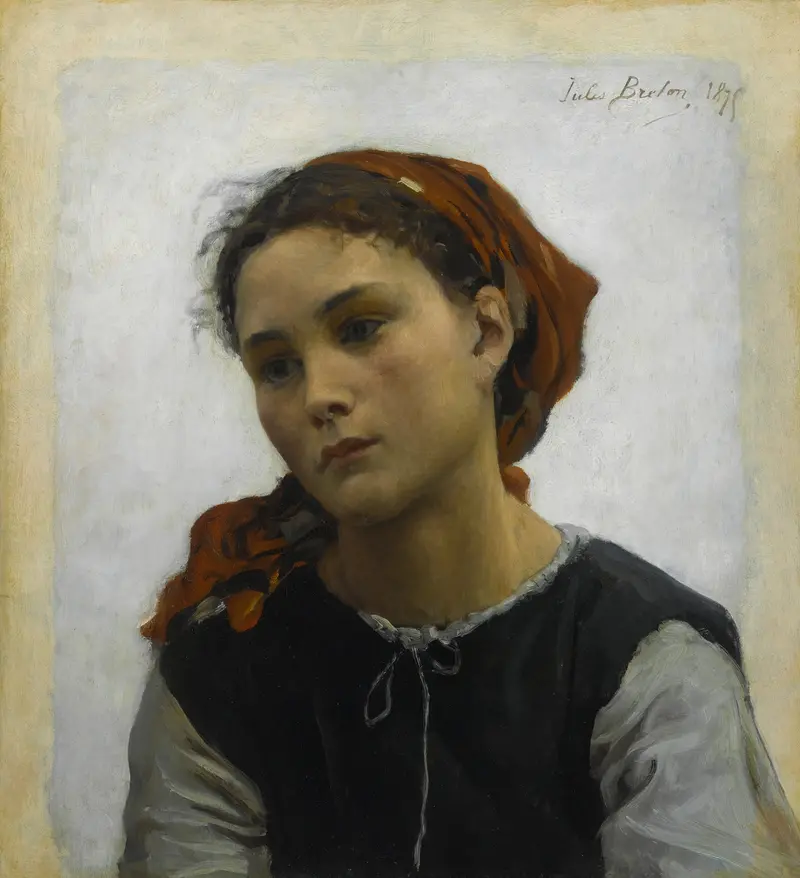
Innocente
Jules Breton
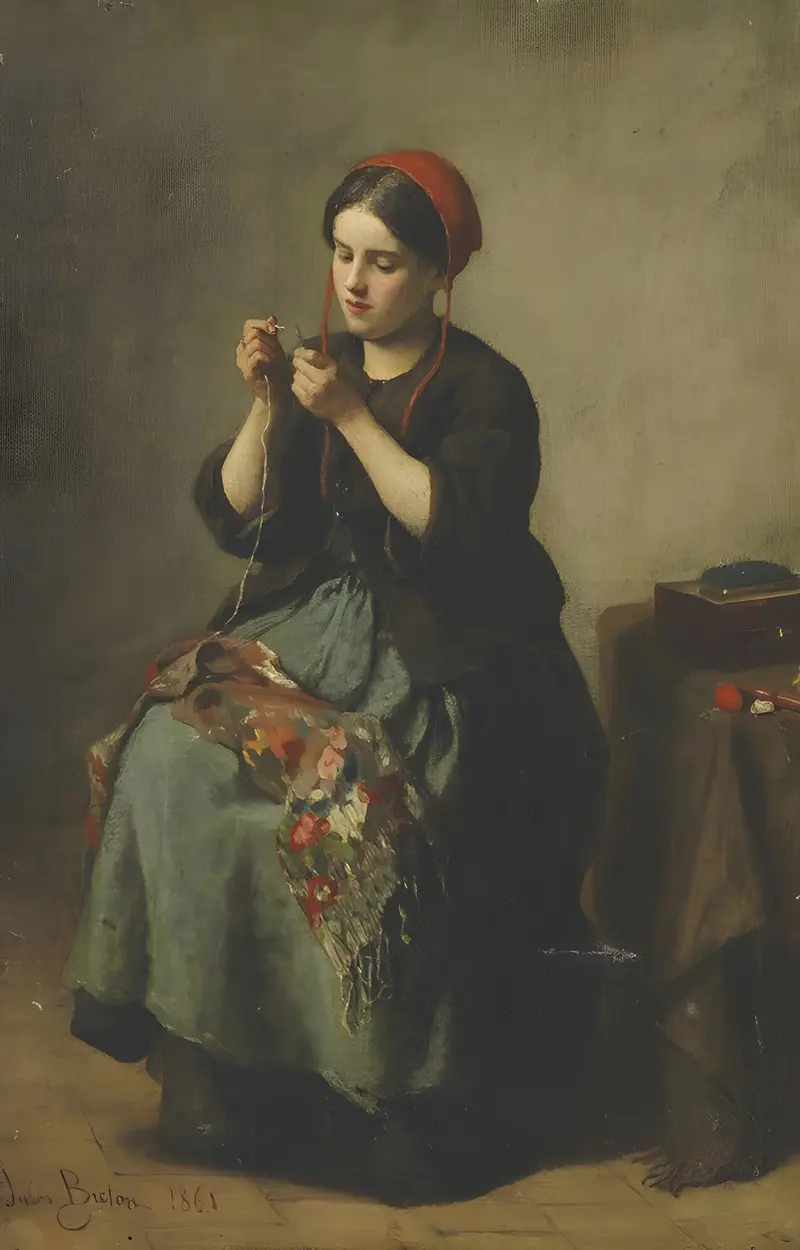
Peasant woman threading a needle
Jules Breton
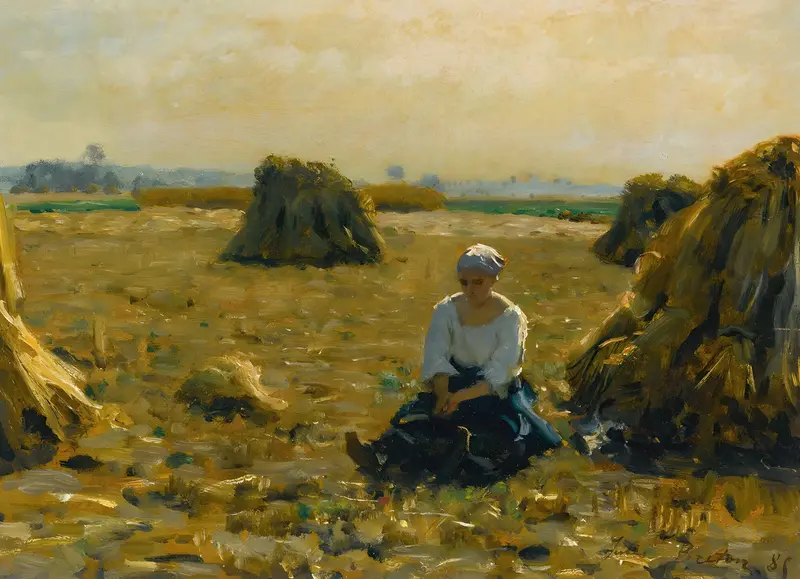
Jeune femme dans les champs
Jules Breton
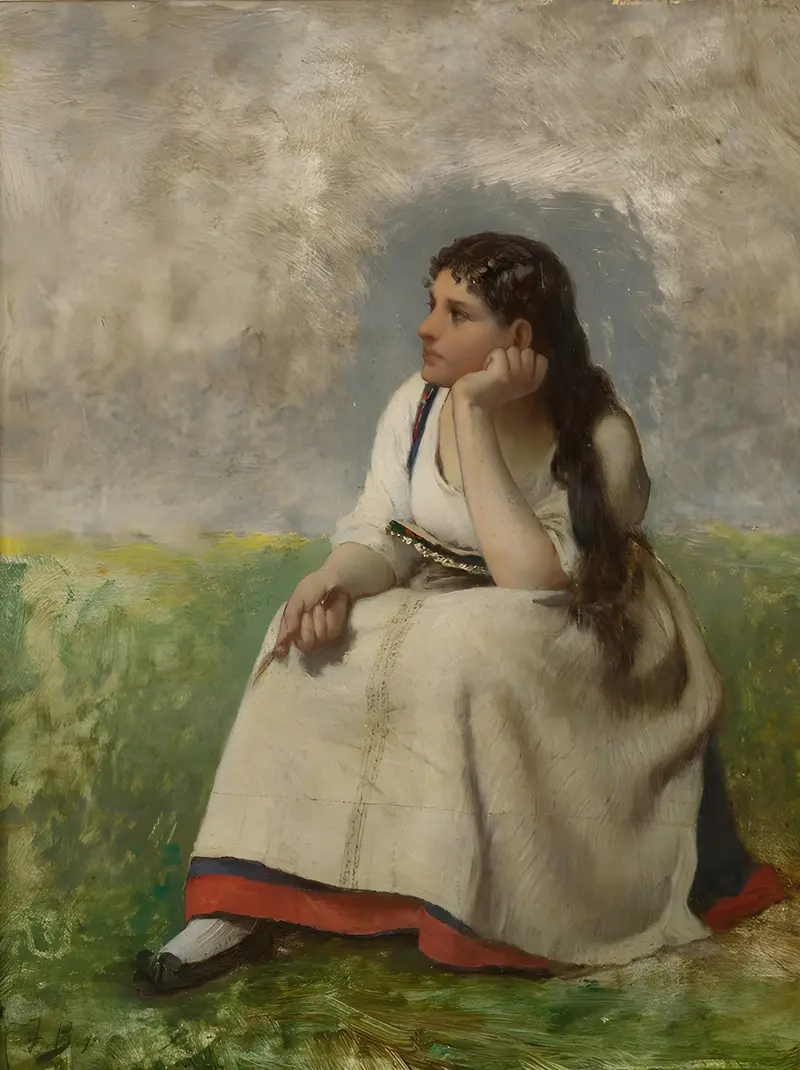
Jeune Fille Pensive
Jules Breton
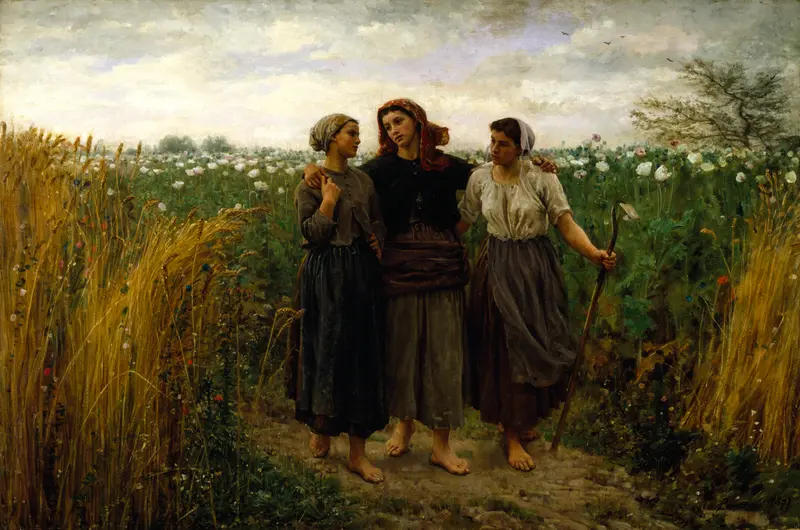
Returning from the Fields
Jules Breton
More Genre Scene Art

Banquet of the Officers of the St George Civic Guard
Frans Hals

Rembrandt and Saskia in the Scene of the Prodigal Son
Rembrandt van Rijn

Bal du moulin de la Galette
Pierre-Auguste Renoir

Quadrille at the Moulin Rouge
Henri de Toulouse-Lautrec

A Burial at Ornans
Gustave Courbet

When Will You Marry?
Paul Gauguin