
Portrait of a Man with a Blue Chaperon — History & Facts
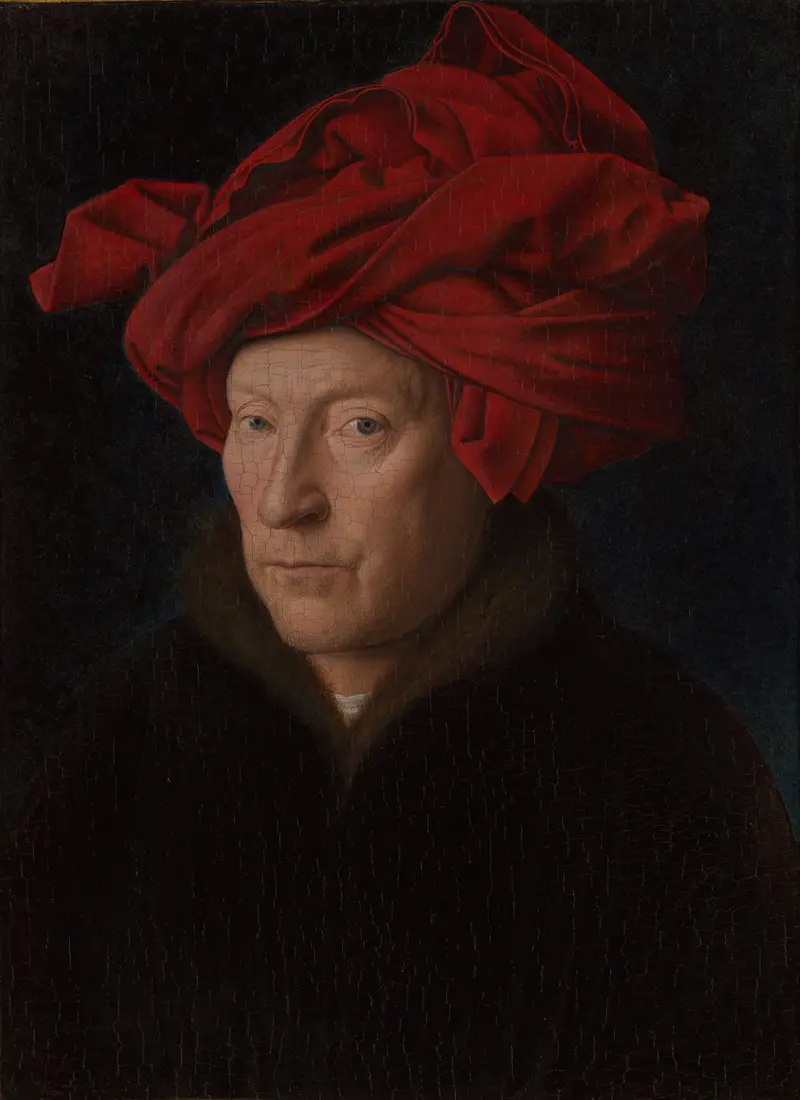
No one knows the true identity of the sitter in Portrait of a Man with a Blue Chaperon, but the painting’s extraordinary realism has led many to speculate that it is a disguised self-portrait by Jan van Eyck himself. The direct gaze, the meticulous rendering of stubble and veins, and the enigmatic half-smile have all fueled centuries of debate. Some art historians point to the blue chaperon—a rare and costly headdress—as a clue, suggesting it might signal the sitter’s social rank or even a specific office within the Burgundian court.
Others note that van Eyck’s signature, painted with almost calligraphic precision along the frame, hints at a personal connection to the work. The man’s face emerges from a dark, unadorned background, his features illuminated by a clear, raking light that accentuates every pore and wrinkle. The blue chaperon, with its elaborate folds and dangling liripipe, dominates the composition, framing the sitter’s head like a sculpted halo. His eyes meet ours with an unflinching steadiness, inviting the viewer into a silent dialogue.
The absence of heraldic badges or overt symbols leaves interpretation open, but the sitter’s confident pose and fine attire suggest a person of means and intellect. Unlike Rogier van der Weyden’s more idealized portraits, van Eyck’s approach is almost forensic, capturing not just the appearance but the psychology of his subject. The painting’s early history is obscure, as is often the case with works from the Northern Renaissance. It likely remained in private hands for centuries, passing quietly through collections before being recognized as a work by Jan van Eyck in the nineteenth century.
Today, Portrait of a Man with a Blue Chaperon is celebrated as a prime example of van Eyck’s revolutionary technique and his role in transforming portraiture in fifteenth-century Europe. The medium itself—whether oil on panel, as with most of van Eyck’s surviving works, or another support—remains uncertain, adding another layer of mystery. The painting stands as a testament to van Eyck’s legacy, bridging the gap between medieval convention and the new realism of the Renaissance.
More Artworks by Jan van Eyck

Adam
Jan van Eyck
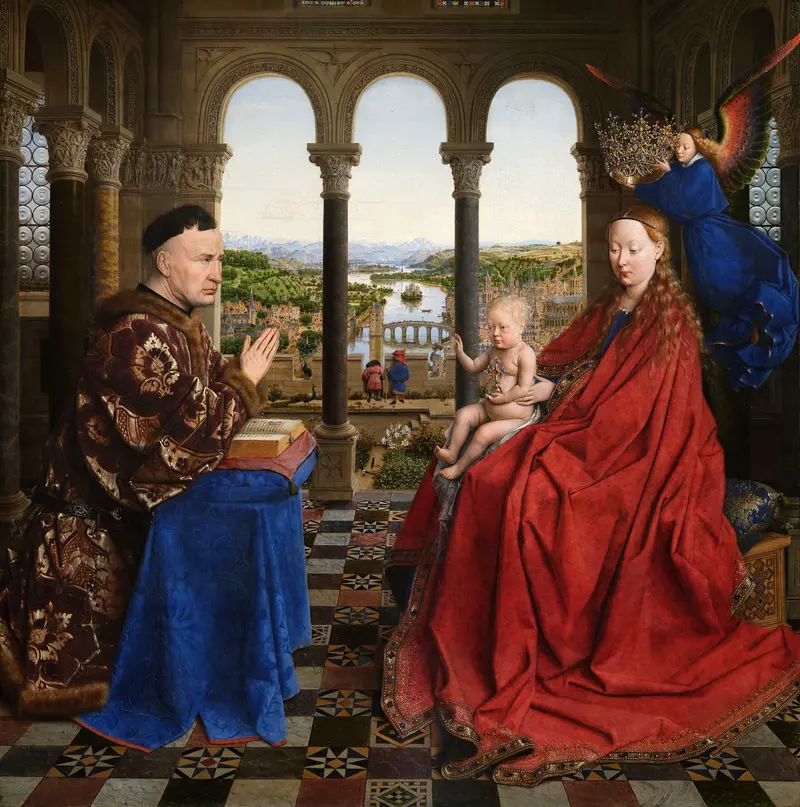
Madonna of Chancellor Rolin
Jan van Eyck
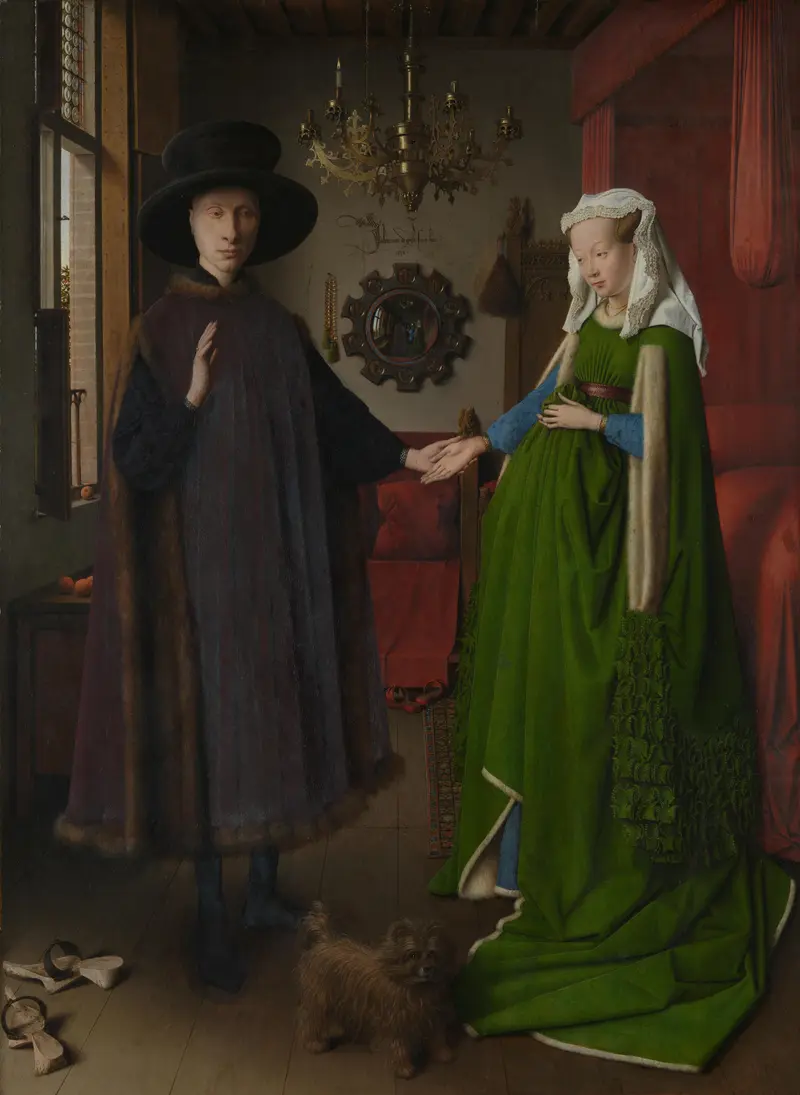
The Arnolfini Portrait
Jan van Eyck
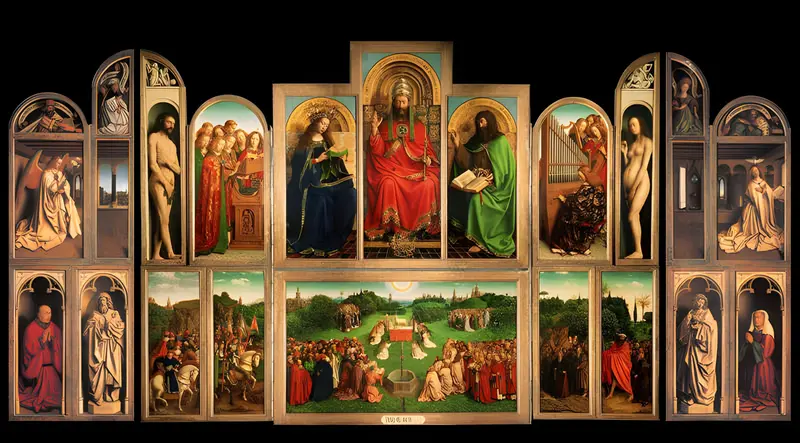
Ghent Altarpiece
Jan van Eyck

Dresden Triptych
Jan van Eyck
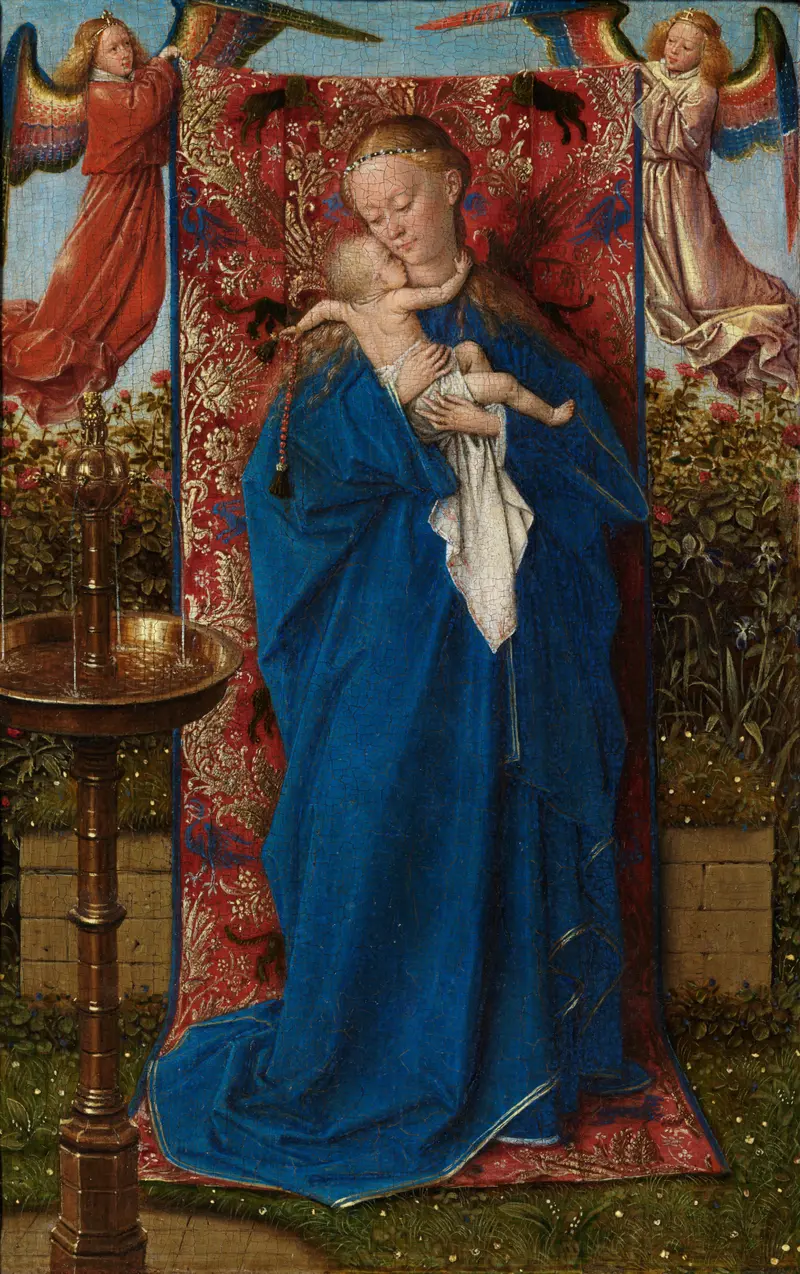
Madonna at the Fountain
Jan van Eyck

Madonna with Canon Joris van der Paele
Jan van Eyck

Prophet Zacharias; Angel of The Annunciation
Jan van Eyck
Portrait of a Man (Self Portrait?)
Jan van Eyck
Adoration of the Lamb from the Ghent Altarpiece
Jan van Eyck





