
Portrait of an old man, sketch — History & Facts
No one knows for certain who the old man in Portrait of an old man, sketch is, or even when exactly Tadeusz Ajdukiewicz painted him. This air of mystery has led some to speculate that the work may have begun as a study for a larger, now-lost commission, or perhaps as a personal exercise in capturing character rather than likeness. What is certain is that this unfinished portrait stands apart from the more formal, polished society portraits that brought Ajdukiewicz fame in the courts of Europe. The sitter meets our gaze directly, his features rendered with swift, searching strokes.
The loose handling of paint (or perhaps pastel or charcoal—the medium is still debated) leaves the old man’s beard and hair in a state of flux, as if caught between memory and reality. There is no grand costume, no emblem of rank or office: instead, the focus is on the furrows of the brow, the heavy-lidded eyes, and the suggestion of a life lived. Unlike the idealized old men of Rembrandt, whose faces glow with inner light, Ajdukiewicz offers us a more reserved, introspective presence, stripped of allegory or narrative. Little is known of the painting’s early history.
Without a signature or date, its attribution to Tadeusz Ajdukiewicz rests on stylistic grounds, and its provenance before the twentieth century is unclear. It likely remained in a private collection, overlooked amid the artist’s grander works, until renewed interest in Polish portraiture brought it to light. Today, Portrait of an old man, sketch is valued as a rare glimpse into the working process of an artist better known for his finished commissions, and as a testament to the enduring power of the human face.
More Artworks by Tadeusz Ajdukiewicz
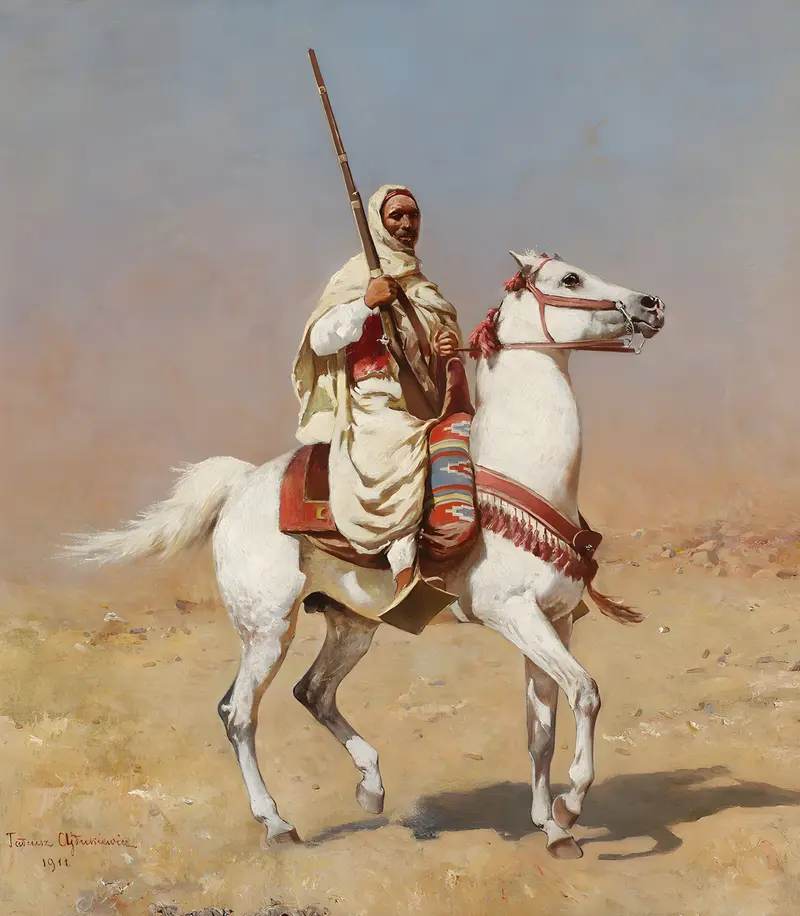
Arab on a grey horse
Tadeusz Ajdukiewicz
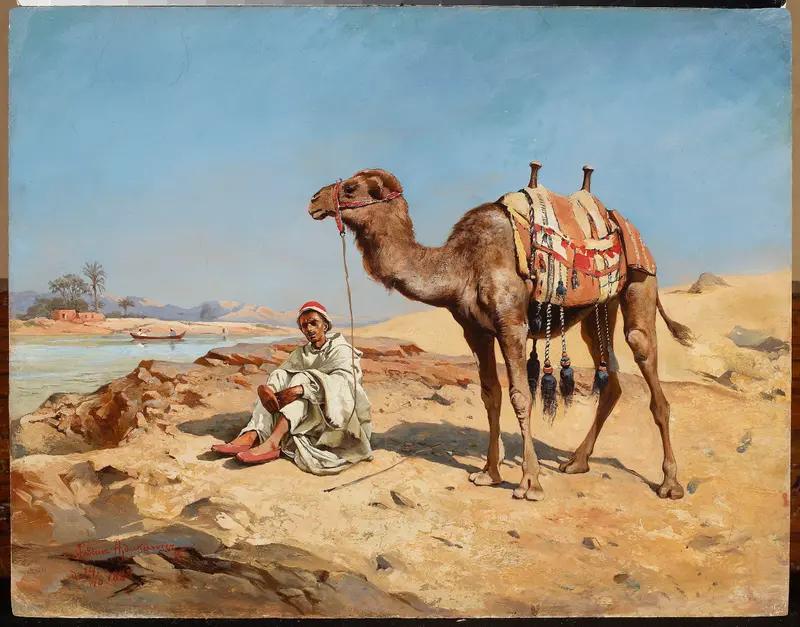
Arab in the desert
Tadeusz Ajdukiewicz
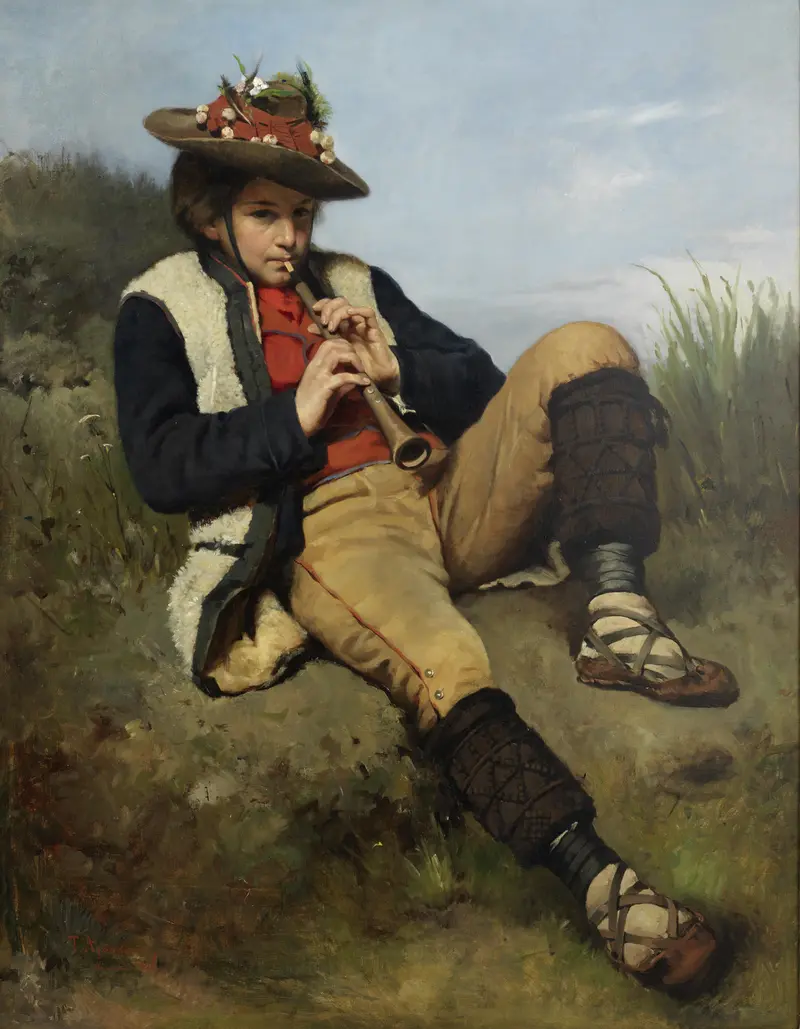
The shepherd boy
Tadeusz Ajdukiewicz

A Parforce Rider in the Forest
Tadeusz Ajdukiewicz
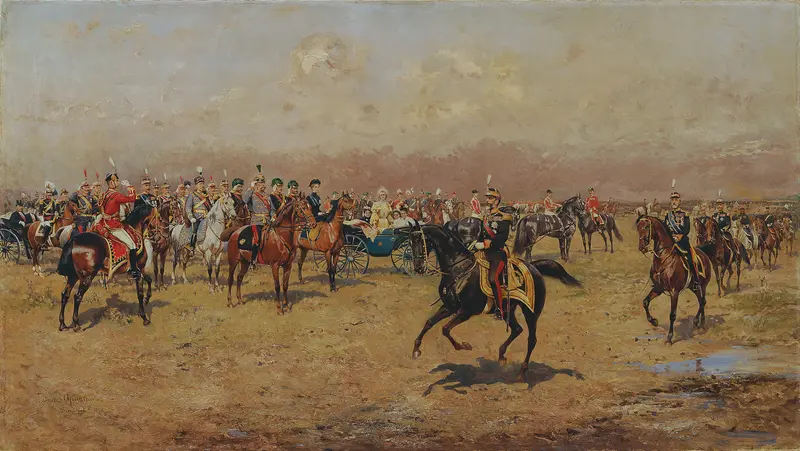
Militärparade vor Kaiser Franz Joseph I.
Tadeusz Ajdukiewicz
Eastern scene against a landscape
Tadeusz Ajdukiewicz
A turkish courtyard
Tadeusz Ajdukiewicz
After hunting for a deer
Tadeusz Ajdukiewicz
Arab and a donkey at the wall of a house
Tadeusz Ajdukiewicz
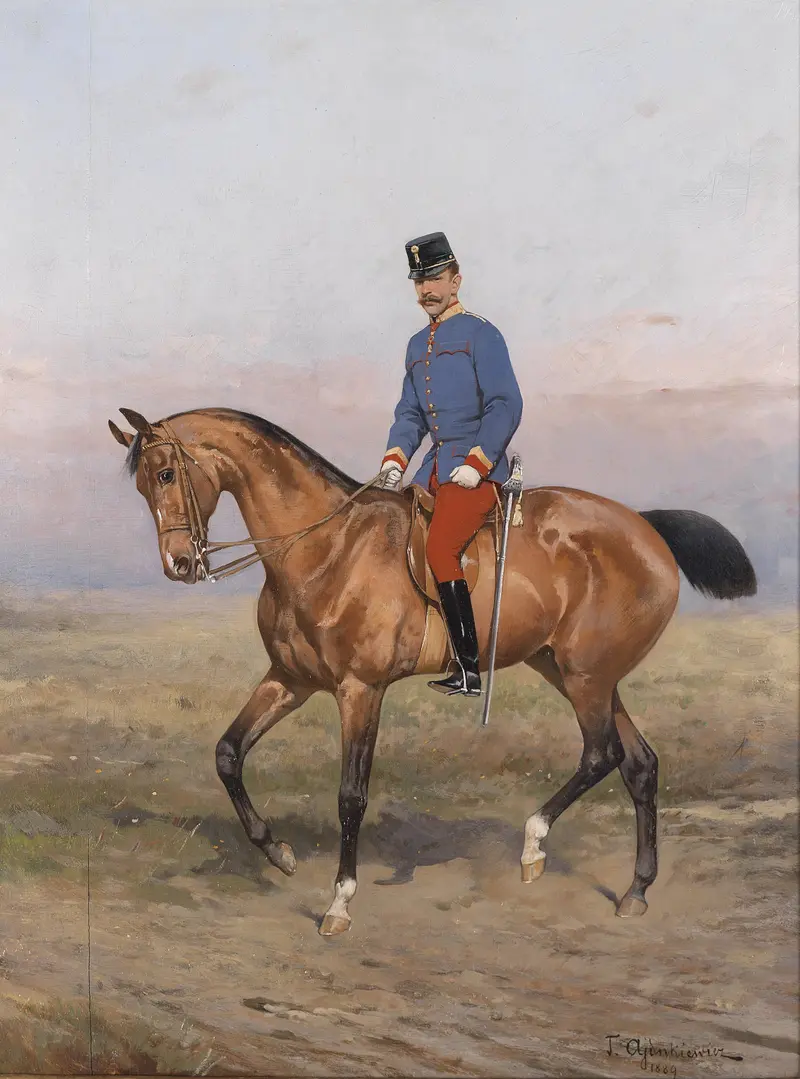
Kronprinz Rudolf zu Pferd
Tadeusz Ajdukiewicz





