
Portrait of Duchess Maria Anna Christina Victoria of Bavaria, 'la Grande Dauphine' — History & Facts
What first seizes the eye is the confident ease with which the sitter holds the coronet—neither clutching nor presenting, but resting it lightly in her lap, as if the weight of royal destiny is something she has learned to bear with composure. The blue mantle, scattered with golden fleurs-de-lis, pools around her in a calculated display of Bourbon prestige, while her gaze meets us with the calm directness of someone who knows her place at the pivot of dynastic power. The painter draws the viewer’s attention to the interplay between the sumptuous textures—the crisp lace at her sleeve, the glowing red and gold of her gown, and the cool, almost tactile velvet of the robe.
Behind her, a sculpted putto atop a plinth hints at the mythic underpinnings of her status, but it is the living woman, poised between ceremony and self-possession, who dominates the scene. This portrait belongs to a world where image was inseparable from authority, and where the role of Dauphine—whether Maria Anna Victoria of Bavaria or her daughter-in-law Marie Adélaïde of Savoy—was as much about spectacle as about lineage. At the turn of the seventeenth to eighteenth century, such paintings were commissioned to assert legitimacy, to circulate likenesses across courts, and to anchor alliances in flesh and fabric. The coronet and fleur-de-lis are not mere decorations but declarations: here sits the future of France, draped in the symbols that defined a dynasty.
History has kept few traces of this particular canvas’s journey, but its purpose is clear in every detail—a visual contract between sitter, artist, and the ever-watchful eyes of posterity. Look again at her hand on the coronet, and consider what it meant to hold the future, if only for a moment.
More Artworks by Jean-François de Troy
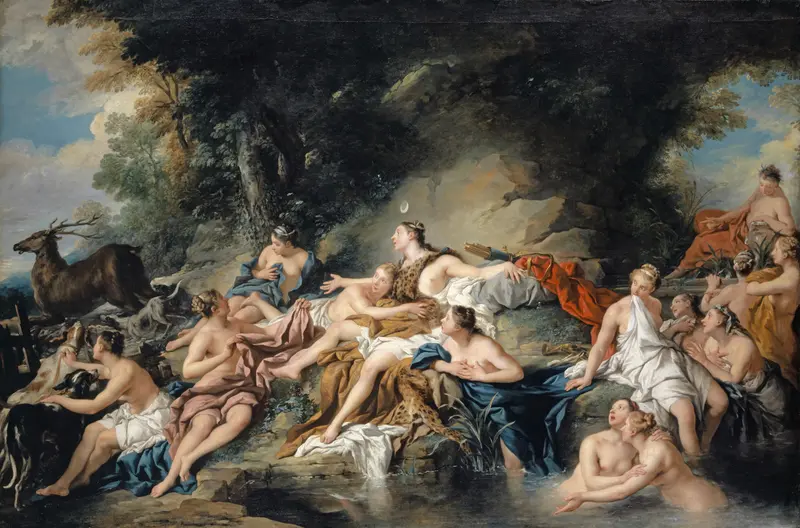
Diana and Actaeon
Jean-François de Troy

Créüse consumée par la robe empoisonnée
Jean-François de Troy
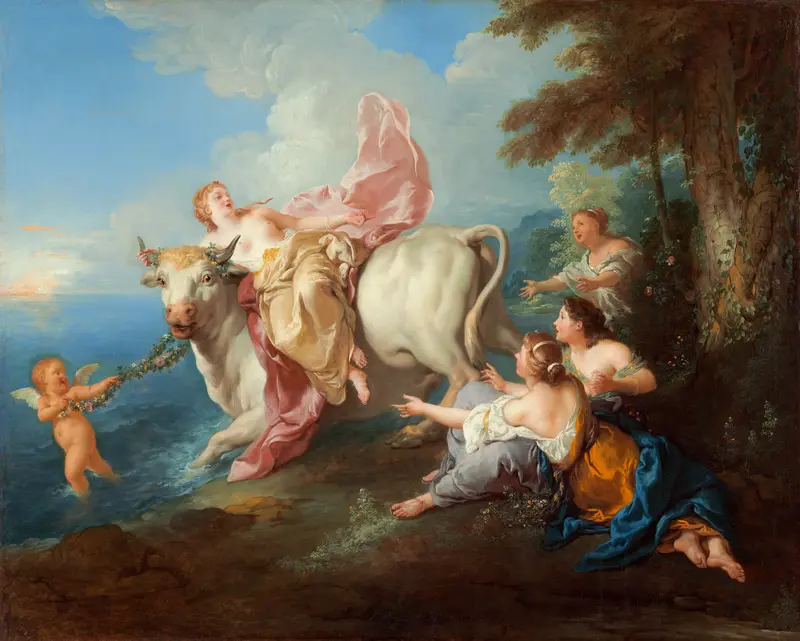
The Abduction of Europa
Jean-François de Troy
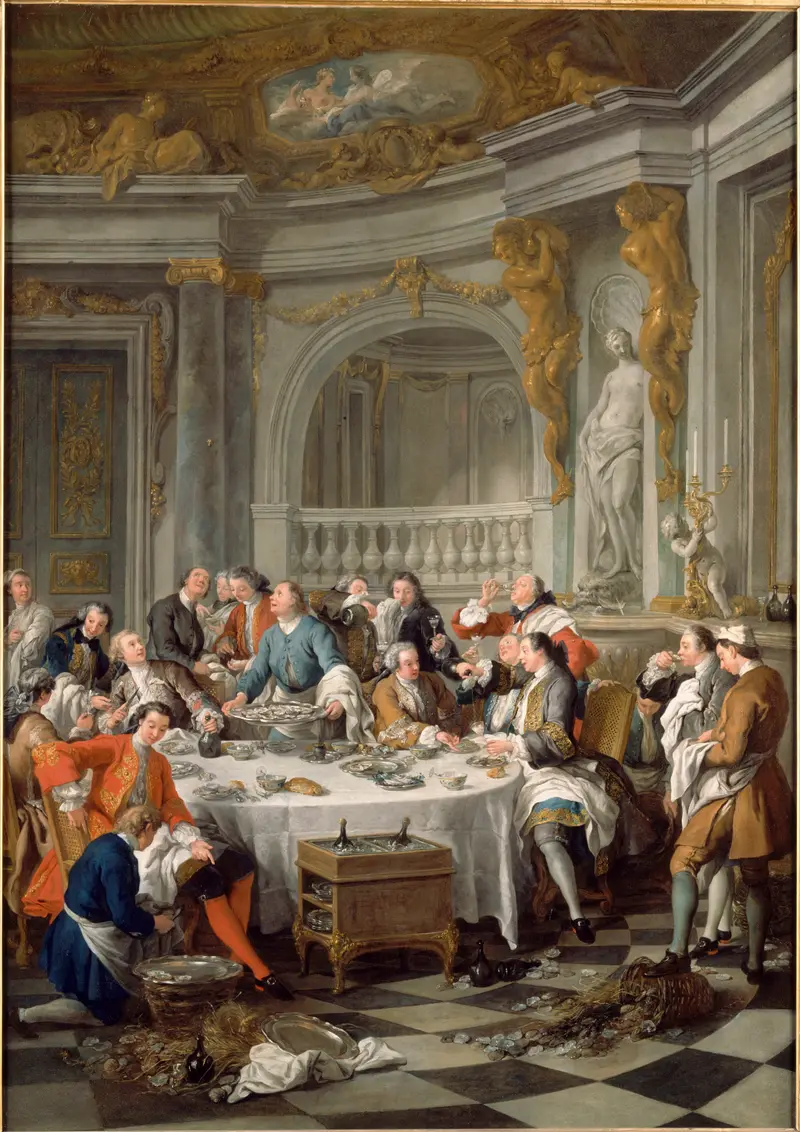
The Lunch of Oysters
Jean-François de Troy

Before the Ball
Jean-François de Troy

Pan and Syrinx
Jean-François de Troy

Le Combat des soldats nés des dents du serpent
Jean-François de Troy

Diana and Her Nymphs Bathing
Jean-François de Troy
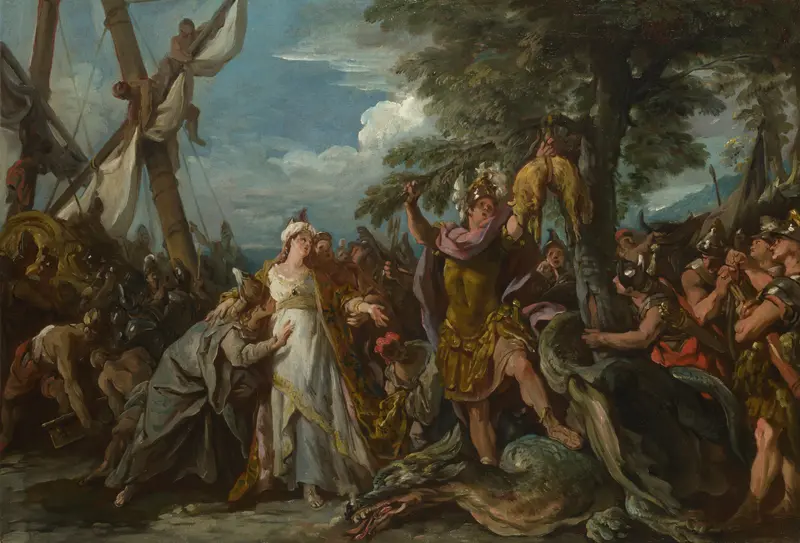
The Capture of the Golden Fleece
Jean-François de Troy

The Triumph of Mordecai
Jean-François de Troy





