
Rochishin Chopping Off the Head of Nio — History & Facts
No other print from Katsushika Hokusai’s early years has provoked as much debate as Rochishin Chopping Off the Head of Nio. Scholars still puzzle over the origins of this dramatic scene, which appears to merge the popular Chinese tale of the bandit-hero Lu Zhishen (Rochishin in Japanese) with Buddhist legend. Created in 1799, when Hokusai was still forging his identity as an artist, the print stands out for its violent energy and the way it draws together two distinct cultural traditions.
Its rarity—few impressions are known—has only heightened its mystique among collectors and historians. At the heart of the image, the monk-warrior Rochishin swings his sword in a decisive arc, severing the head of a Nio guardian statue. The moment is frozen at the peak of action: splinters fly, the Nio’s fierce face contorts, and Rochishin’s muscles tense in exertion. In Buddhist temple lore, Nio statues are fierce protectors, but here, their destruction signals Rochishin’s rejection of empty ritual in favor of direct action—a theme that resonated with Edo-period audiences.
The dynamic composition, with its swirling lines and tightly packed forms, recalls the theatricality found in Utagawa Kuniyoshi’s later prints of legendary heroes, though Hokusai’s treatment is more raw and immediate. The exact medium of Rochishin Chopping Off the Head of Nio remains uncertain, though it is likely a woodblock print, the dominant format for narrative images in late eighteenth-century Japan. No records survive of its original commission, and it is not clear whether it was produced for a specific patron or as part of a commercial series. Over time, the print has become a touchstone for those tracing Hokusai’s early experiments with storytelling and composition, foreshadowing the boldness of his later Thirty-six Views of Mount Fuji.
Today, the few extant impressions are held in private collections and major museums, where they offer a glimpse into the formative years of one of Japan’s most inventive artists.
More Artworks by Katsushika Hokusai

The Great Wave off Kanagawa
Katsushika Hokusai
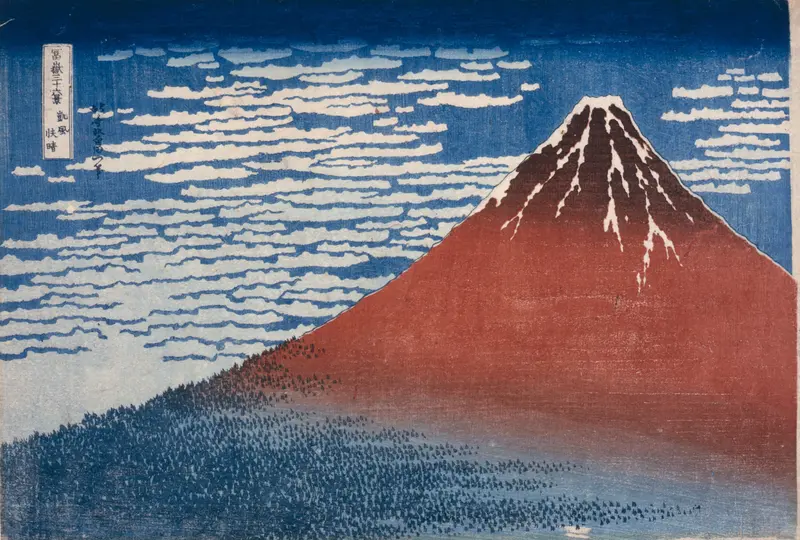
Fine Wind, Clear Morning (Red Fuji)
Katsushika Hokusai
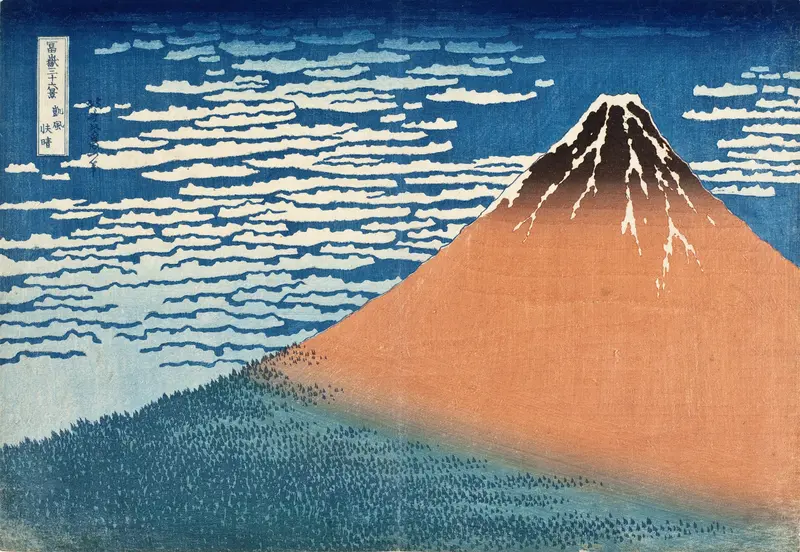
South Wind, Clear Dawn
Katsushika Hokusai
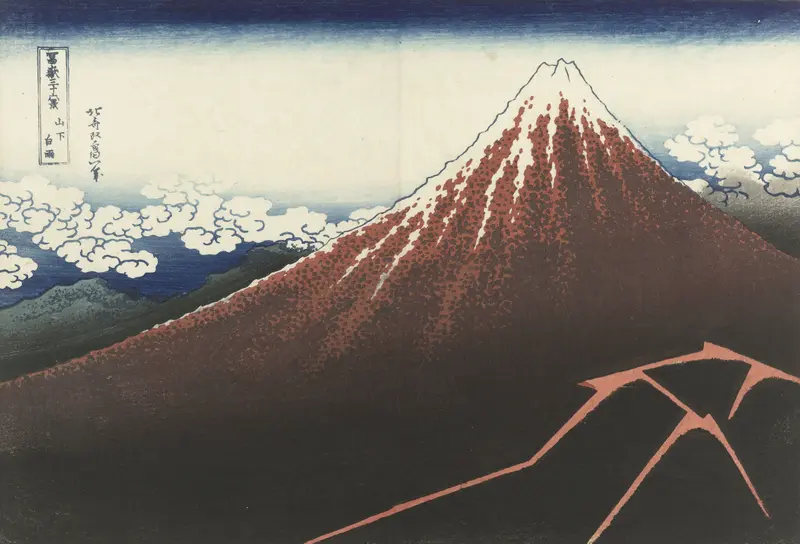
Rainstorm Beneath the Summit
Katsushika Hokusai
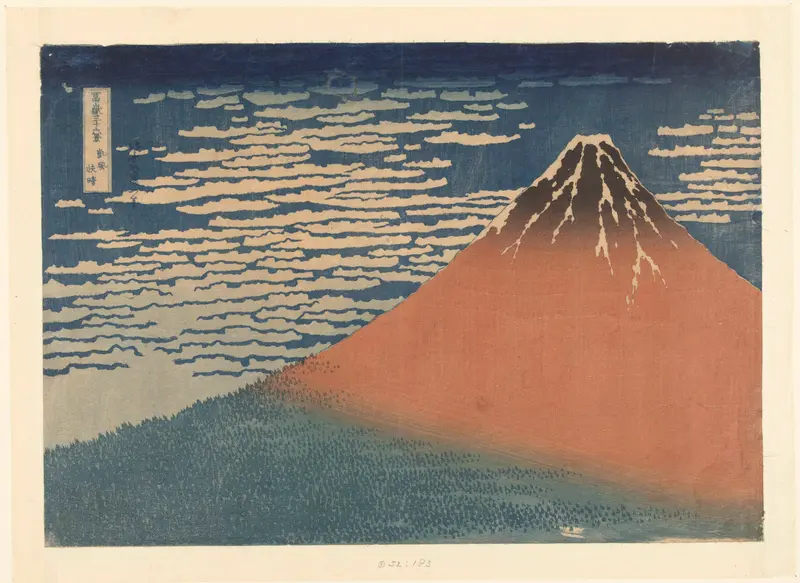
Clear Weather with a Southerly Wind
Katsushika Hokusai
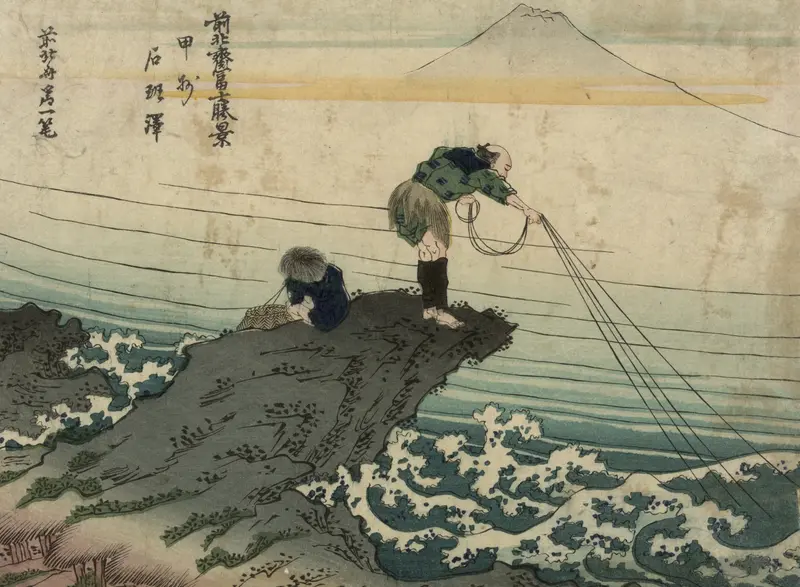
Kōshū kajikazawa
Katsushika Hokusai
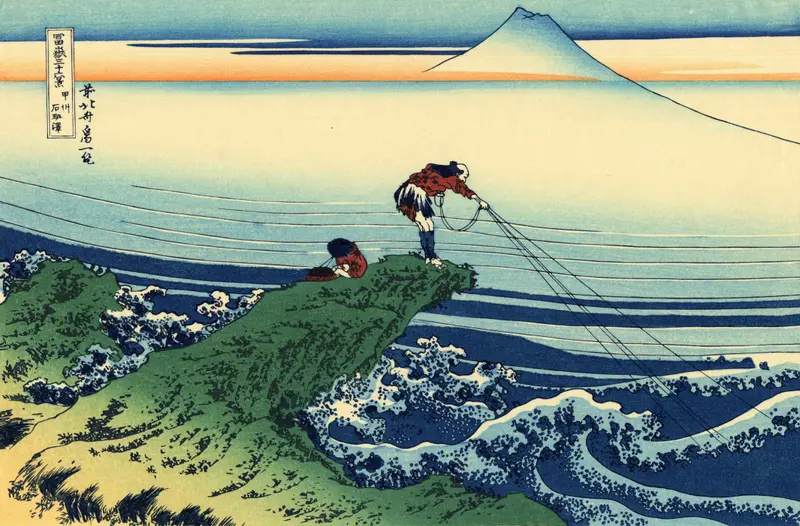
Kōshū kajikazawa 2
Katsushika Hokusai
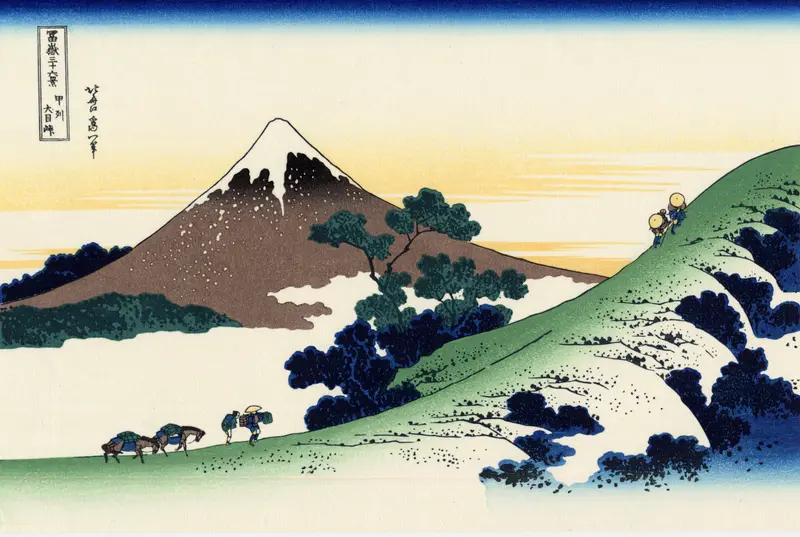
Inume Pass in Kai Province (Kôshû inume-tôge)
Katsushika Hokusai

Yoro Falls in Mino Province (Mino no Yoro no taki), from the series "A Tour of Waterfalls in Various Provinces (Shokoku taki meguri)"
Katsushika Hokusai
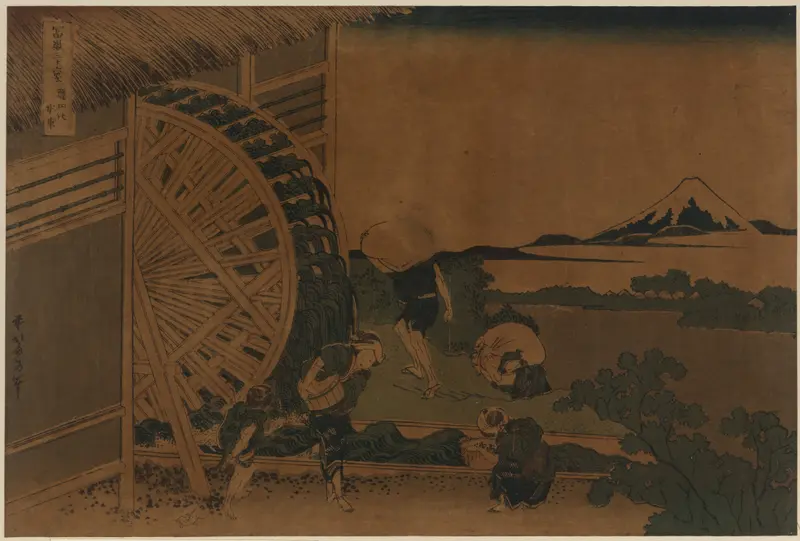
Onden no suisha
Katsushika Hokusai



