
Rustic life — History & Facts
A shaft of winter light slices through the gloom, catching on the hands of a man bent over his work, the glint of a spinning wheel, and the steady gaze of a youth by the hearth. The warmth of the fire spills across the floor, painting the cat and the shoemaker’s boots with flickering orange. Every object in the cramped wooden room feels chosen for a reason: the spools overhead, the battered stool, the pipe in the standing man’s hand.
Here, Akseli Gallen-Kallela draws us into a world where labor and life are inseparable, where each figure’s absorption hints at a rhythm older than the painting itself. The composition leads the eye from the concentration of the craftsman to the quiet industry of the spinner, then to the thoughtful watcher—each absorbed in their own moment, yet bound by the same shared space. Painted in 1887, this scene belongs to a time when artists across Europe were turning their gaze to the realities of rural existence, finding dignity and quiet drama in daily toil. In Finland, where Gallen-Kallela would become a central figure, such images were part of a broader search for national identity and a celebration of folk traditions.
Works like this, now in the Bukowskis collection, were rarely grand commissions; rather, they were intimate studies, often destined for private homes or local exhibitions, capturing the textures and routines that defined a people’s sense of place. History has kept few traces of the specific lives shown here, but the painting’s careful observation invites us to linger, to imagine the stories that filled this room long after the brush was set down.
More Artworks by Akseli Gallen-Kallela
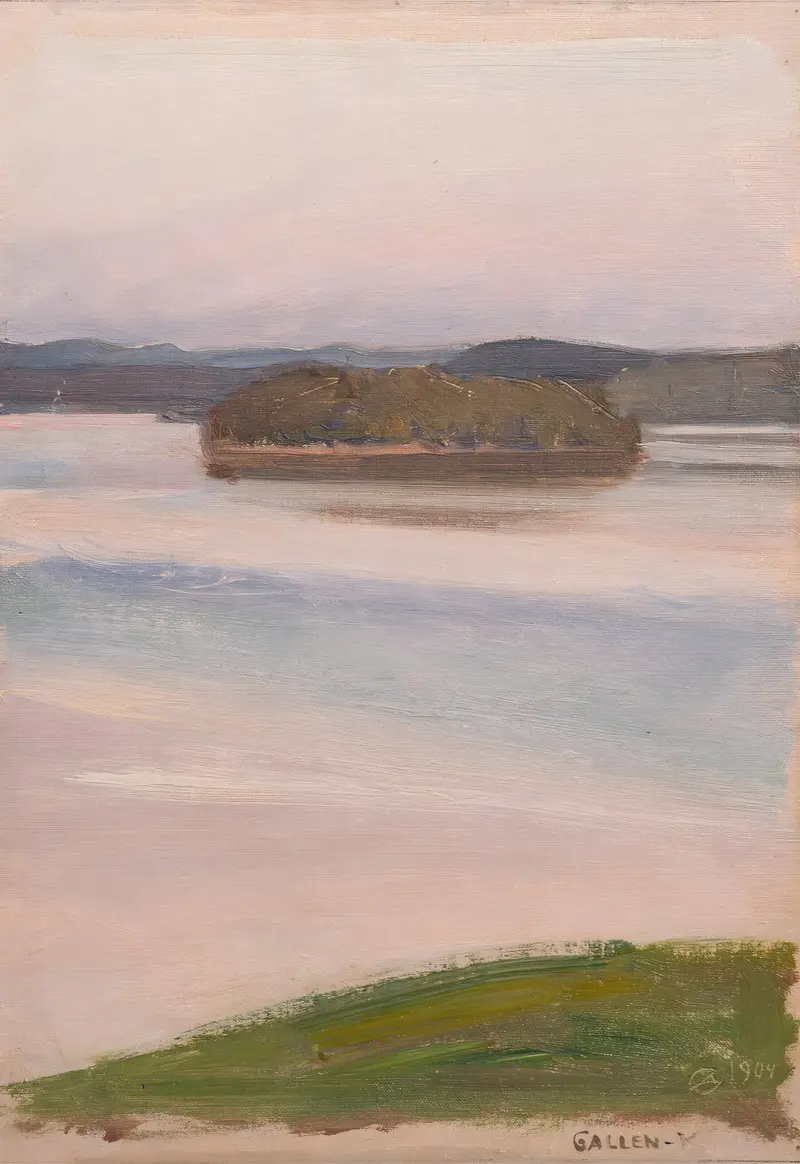
Lake Keitele
Akseli Gallen-Kallela
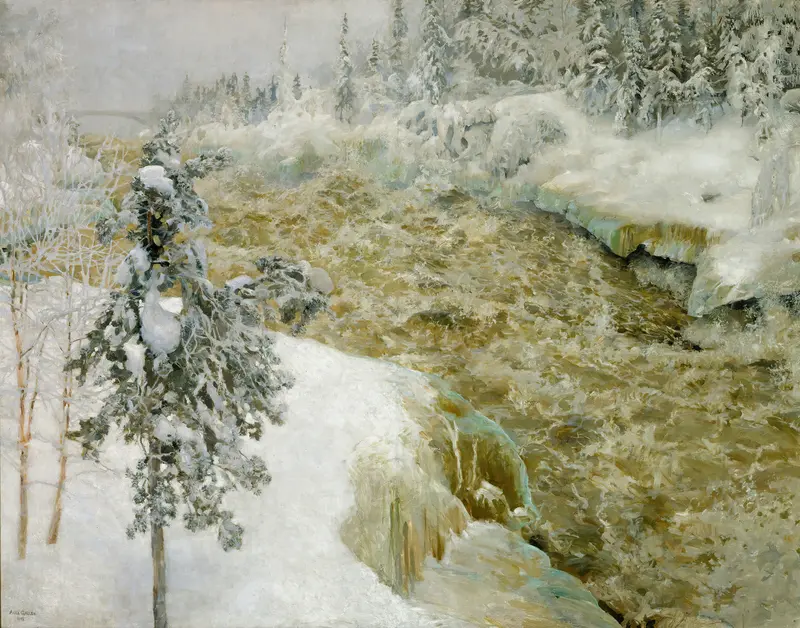
Imatra Falls in Snow ; Imatra in Winter
Akseli Gallen-Kallela
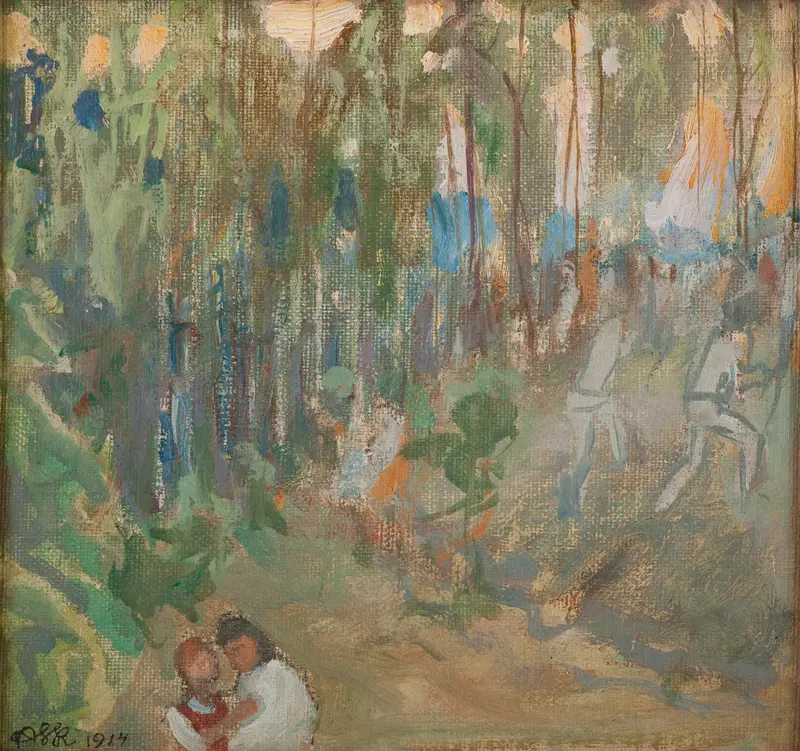
Vainovalkeat
Akseli Gallen-Kallela
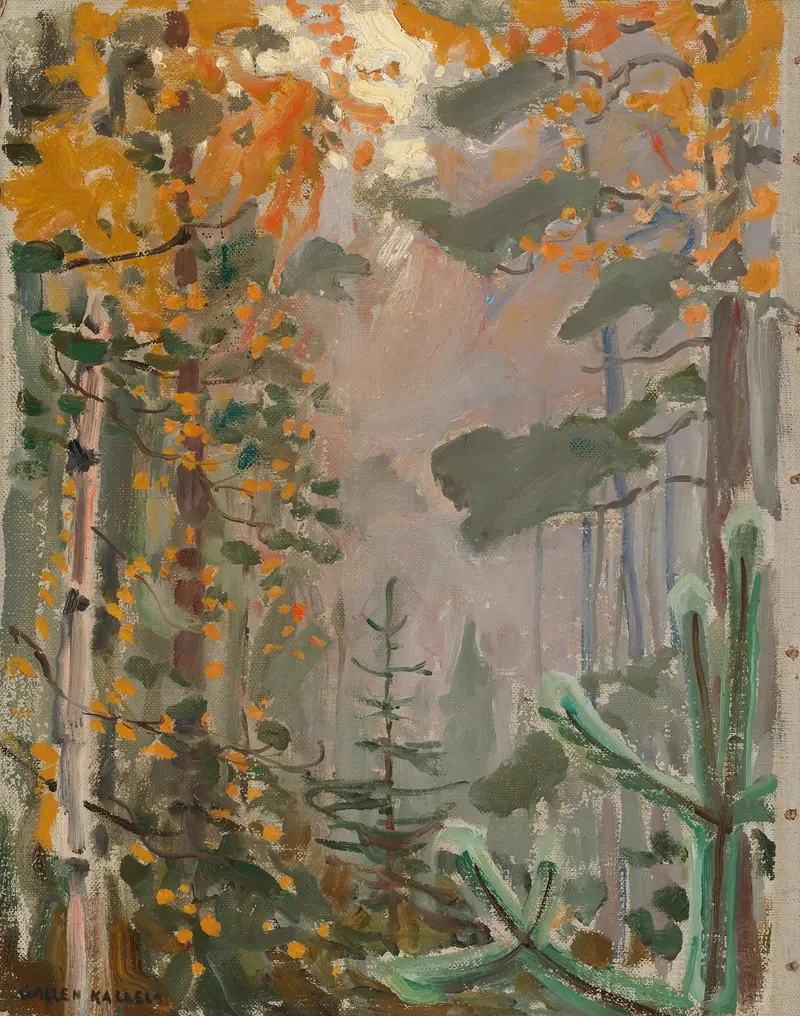
Autumn Landscape
Akseli Gallen-Kallela
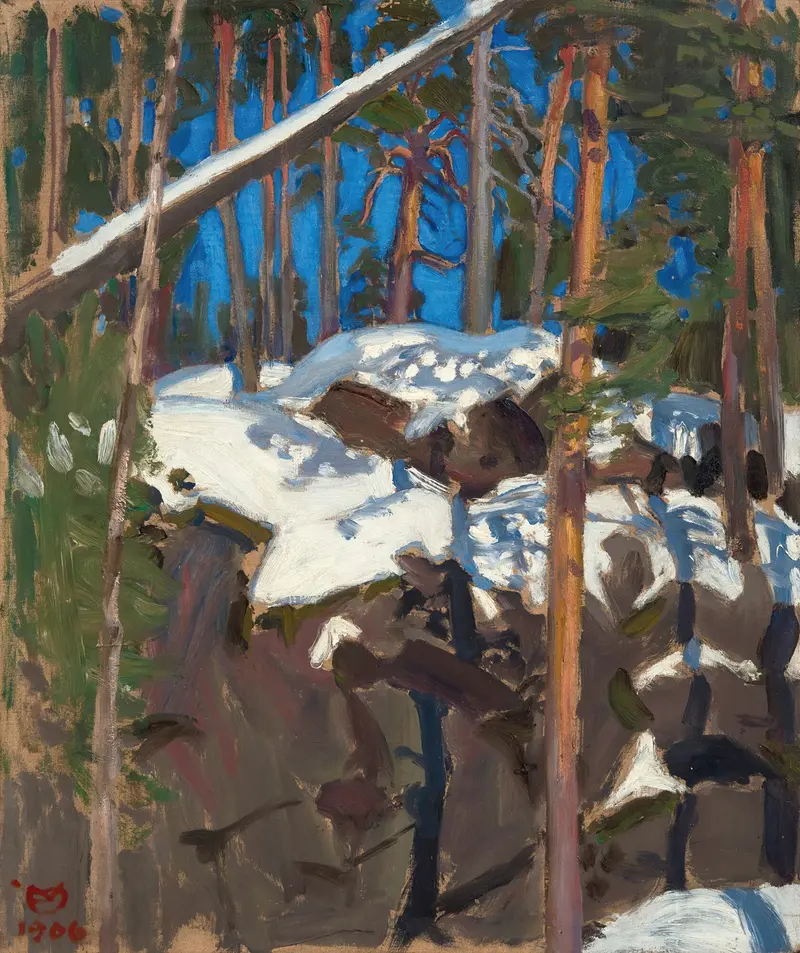
Spring Sun At Konginkangas
Akseli Gallen-Kallela
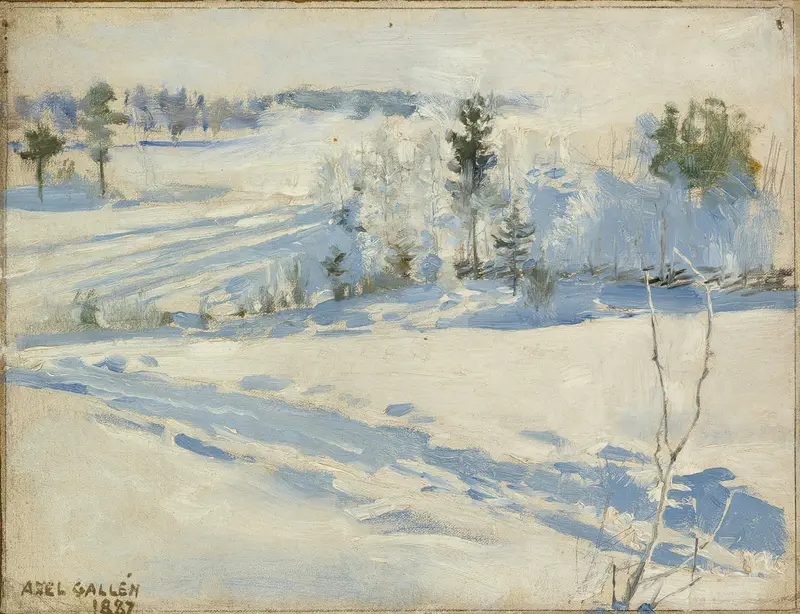
Winter Landscape
Akseli Gallen-Kallela

First Snow
Akseli Gallen-Kallela
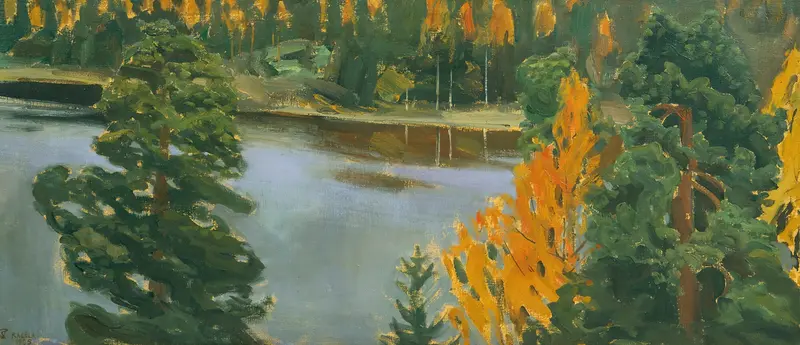
Lake View In Autumn
Akseli Gallen-Kallela
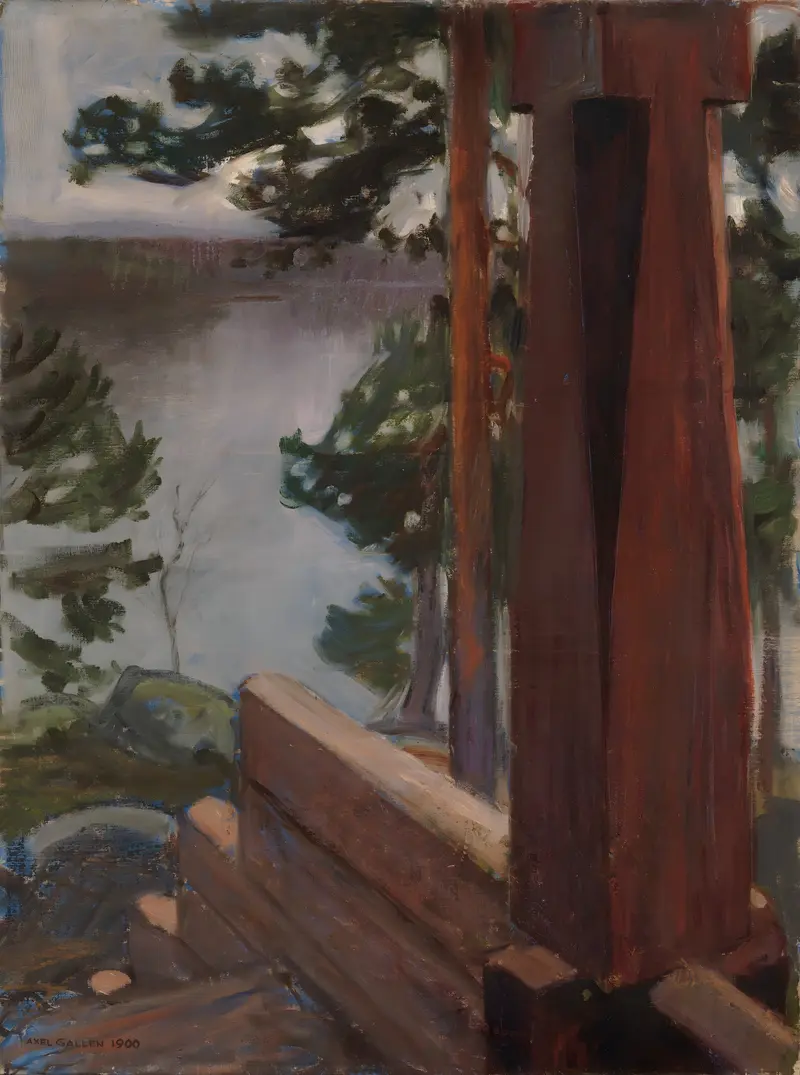
The Kalela Porch
Akseli Gallen-Kallela

Light Behind The Clouds
Akseli Gallen-Kallela
More Genre Scene Art

Banquet of the Officers of the St George Civic Guard
Frans Hals

Rembrandt and Saskia in the Scene of the Prodigal Son
Rembrandt van Rijn

Bal du moulin de la Galette
Pierre-Auguste Renoir

Quadrille at the Moulin Rouge
Henri de Toulouse-Lautrec

A Burial at Ornans
Gustave Courbet

When Will You Marry?
Paul Gauguin