
Small Gleaner Sitting in the Field — History & Facts
When Small Gleaner Sitting in the Field was first exhibited in 1853, Jules Breton was just beginning to attract attention for his sympathetic portrayals of rural life—a subject that, at the time, was often overlooked by the Parisian art world. This painting stands out as one of Breton’s earliest explorations of the gleaner motif, a theme that would later become central to his reputation and even spark debate about the dignity and hardship of peasant labor. The work predates his more famous The Gleaners by several years, marking a pivotal moment when the artist turned his gaze from historical scenes to the everyday realities of the French countryside. At the heart of the composition sits a solitary young girl, her small form dwarfed by the vast, sunlit field that stretches behind her.
She pauses in her labor, clutching a handful of wheat, her gaze lowered in a moment of rest or reflection. The worn clothing and bare feet speak to her poverty, while the golden light bathing her figure suggests both the warmth of the land and the harshness of her toil. Unlike Jean-François Millet’s more monumental gleaners, Breton’s subject is intimate and individualized, inviting the viewer to consider not just the collective plight of the rural poor, but the quiet resilience of a single child. The exact provenance of Small Gleaner Sitting in the Field remains uncertain, as records from the early years of Jules Breton’s career are incomplete.
It is known that Breton’s early gleaner paintings were often purchased by provincial collectors, reflecting a growing interest in scenes of rural labor during the mid-19th century. Over time, works like this helped establish Breton as a leading figure of the Realist movement, celebrated for his ability to blend documentary detail with a sense of empathy. Today, this painting is recognized as a key step in Breton’s artistic evolution, though its current location and medium are not firmly documented.
More Artworks by Jules Breton

The Song of the Lark
Jules Breton
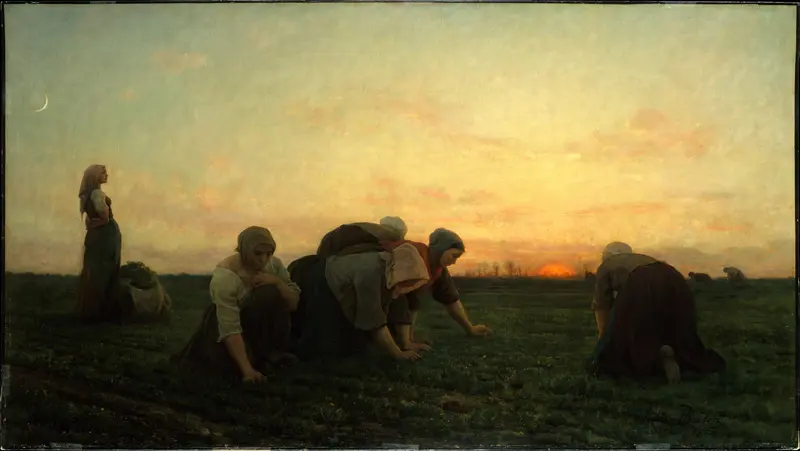
The Weeders
Jules Breton
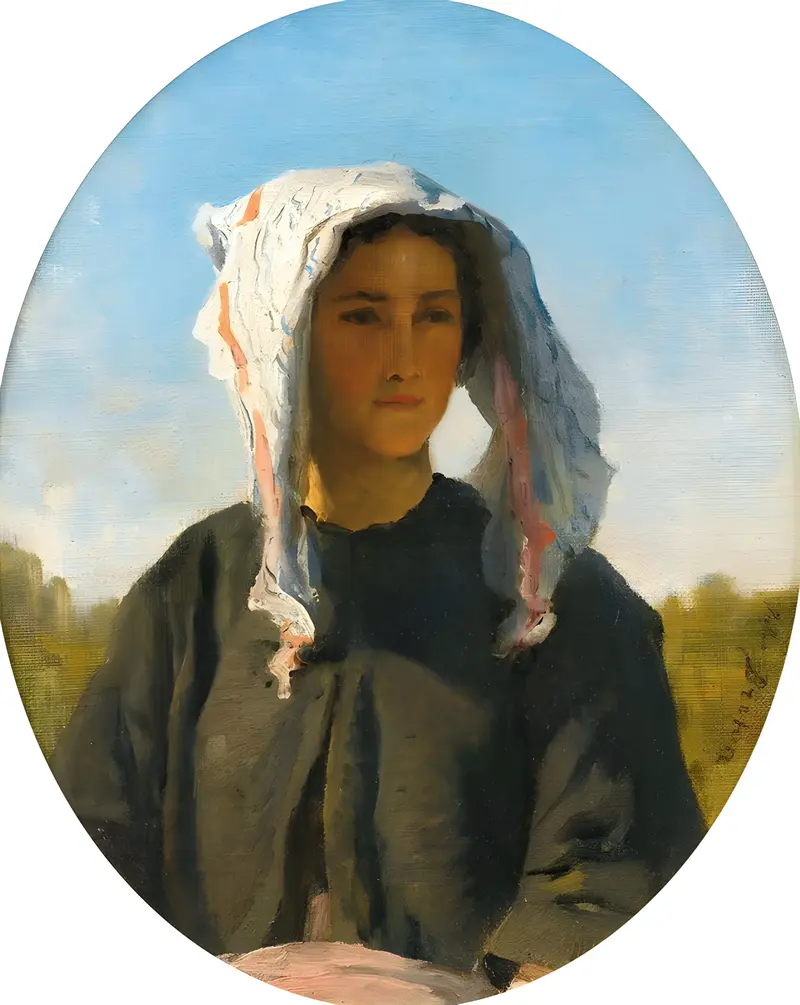
Portrait de jeune Paysanne Bordelaise
Jules Breton
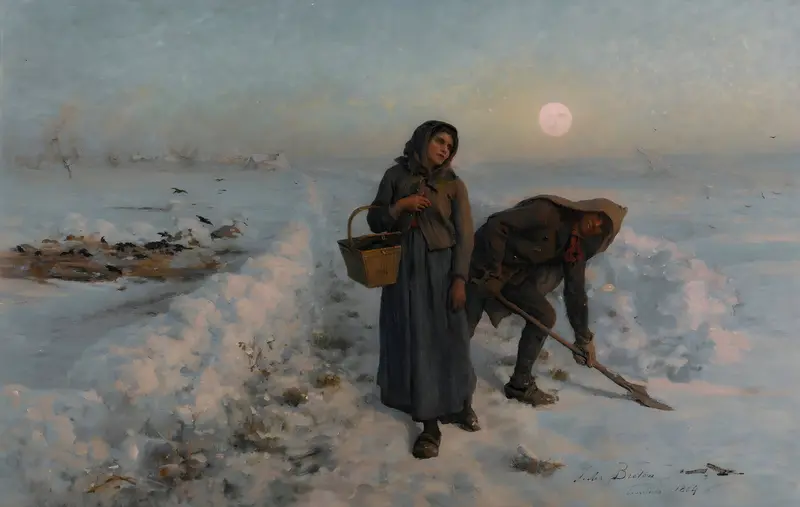
Sur la route en hiver; artois
Jules Breton
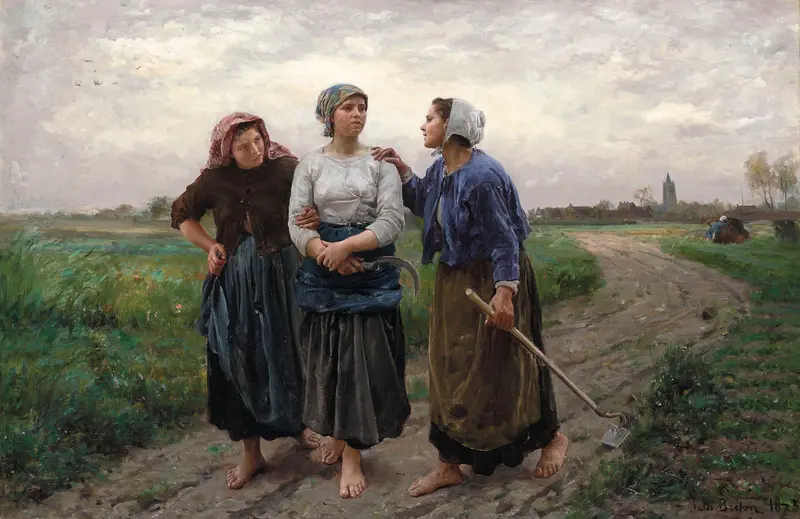
Les amies
Jules Breton
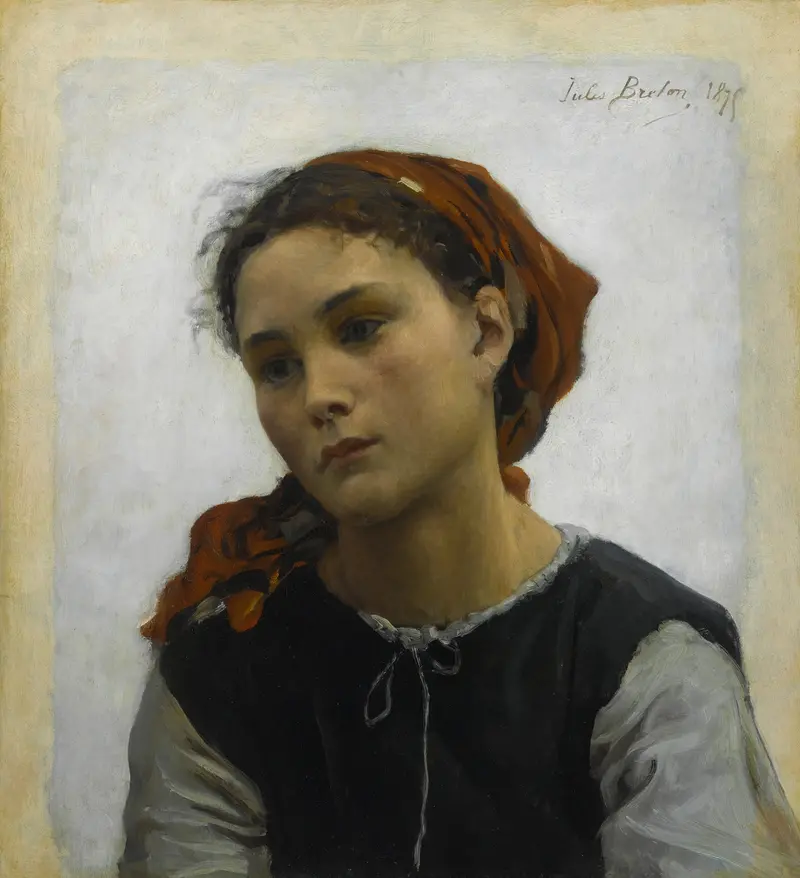
Innocente
Jules Breton
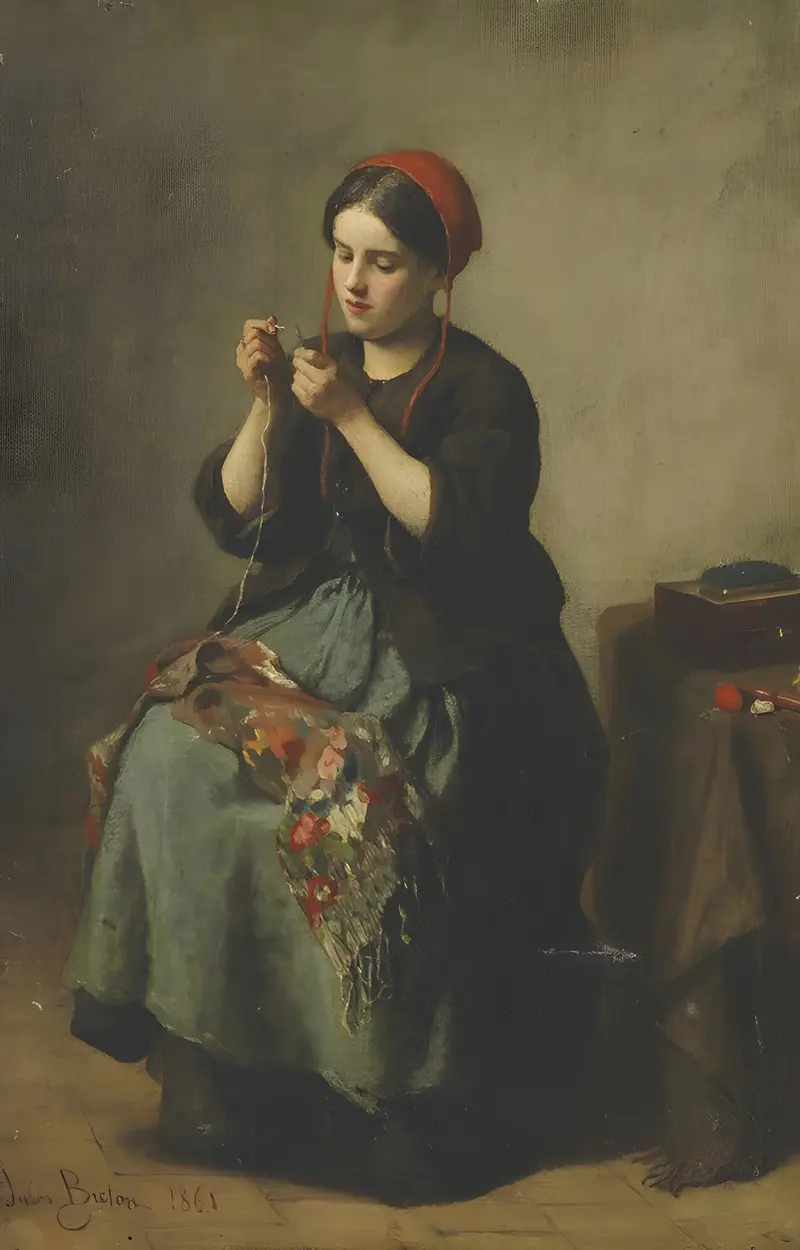
Peasant woman threading a needle
Jules Breton
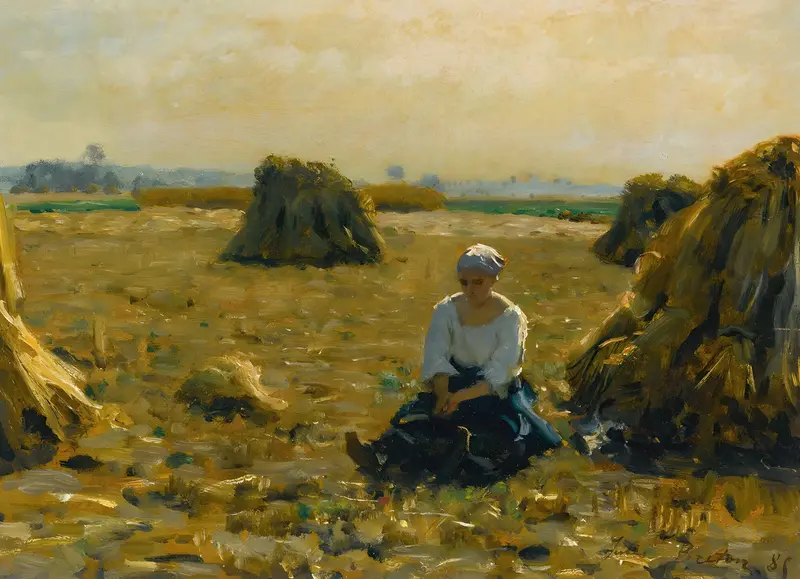
Jeune femme dans les champs
Jules Breton
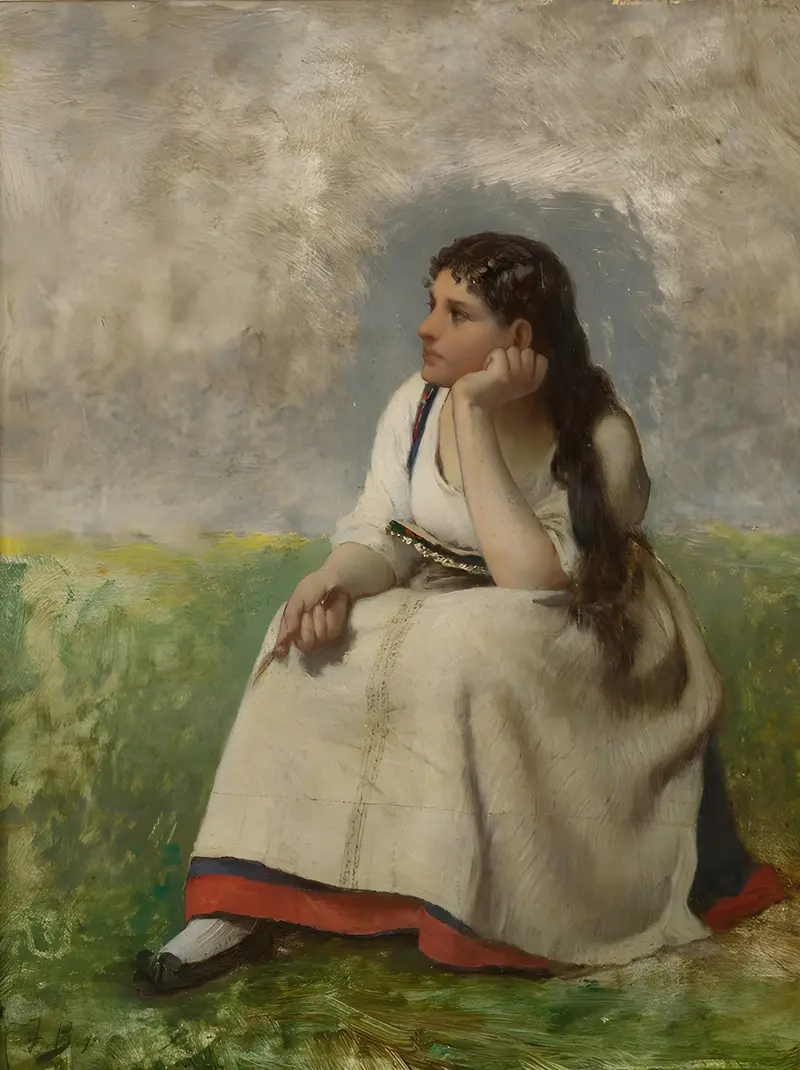
Jeune Fille Pensive
Jules Breton
Returning from the Fields
Jules Breton
More Genre Scene Art

Banquet of the Officers of the St George Civic Guard
Frans Hals

Rembrandt and Saskia in the Scene of the Prodigal Son
Rembrandt van Rijn

Bal du moulin de la Galette
Pierre-Auguste Renoir

Quadrille at the Moulin Rouge
Henri de Toulouse-Lautrec

A Burial at Ornans
Gustave Courbet

When Will You Marry?
Paul Gauguin