
Study of a Female Figure with a Putto — History & Facts
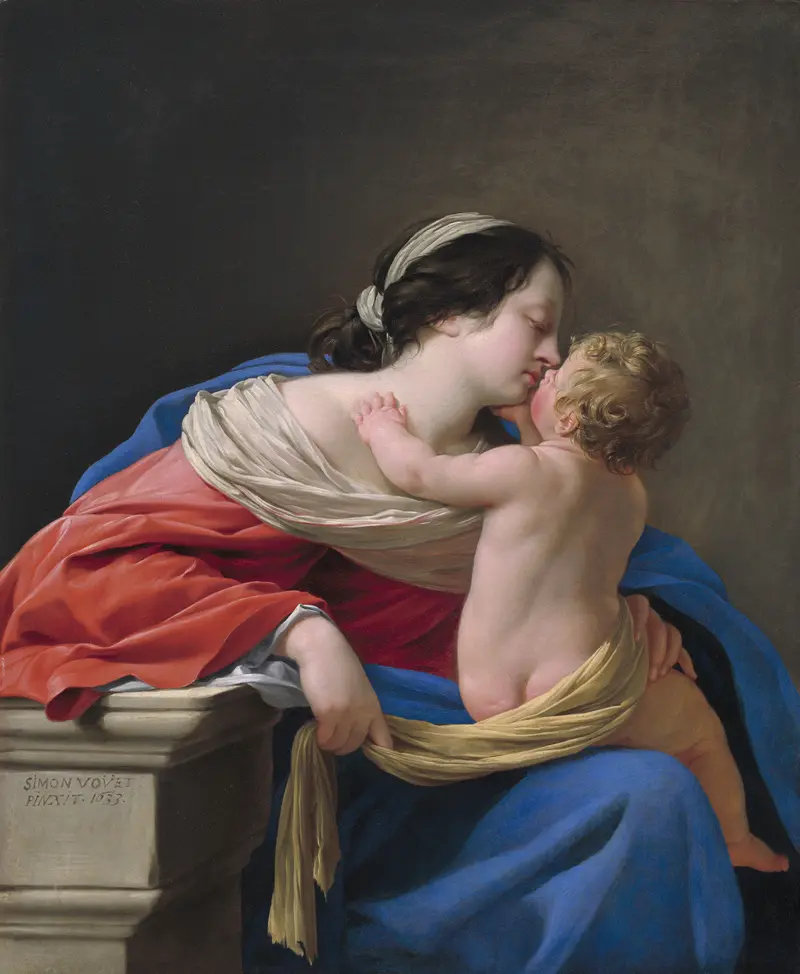
Few artists shaped the visual language of early seventeenth-century France as decisively as Simon Vouet, and yet Study of a Female Figure with a Putto remains a puzzle within his prolific output. Unlike Vouet’s grand commissions for the French court or his celebrated religious altarpieces, this work is neither securely dated nor tied to a known patron, leaving scholars to speculate whether it was a preparatory study for a lost painting, a teaching model for his studio, or an independent exercise in figural invention. Its survival offers a rare glimpse into Vouet’s working process at a moment when he was redefining French painting by blending Italianate drama with Parisian elegance. The scene captures a young woman, her body gently twisting as she interacts with a putto—one of those mischievous, winged children borrowed from classical mythology and Renaissance art.
The woman’s gaze, directed downward, and her open gesture suggest a moment of tender instruction or gentle admonition, while the putto’s upturned face and outstretched arm animate the composition with playful energy. Vouet’s handling of drapery, with its sweeping folds and soft highlights, recalls the Roman works of Guido Reni, yet the intimacy and immediacy of the figures are distinctly his own. The putto, often a symbol of love or divine presence, here serves to humanize the female figure, drawing the viewer into a private, almost domestic exchange. The precise origins of Study of a Female Figure with a Putto remain uncertain, as does its original function.
Works like this were common in Vouet’s studio, where he trained a generation of French painters, and such studies often circulated among pupils or patrons as models of composition and technique. The painting’s journey through collections is not fully documented, but its style and subject place it firmly within Vouet’s mature period, after his return from Italy in the 1620s. Today, it stands as both a testament to Vouet’s pivotal role in the transition from Mannerism to the French Baroque, and as a rare, intimate record of his creative process.
More Artworks by Simon Vouet

Portrait of Louis XIII
Simon Vouet
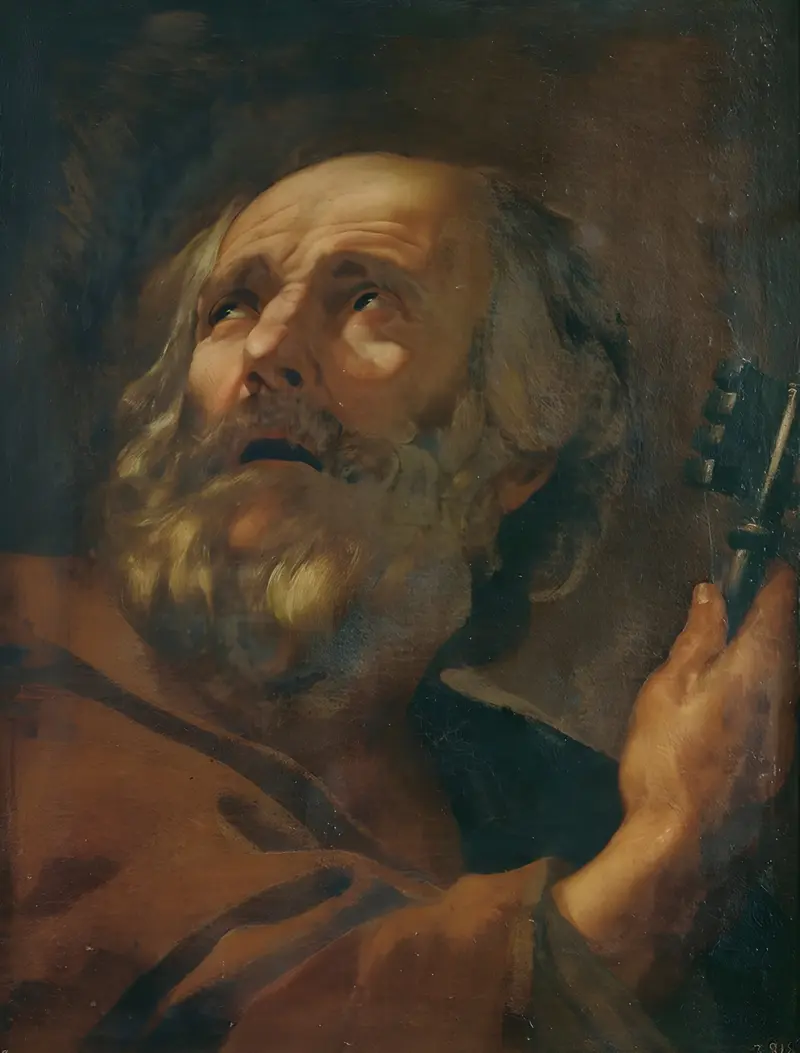
Saint Peter
Simon Vouet
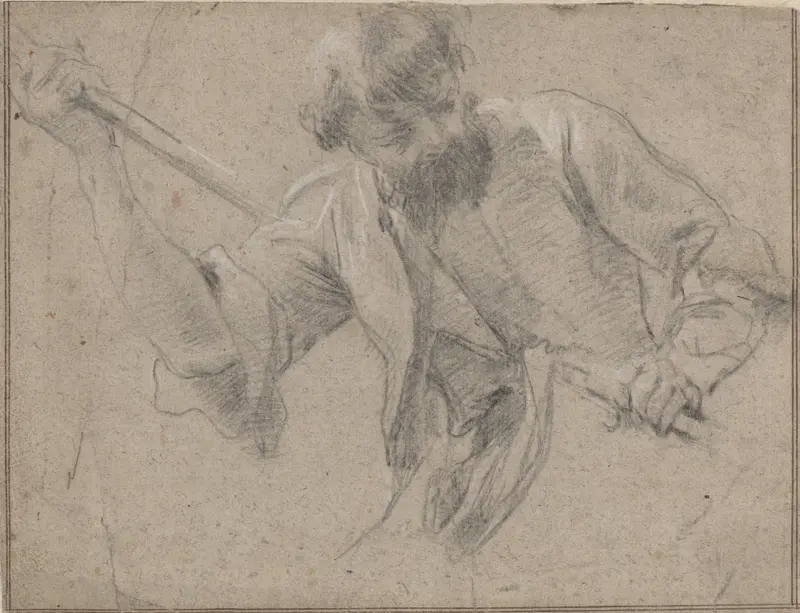
A Bearded Man with a Staff
Simon Vouet
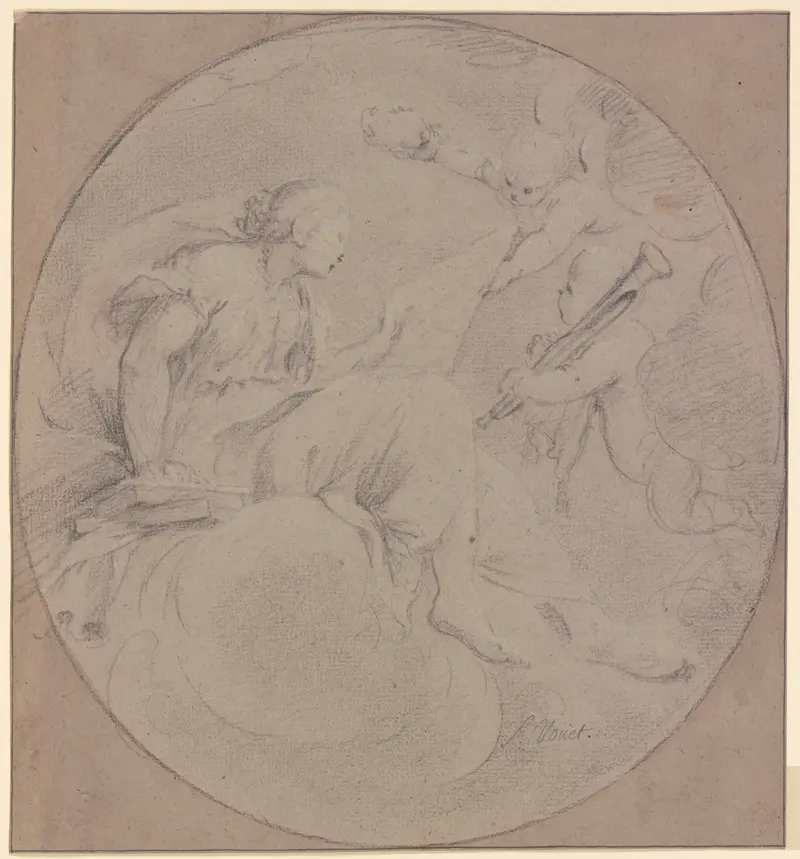
Die Muse der Musik mit zwei Genien, deren einer eine Trompete trägt
Simon Vouet
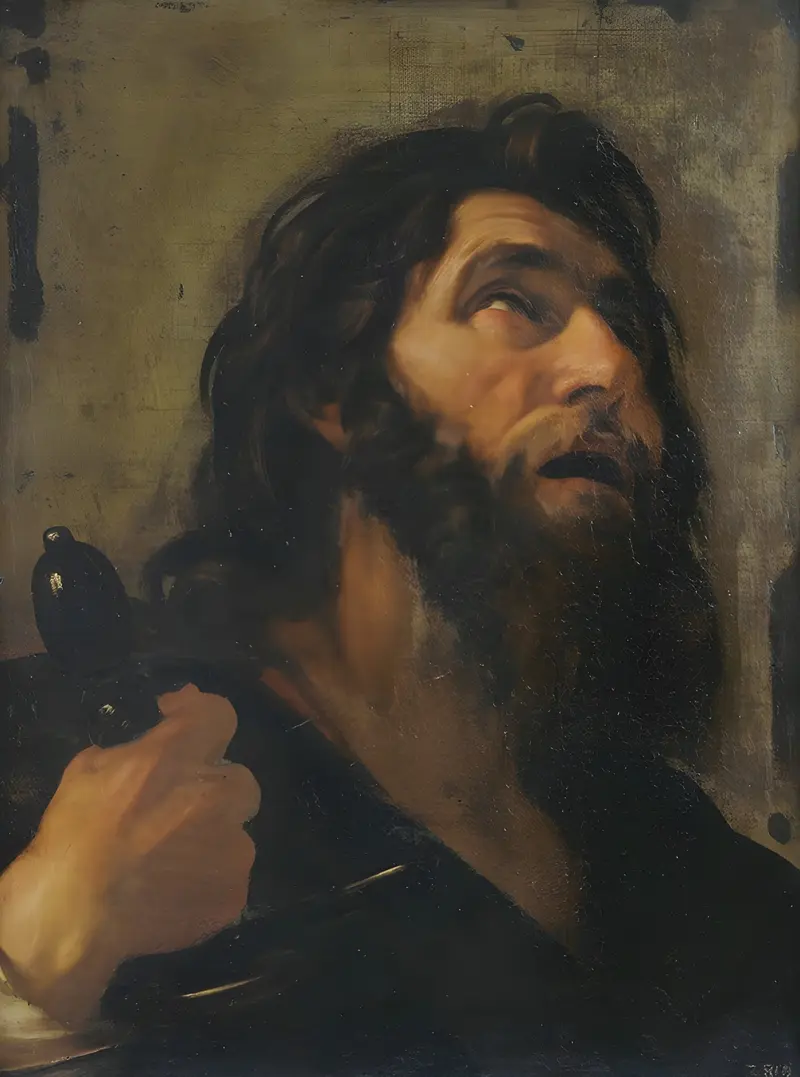
Saint Paul
Simon Vouet
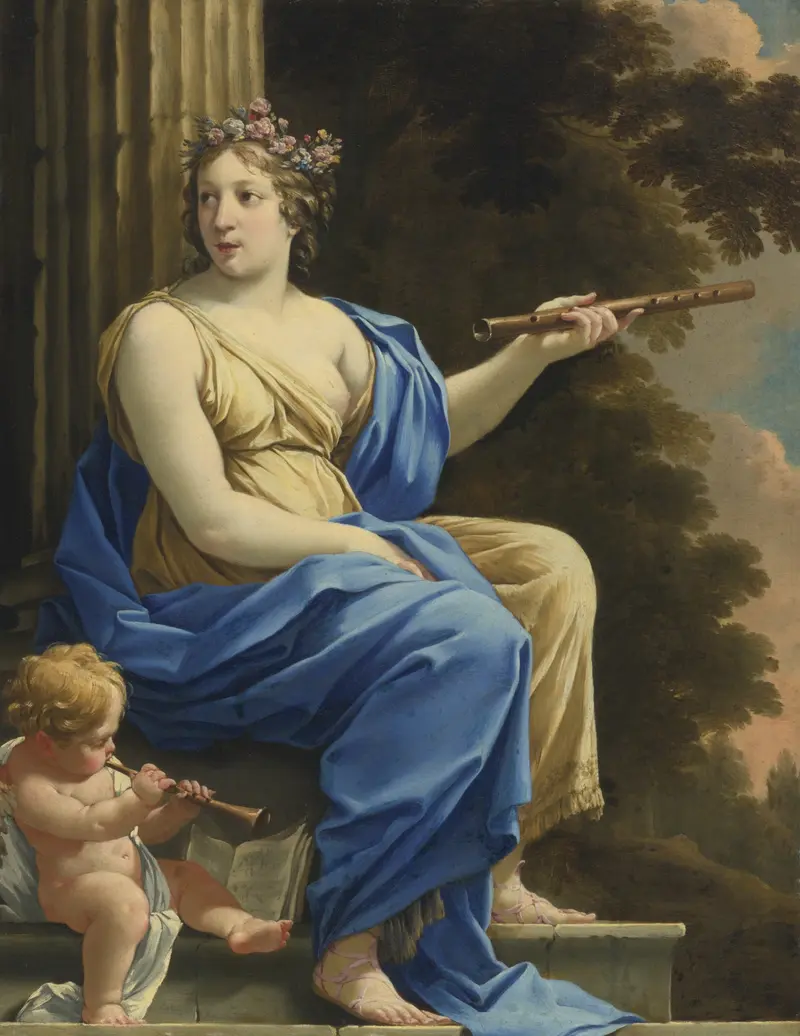
Euterpe, The Muse Of Music And Lyric Poetry
Simon Vouet
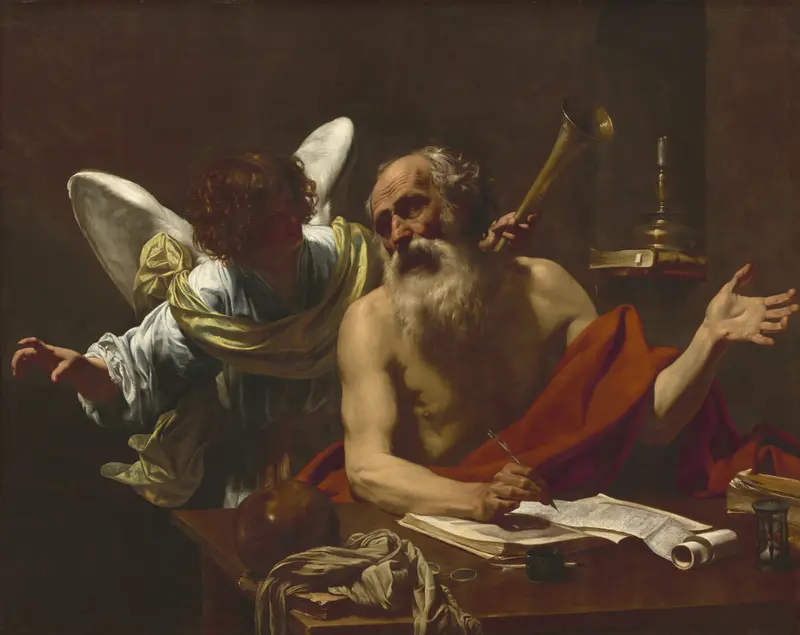
Saint Jerome and the Angel
Simon Vouet
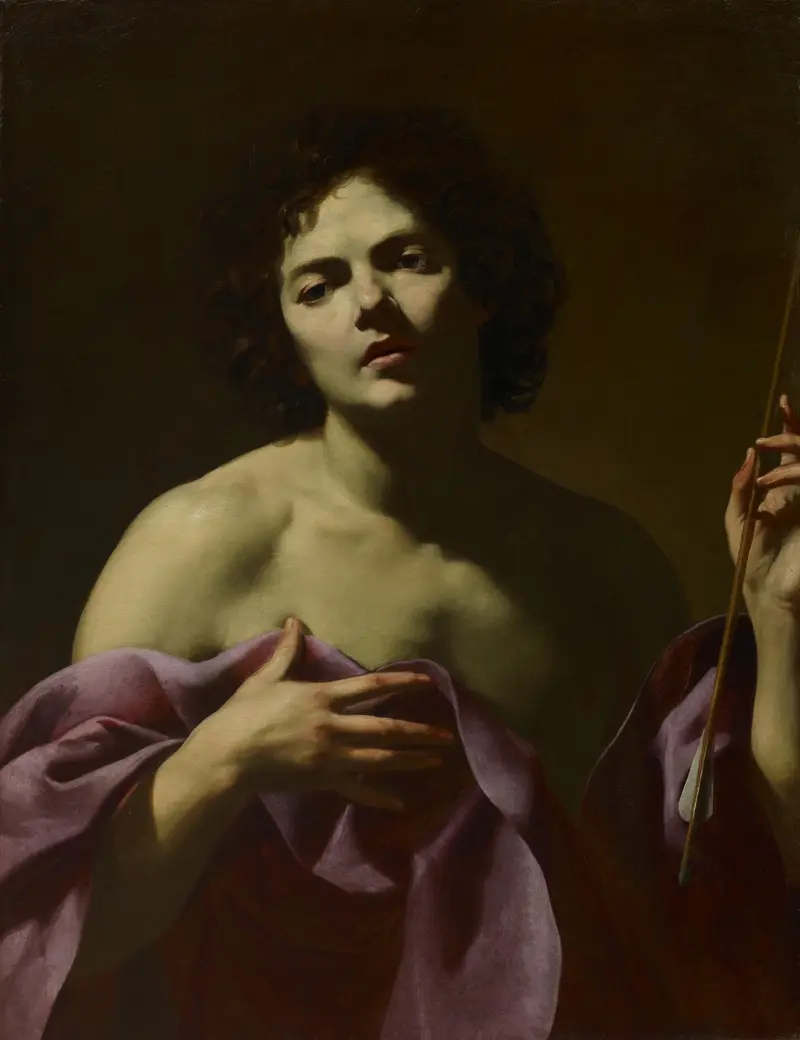
Saint Sebastian
Simon Vouet
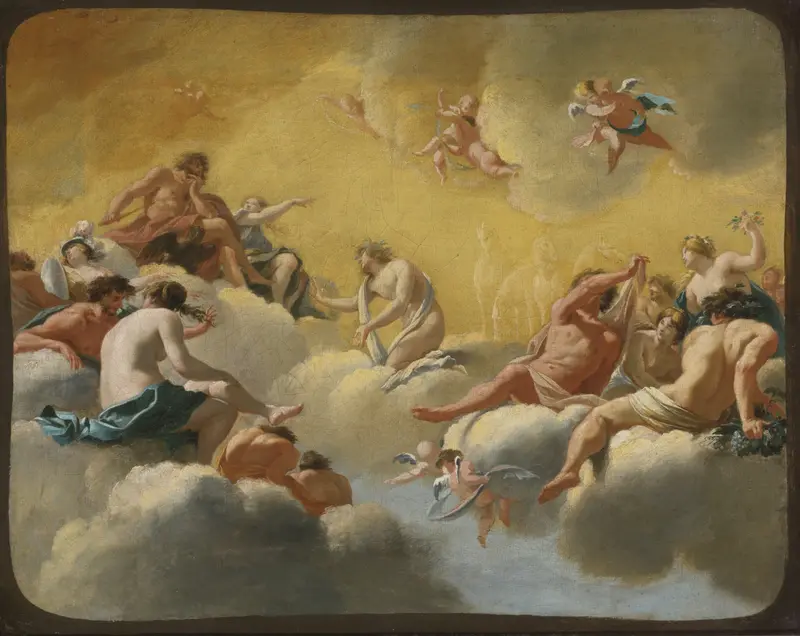
Assembly Of The Gods
Simon Vouet
Madonna and Child
Simon Vouet



