
Study of Three Figures — History & Facts
What grips the viewer first in Study of Three Figures is the charge of silent conversation: three men, each absorbed in a different register of thought, are locked together by a current of shared attention. The closest figure, his hand pressed to his mouth, is caught in a moment of anxious calculation or doubt, his furrowed brow and sidelong gaze drawing the eye to the tension in his pose. Behind him, two companions lean in, their faces half-shadowed, their eyes fixed on the same unseen point.
The light, warm and directional, sculpts their features and hands with a sculptor’s care, while the palette of ochres, reds, and deep blues sets a mood of gravity and inwardness. Every gesture here is a clue: the hand to the mouth, the knitted brows, the subtle lean forward — all speak of a moment heavy with decision or realization. Works like this, attributed to Jean-François de Troy and now found in collections such as Sotheby’s Lot.375, belong to a tradition where artists honed their craft through studies of expressive heads and hands, often for larger narrative paintings. In the eighteenth century, such studies were prized both as exercises in capturing human character and as objects of connoisseurship in their own right.
Theatricality and psychological depth were the hallmarks of the age, and painters like de Troy, working in the wake of the French Baroque, brought a new immediacy to the old academic genres. History has kept few traces of the specific stories behind many of these studies, but their power lies precisely in this ambiguity — inviting the viewer to linger, to read the faces, and to imagine the drama that binds these three men together.
More Artworks by Jean-François de Troy
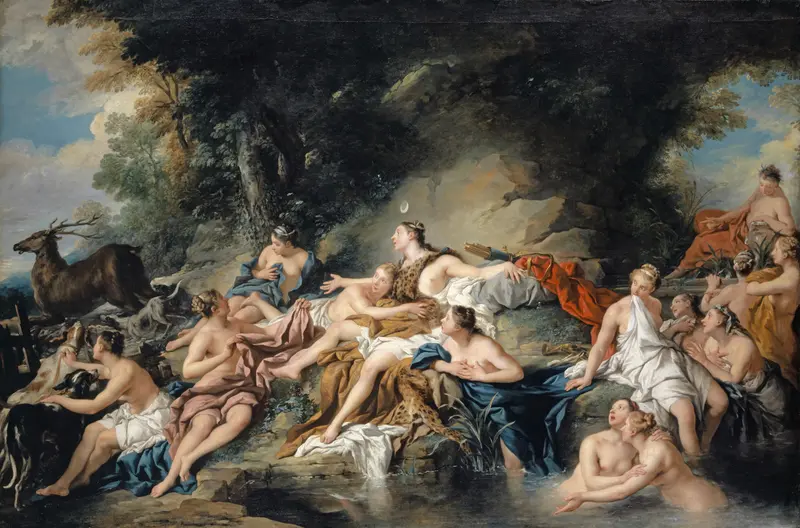
Diana and Actaeon
Jean-François de Troy
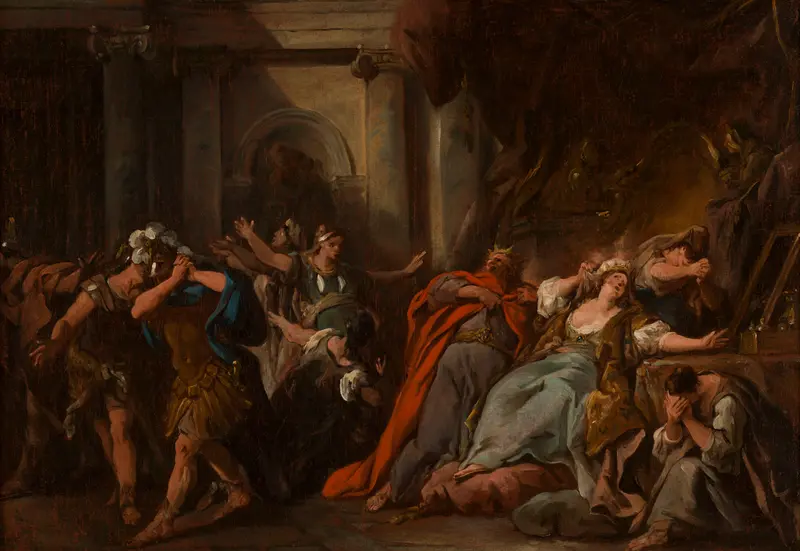
Créüse consumée par la robe empoisonnée
Jean-François de Troy
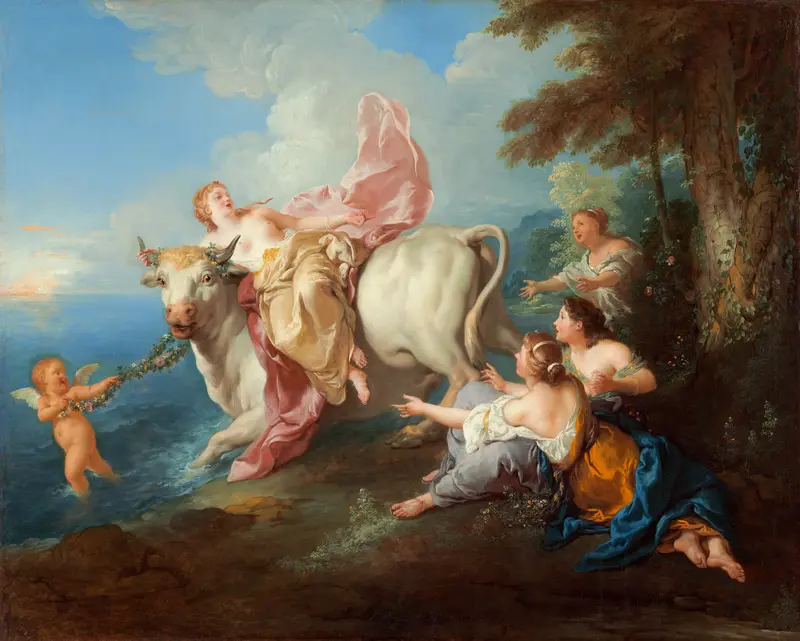
The Abduction of Europa
Jean-François de Troy
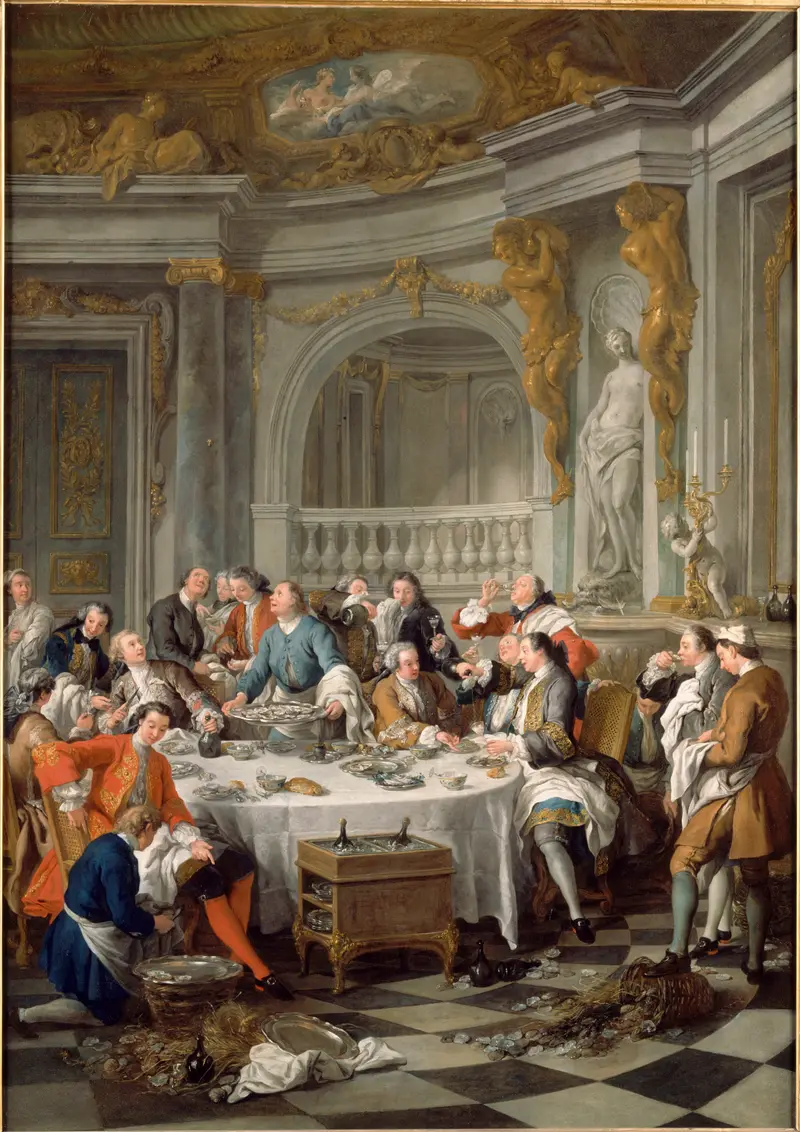
The Lunch of Oysters
Jean-François de Troy
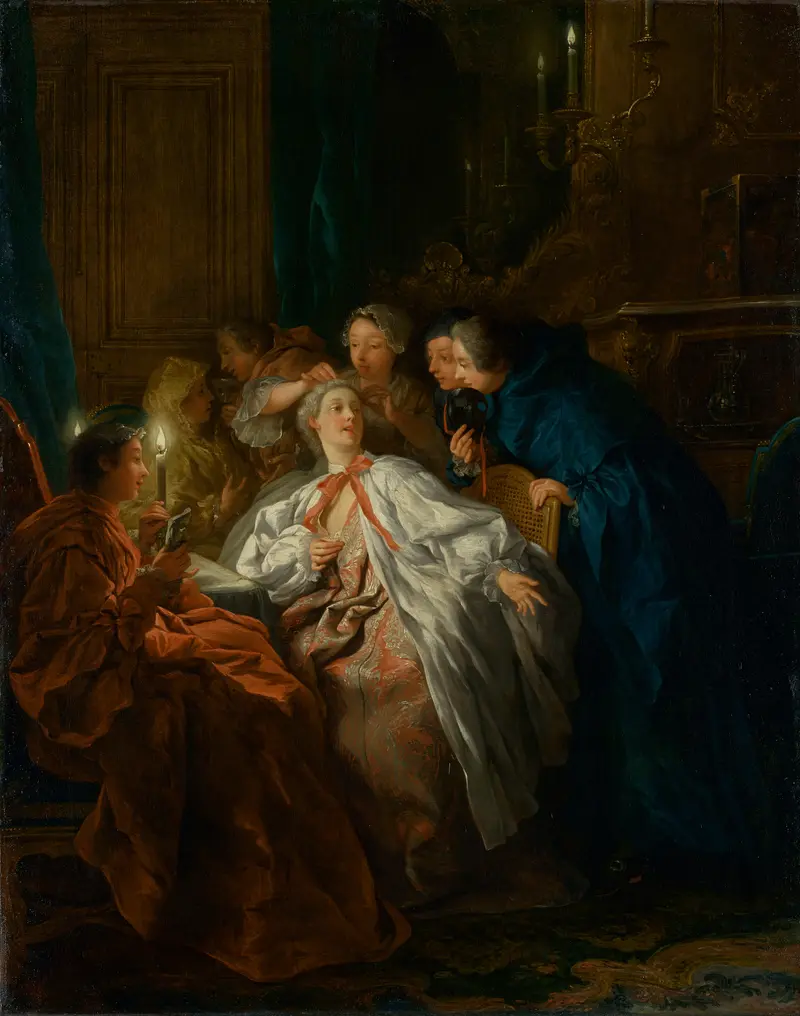
Before the Ball
Jean-François de Troy
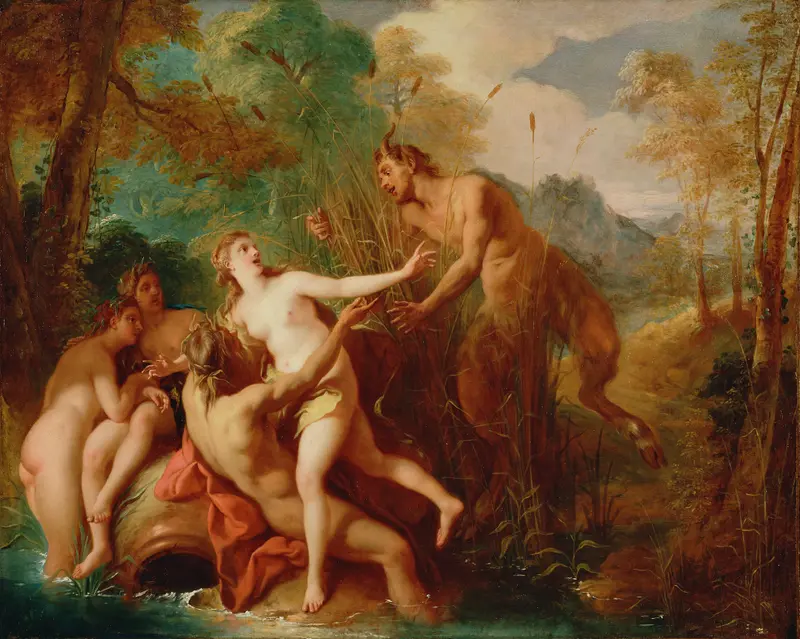
Pan and Syrinx
Jean-François de Troy

Le Combat des soldats nés des dents du serpent
Jean-François de Troy
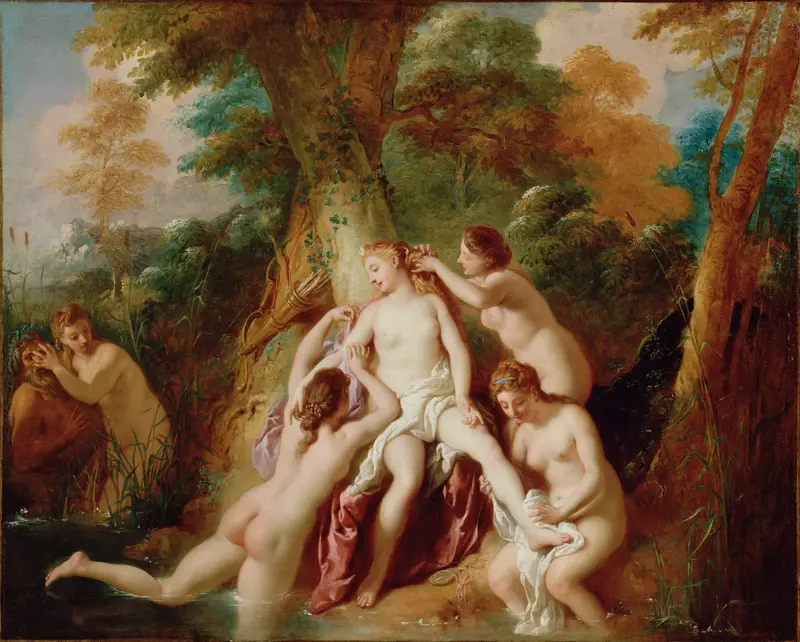
Diana and Her Nymphs Bathing
Jean-François de Troy
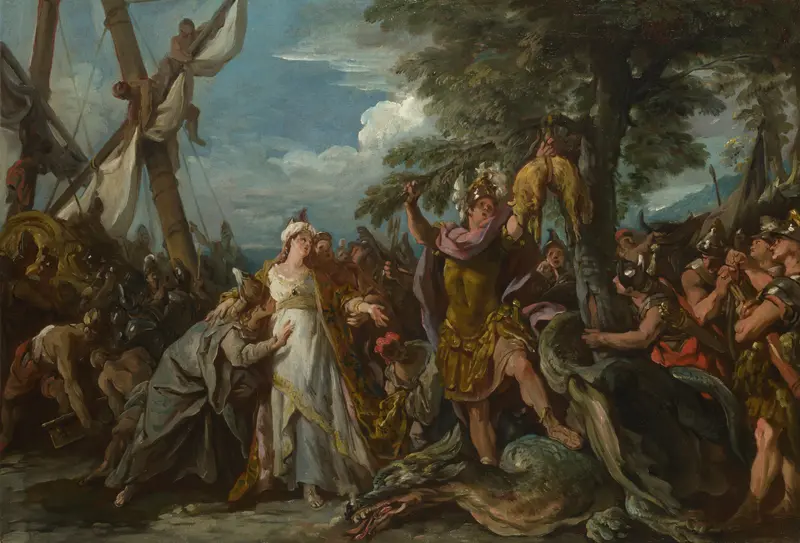
The Capture of the Golden Fleece
Jean-François de Troy

The Triumph of Mordecai
Jean-François de Troy



