
Subject Composition — History & Facts
A swirl of gold and emerald draws the viewer into a gathering that feels both intimate and theatrical. In Subject Composition, Adolphe Joseph Thomas Monticelli uses thick, impasto brushwork to conjure four women, their forms shimmering with movement and light. The eye is caught first by the figure in yellow, her back turned, as if she has just arrived or is about to speak—a gesture that invites us to imagine the conversation, the laughter, the secrets exchanged.
The other three, clustered together, seem to glow from within, their faces and dresses melting into the lush, textured background. Monticelli’s palette is rich and daring, the brushstrokes so lively that the scene feels half-remembered, as if glimpsed at dusk in a park or garden. This painting belongs to a world of fêtes galantes, a genre revived in 19th-century France by artists like Monticelli, who found inspiration in the elegant gatherings of the 18th century. These scenes, filled with fashionably dressed figures in lush outdoor settings, were never mere records of real events but invitations to dream of pleasure and refined company.
During his Paris years, Monticelli made such compositions his signature, echoing the spirit of Watteau but with a modern, almost abstract energy. The National Gallery’s example, painted probably between 1870 and 1890, stands as a vivid relic of that era’s longing for beauty and escape—its thick paint and glowing colors urging us to look again, and imagine the music just out of earshot.
More Artworks by Adolphe Monticelli

Portrait of a Lady
Adolphe Monticelli
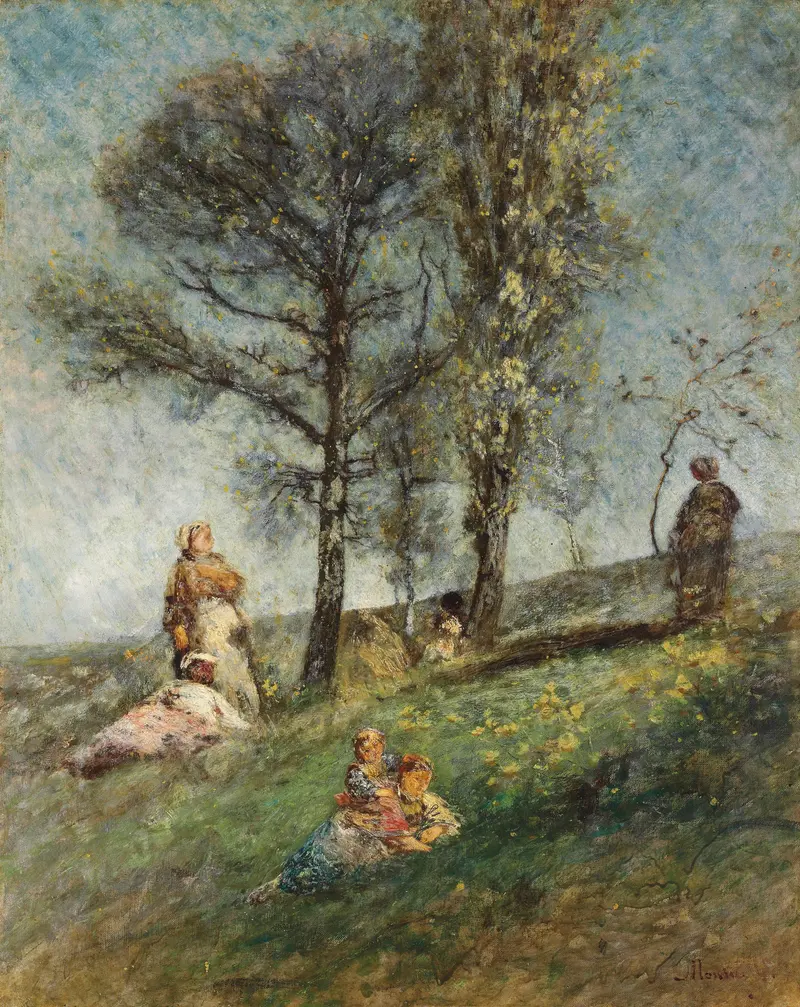
A Young Family Under Trees On A Hill
Adolphe Monticelli

Fête d'Après-Midi
Adolphe Monticelli
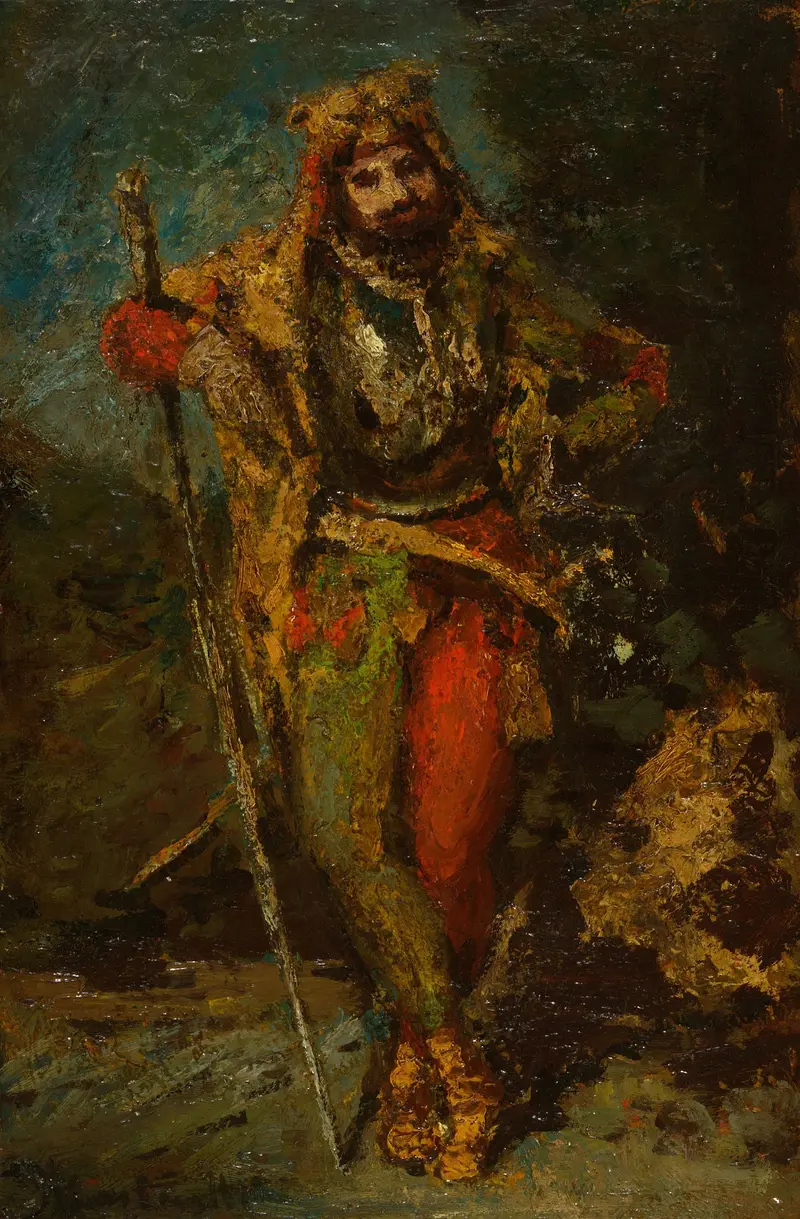
Mephisto from the Opera Faust
Adolphe Monticelli
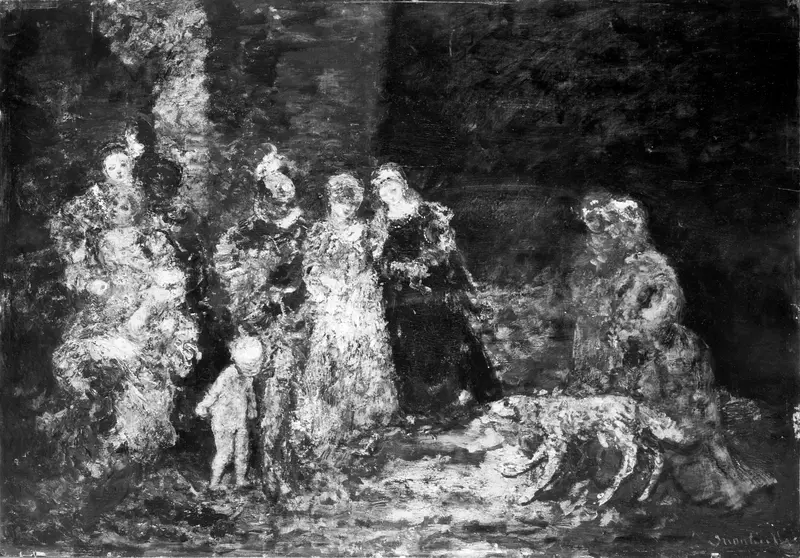
The Fairies
Adolphe Monticelli
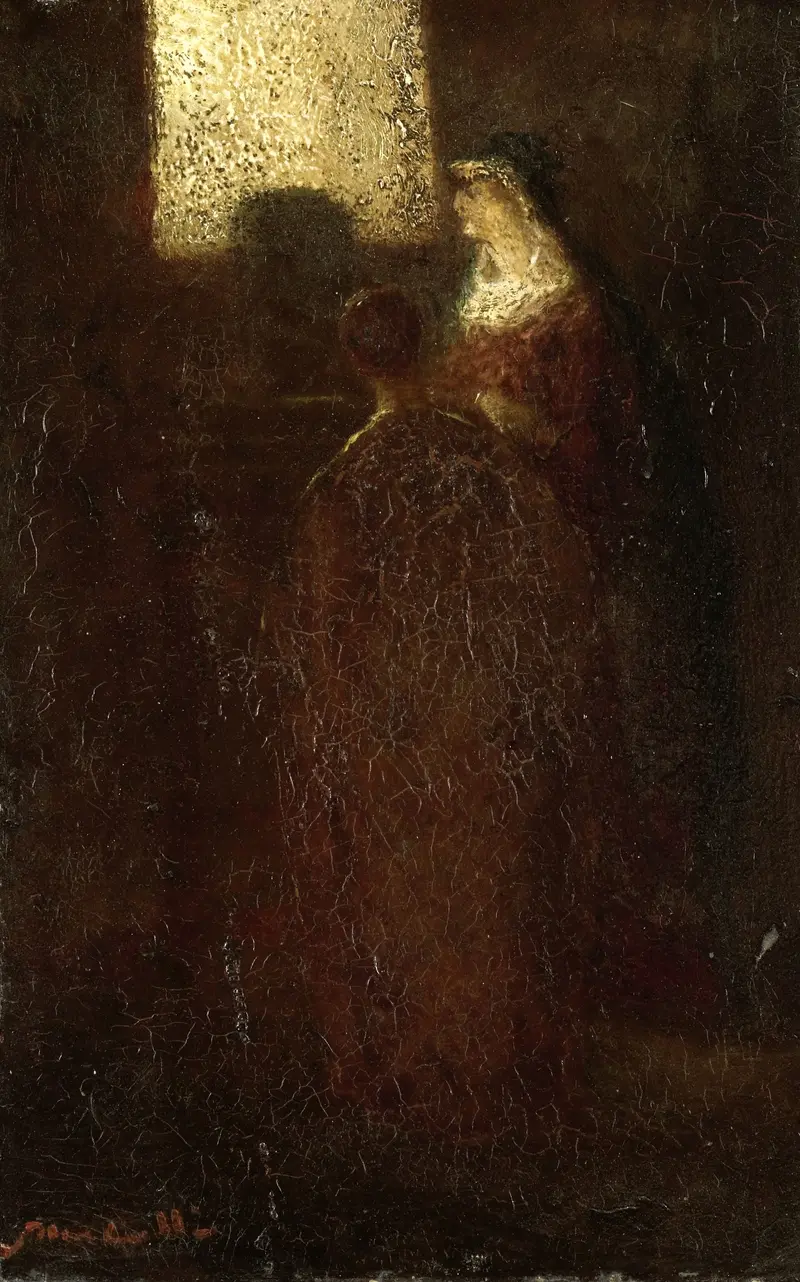
Aan het altaar
Adolphe Monticelli
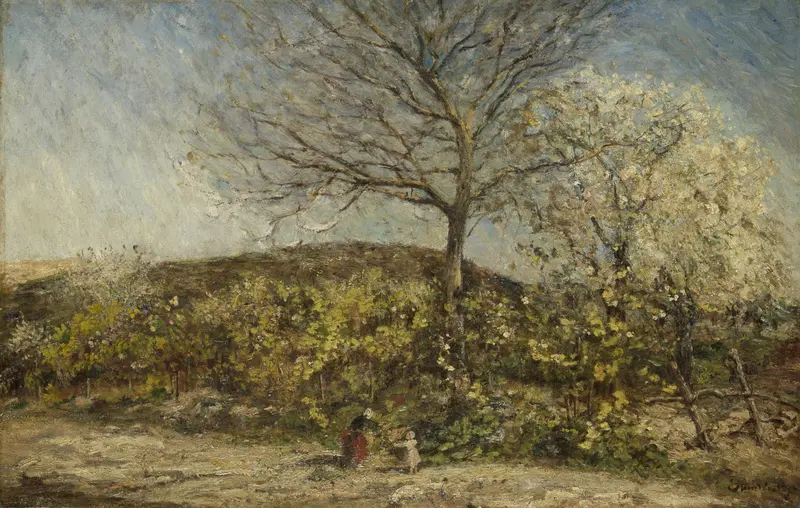
Landschap met bloeiende boomgaard
Adolphe Monticelli
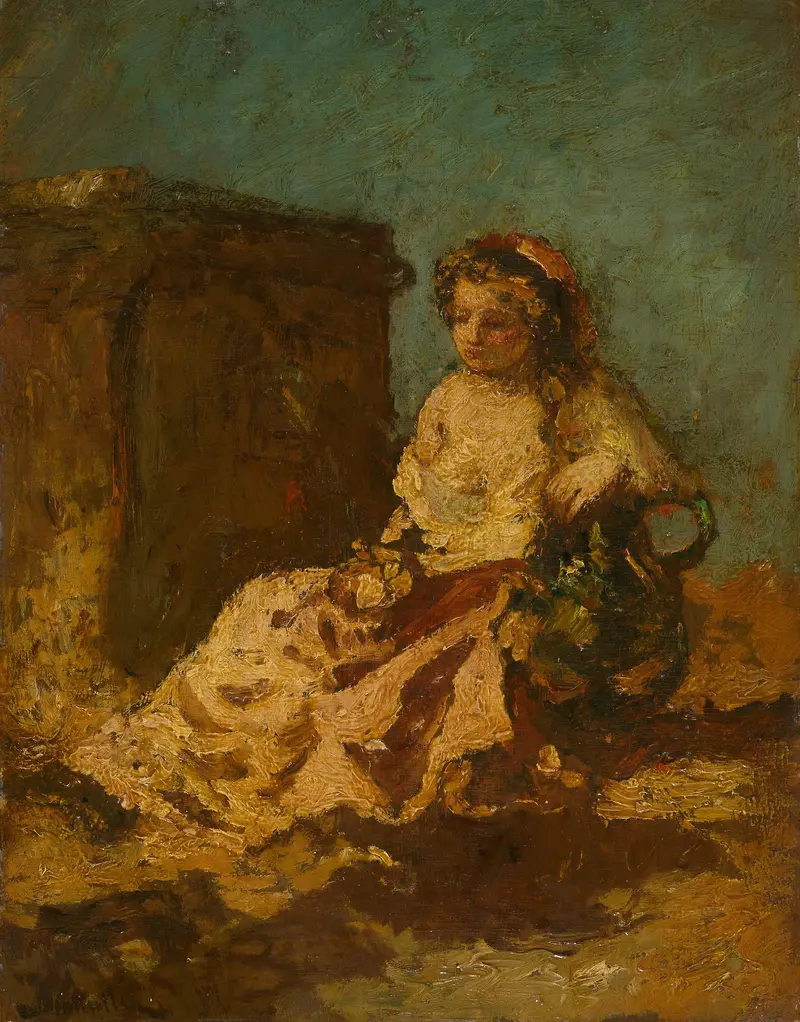
Meditation (Seated Woman)
Adolphe Monticelli
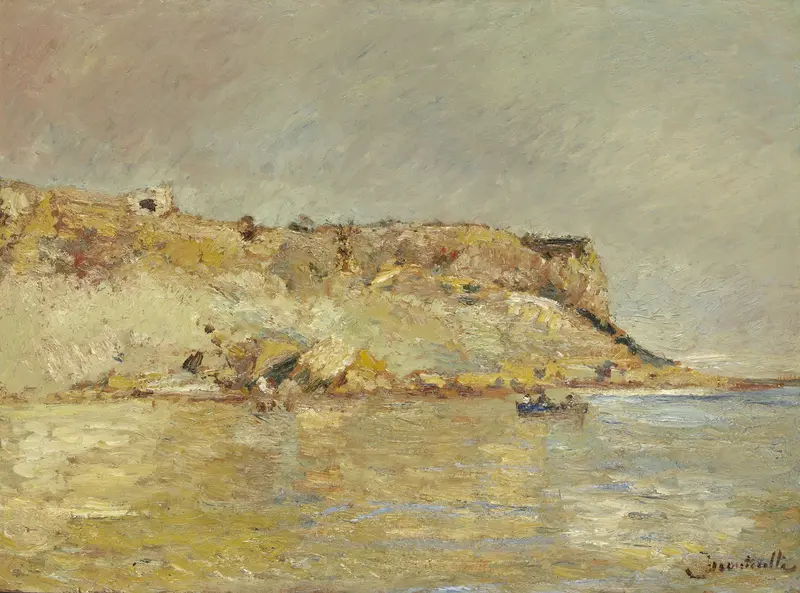
Coastal Mountains
Adolphe Monticelli
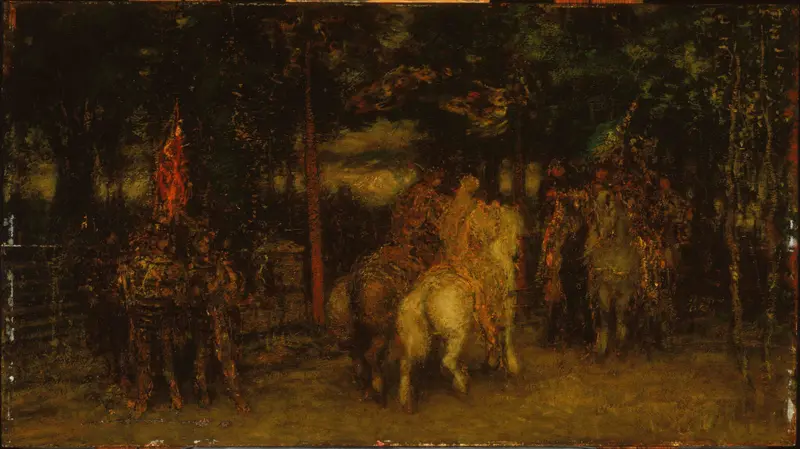
Landscape with Figures
Adolphe Monticelli
More Genre Scene Art

Banquet of the Officers of the St George Civic Guard
Frans Hals

Rembrandt and Saskia in the Scene of the Prodigal Son
Rembrandt van Rijn

Bal du moulin de la Galette
Pierre-Auguste Renoir

Quadrille at the Moulin Rouge
Henri de Toulouse-Lautrec

A Burial at Ornans
Gustave Courbet

When Will You Marry?
Paul Gauguin