
Tancred Baptizing Clorinda — History & Facts
In the late 16th century, Tintoretto turned to the epic poetry of Torquato Tasso for inspiration, choosing a scene that had never before been painted on this scale: the baptism of the warrior Clorinda by her lover Tancred, moments before her death. This episode from Jerusalem Delivered (first published in 1581) electrified Venetian audiences, who recognized in it both the tragedy of war and the hope of redemption. The painting was created in 1593, near the end of Tintoretto’s life, at a time when he was renowned for his daring compositions and dramatic lighting.
No other version by Tintoretto of this subject is known, making this work a singular meditation on love, violence, and forgiveness. At the center of the canvas, Tancred kneels over the mortally wounded Clorinda, his armor gleaming, as he pours water over her brow in an improvised baptism. Clorinda, a Saracen warrior who fought valiantly against the Crusaders, has just learned her true identity and, in her final moments, accepts Tancred’s faith. The torchlight that falls across their entwined figures highlights the intimacy of the act, while the darkness behind them suggests both the battlefield and the unknown beyond death.
The gesture of Tancred’s hand, gentle yet urgent, contrasts with the violence that preceded this scene. Where Poussin would later treat similar themes with classical restraint, Tintoretto’s version is immediate, almost theatrical, drawing the viewer into the emotional climax. The precise circumstances of the painting’s commission remain uncertain, but it was likely intended for a private Venetian patron with a taste for literary subjects and contemporary drama. Over the centuries, Tancred Baptizing Clorinda has been admired for its bold brushwork and psychological depth, though its attribution was briefly questioned in the 19th century before being reaffirmed by modern scholarship.
Today, it is recognized as one of Tintoretto’s late masterpieces, a testament to his enduring fascination with the interplay of light, narrative, and human passion. The work now hangs in a major European collection, where it continues to invite viewers into Tasso’s world of chivalry, faith, and tragic love.
More Artworks by Tintoretto
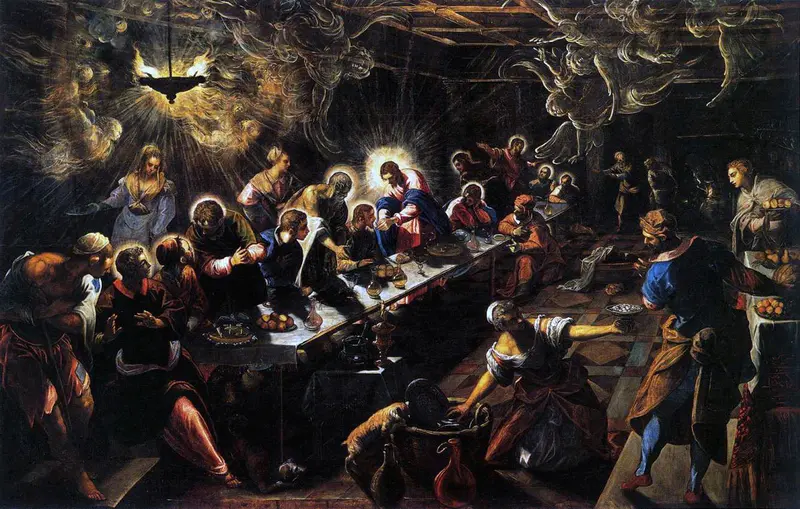
The Last Supper
Tintoretto
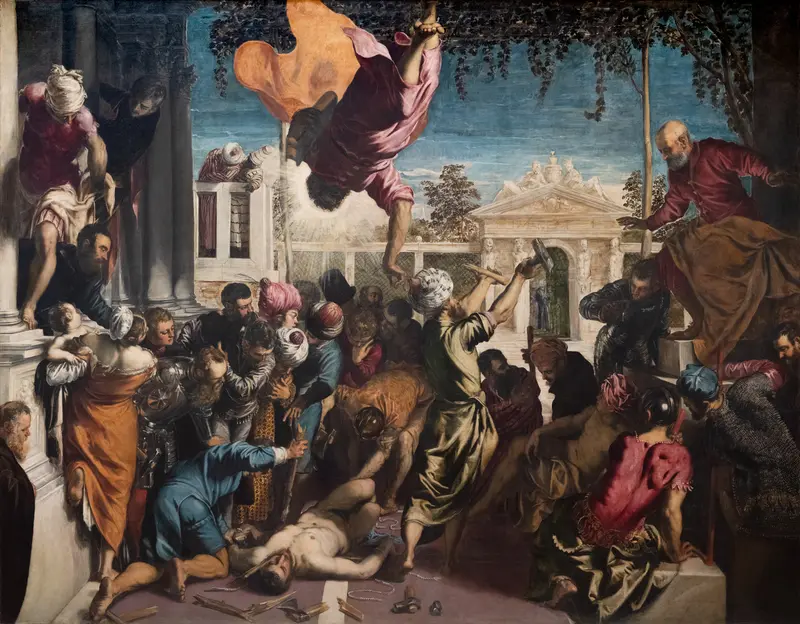
The Miracle of the Slave
Tintoretto
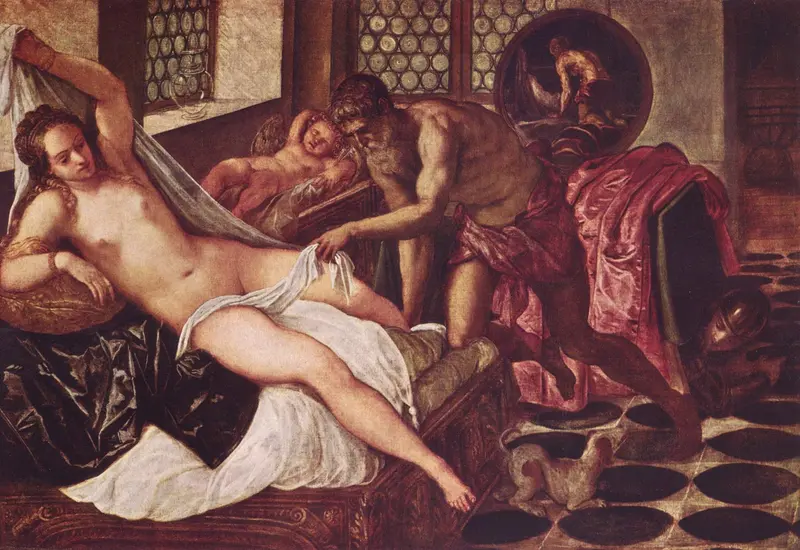
Venus and Mars Surprised by Vulcan
Tintoretto

Adoration of the Shepherds
Tintoretto
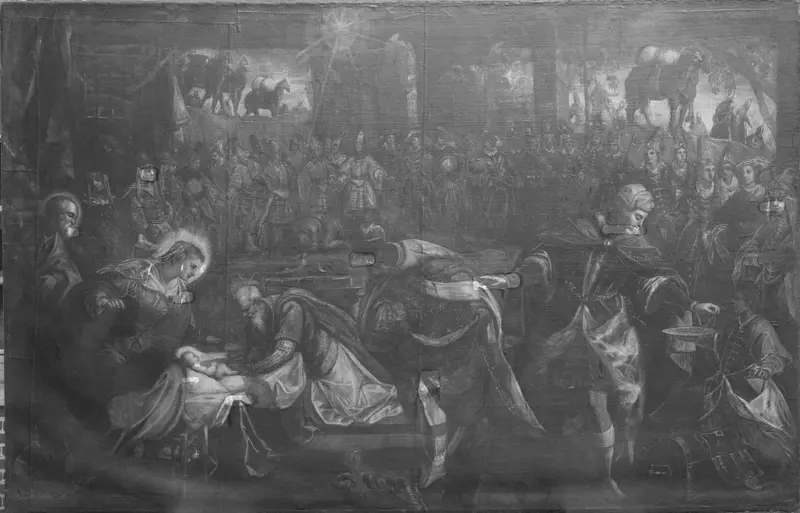
Adoration of the Magi
Tintoretto
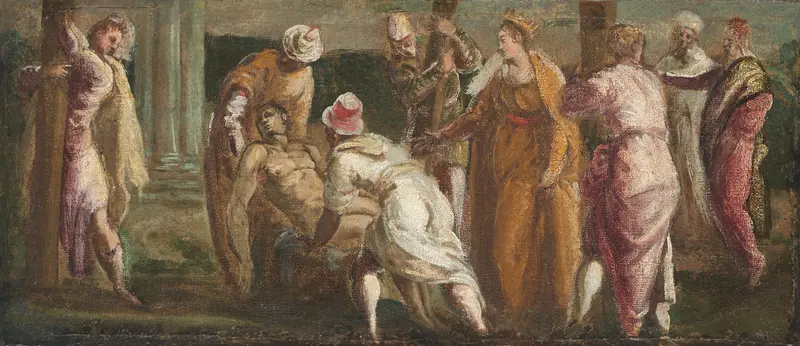
Saint Helen Testing the True Cross
Tintoretto
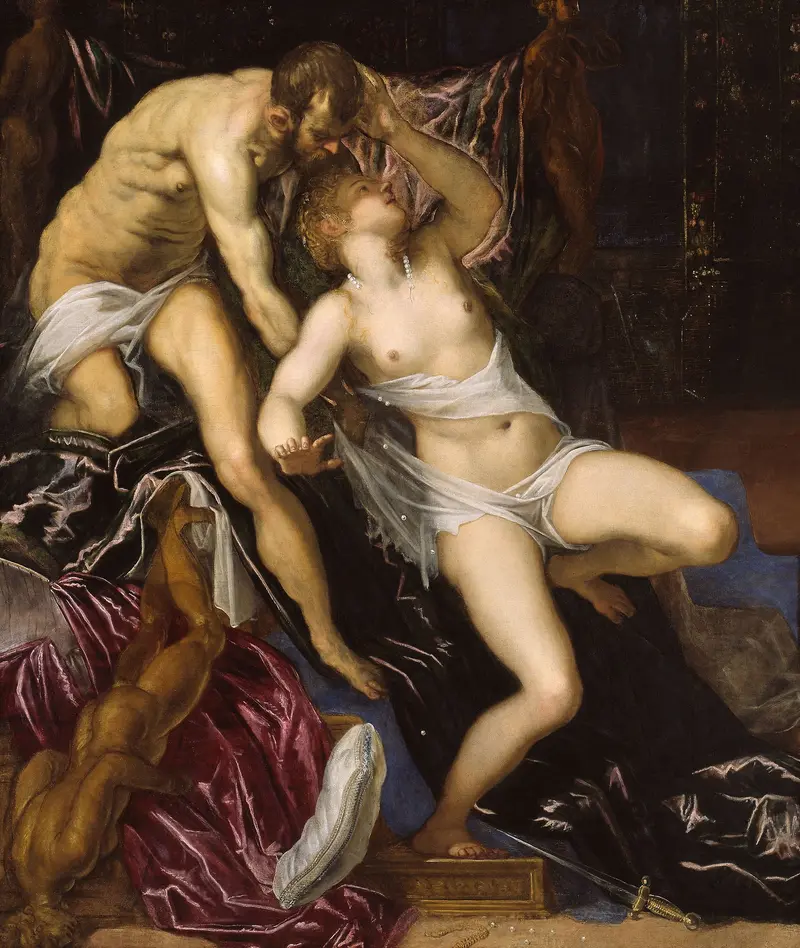
Tarquin and Lucretia
Tintoretto
Two Male Figures in Motion (verso)
Tintoretto
A Female Nude [verso]
Tintoretto
Veduta Kopra
Tintoretto





