
The Cup of Tea (II) — History & Facts
A single black ribbon of hair slices across the faceless head, anchoring the eye in the swirl of geometry and color that is The Cup of Tea (II). The figure, built from rounded, interlocking forms, sits absorbed in the ritual of stirring tea, yet nothing here is casual or accidental. The cup, a vivid red, pulses at the center, while the hands—almost mechanical in their precision—echo the cylinders and spheres that populate the background.
Every surface is flattened, every object distilled to its essence, so that the act of tea-drinking becomes a study in rhythm and balance, rather than a portrait of leisure. Fernand Léger’s world in 1921 was one of machines and modernity, and this painting hums with the energy of that era. The palette is crisp: whites, blacks, reds, and yellows, each chosen to heighten the sense of constructed order. The background is a puzzle of stripes, grids, and blocks, pressing forward until figure and setting nearly merge.
Yet the mood is not cold; the rounded limbs and the playful arrangement of objects invite the viewer to linger. This is not the intimate, dreamy tea-time of a Mary Cassatt, but a celebration of the everyday made new—where even a simple cup becomes a marvel of form and invention.
More Artworks by Fernand Léger

The Tugboat Bridge
Fernand Léger
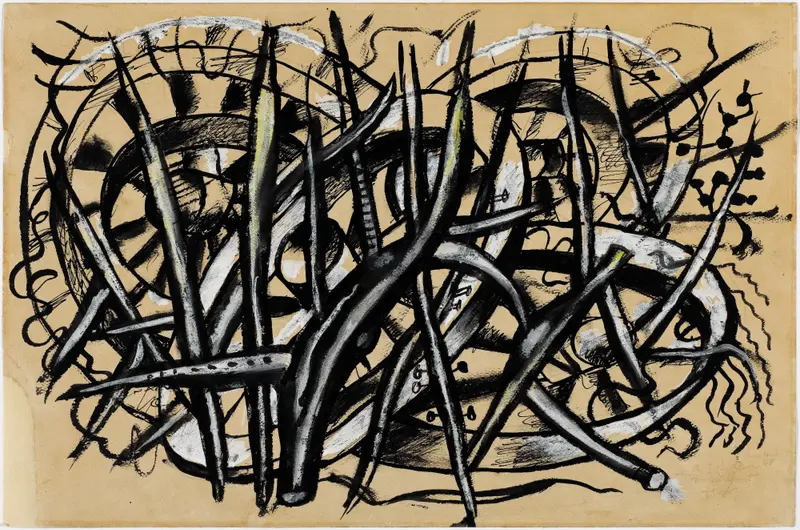
The Wheels
Fernand Léger

Le Cirque Médrano
Fernand Léger
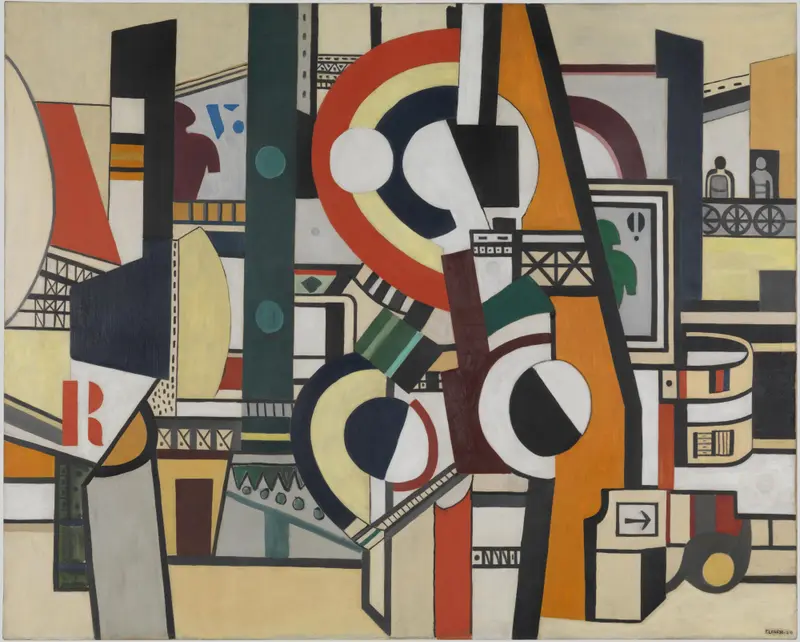
The Disks in the City
Fernand Léger
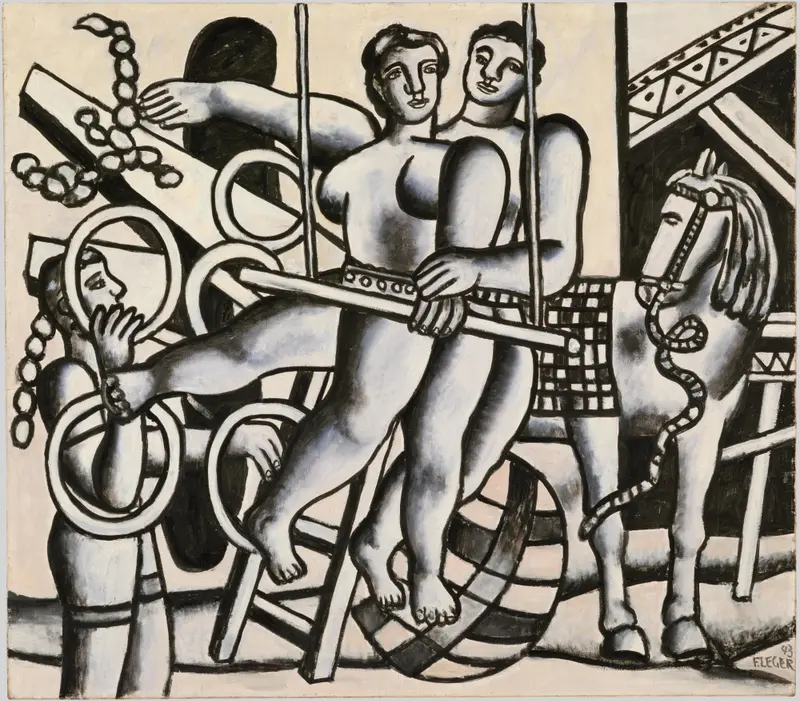
Le Jongleur et les acrobates
Fernand Léger
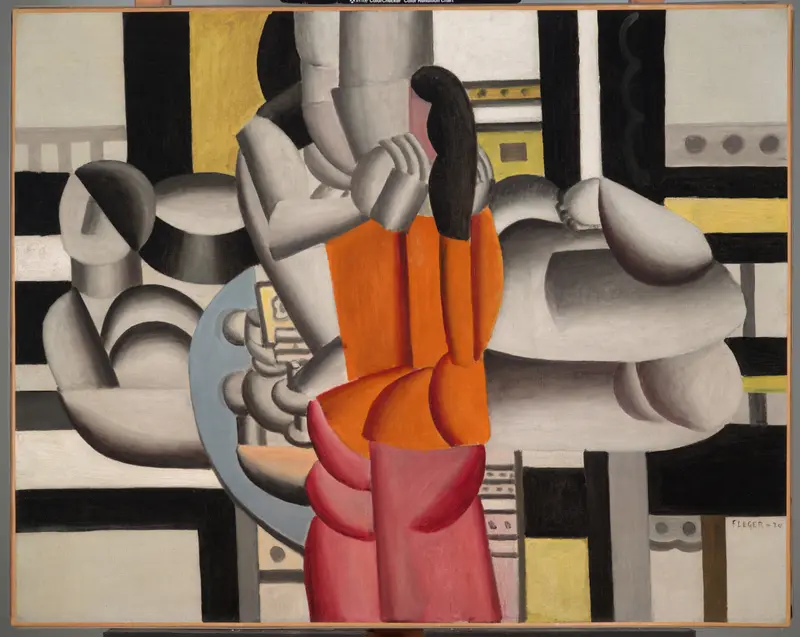
Three Women and Still Life (Déjeuner)
Fernand Léger
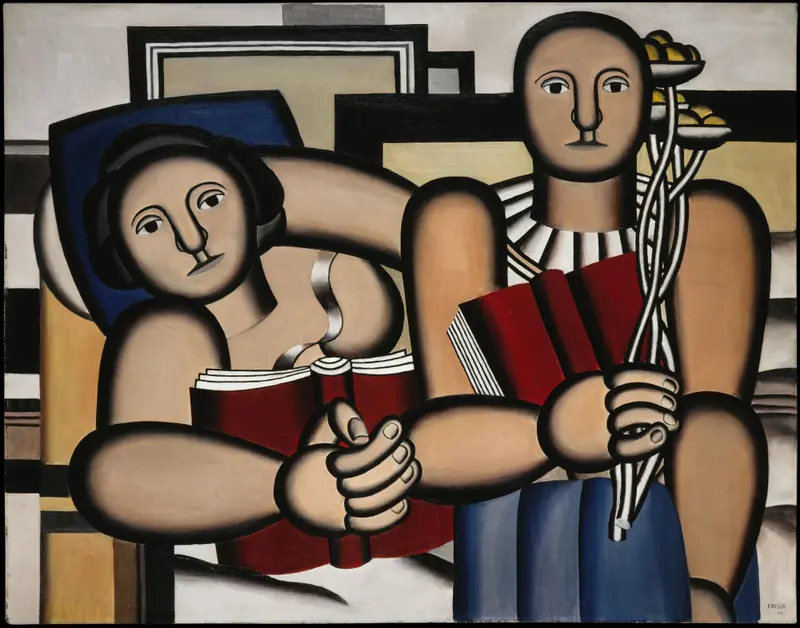
Reading
Fernand Léger
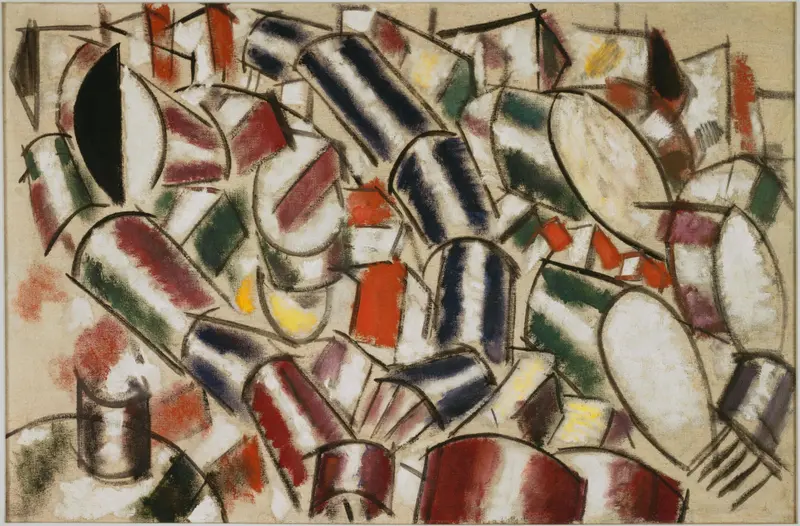
Femme couchée
Fernand Léger
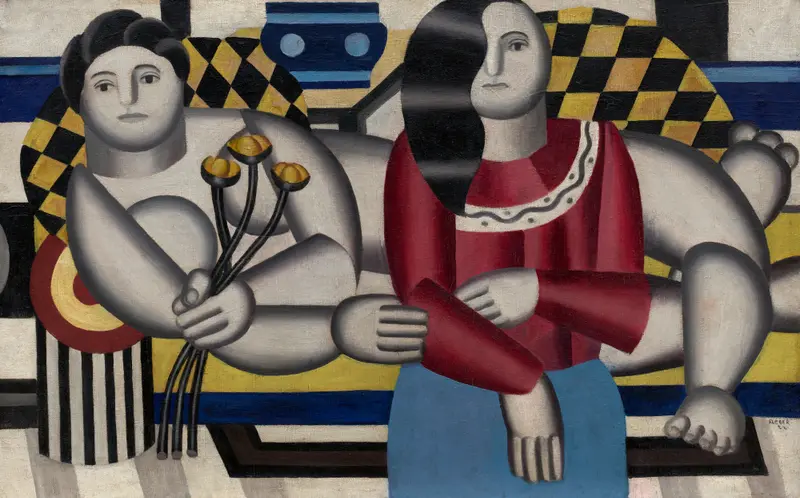
Woman holding flowers
Fernand Léger
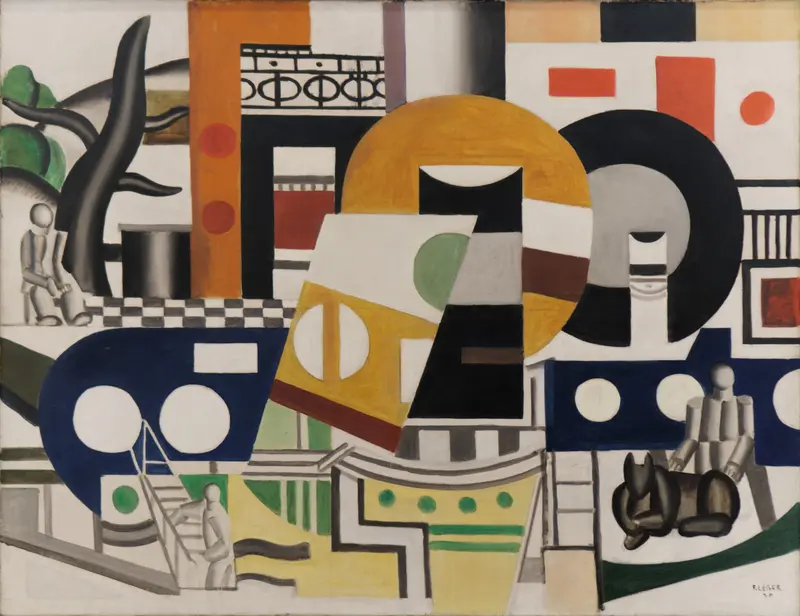
The Tug
Fernand Léger
More Genre Scene Art

Banquet of the Officers of the St George Civic Guard
Frans Hals

Rembrandt and Saskia in the Scene of the Prodigal Son
Rembrandt van Rijn

Bal du moulin de la Galette
Pierre-Auguste Renoir

Quadrille at the Moulin Rouge
Henri de Toulouse-Lautrec

A Burial at Ornans
Gustave Courbet

When Will You Marry?
Paul Gauguin