
The Enchantress — History & Facts
What first catches the eye in The Enchantress is the confident, almost knowing gaze of the central figure, her body framed by a riot of lush pink blooms and crowned with a fan of peacock feathers. She stands at the threshold between the earthly and the magical, offering a golden fruit in one hand and raising a glass in the other, as if inviting the viewer into a ritual whose rules are hers alone. The peacock crown, with its iridescent eyes, signals both regality and mystery, while the white wings behind her shoulders blur the line between goddess, angel, and mortal temptress.
Light glances off her skin and the glass, drawing the viewer’s attention to her outstretched hand and the object it presents—an apple, perhaps, or a symbol of knowledge, temptation, or fate. The garden behind her is both a setting and a veil, its flowers echoing the sensuality and danger of her invitation. Painted in 1890 by Akseli Gallen-Kallela, this work emerges from a moment when artists across Europe were drawn to myth, symbol, and the supernatural. The late nineteenth century saw a fascination with femme fatale figures—women who embodied both allure and peril, often set in lush, dreamlike landscapes.
In Finland, where Gallen-Kallela was forging his reputation, artists were exploring national identity and myth, sometimes blending local folklore with broader Symbolist currents. The medium of this painting remains undocumented, and little is recorded about its early history, but its presence in the Hannu Miettinen collection today invites us to linger on its unresolved riddles. The longer one looks, the more the figure’s smile seems to shift, as if the enchantment is not only in the subject, but in the act of looking itself.
More Artworks by Akseli Gallen-Kallela
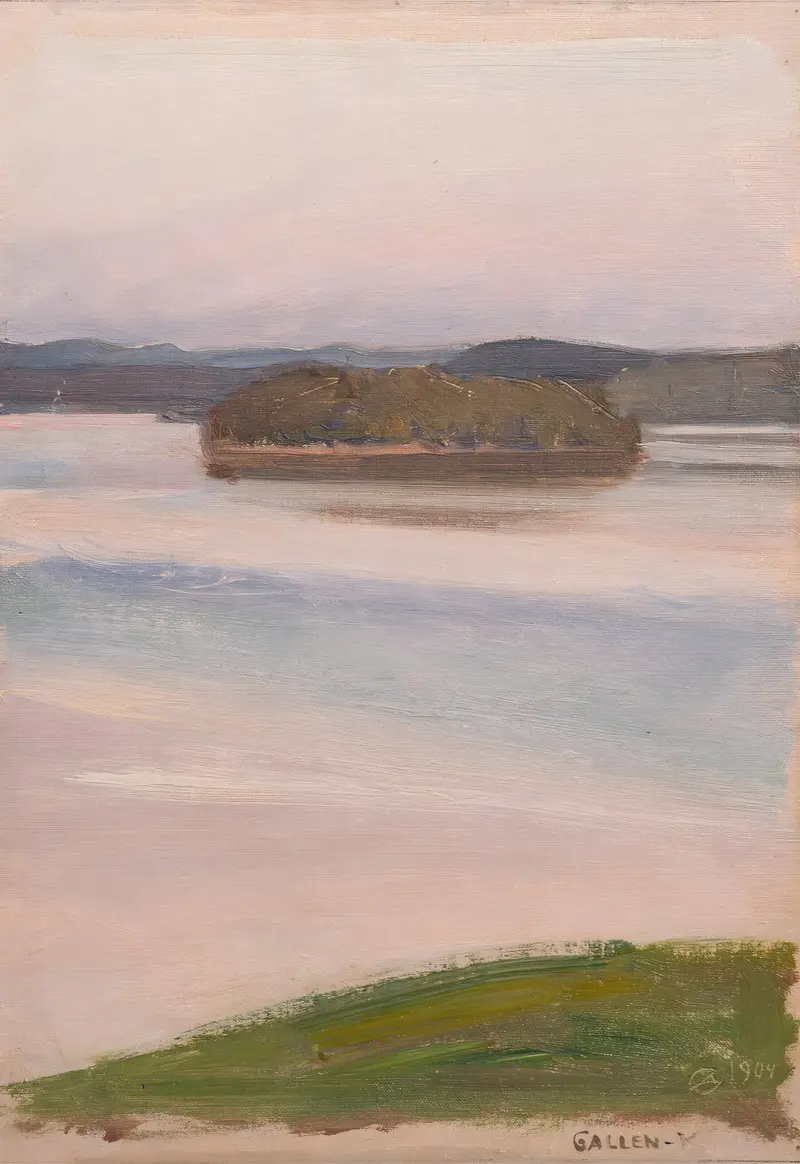
Lake Keitele
Akseli Gallen-Kallela
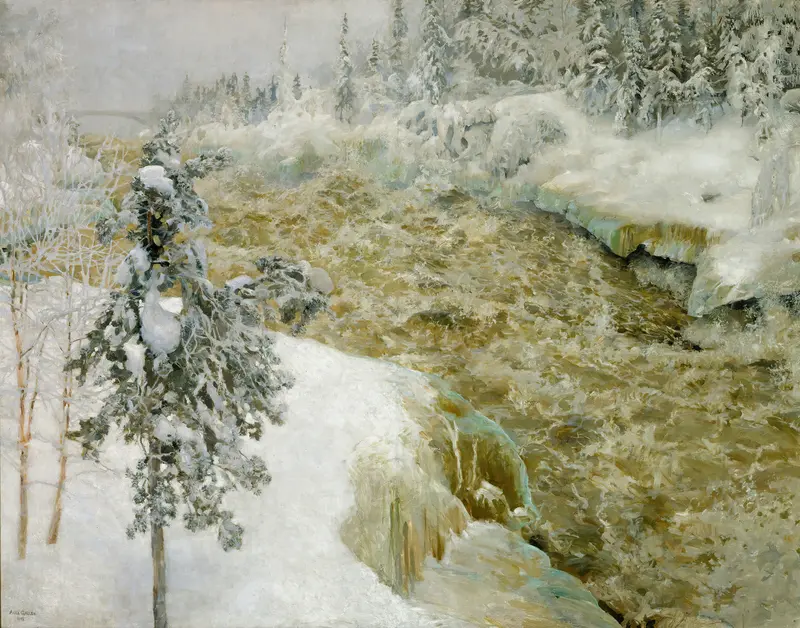
Imatra Falls in Snow ; Imatra in Winter
Akseli Gallen-Kallela
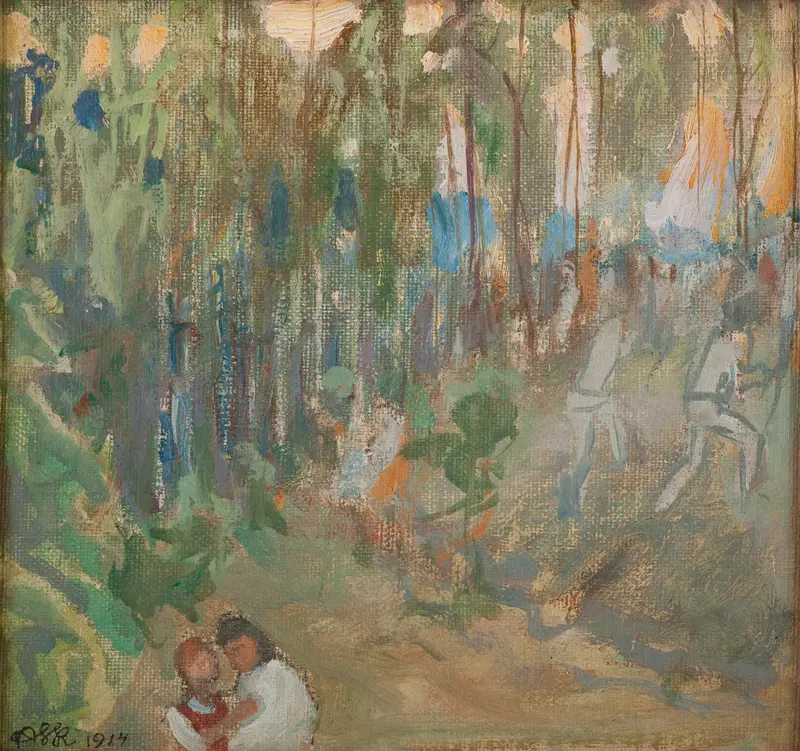
Vainovalkeat
Akseli Gallen-Kallela
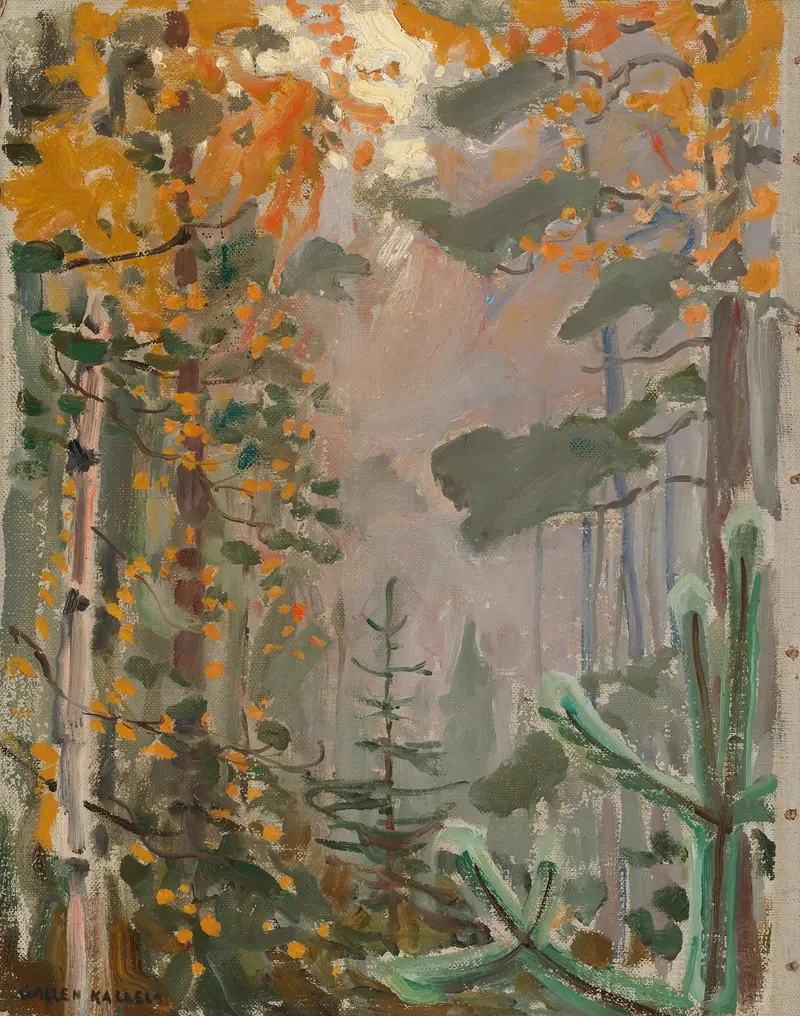
Autumn Landscape
Akseli Gallen-Kallela
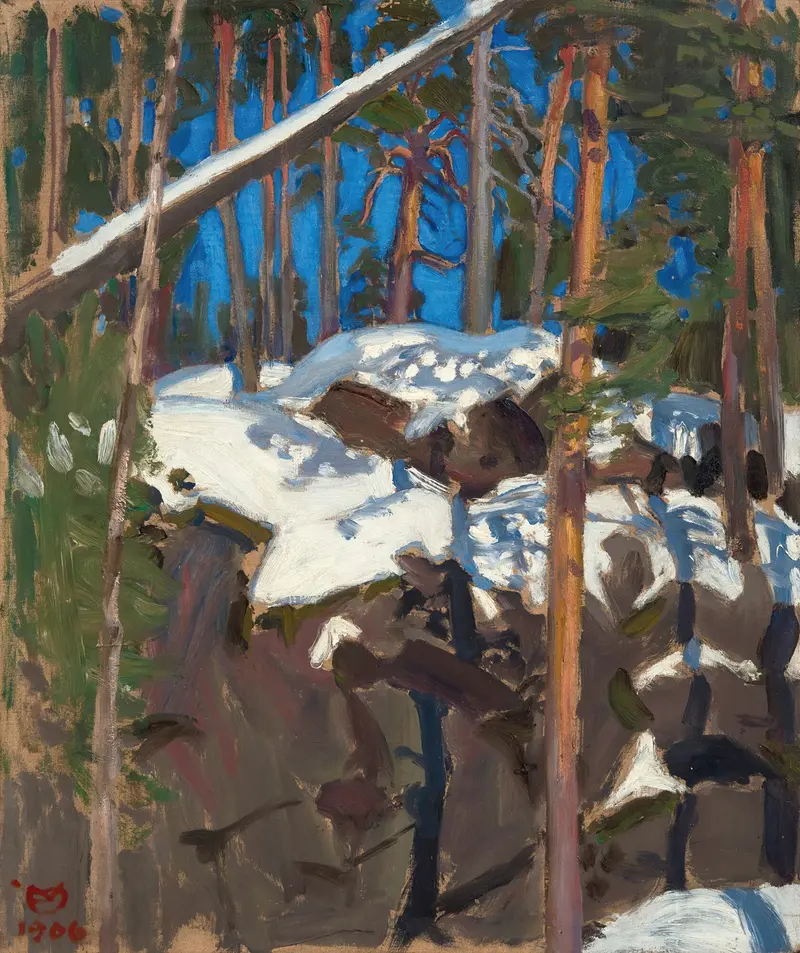
Spring Sun At Konginkangas
Akseli Gallen-Kallela
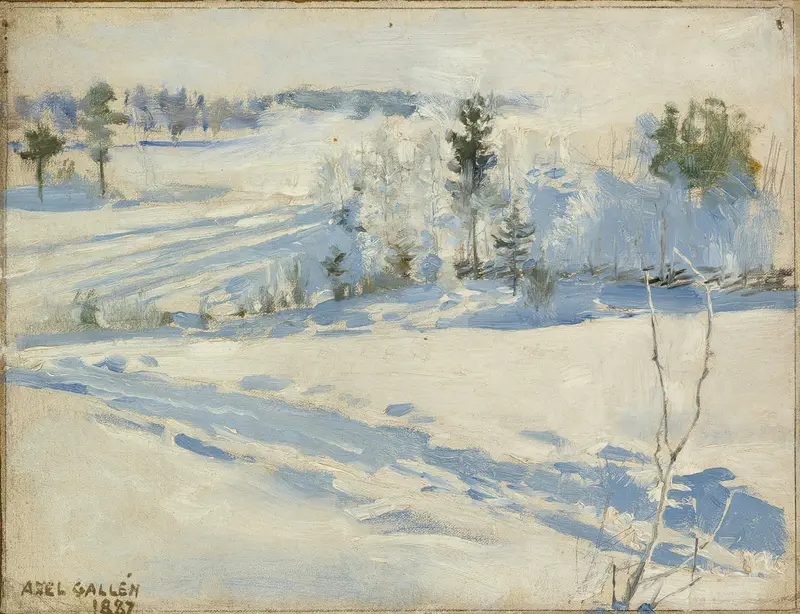
Winter Landscape
Akseli Gallen-Kallela

First Snow
Akseli Gallen-Kallela
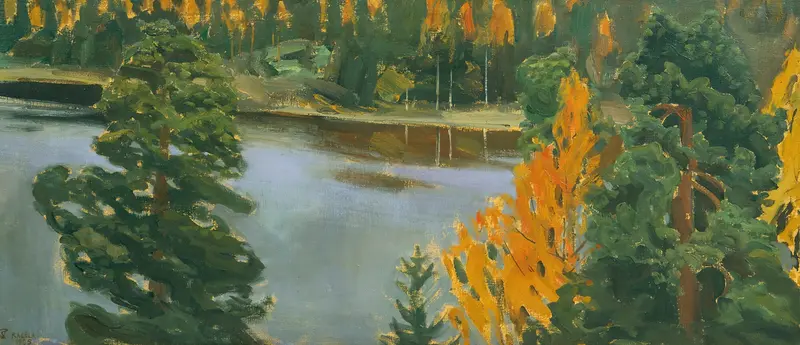
Lake View In Autumn
Akseli Gallen-Kallela
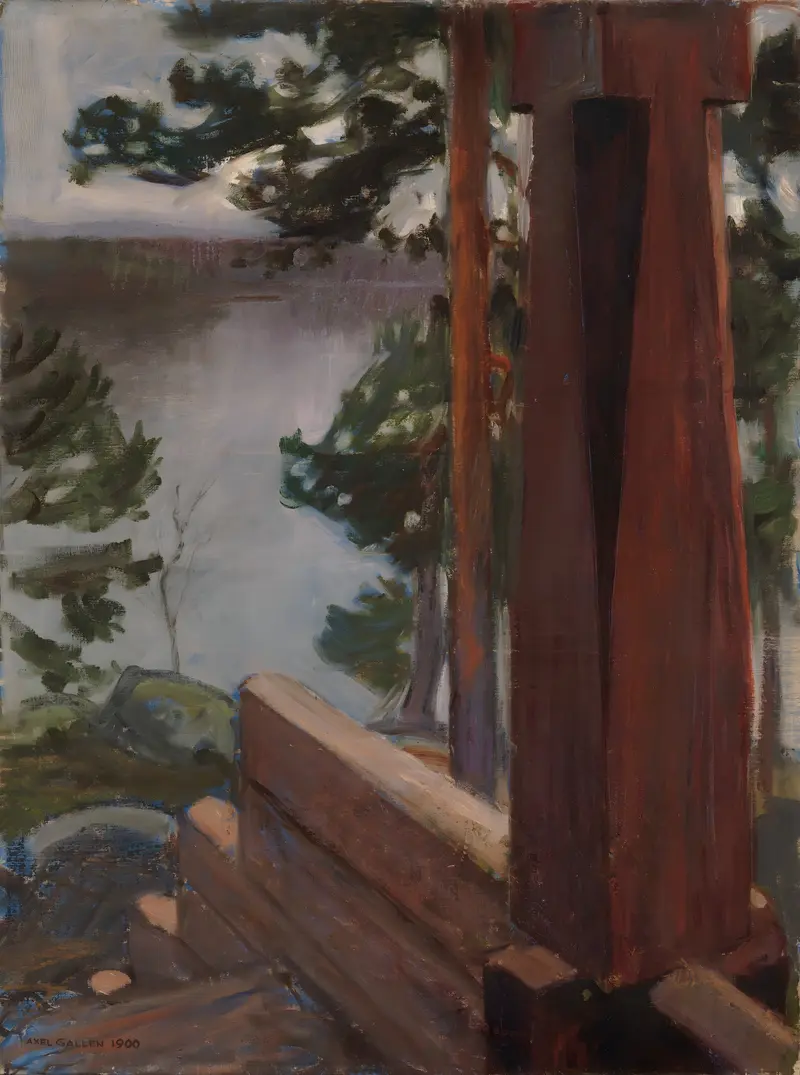
The Kalela Porch
Akseli Gallen-Kallela

Light Behind The Clouds
Akseli Gallen-Kallela





