
The Four seasons — History & Facts
What first catches the eye in The Four Seasons is the rhythm of human life unfolding across the year, each panel a stage in the grand pageant of labor and leisure. Abel Grimmer leads us through a landscape where the cycle of sowing, reaping, tending, and resting is both ordinary and monumental. The figures bend to their tasks with a kind of choreography: spades rise and fall in the spring earth, sickles flash in the golden fields of summer, livestock and villagers cluster in autumn’s busy yard, and winter’s pale light finds skaters and bundled children tracing patterns on the ice.
Each gesture is a clue to the season—bare arms and heavy skirts, baskets brimming with harvest, the hush of snow underfoot—while the low horizon and distant church spires give the sky and the land equal claim to the story. Painted in 1607, this work belongs to a world where such scenes were more than decoration—they were reminders, calendars, and lessons all at once. In the Low Countries, artists like Grimmer specialized in these cycles, often for prosperous burghers who saw their own fortunes reflected in the order of nature and community. The genre flourished in an age of urban pride and rural nostalgia, when the rhythms of the countryside were both a reality and an ideal.
Now in the Royal Museum of Fine Arts Antwerp, this painting stands as a window onto a time when the seasons were not just weather, but the very architecture of daily life. Look again, and see how every figure, every furrowed field, is stitched into the fabric of a year that never truly ends.
More Artworks by Abel Grimmer

Flemish proverbs
Abel Grimmer
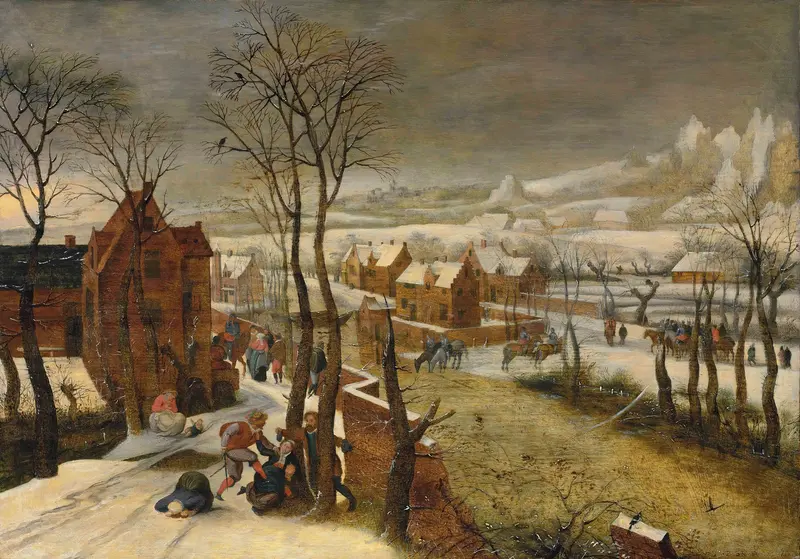
A Village Landscape In Winter With The Massacre Of The Innocents
Abel Grimmer
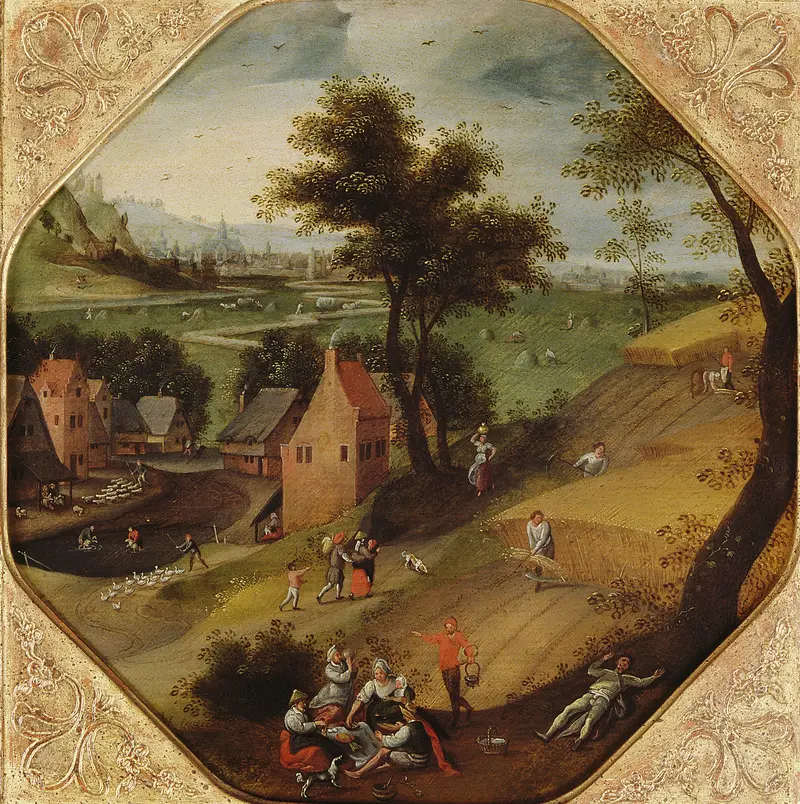
De Zomer
Abel Grimmer
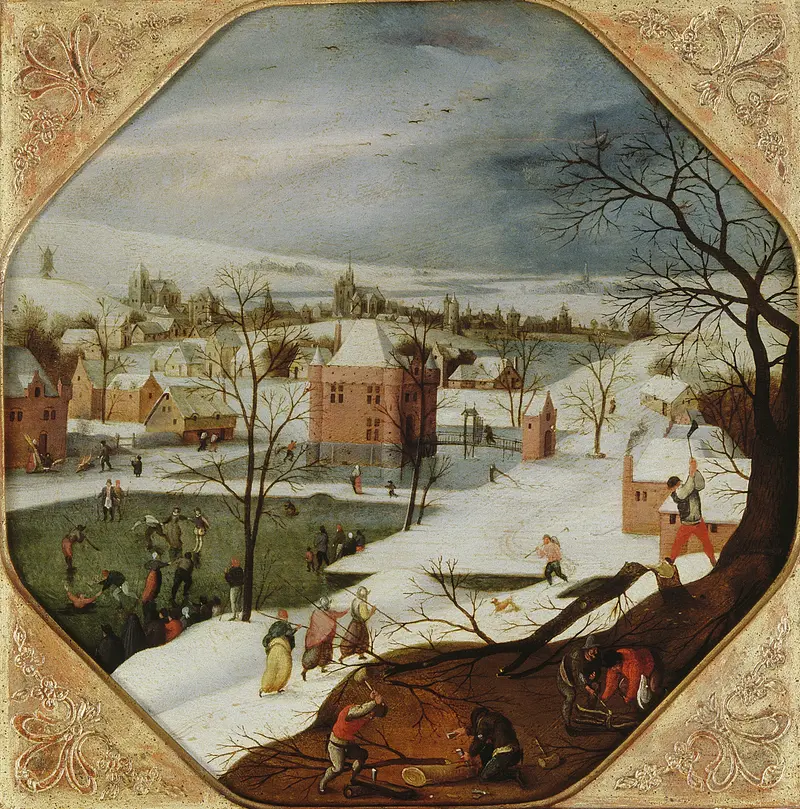
De Winter
Abel Grimmer
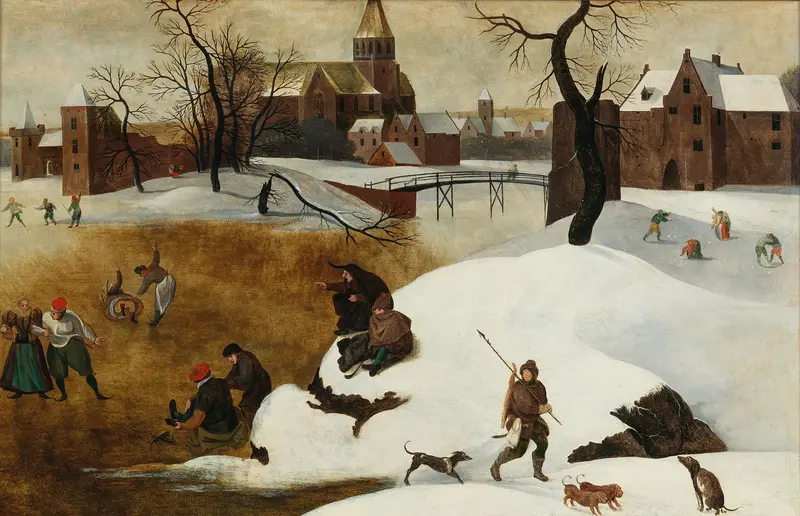
winter landscape with skaters
Abel Grimmer
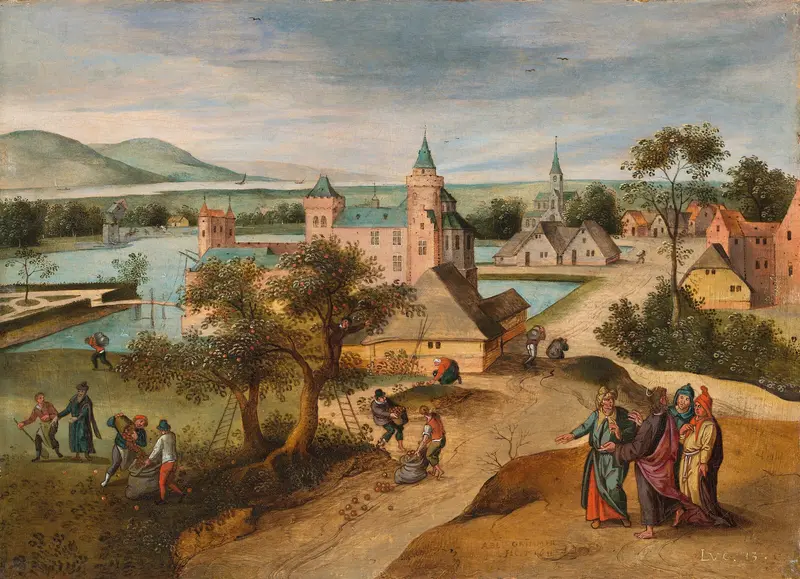
September – The Parable of the Barren Fig Tree
Abel Grimmer
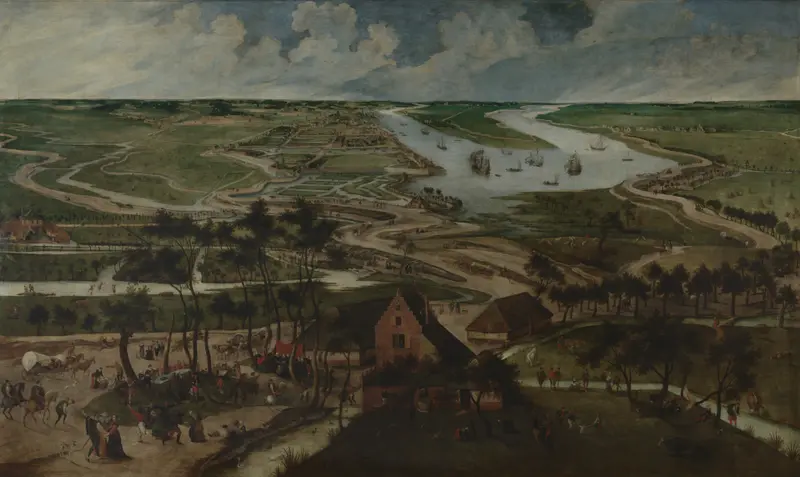
The Eel Huts in the Antwerp Polder outside the Lillo or Slijk Gate
Abel Grimmer
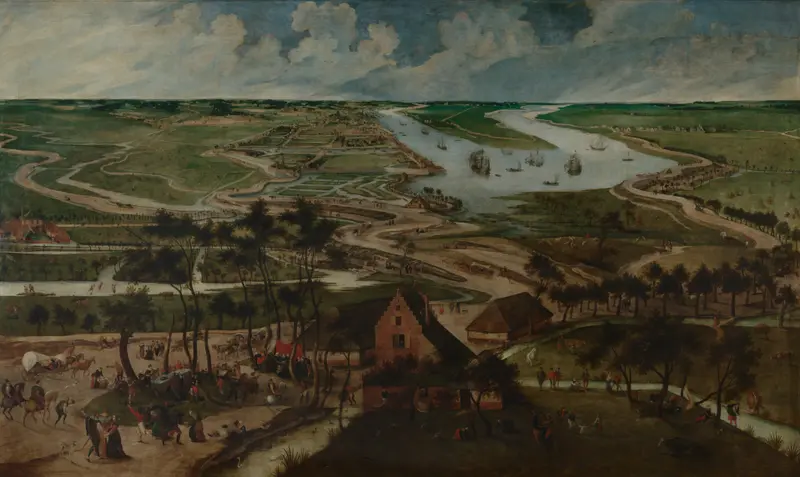
De Antwerpse polder en de Palinghuizen buiten de Slijk- of Lillopoort
Abel Grimmer
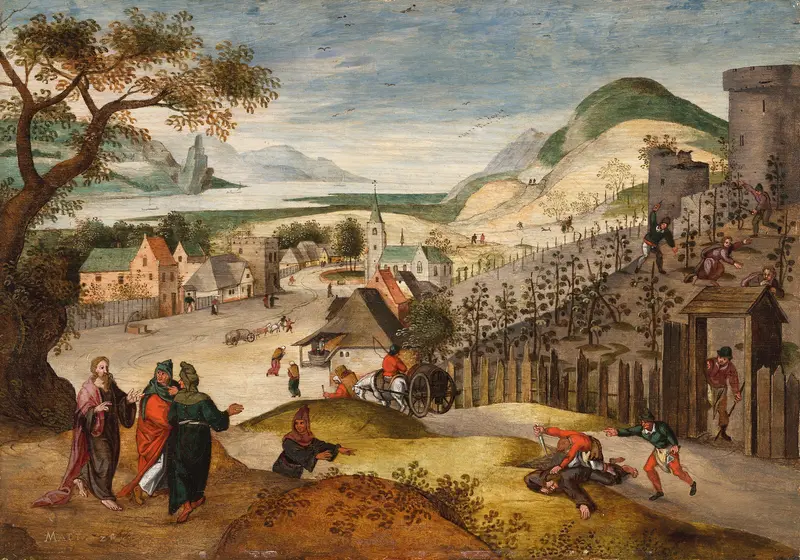
October – The Parable of the Vineyard
Abel Grimmer
The Marketplace in Bergen op Zoom
Abel Grimmer
More Genre Scene Art

Banquet of the Officers of the St George Civic Guard
Frans Hals

Rembrandt and Saskia in the Scene of the Prodigal Son
Rembrandt van Rijn

Bal du moulin de la Galette
Pierre-Auguste Renoir

Quadrille at the Moulin Rouge
Henri de Toulouse-Lautrec

A Burial at Ornans
Gustave Courbet

When Will You Marry?
Paul Gauguin