
The Gardener I — History & Facts
When Georges Seurat painted The Gardener I in 1882, he was just twenty-three years old and had not yet developed the pointillist technique that would make him famous. What makes this work remarkable is that it offers a rare glimpse into Seurat’s formative years, before the radical experiments of Neo-Impressionism that would soon follow. The painting stands as one of the earliest known studies from life by Seurat, and its existence was largely unknown to the public until it surfaced in the twentieth century.
Scholars have pored over its brushwork, searching for hints of the meticulous method that would define his later career. The scene Seurat chose is humble: a solitary gardener, absorbed in his work, stands amidst a tangle of green and earth. The man’s bent posture and sturdy hands speak of physical labor, while the dappled light filtering through unseen foliage suggests a quiet, almost meditative atmosphere. Unlike the later, more stylized figures of A Sunday Afternoon on the Island of La Grande Jatte, here the gardener is rendered with loose, searching strokes, the background barely resolved into patches of color.
The focus on ordinary labor recalls the realism of Jean-François Millet, but Seurat’s interest lies less in social commentary than in the study of natural light and the human form in space. The precise history of The Gardener I as an object is uncertain; its early provenance is not well documented, and the medium itself remains a matter of scholarly debate—some suggest oil on panel, others a small canvas. What is clear is that the painting marks a crucial step in Seurat’s journey from academic training to the innovations of Neo-Impressionism. Today, it stands as a testament to his restless curiosity and the quiet observation that underpinned his later, more systematic approach.
Its survival allows us to trace the roots of a painter who would soon change the course of modern art.
More Artworks by Georges Seurat
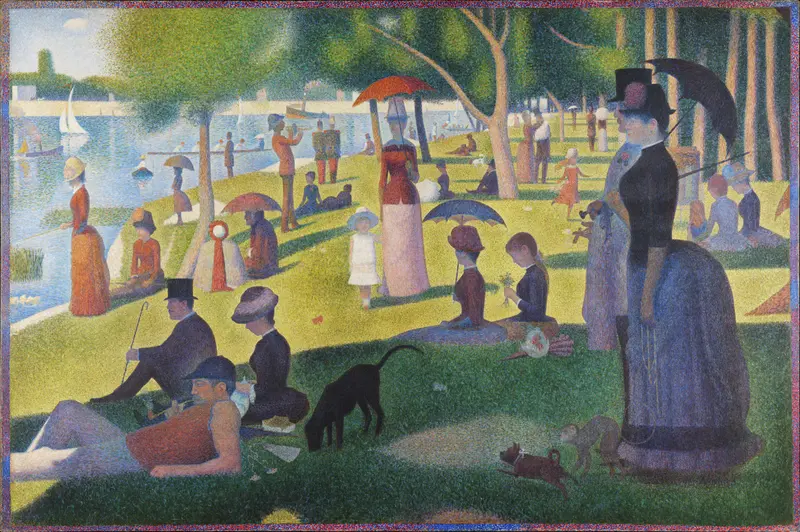
A Sunday Afternoon on the Island of La Grande Jatte
Georges Seurat
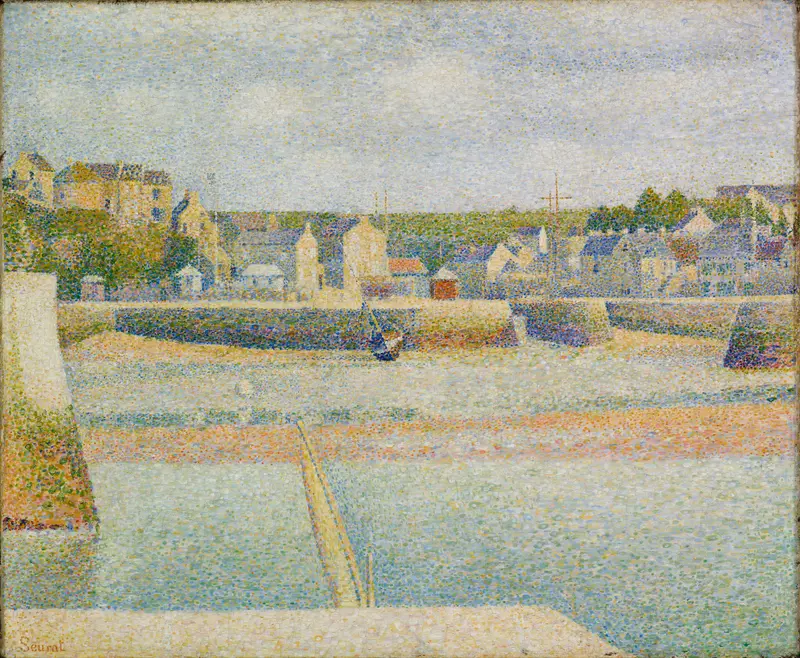
Port-en-Bessin, The Outer Harbor (Low Tide)
Georges Seurat
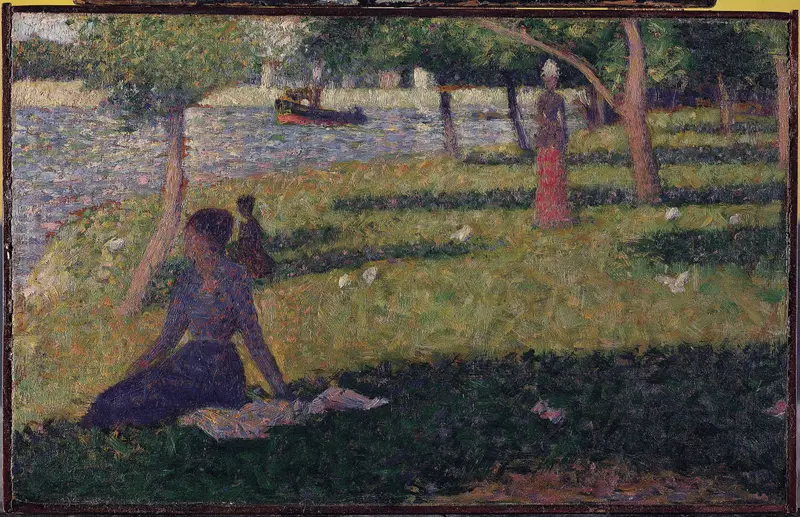
Étude pour ‘La Grande Jatte’ (Study for ‘La Grande Jatte’)
Georges Seurat
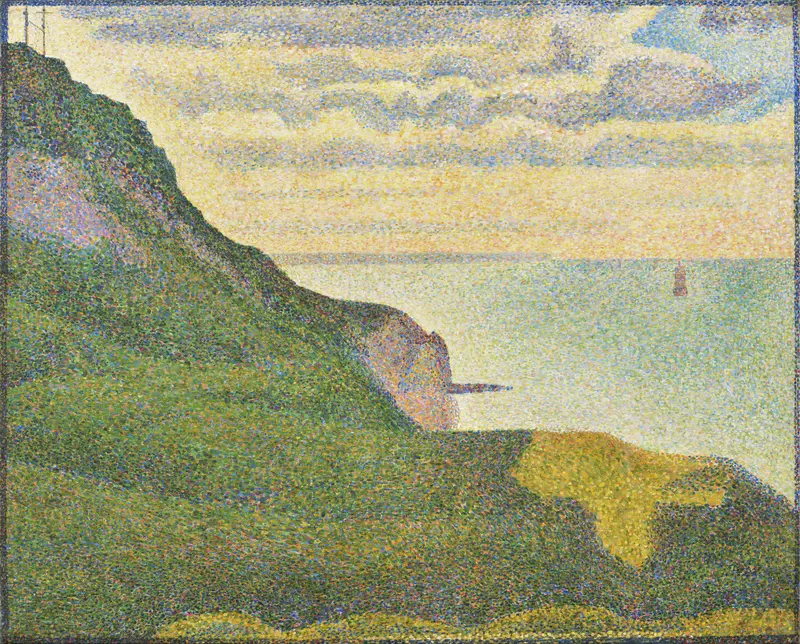
Seascape at Port-en-Bessin,Normandy
Georges Seurat
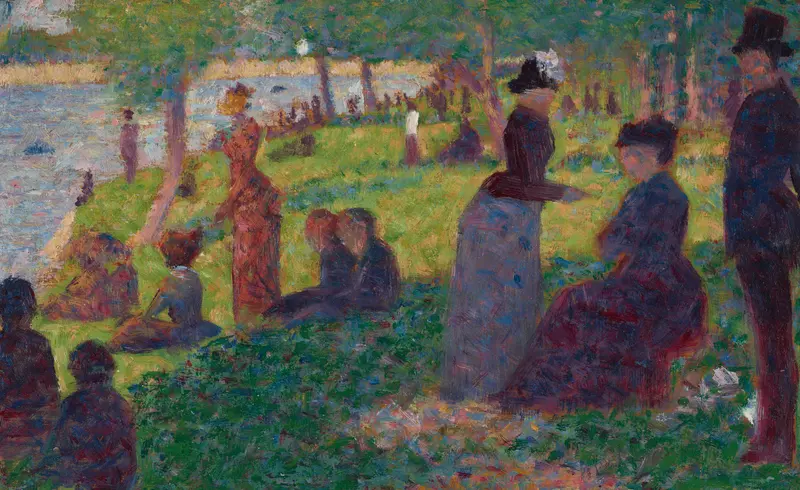
Oil Sketch for "A Sunday on La Grande Jatte — 1884"
Georges Seurat
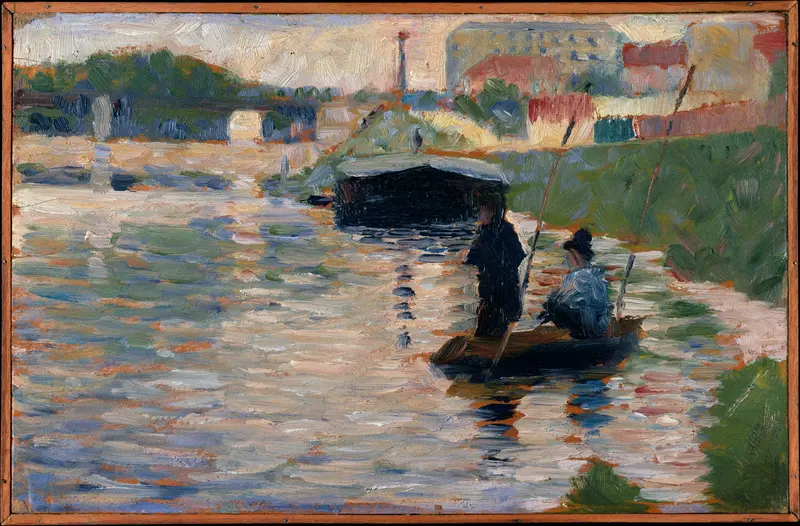
View of the Seine
Georges Seurat
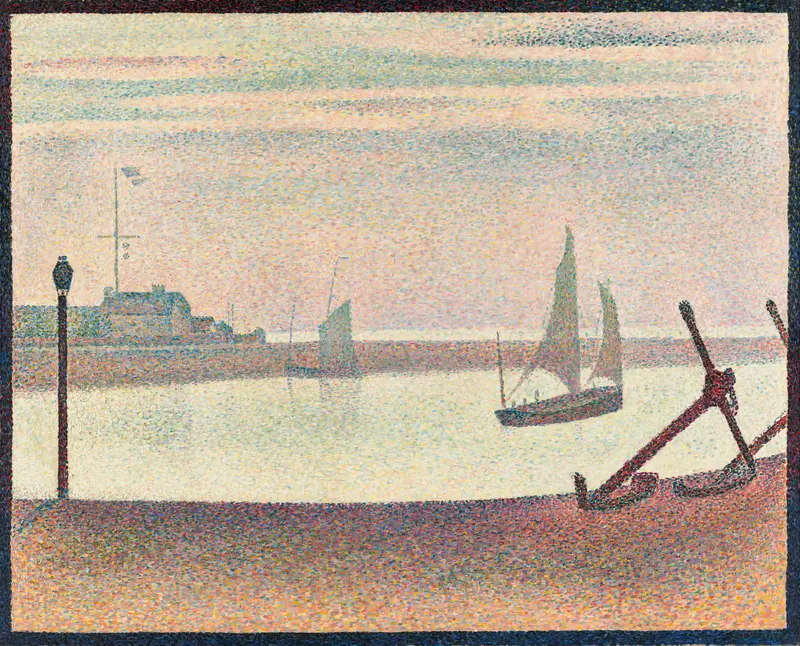
The Channel at Gravelines, Evening
Georges Seurat
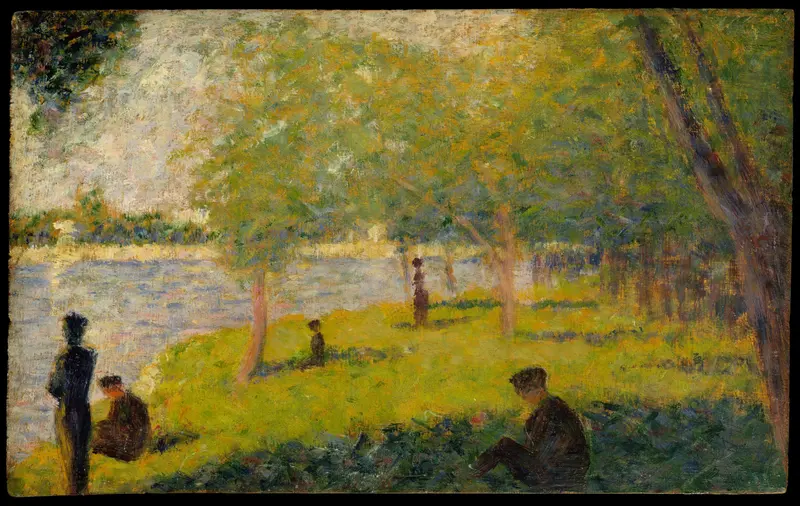
Study for ‘A Sunday on La Grande Jatte’
Georges Seurat
Study for A Sunday on La Grande Jatte
Georges Seurat
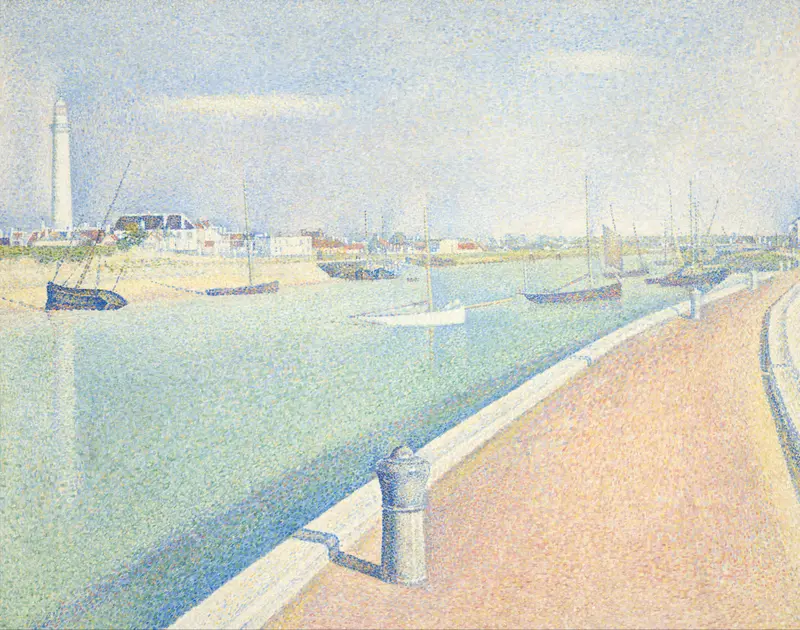
The Channel of Gravelines, Petit Fort Philippe
Georges Seurat
More Genre Scene Art

Banquet of the Officers of the St George Civic Guard
Frans Hals

Rembrandt and Saskia in the Scene of the Prodigal Son
Rembrandt van Rijn

Bal du moulin de la Galette
Pierre-Auguste Renoir

Quadrille at the Moulin Rouge
Henri de Toulouse-Lautrec

A Burial at Ornans
Gustave Courbet

When Will You Marry?
Paul Gauguin