
The Great Red Dragon and the Woman Clothed with the Sun — History & Facts
Few images from the Romantic period are as instantly arresting—or as shrouded in intrigue—as The Great Red Dragon and the Woman Clothed with the Sun by William Blake. This work is one of a series of at least four watercolours Blake produced between 1805 and 1810, all commissioned by the collector Thomas Butts. The "Great Red Dragon" series has fascinated viewers for centuries, not only for its visionary power but also for the mystery surrounding Blake’s exact techniques and materials, which remain debated among scholars.
The paintings have inspired everything from novels to films, and even played a chilling role in Thomas Harris’s 1981 novel Red Dragon. Blake seizes upon a scene from the Book of Revelation, where the monstrous dragon confronts a radiant woman. The moment he chooses is one of suspense: the dragon, with his immense, bat-like wings and coiled musculature, hovers above the woman, who stands in prayer, clothed in sunlight and crowned with stars. The dragon’s posture—arching and menacing—captures the threat, while the woman’s upward gaze and calm hands suggest faith and resistance.
The contrast of dark, swirling reds and luminous golds heightens the drama, echoing the spiritual struggle at the heart of the biblical text. Unlike Rubens’s more crowded and heroic interpretations of Revelation, Blake’s vision is stark, psychological, and charged with personal symbolism. The physical history of this painting is closely tied to its commissioner, Thomas Butts, a loyal patron who enabled Blake to pursue his singular visions. After remaining in private hands for much of the nineteenth century, the work eventually entered the collection of the Brooklyn Museum, where it is displayed today.
The precise medium—often described as watercolor with ink and graphite—remains a topic of technical study, as Blake’s methods were highly experimental and not always documented. This series marks a high point in Blake’s career as a painter, standing apart from his illuminated books and engravings, and continues to be a touchstone for those exploring the intersection of art, faith, and imagination in the early nineteenth century.
More Artworks by William Blake
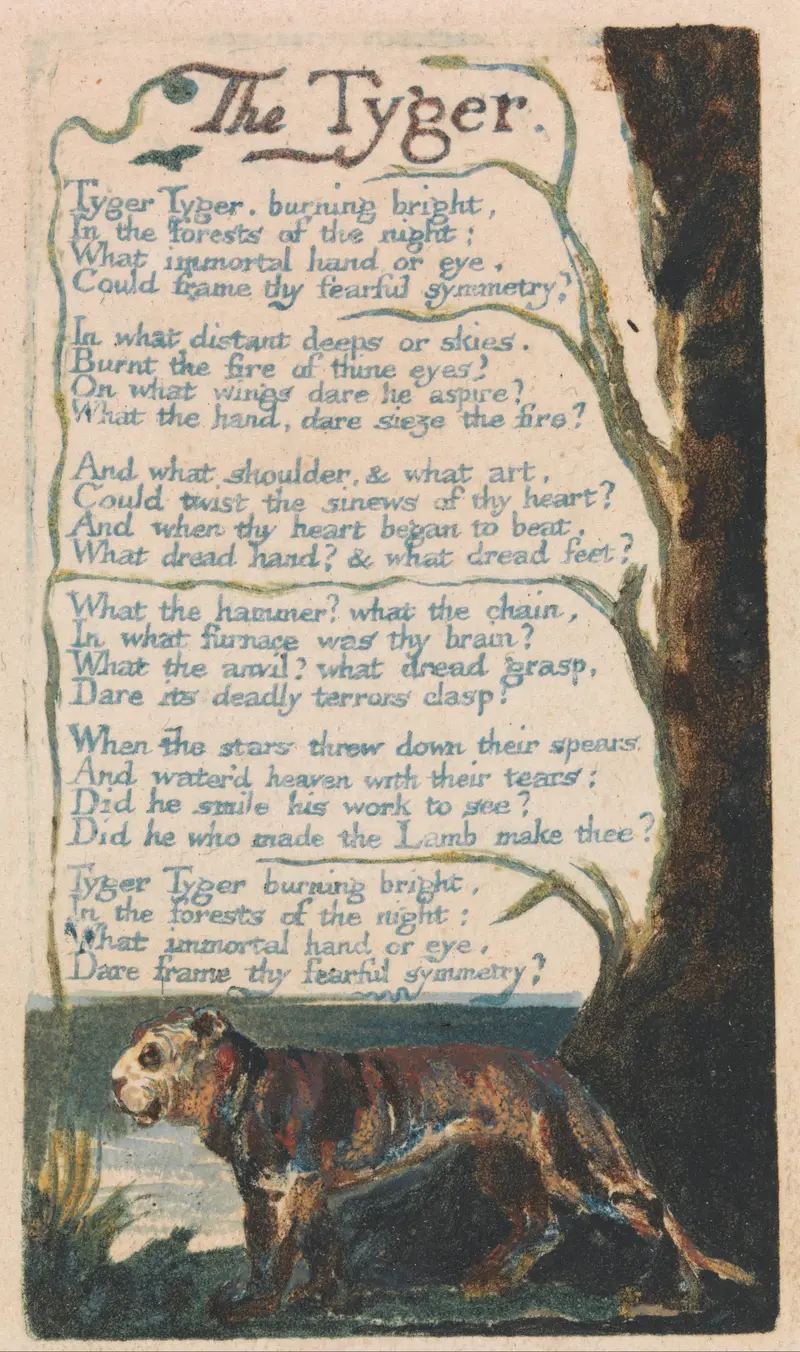
The Tyger
William Blake

Christ Blessing
William Blake
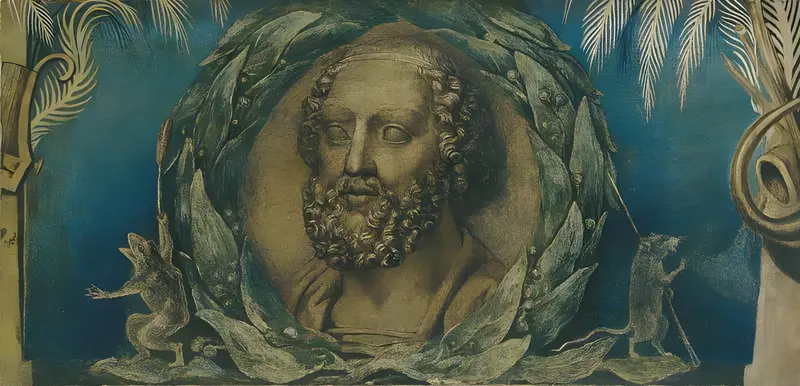
Homer
William Blake
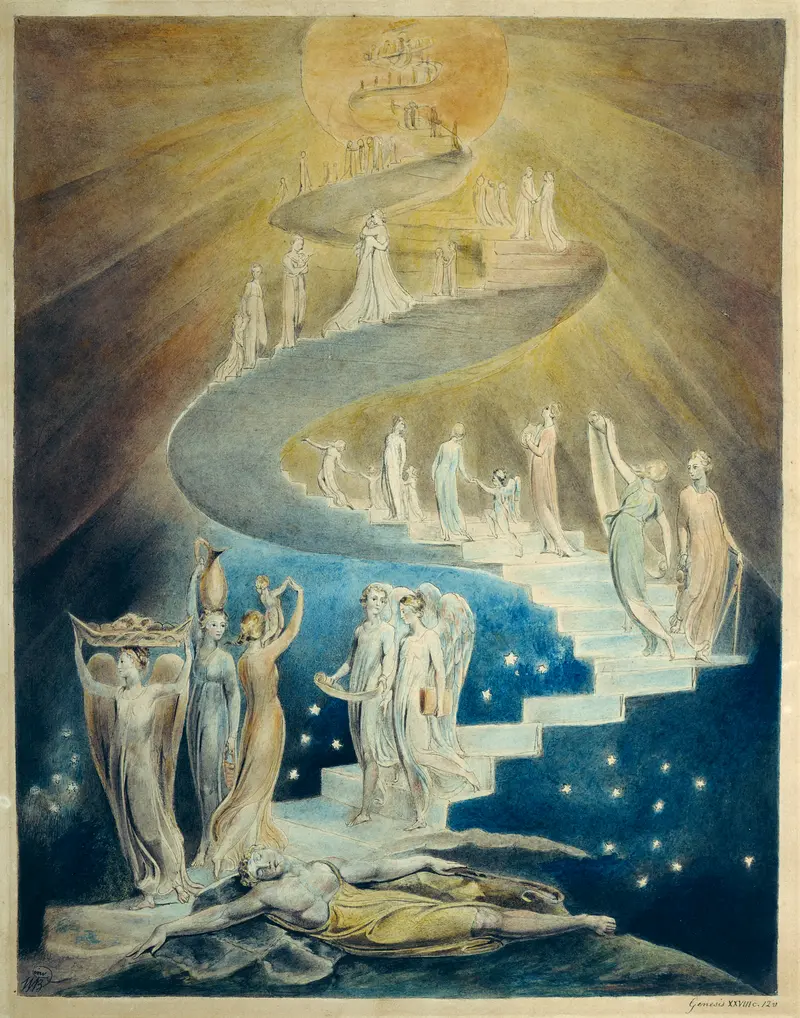
Jacob's Ladder
William Blake
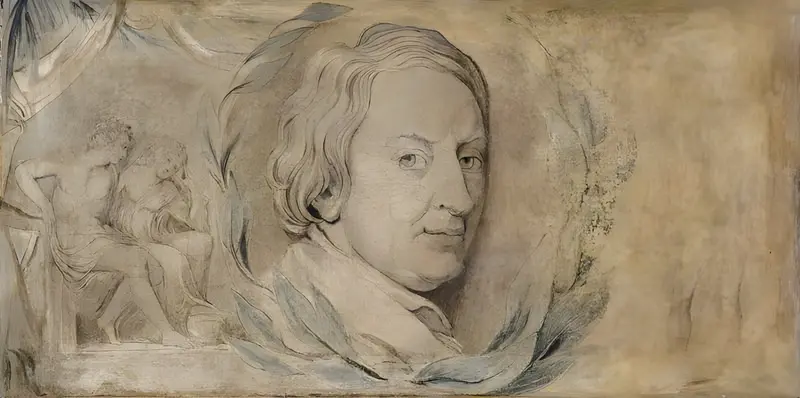
John Dryden (1631–1700)
William Blake
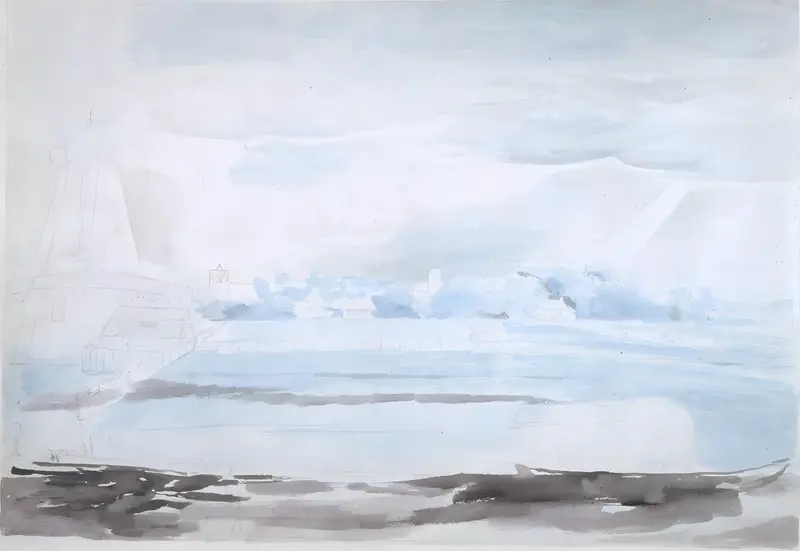
Landscape near Felpham
William Blake
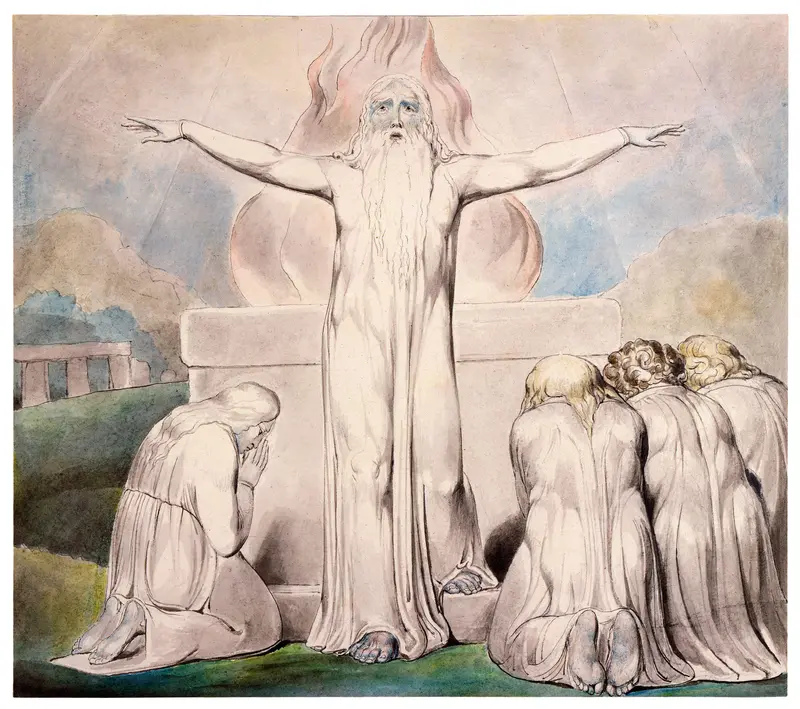
Sacrifice of Job
William Blake
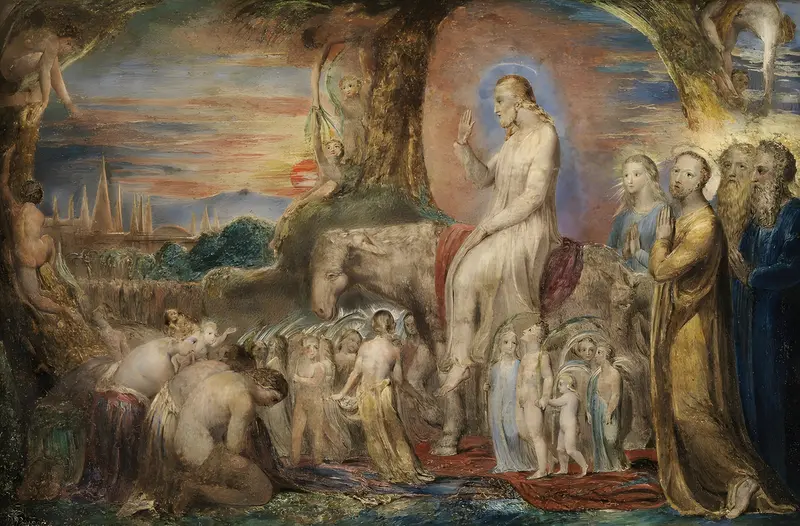
Christ's Entry into Jerusalem
William Blake
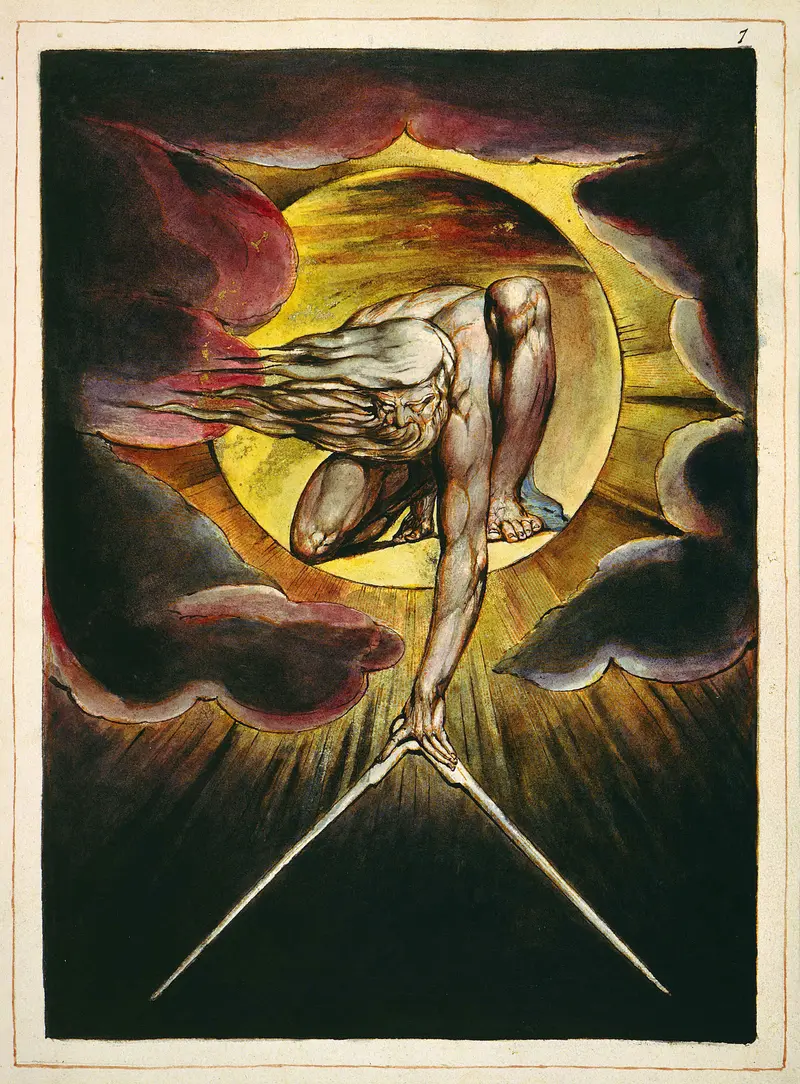
The Ancient of Days
William Blake
Adam Naming the Beasts
William Blake





