
The Ladies' Man — History & Facts
When The Ladies' Man appeared at the Salon des Indépendants in 1890, Parisian critics were quick to note its sly humor—a rare quality in the usually reserved work of Georges Seurat. The painting’s title, a playful nod to the archetype of the suave Parisian flirt, was reportedly suggested by Seurat’s friends, who saw in it a gentle parody of the city’s social rituals. Unlike Seurat’s monumental A Sunday Afternoon on the Island of La Grande Jatte, this work is more intimate, yet it still captures the spirit of Paris at the close of the nineteenth century, when café culture and the spectacle of public life fascinated artists and writers alike. At the center of the composition, a well-dressed gentleman stands under the dappled shade of a boulevard, his posture confident, hat tipped just so, as he exchanges glances with a trio of elegantly attired women.
The man’s cane and boutonnière mark him as a figure of fashion, while the women’s parasols and gloves signal their own social standing. Seurat’s signature pointillist technique—tiny, precise dots of color—creates a shimmering effect, suggesting both the heat of the afternoon and the charged atmosphere of flirtation. The subtle interplay of gazes and gestures invites viewers into a moment of anticipation, much like Edgar Degas’s scenes of urban life, but with a more detached, almost scientific observation of human behavior. The exact medium of The Ladies' Man remains uncertain, though it is generally accepted to be oil on canvas, consistent with Seurat’s practice in his mature period.
The painting’s provenance is not fully documented; it is believed to have remained with Seurat’s family after his untimely death in 1891, later passing through several private collections before entering the public sphere. Today, it is recognized as a late work, created during the final years of Seurat’s short career, and it offers a glimpse of the artist’s evolving interest in the psychology of modern life. While less monumental than his best-known canvases, The Ladies' Man stands as a testament to Seurat’s keen observation and his subtle sense of irony.
More Artworks by Georges Seurat
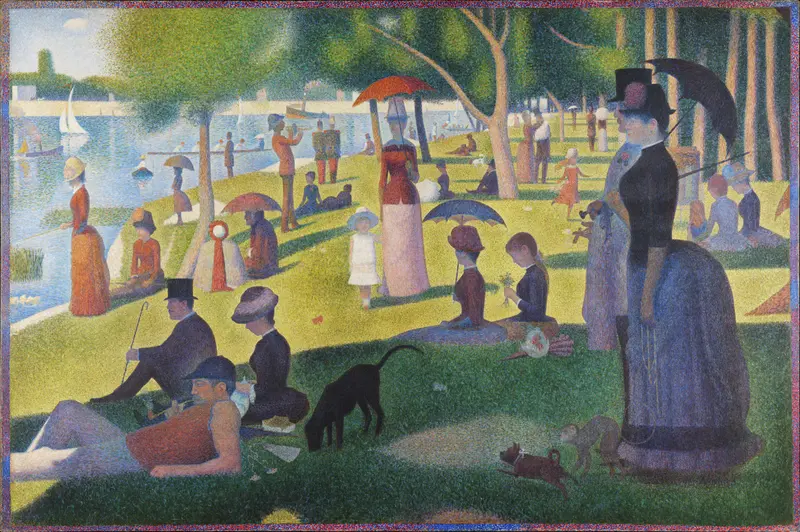
A Sunday Afternoon on the Island of La Grande Jatte
Georges Seurat
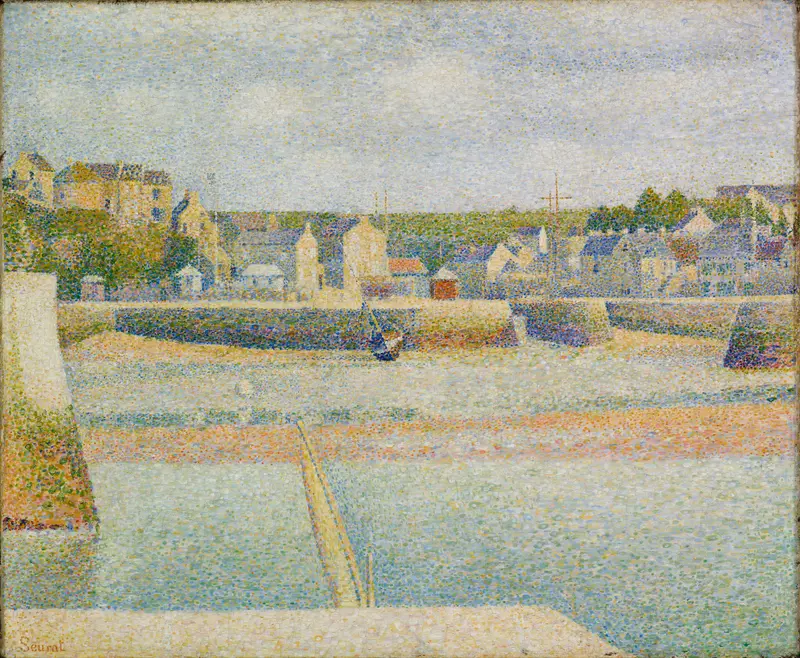
Port-en-Bessin, The Outer Harbor (Low Tide)
Georges Seurat
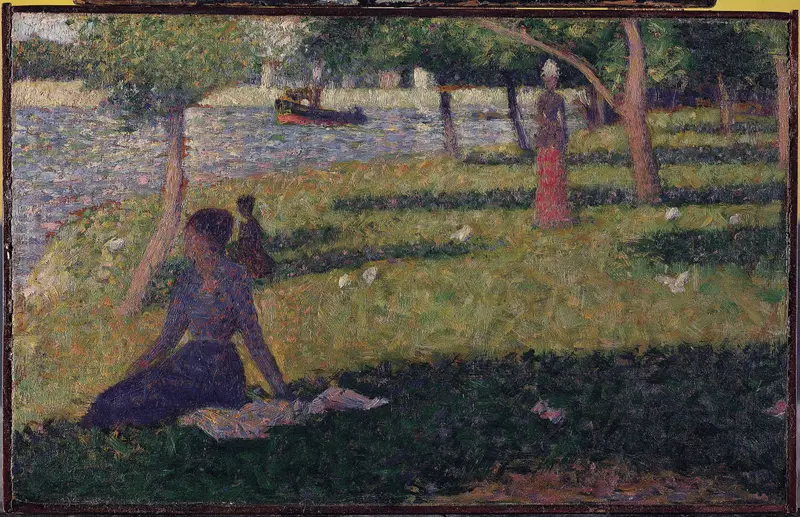
Étude pour ‘La Grande Jatte’ (Study for ‘La Grande Jatte’)
Georges Seurat
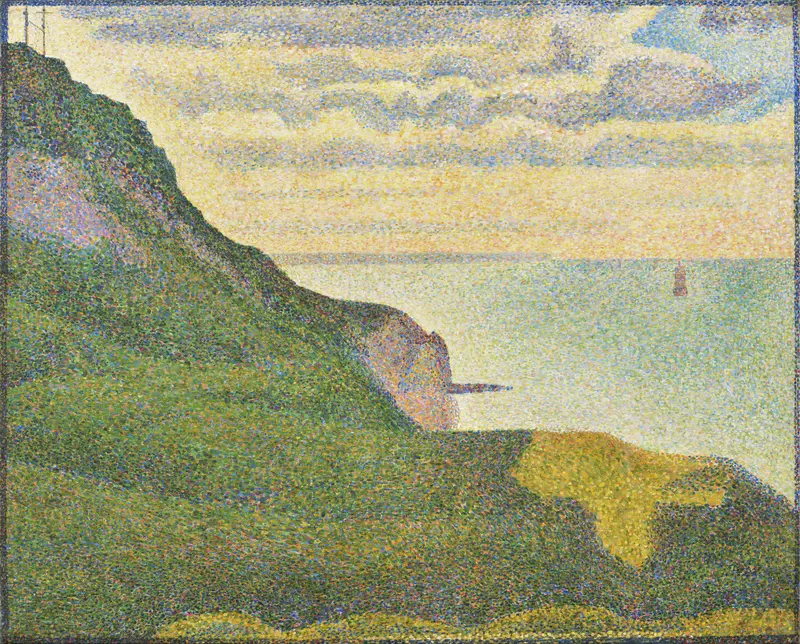
Seascape at Port-en-Bessin,Normandy
Georges Seurat
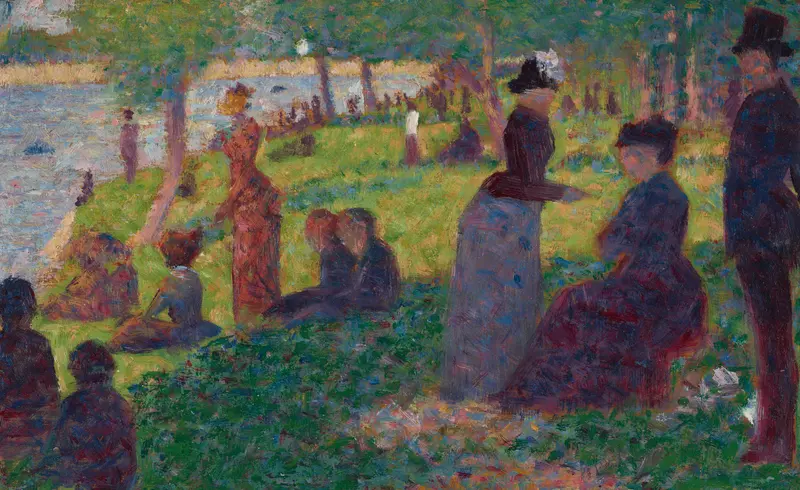
Oil Sketch for "A Sunday on La Grande Jatte — 1884"
Georges Seurat
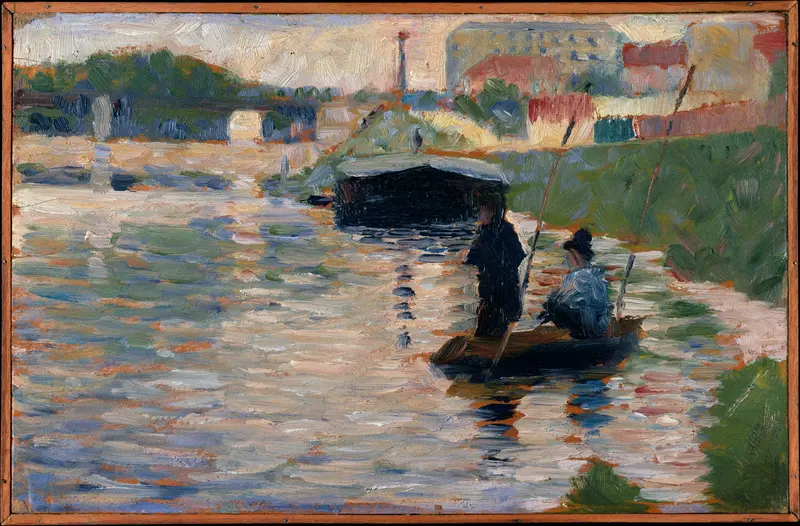
View of the Seine
Georges Seurat
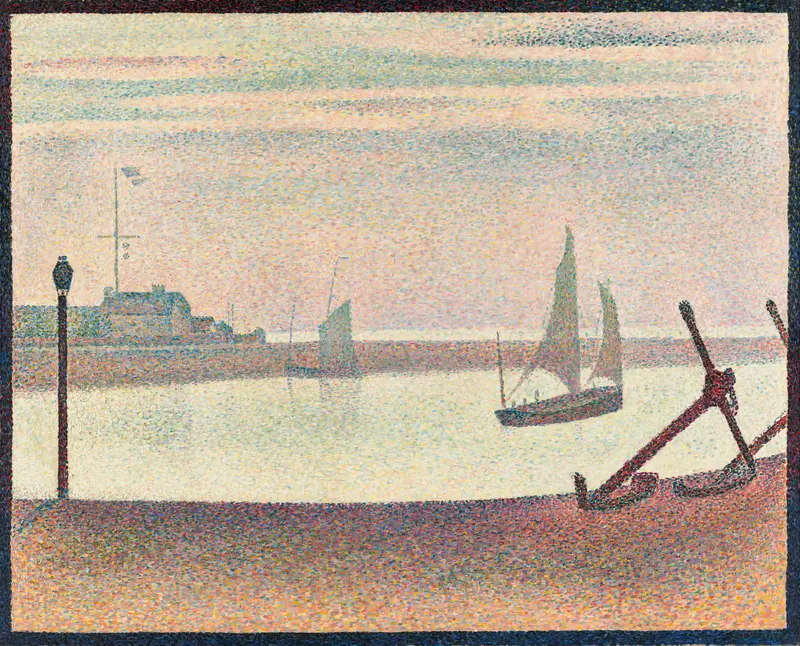
The Channel at Gravelines, Evening
Georges Seurat
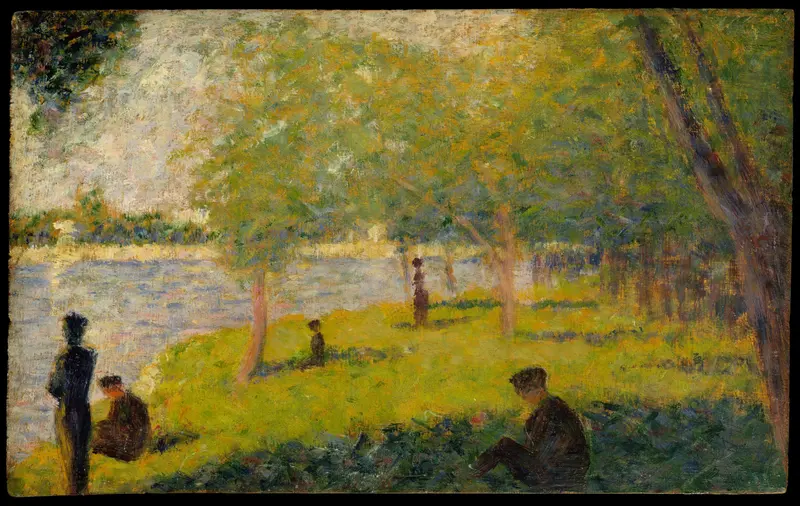
Study for ‘A Sunday on La Grande Jatte’
Georges Seurat
Study for A Sunday on La Grande Jatte
Georges Seurat
The Channel of Gravelines, Petit Fort Philippe
Georges Seurat
More Genre Scene Art

Banquet of the Officers of the St George Civic Guard
Frans Hals

Rembrandt and Saskia in the Scene of the Prodigal Son
Rembrandt van Rijn

Bal du moulin de la Galette
Pierre-Auguste Renoir

Quadrille at the Moulin Rouge
Henri de Toulouse-Lautrec

A Burial at Ornans
Gustave Courbet

When Will You Marry?
Paul Gauguin