
The Luteplayer — History & Facts
What first catches the eye in The Luteplayer is the infectious sense of mischief that radiates from the man in pink, his grin as broad as the sweep of his instrument. Light pours in from the open door, catching on the lute’s polished wood and the flushed faces of both figures, as if the music itself has warmed the room. The woman at the table, cheeks ruddy and eyes bright, leans in with a conspiratorial smile, her hands busy with a bowl but her attention clearly fixed on her companion.
Even the cat, caught mid-prowl with a stolen morsel, seems to join the scene’s rough-and-ready humor. Every detail—the battered stool, the simple shelf, the jug at the player’s feet—grounds the moment in the everyday, yet the mood is anything but ordinary. This painting belongs to the world of early seventeenth-century Flanders, where artists like Adriaen Brouwer delighted in scenes of tavern life and humble interiors. Around 1625, such works were both a celebration and a gentle satire of ordinary pleasures, often snapped up by prosperous townsfolk eager for art that reflected—and poked fun at—their own habits.
The painting now in the V&A South Kensington collection is a lively example of this tradition: its rough brushwork and earthy palette echo the textures of real life, while the composition draws the viewer into the joke. History has kept few traces of this specific canvas’s journey, but its laughter is undiminished—inviting you to linger, and perhaps to listen for the tune still echoing in the painted air.
More Artworks by Adriaen Brouwer

The Smokers
Adriaen Brouwer
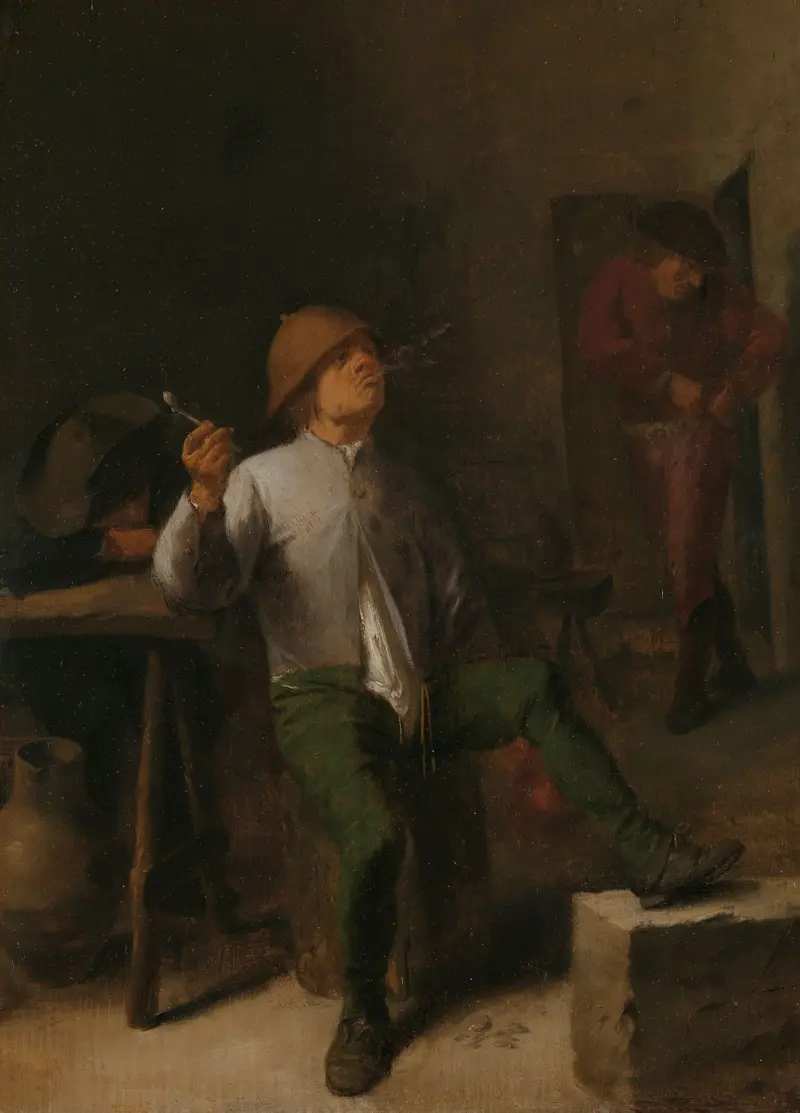
The Smoker
Adriaen Brouwer
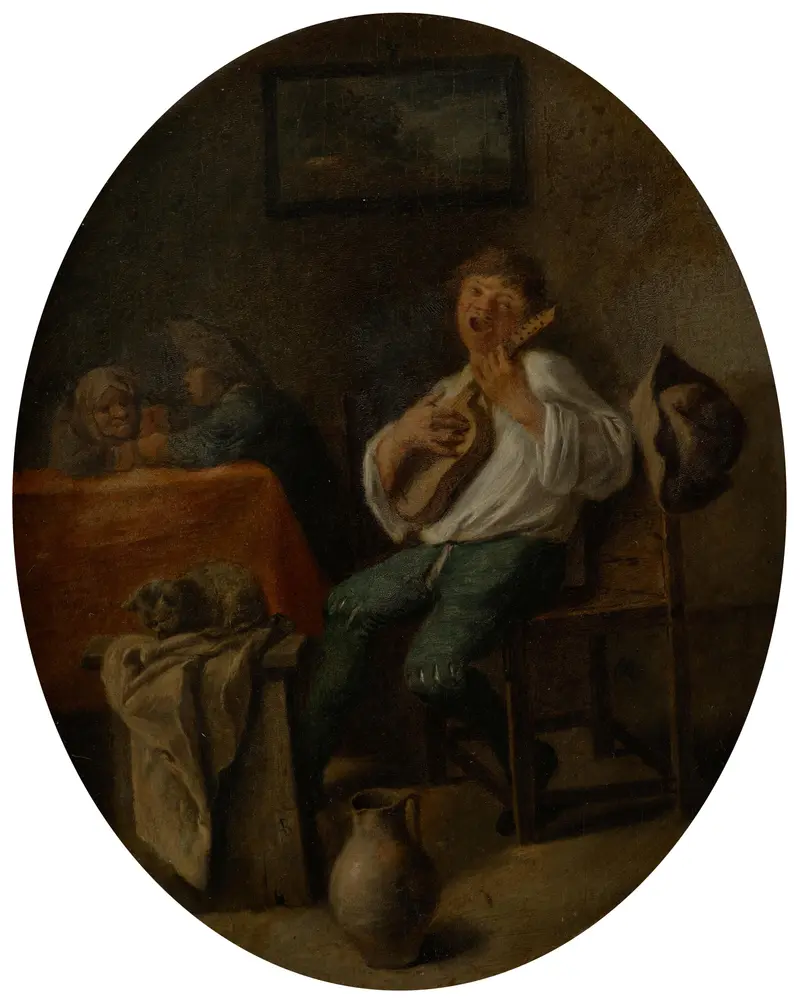
The Guitar Player
Adriaen Brouwer
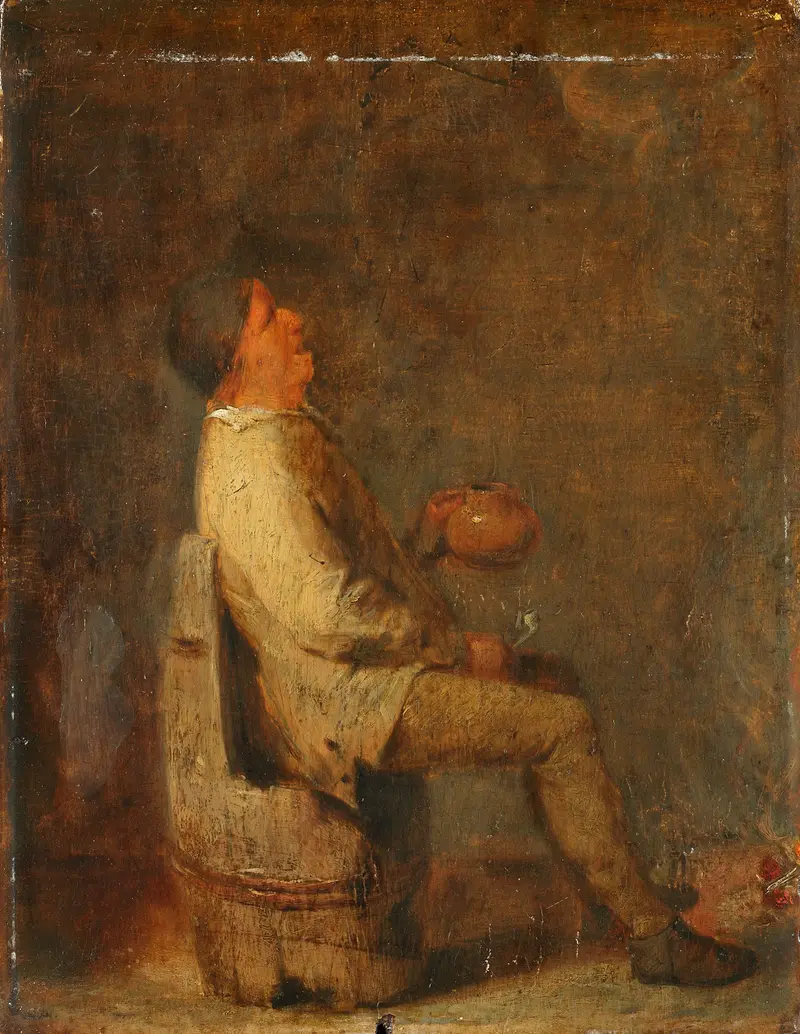
A Peasant Singing
Adriaen Brouwer
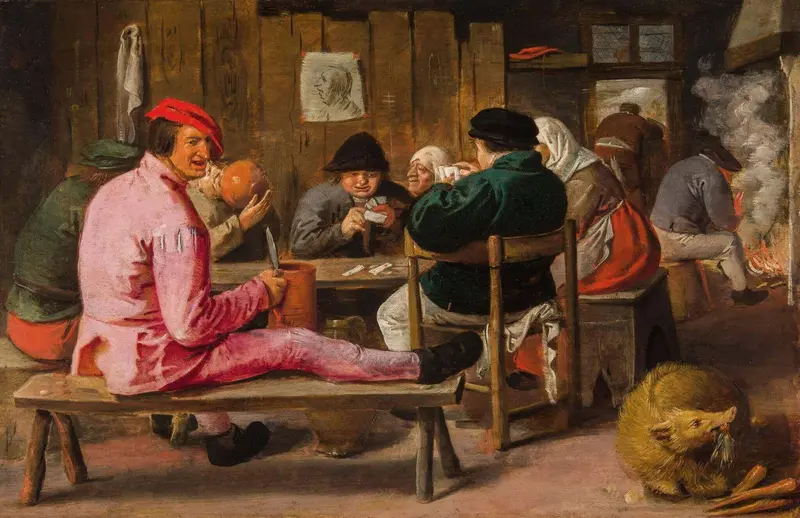
Merry Peasants in an Inn
Adriaen Brouwer
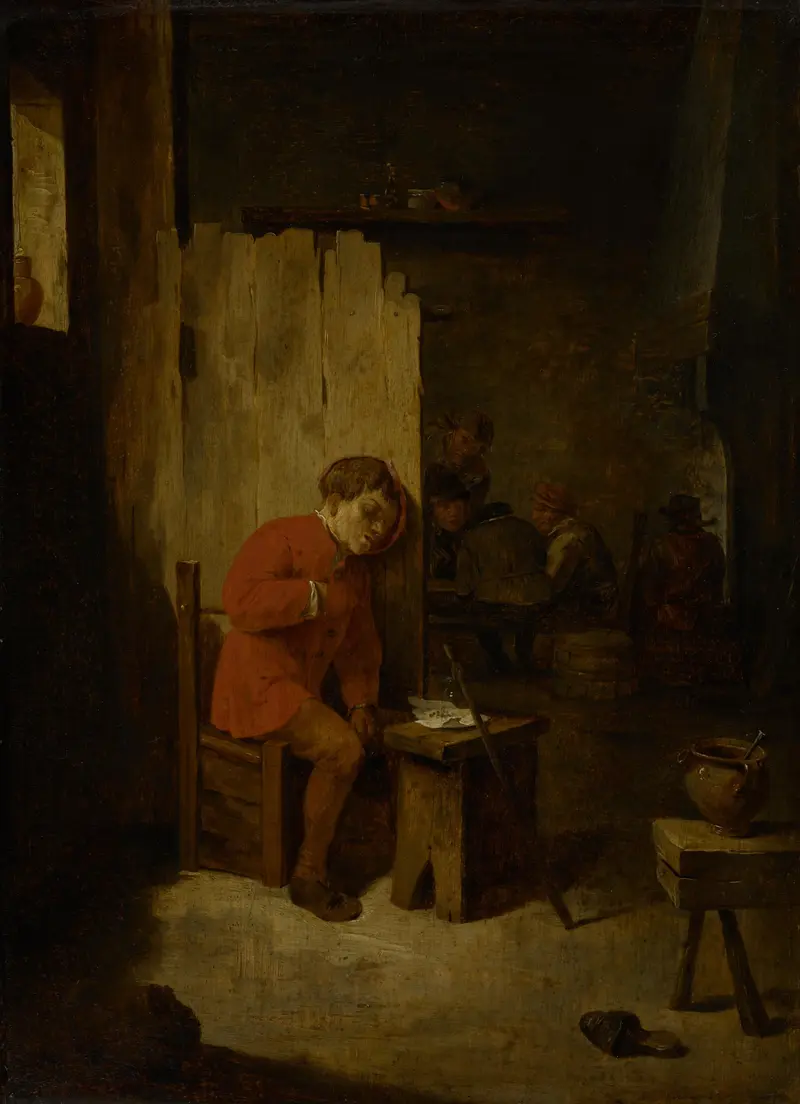
Nachahmer, Schlafender Bauer 853G Gemäldegalerie
Adriaen Brouwer
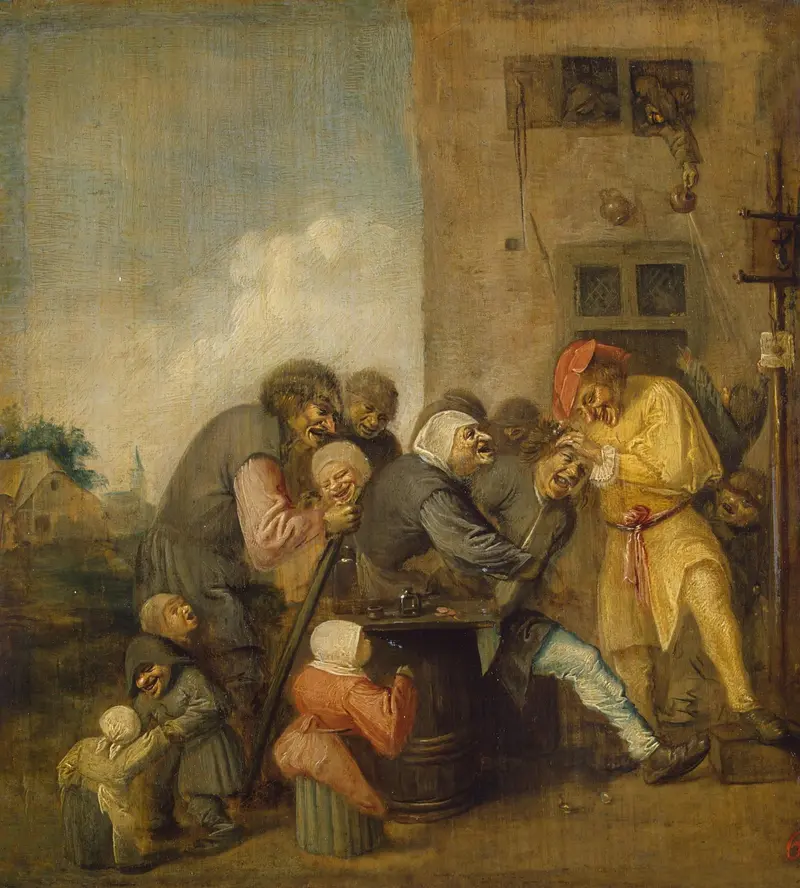
Village Charlatan (The Operation for Stone in the Head)
Adriaen Brouwer
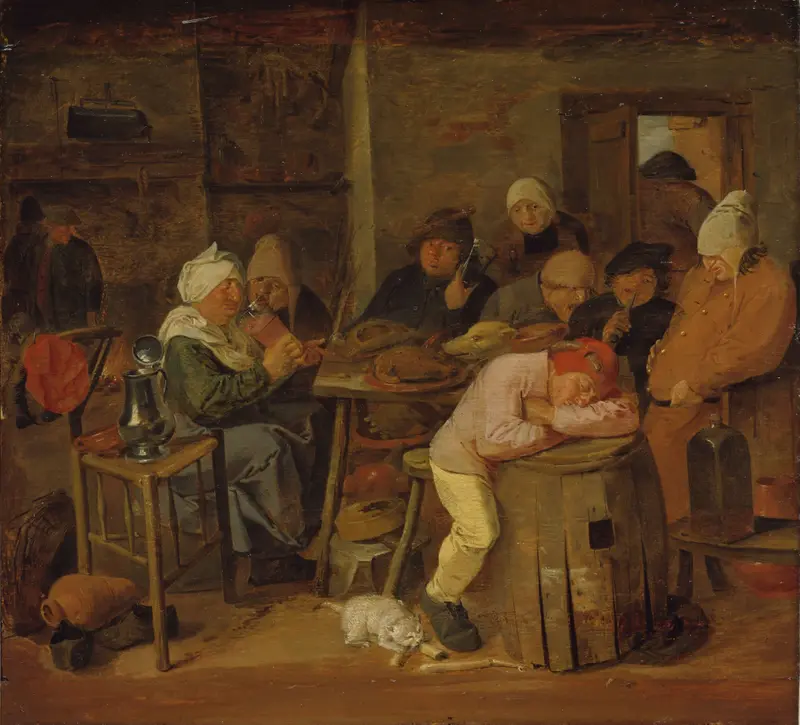
Peasants in an interior (The slaughter feast)
Adriaen Brouwer
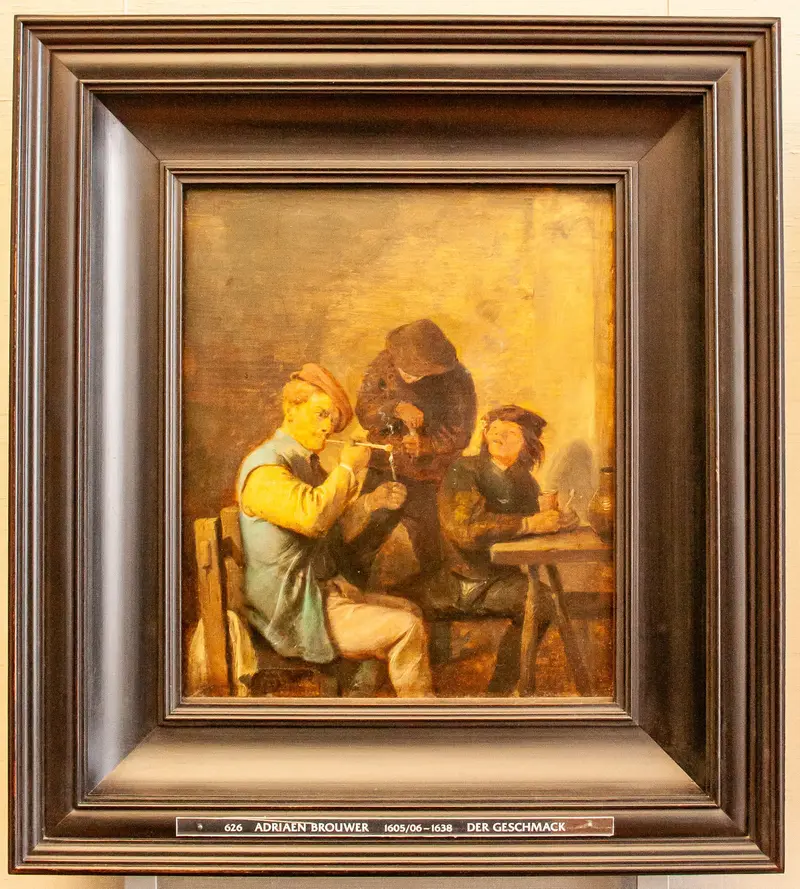
The Taste
Adriaen Brouwer
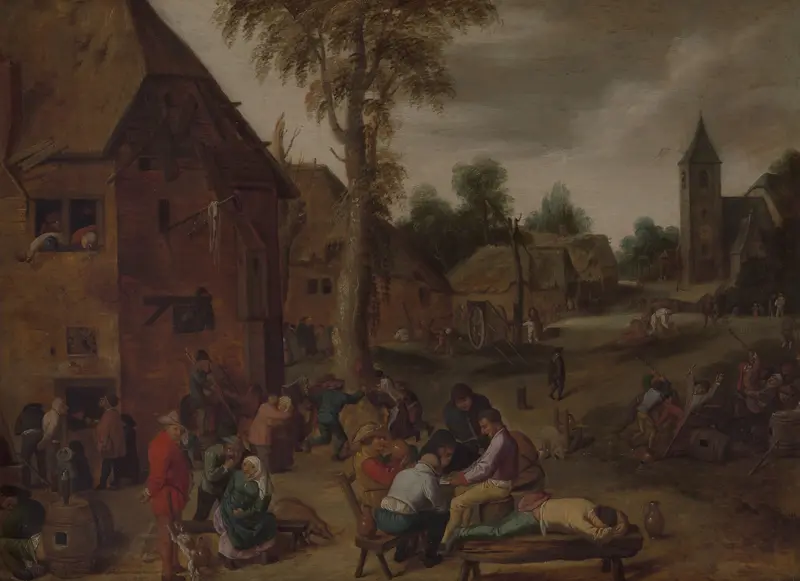
A Fair
Adriaen Brouwer
More Genre Scene Art

Banquet of the Officers of the St George Civic Guard
Frans Hals

Rembrandt and Saskia in the Scene of the Prodigal Son
Rembrandt van Rijn

Bal du moulin de la Galette
Pierre-Auguste Renoir

Quadrille at the Moulin Rouge
Henri de Toulouse-Lautrec

A Burial at Ornans
Gustave Courbet

When Will You Marry?
Paul Gauguin