
The Reapers — History & Facts
When The Reapers was first exhibited in 1861, it marked a turning point for Jules Breton, who had just begun to win acclaim for his sympathetic portrayals of rural life. Critics at the Paris Salon noted the painting’s dignified treatment of peasant labor, a subject that was still controversial among the urban elite. Breton’s choice to elevate the everyday toil of harvesters onto a grand scale challenged the conventions of academic painting, which favored mythological or historical themes.
In a letter from that year, Breton wrote, “I want to show the poetry of the fields, the nobility of work.” This ambition would shape his entire career. At the center of The Reapers, a group of sunburnt men and women pause in a golden field, their scythes resting for a moment of respite. The artist captures the instant when exhaustion and camaraderie mingle: a woman wipes her brow, a man leans on his tool, and the midday light bathes their faces in warm tones. The sheaves of wheat at their feet are rendered with careful attention, each stalk a testament to hours of labor.
Unlike Jean-François Millet’s more somber The Gleaners, Breton’s figures stand upright and proud, their gazes level with the viewer’s, asserting their presence and dignity. The composition’s broad horizon and clear sky suggest both the vastness of the land and the endurance of those who work it. The exact provenance of The Reapers is not fully documented, but it is typical of Breton’s early 1860s canvases, which were often acquired by French collectors eager for scenes of rural authenticity. Throughout the late nineteenth century, Breton’s reputation grew, and his works traveled widely in exhibitions across Europe and America.
Today, The Reapers is recognized as a key example of the Realist movement’s engagement with contemporary social realities. Its influence can be traced in later depictions of labor by artists such as Winslow Homer and Thomas Eakins. Though the painting’s original commissioner is unknown, its enduring presence in public collections attests to the lasting appeal of Breton’s vision of rural France.
More Artworks by Jules Breton

The Song of the Lark
Jules Breton
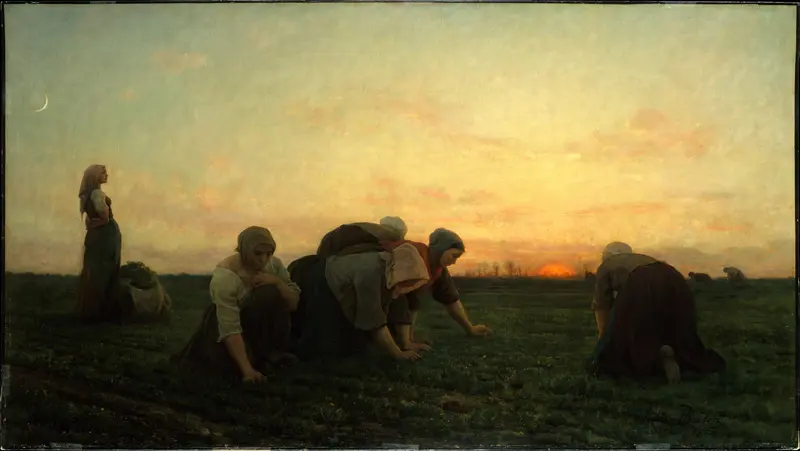
The Weeders
Jules Breton
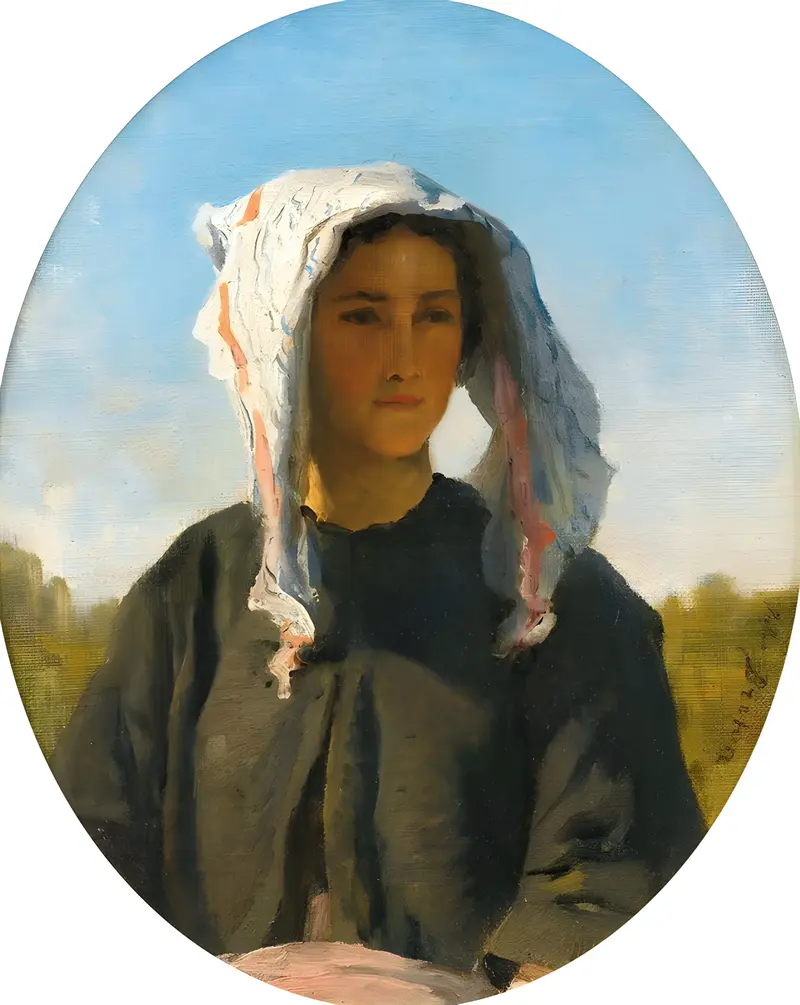
Portrait de jeune Paysanne Bordelaise
Jules Breton
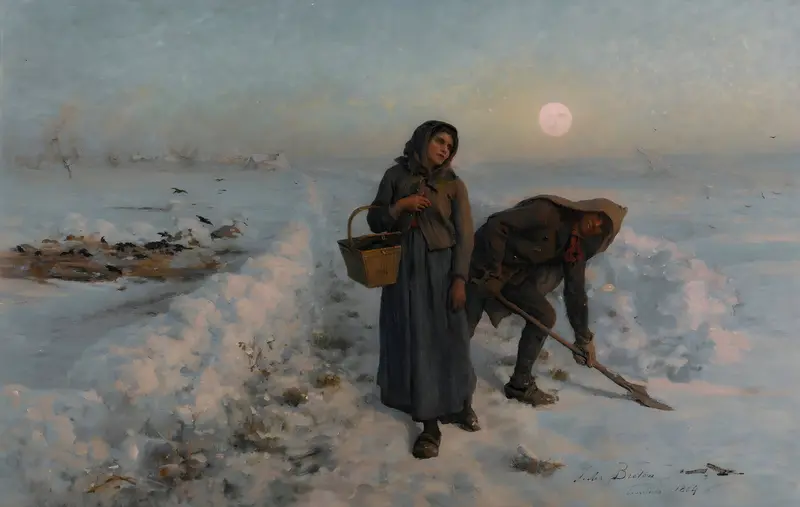
Sur la route en hiver; artois
Jules Breton
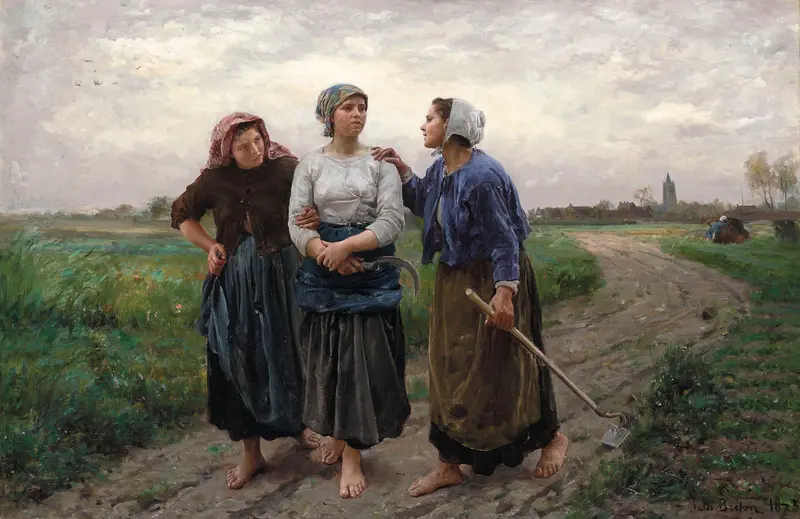
Les amies
Jules Breton
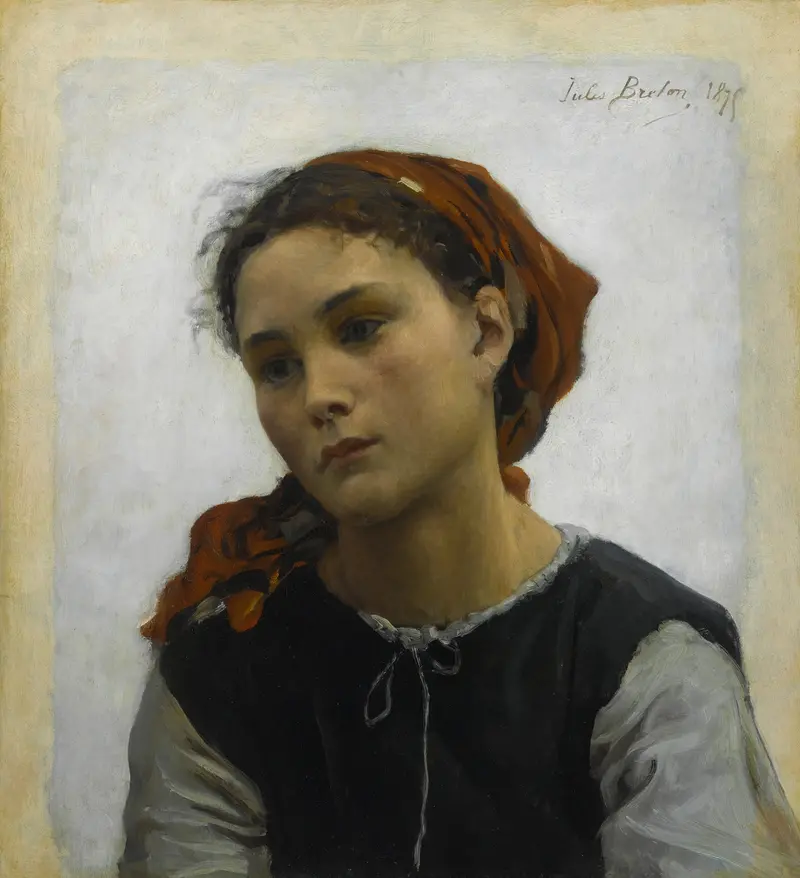
Innocente
Jules Breton
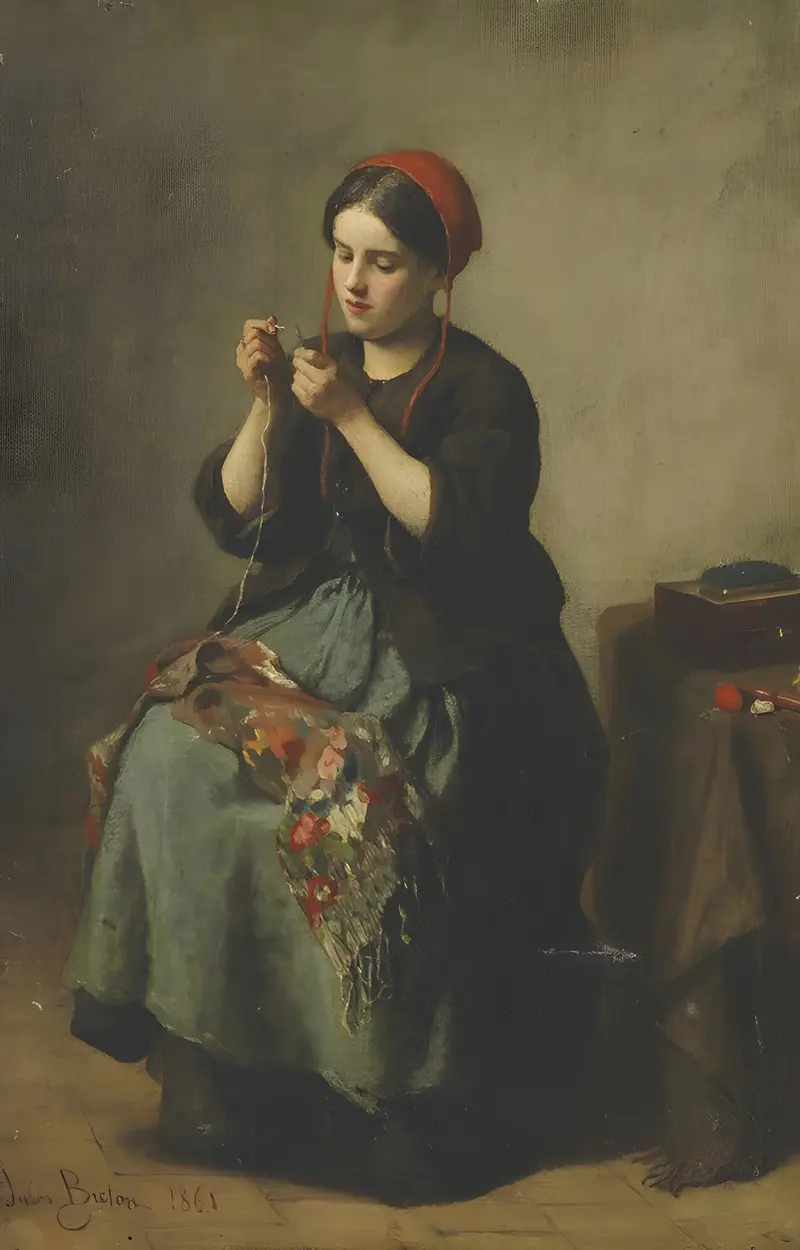
Peasant woman threading a needle
Jules Breton
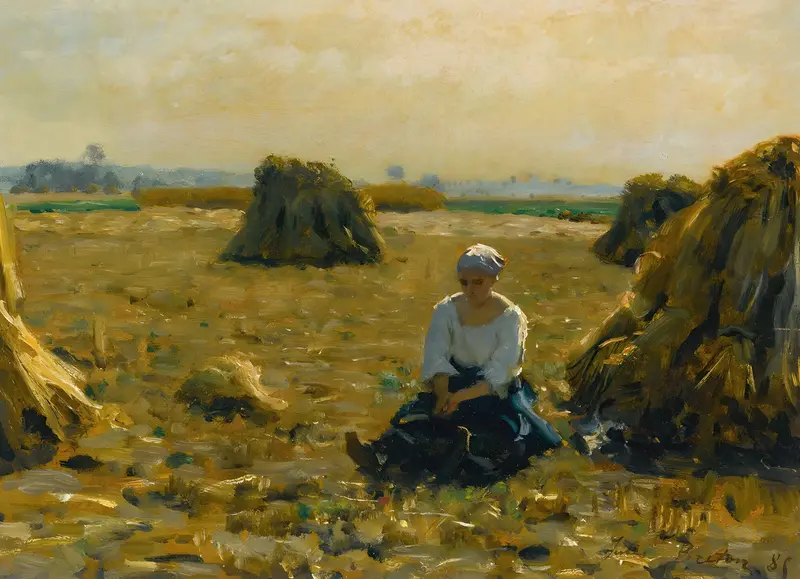
Jeune femme dans les champs
Jules Breton
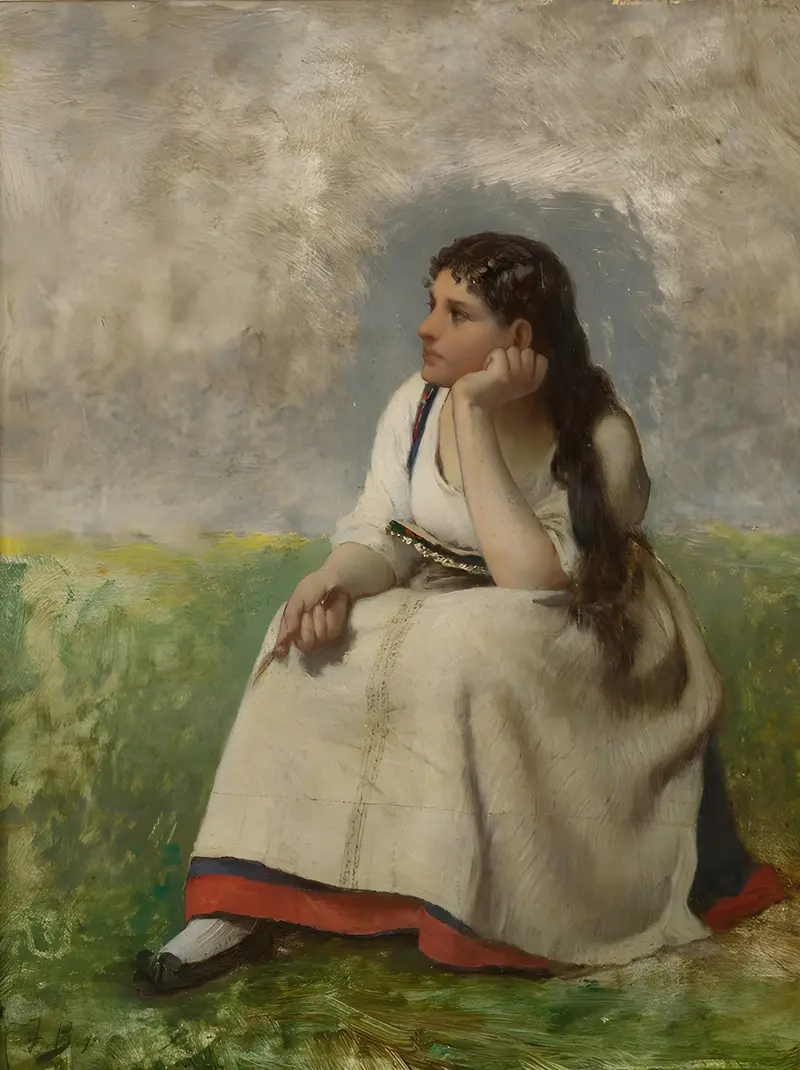
Jeune Fille Pensive
Jules Breton
Returning from the Fields
Jules Breton
More Genre Scene Art

Banquet of the Officers of the St George Civic Guard
Frans Hals

Rembrandt and Saskia in the Scene of the Prodigal Son
Rembrandt van Rijn

Bal du moulin de la Galette
Pierre-Auguste Renoir

Quadrille at the Moulin Rouge
Henri de Toulouse-Lautrec

A Burial at Ornans
Gustave Courbet

When Will You Marry?
Paul Gauguin