
The Silken Curtain (East of the Sun and West of the Moon) — History & Facts
The first thing to catch the eye in The Silken Curtain (East of the Sun and West of the Moon) is the sense of hushed anticipation, as if the entire room is holding its breath. Light pours across the intricate wooden floor, drawing the viewer’s gaze to the kneeling figure—her gown trailing behind her like a spill of moonlight. Every detail, from the embroidered hem of her robe to the golden tracery of the door, is a deliberate invitation to linger.
The standing figure, poised and almost otherworldly in his patterned sleeves and ornate belt, gestures toward the bed, his expression unreadable. The great silken canopy above them, heavy with pattern and promise, turns the chamber into a stage where something momentous is about to unfold. Created for the 1922 edition of East of the Sun and West of the Moon: Old Tales from the North, this illustration by Kay Nielsen belongs to a golden age of book illustration, when publishers sought to enchant readers with images as rich as the stories themselves. In the early twentieth century, fairy tales from Scandinavia found new life in lavishly produced volumes, often intended for both children and adults.
Nielsen’s work stands out for its blend of Art Nouveau elegance and Norse fantasy, his figures elongated and dreamlike, his interiors steeped in pattern and symbolism. While history has preserved little about the journey of this specific drawing, its place in the New York Public Library’s digitized collection ensures it continues to cast its spell—inviting viewers to step beyond the curtain and into the world of northern legend.
More Artworks by Kay Nielsen
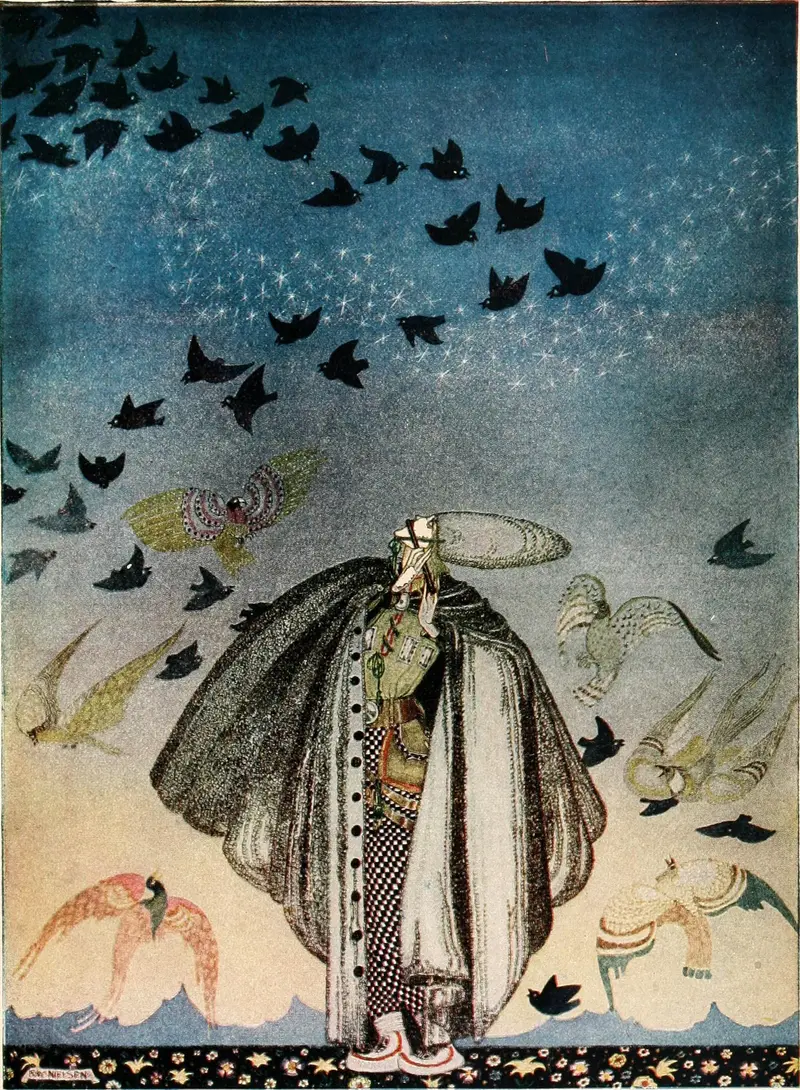
The Cloak of Black Birds (East of the Sun and West of the Moon)
Kay Nielsen

The Spirit at the Lighted Door (East of the Sun and West of the Moon)
Kay Nielsen
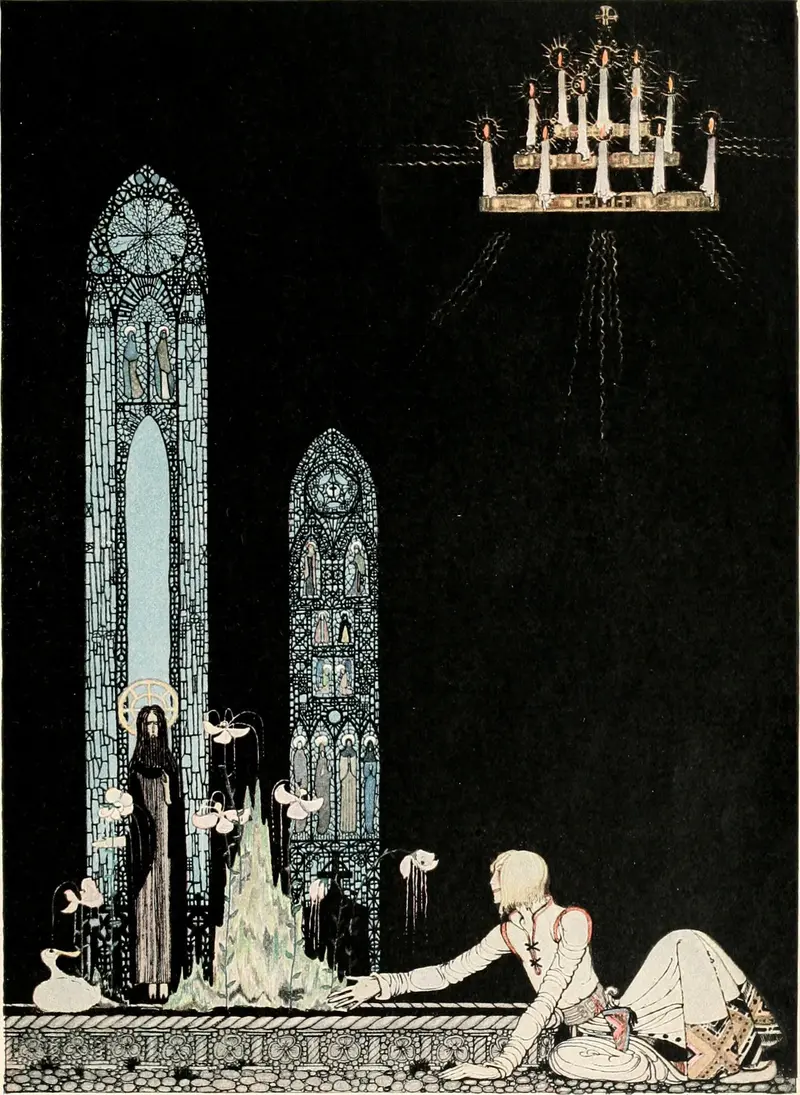
The Widow's Son and the Candles (East of the Sun and West of the Moon)
Kay Nielsen
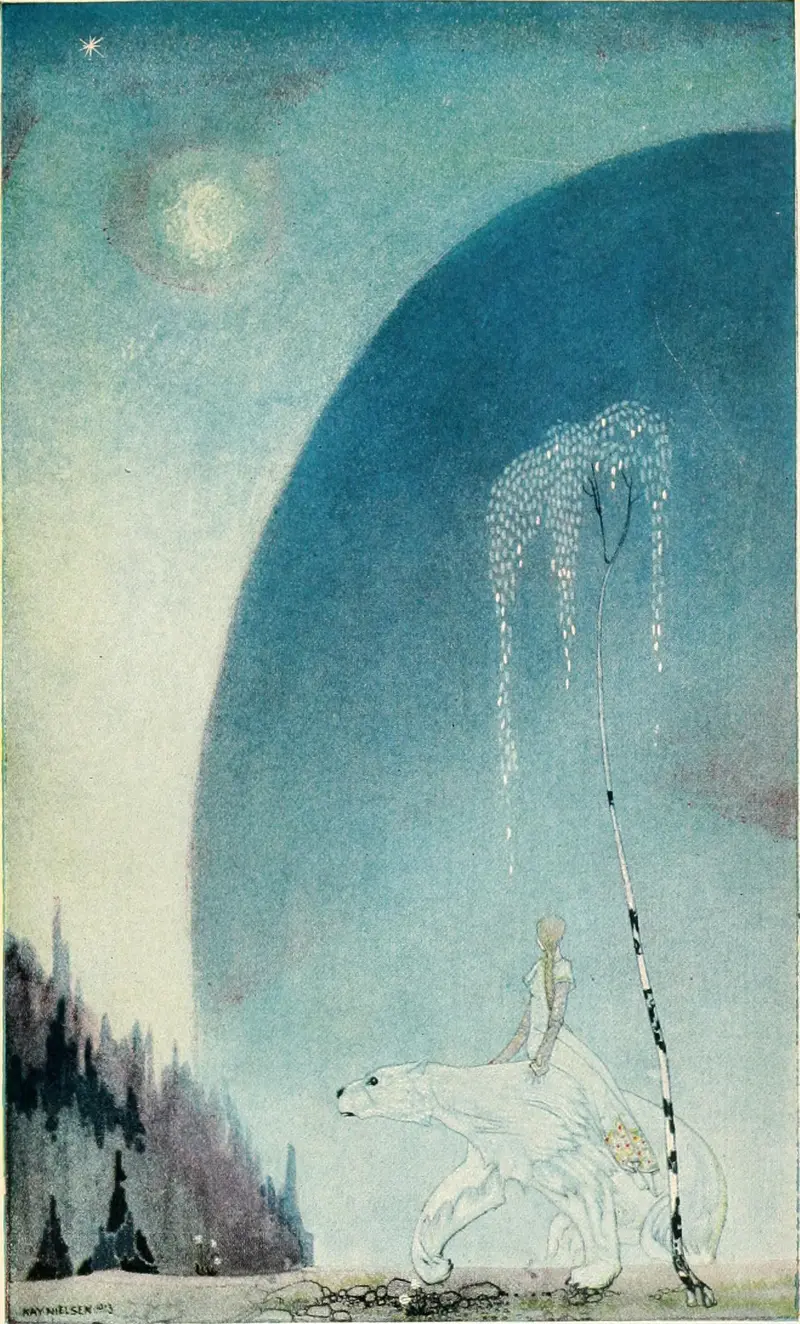
The White Goat Under the Moon (East of the Sun and West of the Moon)
Kay Nielsen

The Cloud Castle (Hansel and Gretel and Other Stories)
Kay Nielsen
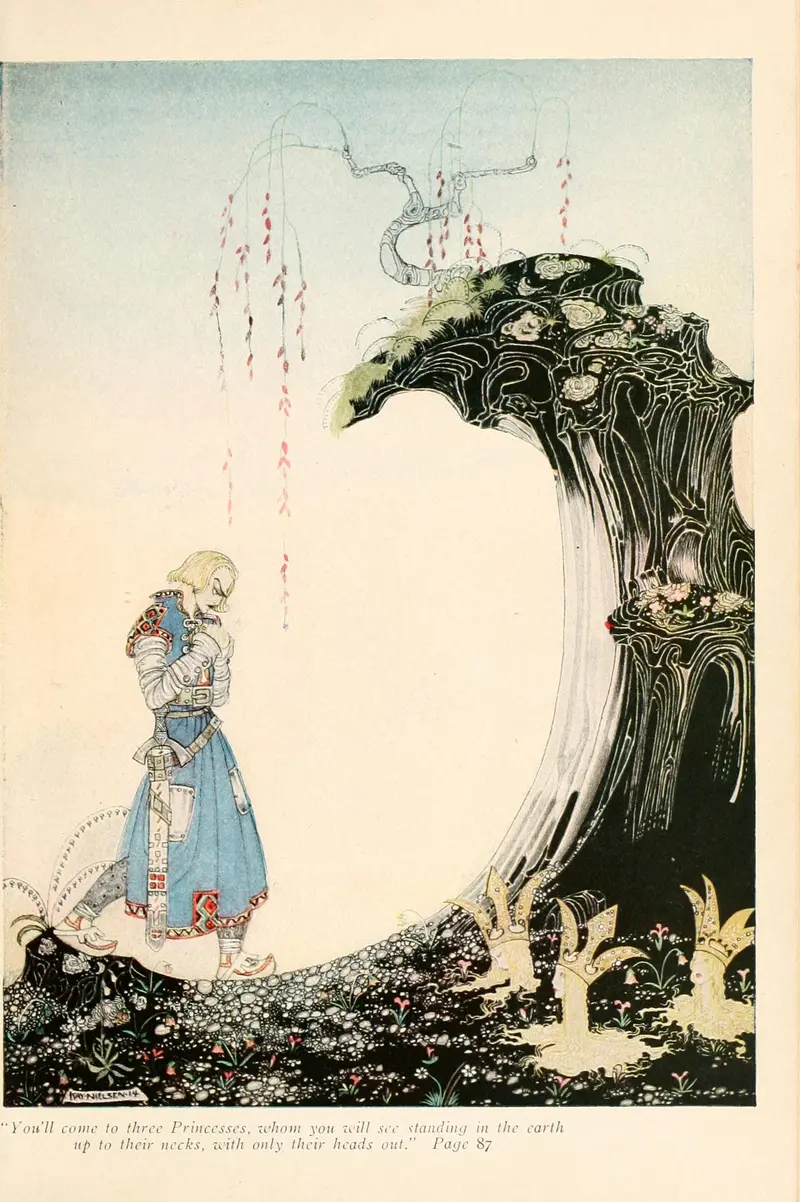
The Enchanted Wave (East of the Sun and West of the Moon)
Kay Nielsen
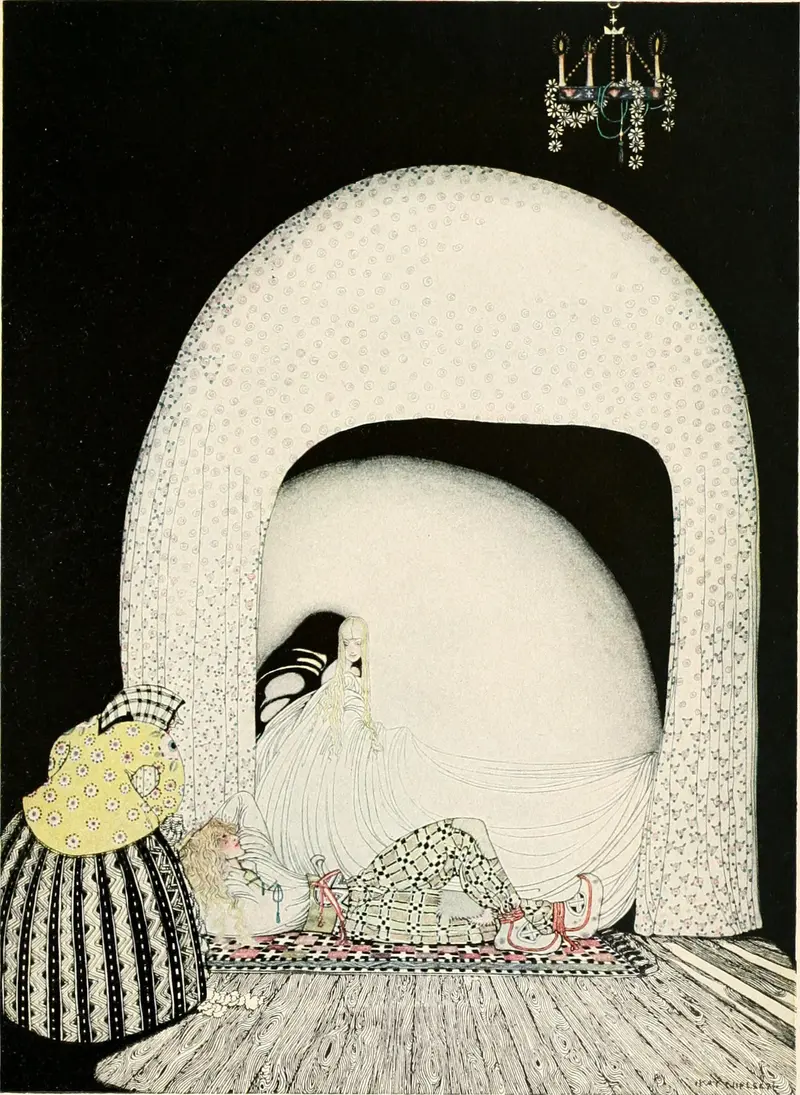
Beneath the White Canopy (East of the Sun and West of the Moon)
Kay Nielsen
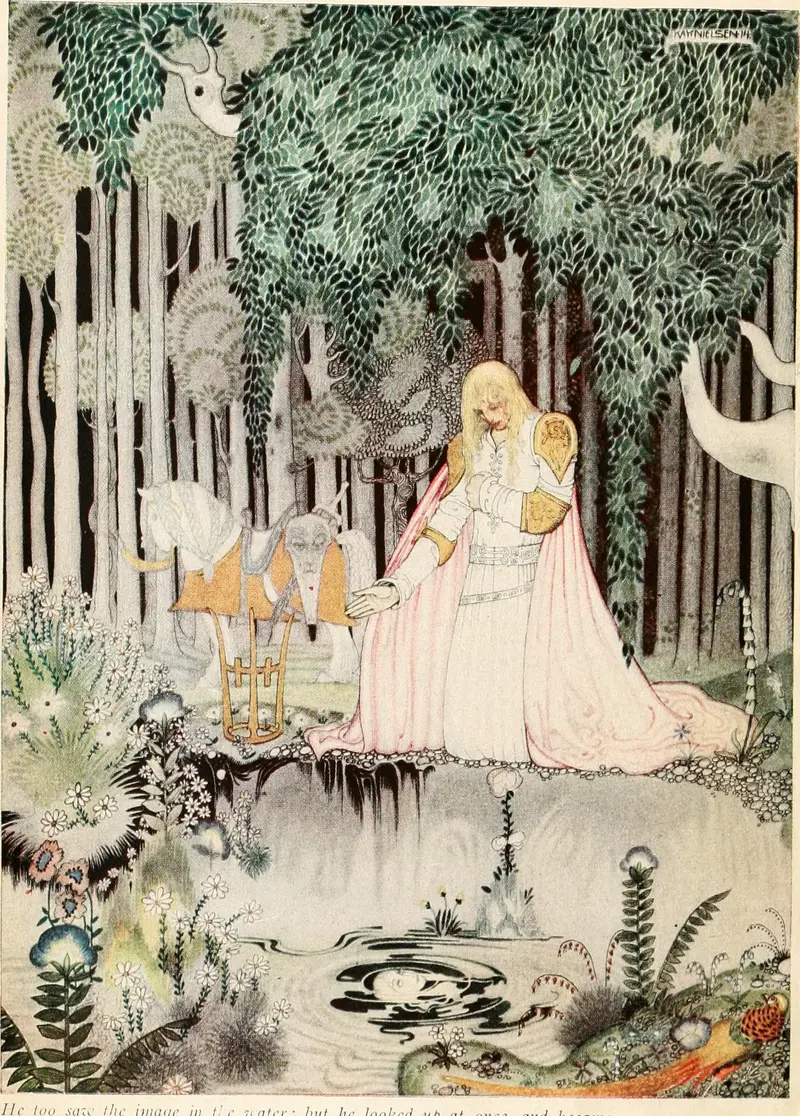
The Princess in the Moonlit Wood (East of the Sun and West of the Moon)
Kay Nielsen
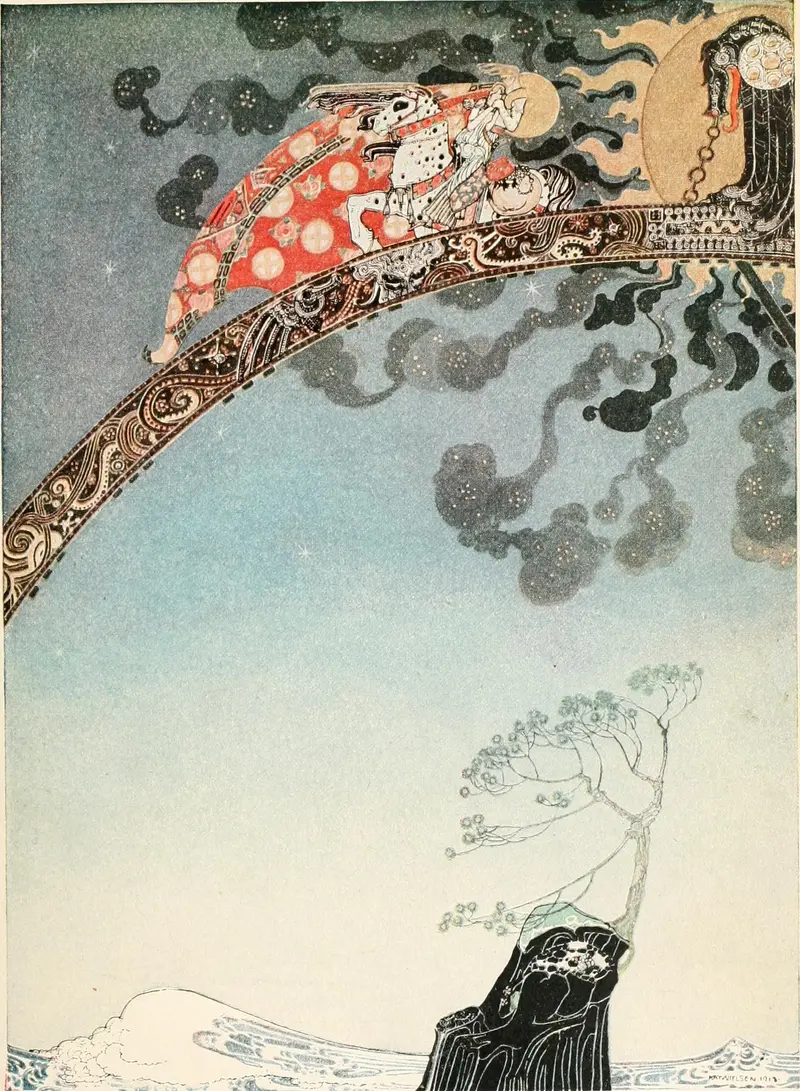
The Bridge Over the Sea (East of the Sun and West of the Moon)
Kay Nielsen
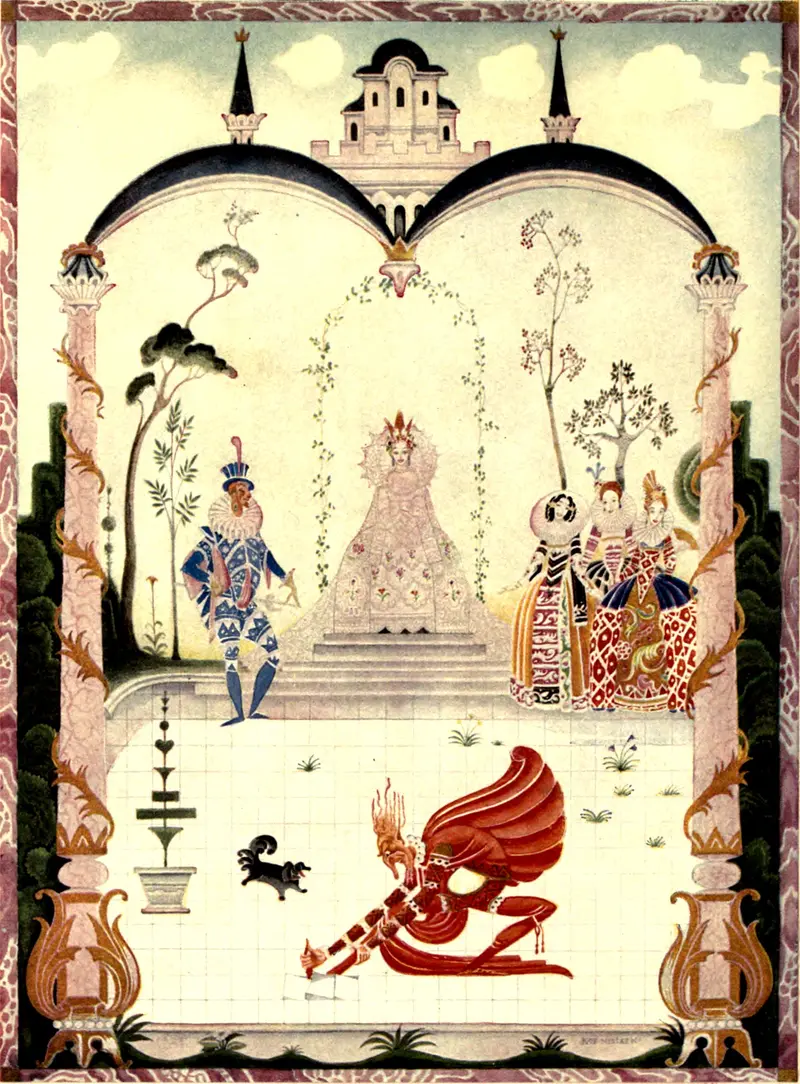
Frontispiece (Hansel and Gretel and Other Stories)
Kay Nielsen





