
The singing lesson — History & Facts
A riot of figures tumbles across the dim interior, each caught in a moment of wild, almost theatrical animation. The eye is drawn first to the conductor, perched atop a table and wielding his baton with exaggerated vigor, as if summoning chaos rather than harmony. Around him, musicians and listeners alike are swept up in the tumult—some straining toward the oversized music book, others lost in their own distractions, and a few seemingly oblivious to the lesson altogether.
The light, harsh and selective, picks out faces and gestures from the gloom, heightening the sense of disorder. Every detail, from the scattered objects on the floor to the twisted postures of the figures, signals a world where discipline has given way to unruly spectacle. Painted in the 1680s by Alessandro Magnasco, this work belongs to the feverish heart of the late Baroque, a period when Italian artists often turned to scenes of everyday life, but with a twist of caricature or moral commentary. Magnasco's hand is unmistakable in the nervous brushwork and the almost grotesque exaggeration of his characters, a style that set him apart from his contemporaries.
Such scenes were rarely mere decoration; they invited viewers to reflect on folly, disorder, and the fragile boundaries of civility. Now housed in the Deutsches Historisches Museum, The singing lesson stands as a vivid reminder that even in the structured world of Baroque music, chaos was never far from the surface. Let your gaze linger on each figure—there is a story in every gesture.
More Artworks by Alessandro Magnasco

The Synagogue
Alessandro Magnasco
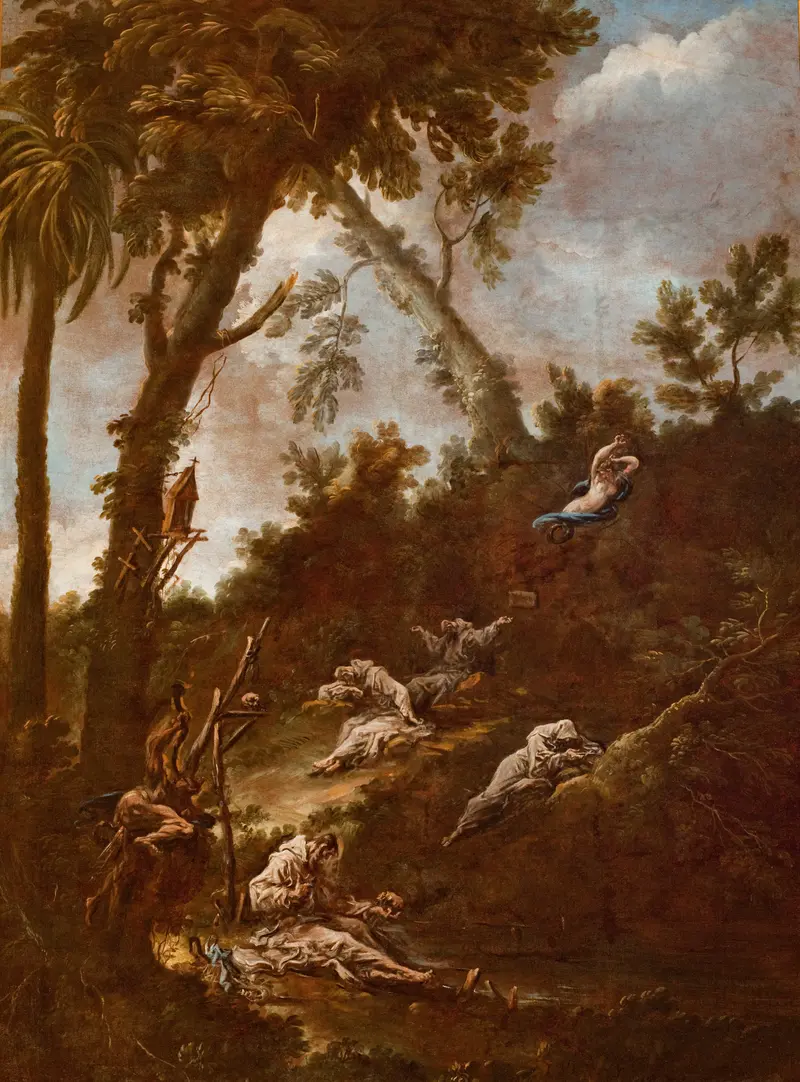
Hermits (Anachorets)
Alessandro Magnasco
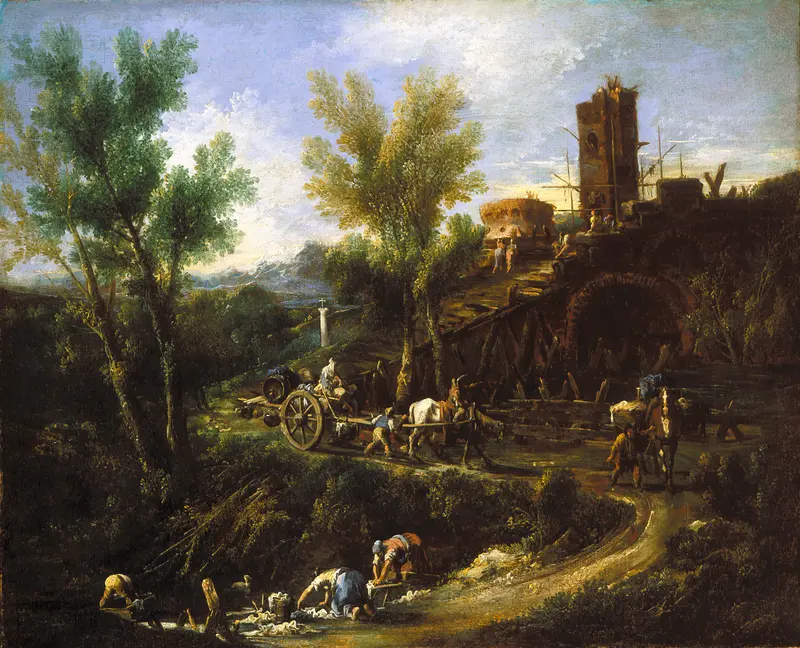
Landscape with Gypsies and Washerwomen
Alessandro Magnasco
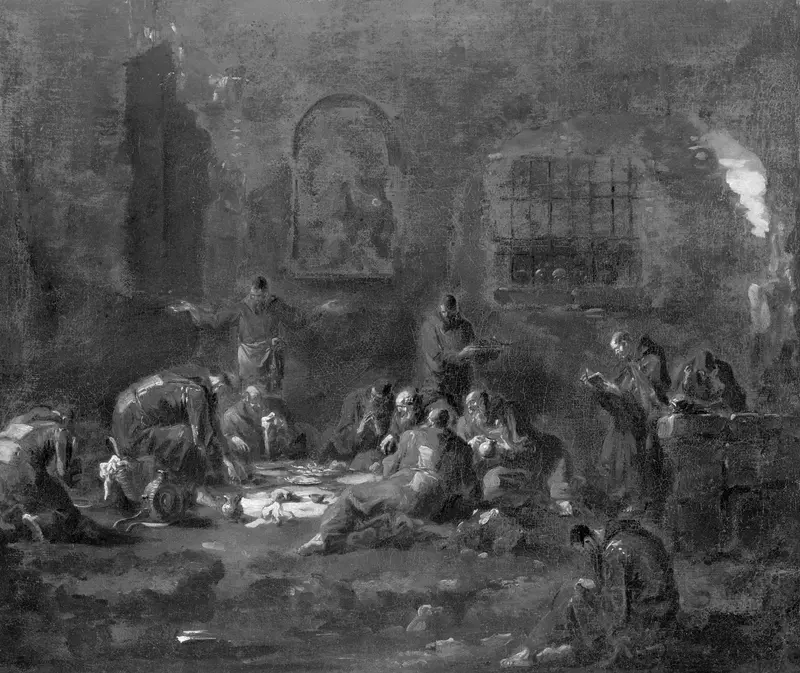
Monks at Supper
Alessandro Magnasco
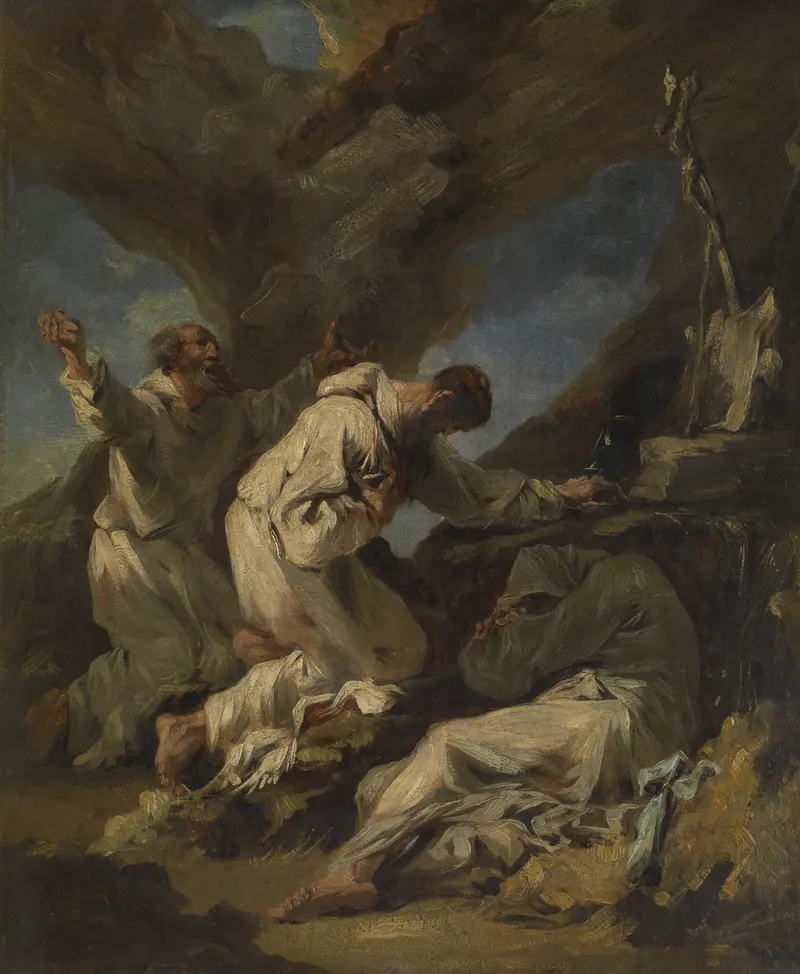
Praying Monks
Alessandro Magnasco
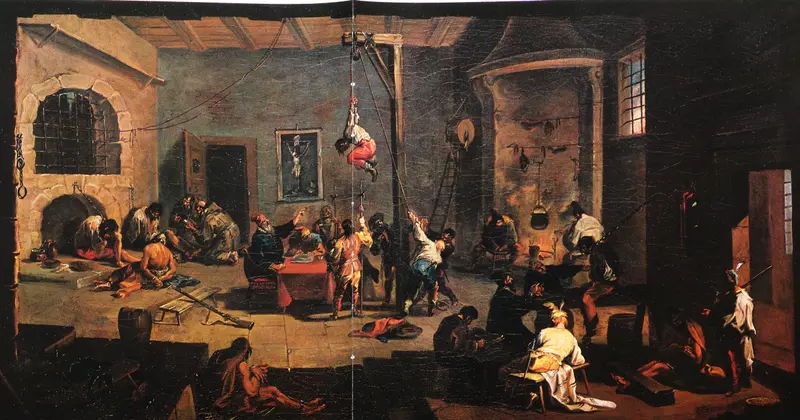
Torture Scene
Alessandro Magnasco
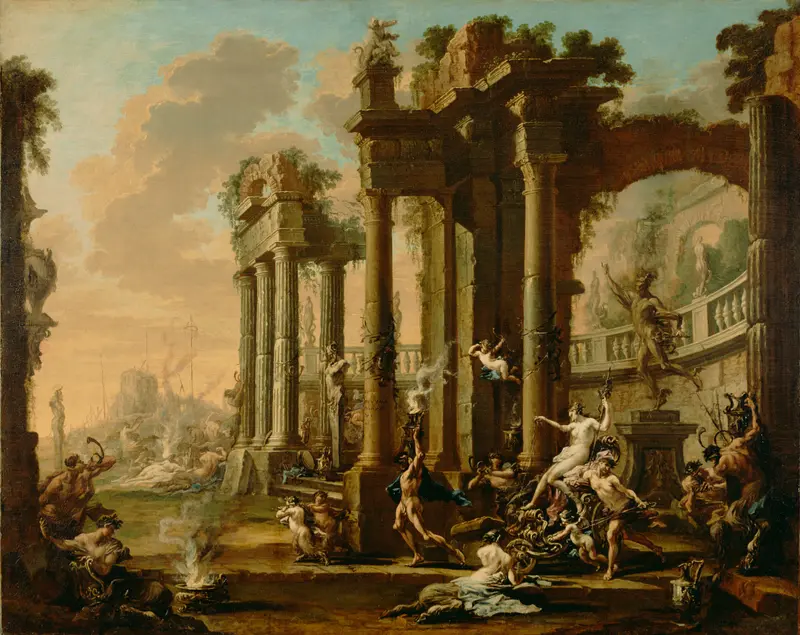
The Triumph of Venus
Alessandro Magnasco
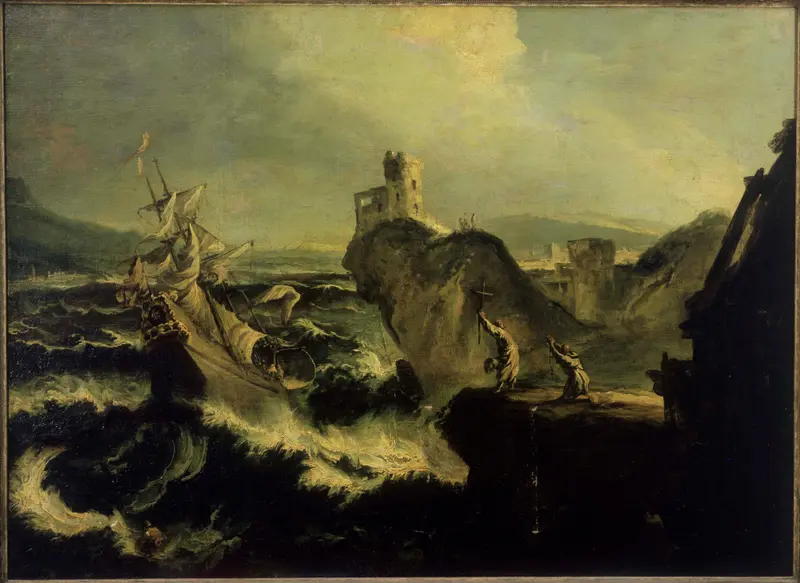
The Shipwreck
Alessandro Magnasco
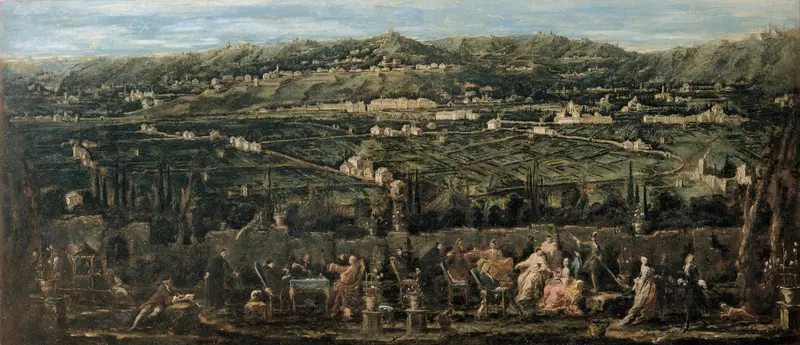
Garden Party in Albaro
Alessandro Magnasco
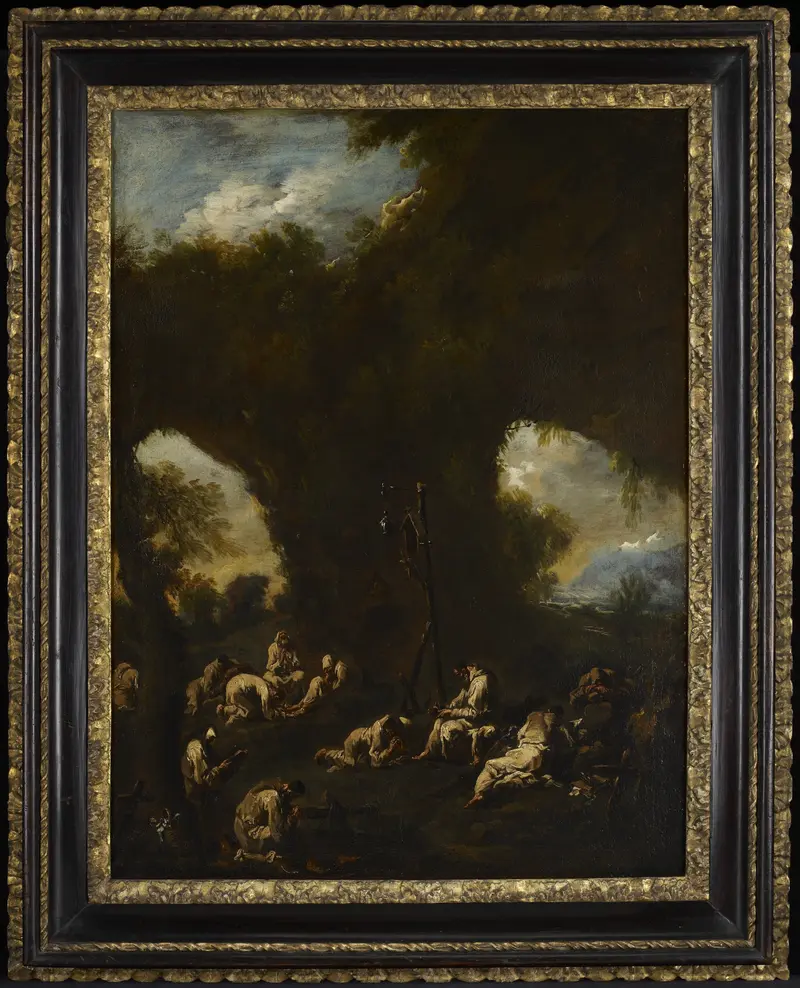
Monks Praying in a Grotto
Alessandro Magnasco
More Genre Scene Art

Banquet of the Officers of the St George Civic Guard
Frans Hals

Rembrandt and Saskia in the Scene of the Prodigal Son
Rembrandt van Rijn

Bal du moulin de la Galette
Pierre-Auguste Renoir

Quadrille at the Moulin Rouge
Henri de Toulouse-Lautrec

A Burial at Ornans
Gustave Courbet

When Will You Marry?
Paul Gauguin