
The Story of Nastagio Degli Onesti, part three — History & Facts
In 1483, the powerful Pucci family of Florence commissioned Sandro Botticelli to create a series of four panels narrating a tale from Boccaccio's Decameron as a wedding gift. These paintings were intended to decorate a bridal chamber, their vivid storytelling serving as both entertainment and moral lesson for the newlyweds. The third panel, The Story of Nastagio Degli Onesti, part three, captures a pivotal moment in this narrative cycle, blending the fantastical with the practical concerns of love and marriage in Renaissance Florence. At the heart of this panel, Nastagio hosts a grand banquet in a pine grove, inviting his beloved and her family.
Suddenly, the supernatural spectacle he alone had witnessed—a ghostly knight hunting a naked woman—erupts before all the guests. Botticelli’s composition is alive with movement: the terrified woman flees, the knight pursues, and the guests recoil in horror. The silverware on the table glints with the same cold light as the knight’s armor, tying the feast to the haunting.
Unlike the more restrained storytelling of Ghirlandaio, Botticelli fills the scene with overlapping figures and urgent gestures, intensifying the drama and ensuring the lesson—fear can move hearts—lands with force. The panels remained in Florence for centuries, admired for their narrative clarity and decorative charm. Though the exact medium is uncertain, they are believed to be tempera on wood, typical of Botticelli's workshop in the early Renaissance. Today, The Story of Nastagio Degli Onesti, part three is part of the Prado Museum’s collection in Madrid, a testament to the international journeys of Florentine art.
The series is often studied as a bridge between private, domestic commissions and the grander public works that would soon define Botticelli’s career.
More Artworks by Sandro Botticelli

Virgin and Child
Sandro Botticelli

Madonna and Child and the Young St John the Baptist
Sandro Botticelli

Madonna and Child with six angels and Saint John the Baptist as Child
Sandro Botticelli

Adoration of the Magi
Sandro Botticelli

Virgin and Child with the Young Saint John the Baptist
Sandro Botticelli
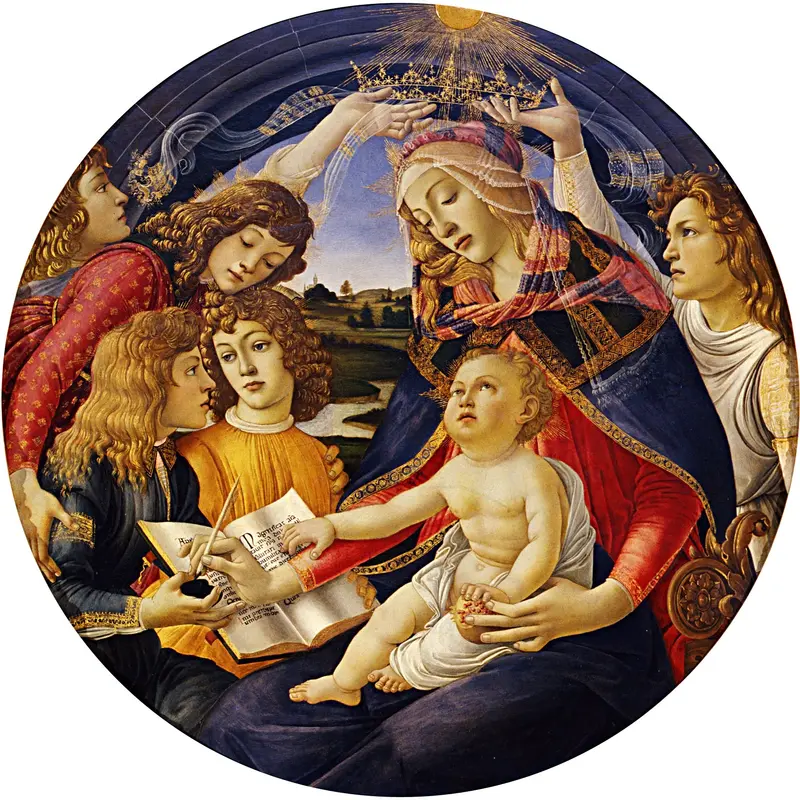
Madonna of the Magnificat
Sandro Botticelli
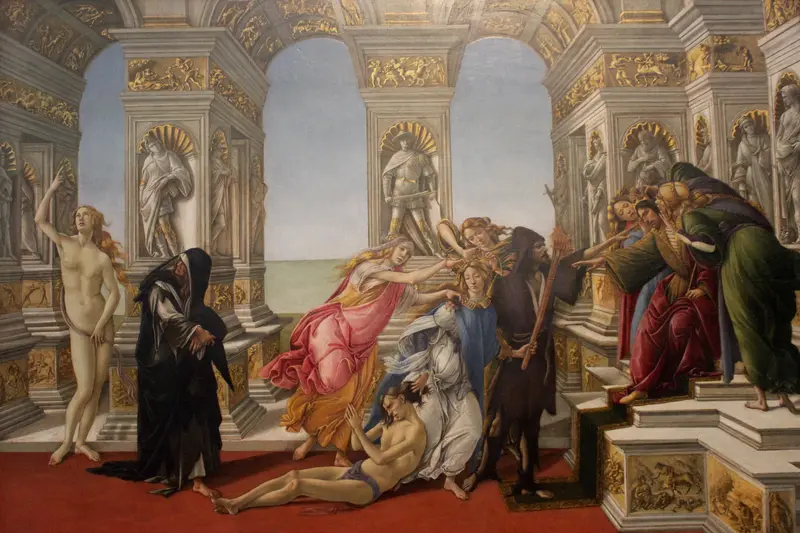
Calumny of Apelles
Sandro Botticelli

Portrait of a young man holding a roundel
Sandro Botticelli

The Trinity with Saint Mary Magdalene and Saint John the Baptist, the Archangel Raphael and Tobias
Sandro Botticelli

Idealized Portrait of a Lady (Portrait of Simonetta Vespucci as Nymph)
Sandro Botticelli
More Genre Scene Art

Banquet of the Officers of the St George Civic Guard
Frans Hals

Rembrandt and Saskia in the Scene of the Prodigal Son
Rembrandt van Rijn

Bal du moulin de la Galette
Pierre-Auguste Renoir

Quadrille at the Moulin Rouge
Henri de Toulouse-Lautrec

A Burial at Ornans
Gustave Courbet

When Will You Marry?
Paul Gauguin