
The Transfiguration, St Jerome and St Augustine — History & Facts
When Sandro Botticelli painted The Transfiguration, St Jerome and St Augustine around 1500, he was entering the final years of his career, a period marked by growing religious fervor in Florence and the influence of the fiery preacher Savonarola. This work stands out because it unites three monumental figures—Christ, St Jerome, and St Augustine—who rarely share the same pictorial space. The painting’s composition and subject have led scholars to speculate that it was commissioned for a learned religious institution, perhaps a monastery or a confraternity devoted to study and contemplation, though no definitive records of its original patron survive. At the heart of the painting, Christ is shown at the moment of the Transfiguration, his figure radiant and elevated above the earthly plane, flanked by Moses and Elijah.
Below, St Jerome, known for his translation of the Bible into Latin, and St Augustine, the philosopher-bishop, are depicted in deep contemplation, their gestures and attributes—Jerome’s lion and Augustine’s bishop’s mitre—identifying them unmistakably. The dramatic contrast of light, with Christ bathed in brilliance and the saints half-shadowed, underscores the divide between divine revelation and human understanding. Unlike Raphael’s later Transfiguration, which swells with tumultuous movement, Botticelli’s version is marked by a quiet gravity, inviting the viewer to meditate on the mysteries of faith and intellect. The physical history of The Transfiguration, St Jerome and St Augustine remains partly shrouded in mystery, as is often the case with Botticelli’s late works.
It is not clear when the painting left its original setting, but by the nineteenth century it was part of a private collection in Italy, before entering the public sphere through acquisition by a major museum. Today, it is recognized as a testament to Botticelli’s evolving style in his later years, when his palette grew more austere and his figures more introspective. The painting’s blend of theological depth and psychological subtlety has made it a subject of ongoing study, especially as scholars continue to reassess Botticelli’s legacy beyond his celebrated mythologies.
More Artworks by Sandro Botticelli
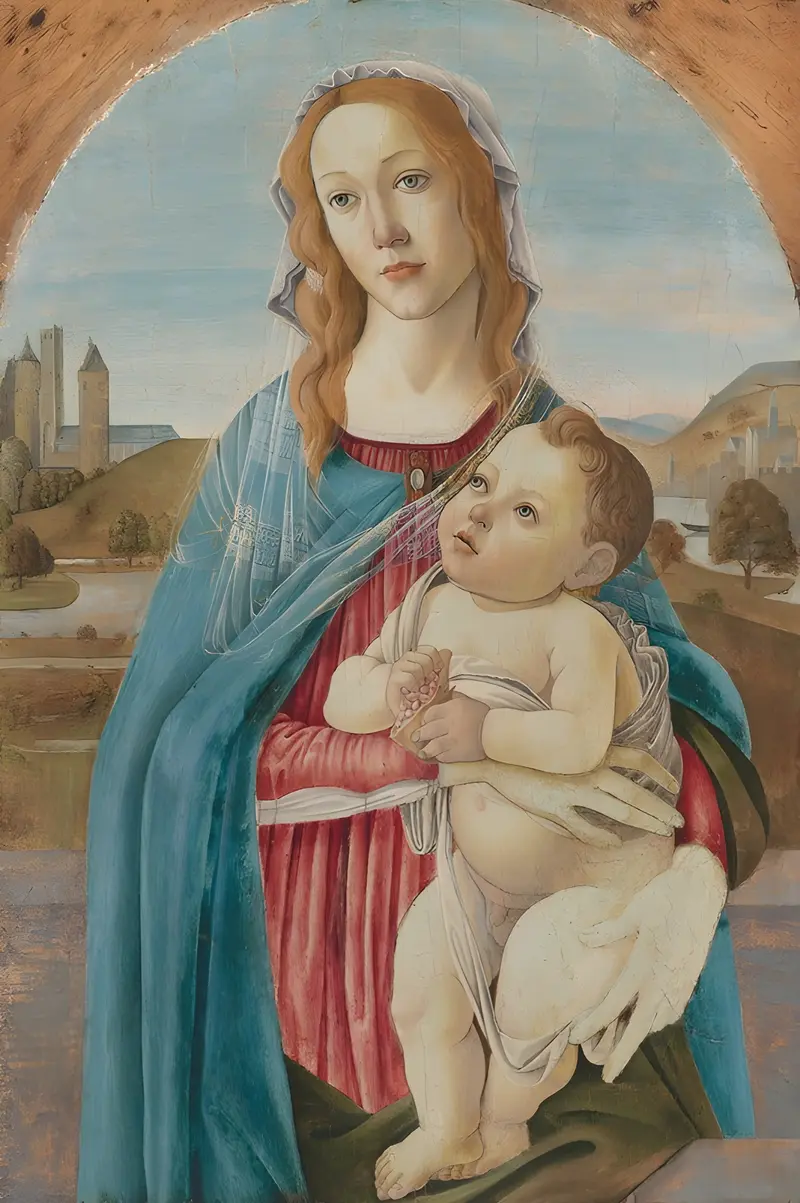
Virgin and Child
Sandro Botticelli
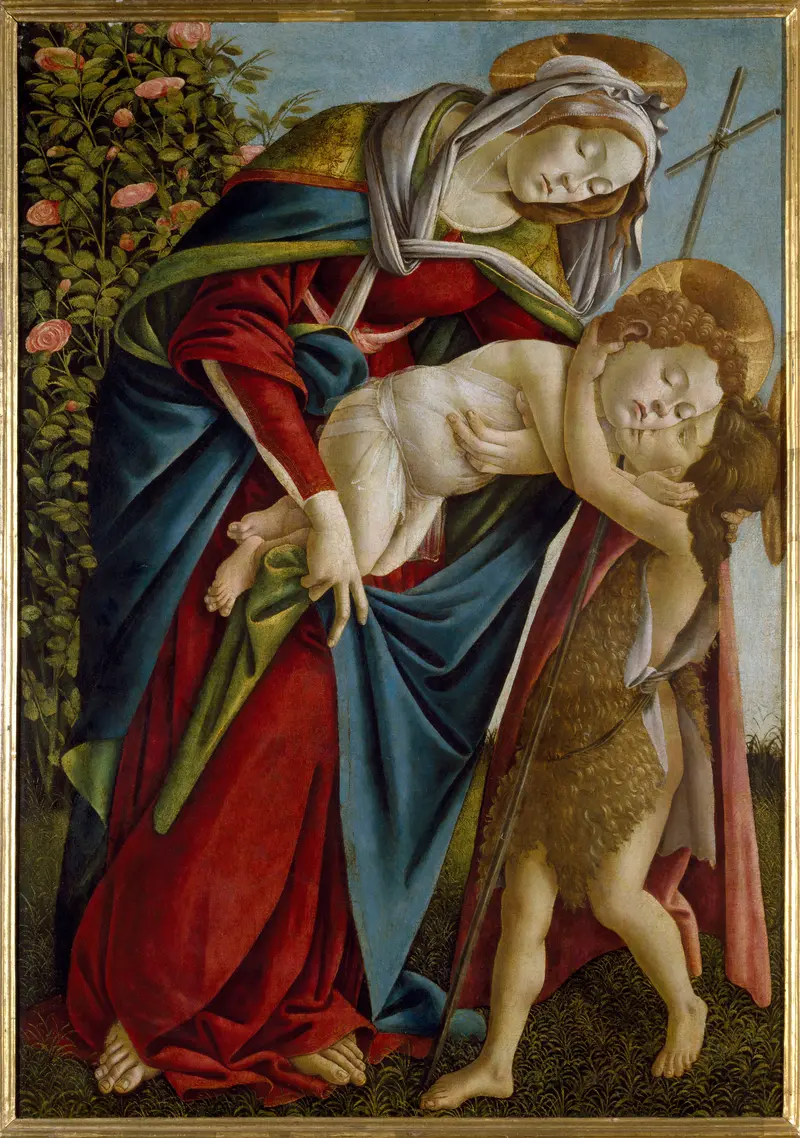
Madonna and Child and the Young St John the Baptist
Sandro Botticelli
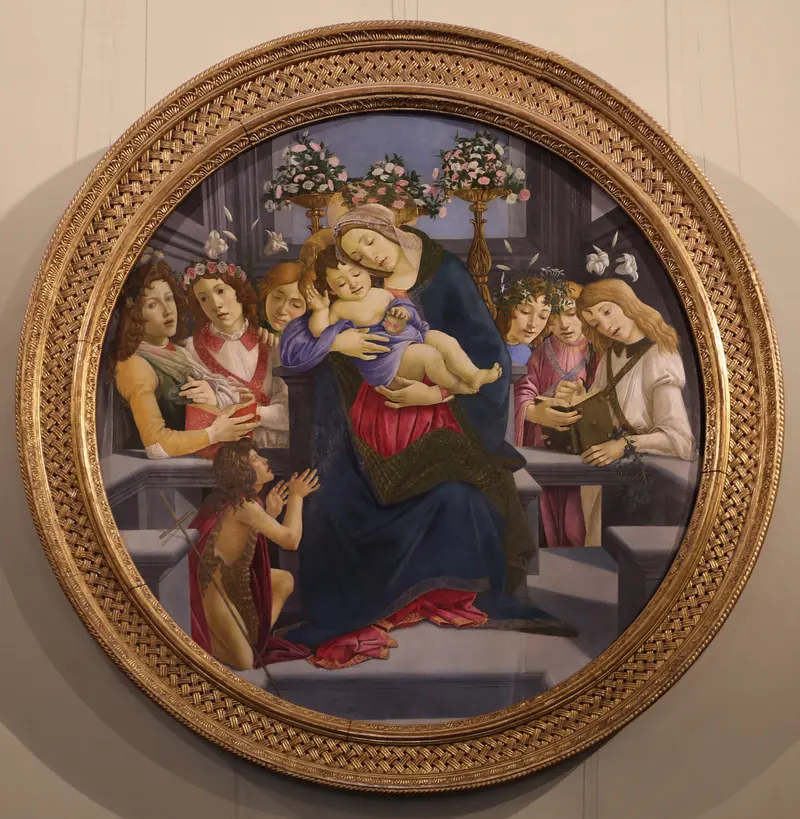
Madonna and Child with six angels and Saint John the Baptist as Child
Sandro Botticelli
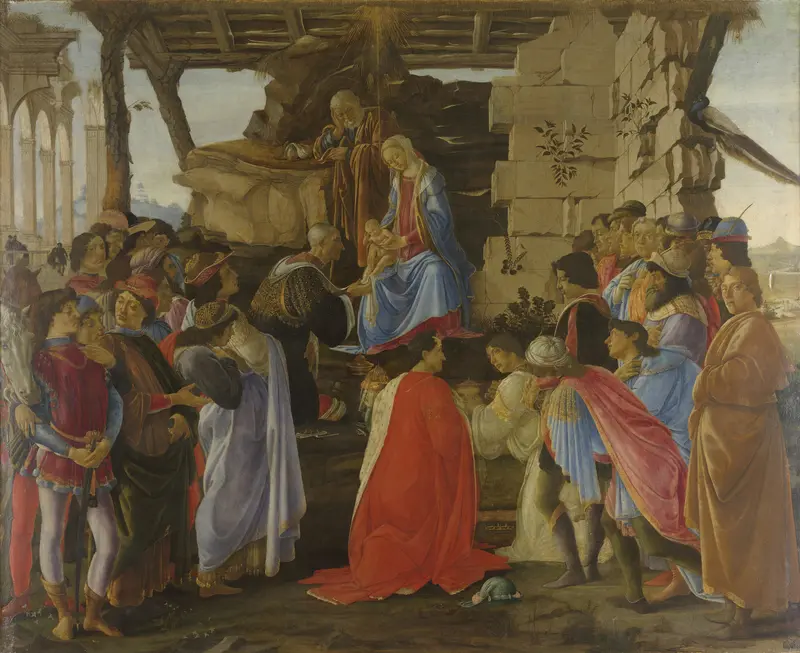
Adoration of the Magi
Sandro Botticelli

Virgin and Child with the Young Saint John the Baptist
Sandro Botticelli
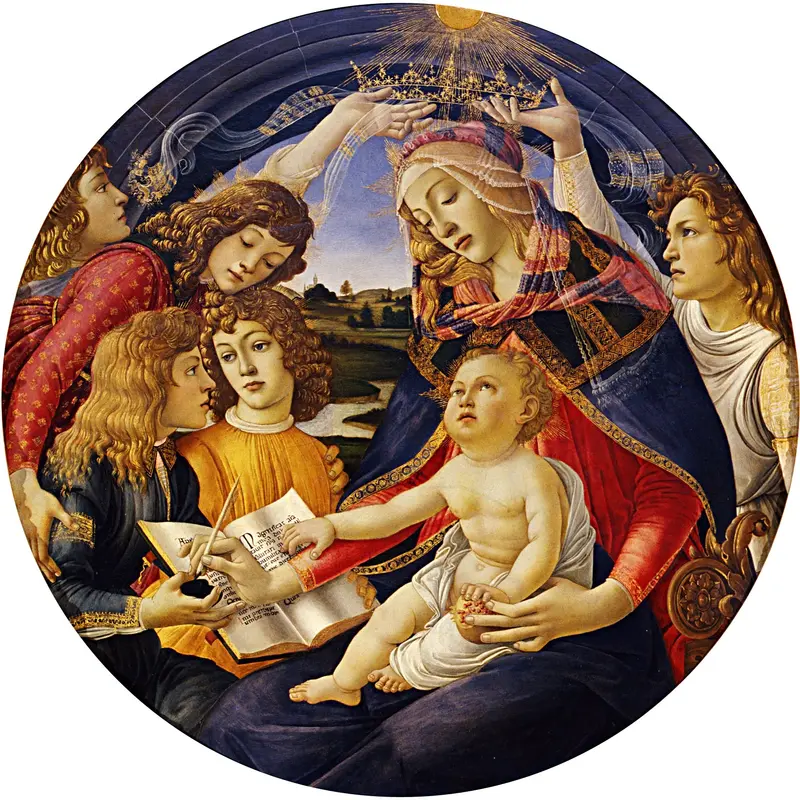
Madonna of the Magnificat
Sandro Botticelli
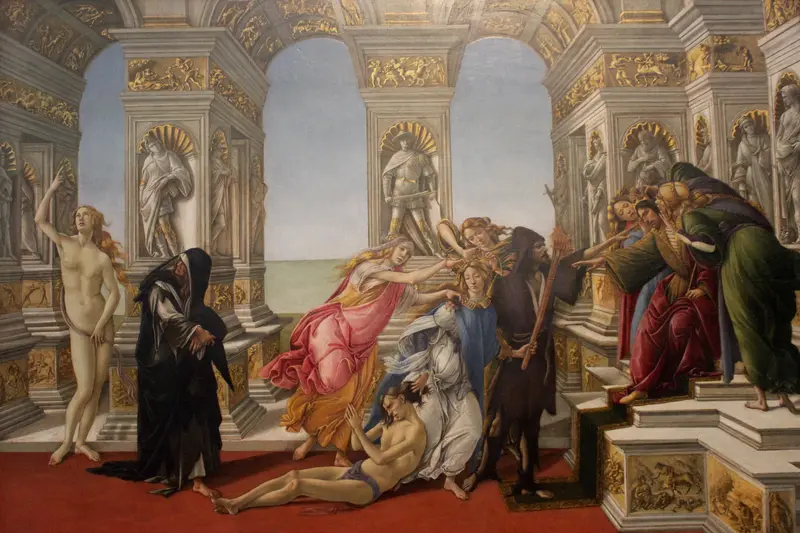
Calumny of Apelles
Sandro Botticelli
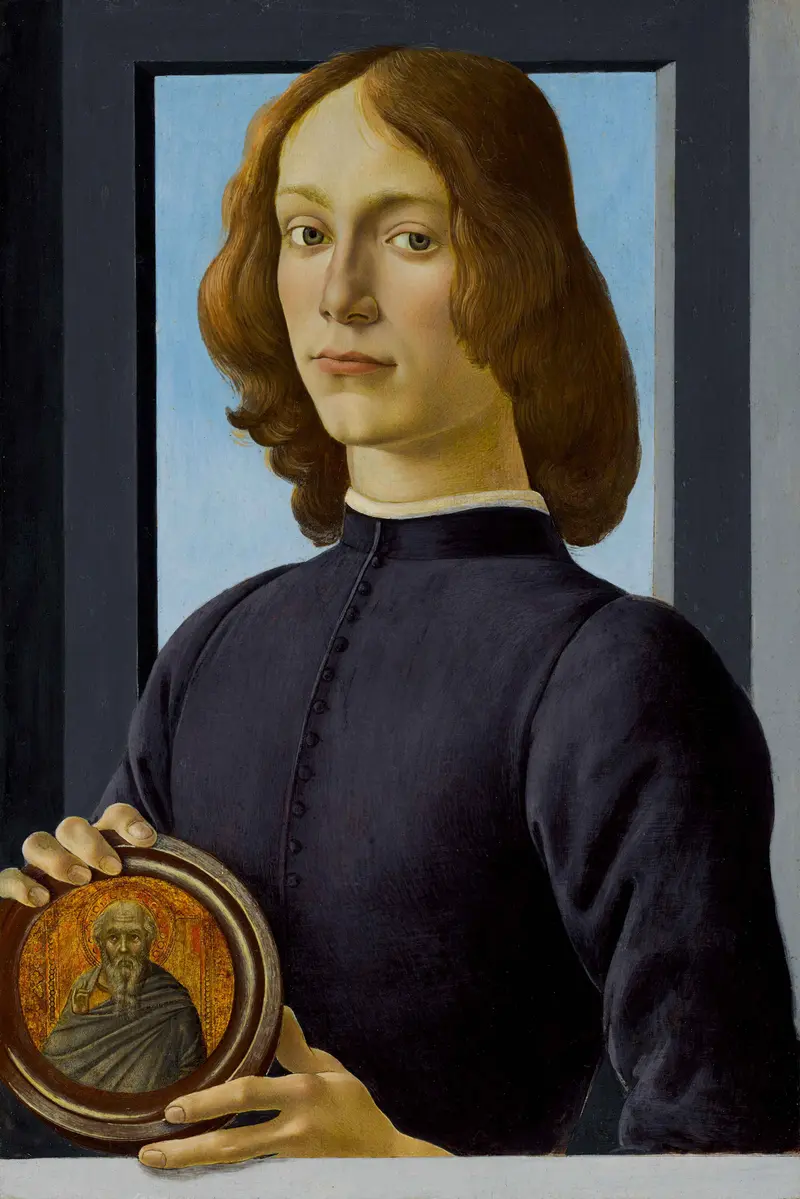
Portrait of a young man holding a roundel
Sandro Botticelli

The Trinity with Saint Mary Magdalene and Saint John the Baptist, the Archangel Raphael and Tobias
Sandro Botticelli
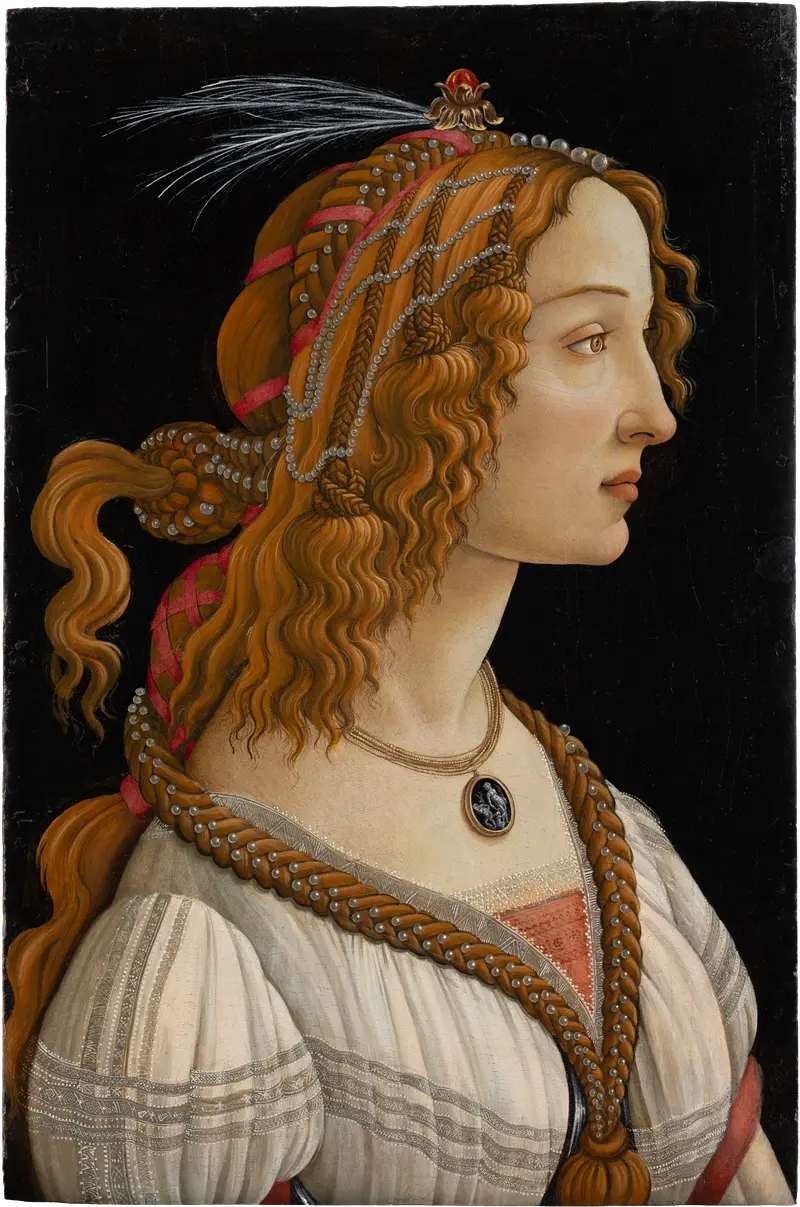
Idealized Portrait of a Lady (Portrait of Simonetta Vespucci as Nymph)
Sandro Botticelli





