
The Virgin and Child at the Fountain — History & Facts
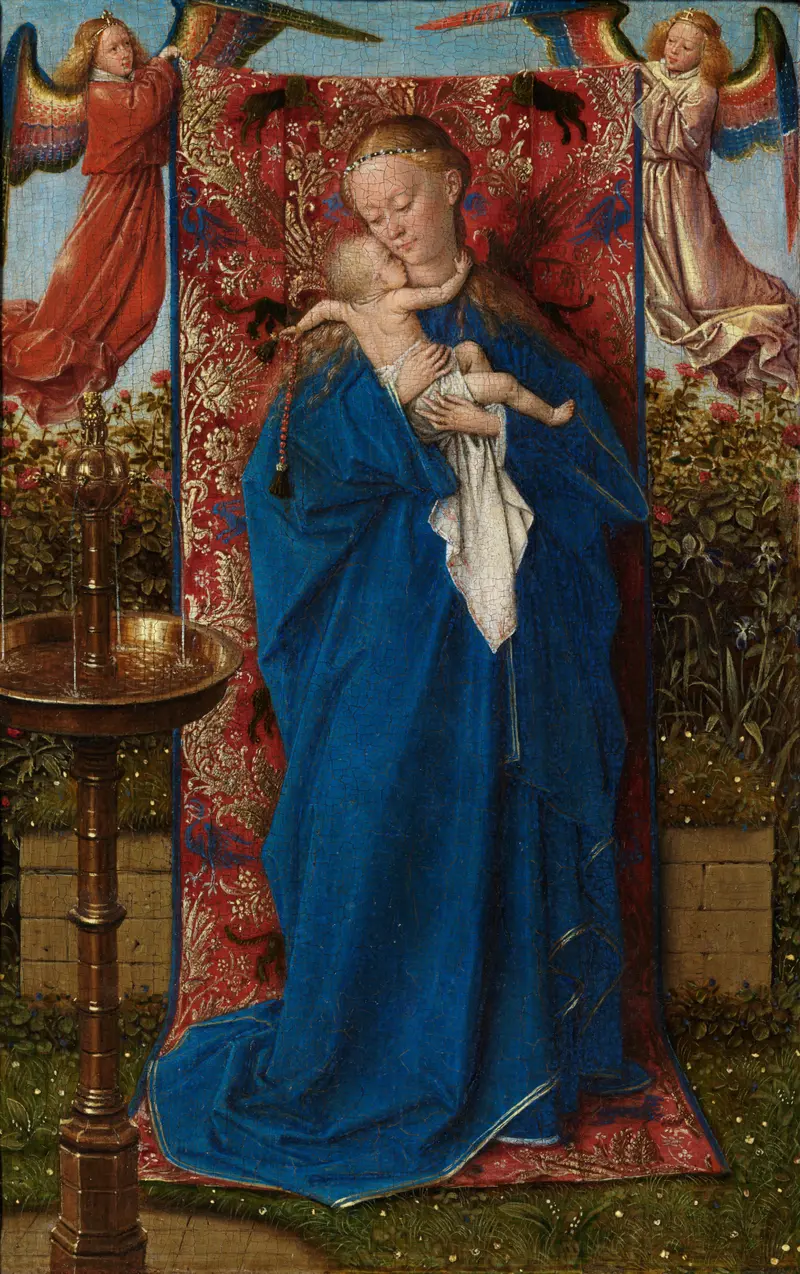
No other surviving painting by Jan van Eyck is so small, yet so packed with symbolism, as The Virgin and Child at the Fountain. Measuring just over 19 by 12 centimeters, this intimate panel has inspired debate for centuries: was it a private devotional object for a wealthy patron, or perhaps a precious diplomatic gift? Its jewel-like detail and pristine condition have fueled speculation about its original setting and purpose, as no direct documentation of its commission survives. The painting’s extraordinary preservation allows us to see van Eyck’s hand almost as freshly as his first viewers did in the 15th century. The scene captures the Virgin Mary, crowned and robed in deep blue, holding the Christ Child beside a Gothic fountain in a lush enclosed garden.
At this moment, the infant reaches for the water, echoing the medieval idea of Mary as the “fons vitae”—the fountain of life. The water itself, rendered with van Eyck’s signature precision, flows into a clear basin, symbolizing purity and baptism. Behind them, a hedge of roses and lilies alludes to Mary’s virtues, while the delicate gold embroidery on her gown proclaims her status as Queen of Heaven.
Unlike the grand, architectural settings of Rogier van der Weyden’s Virgins, van Eyck’s approach is close, direct, and almost tactile, inviting the viewer into a private space of contemplation. While the painting’s early history is unclear, its style and technique firmly place it in the later career of Jan van Eyck, likely painted in Bruges in the 1430s or early 1440s. It has been in the collection of the Royal Museum of Fine Arts Antwerp since the 19th century, having passed through the hands of collectors who prized it for its exquisite finish and rarity. Scholars continue to discuss its original function, as its small scale and devotional subject suggest it was meant for personal prayer rather than public display.
Today, The Virgin and Child at the Fountain stands as a testament to van Eyck’s unmatched skill in oil painting and his ability to infuse even the most familiar religious themes with new life and meaning.
More Artworks by Jan van Eyck

Adam
Jan van Eyck
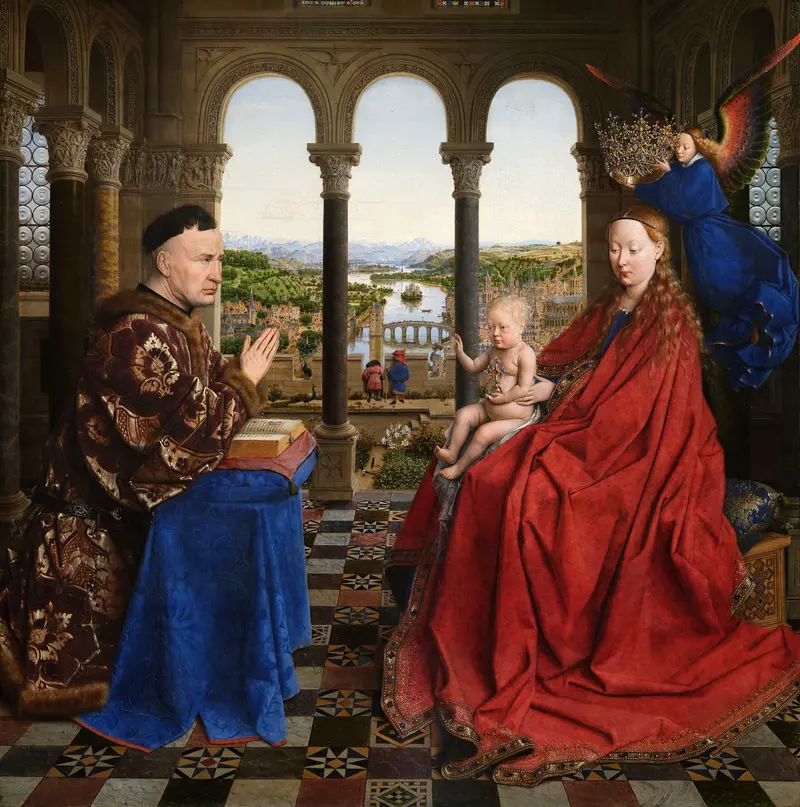
Madonna of Chancellor Rolin
Jan van Eyck
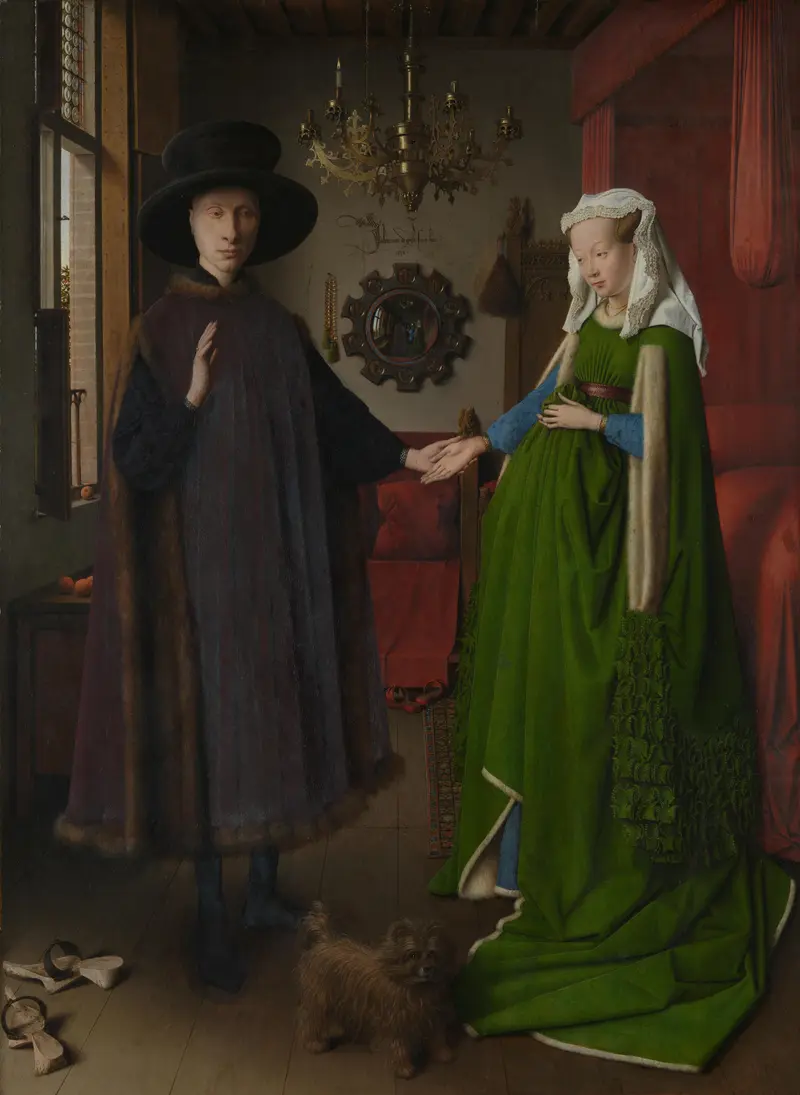
The Arnolfini Portrait
Jan van Eyck
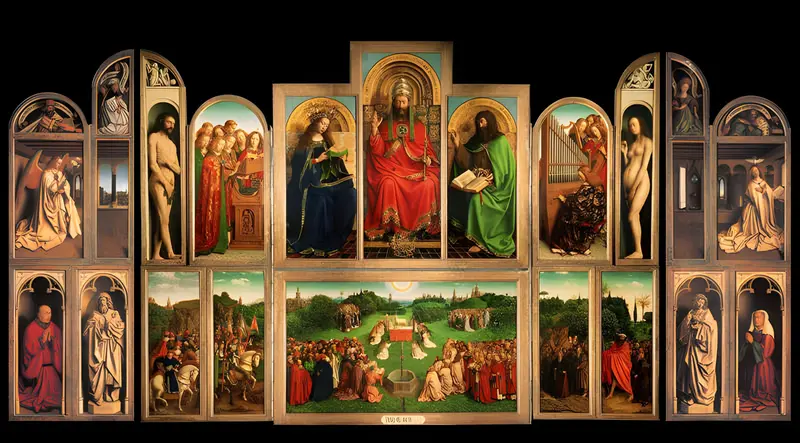
Ghent Altarpiece
Jan van Eyck

Dresden Triptych
Jan van Eyck
Madonna at the Fountain
Jan van Eyck

Madonna with Canon Joris van der Paele
Jan van Eyck

Prophet Zacharias; Angel of The Annunciation
Jan van Eyck
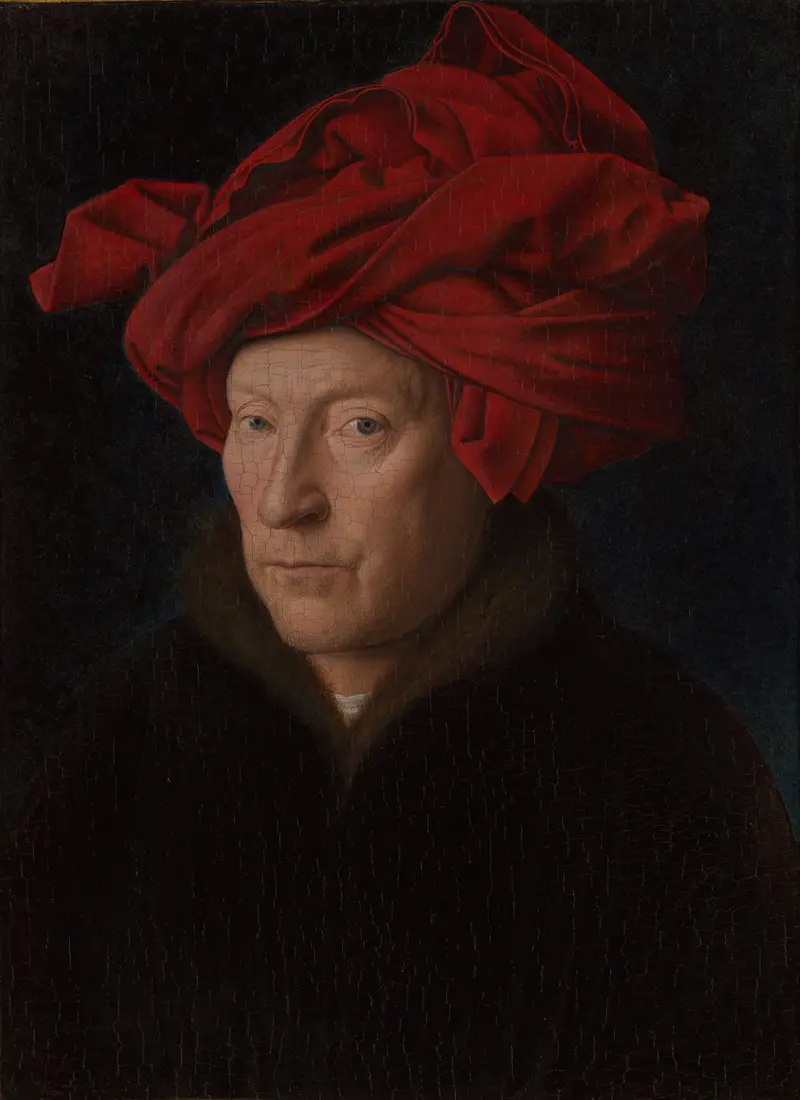
Portrait of a Man (Self Portrait?)
Jan van Eyck
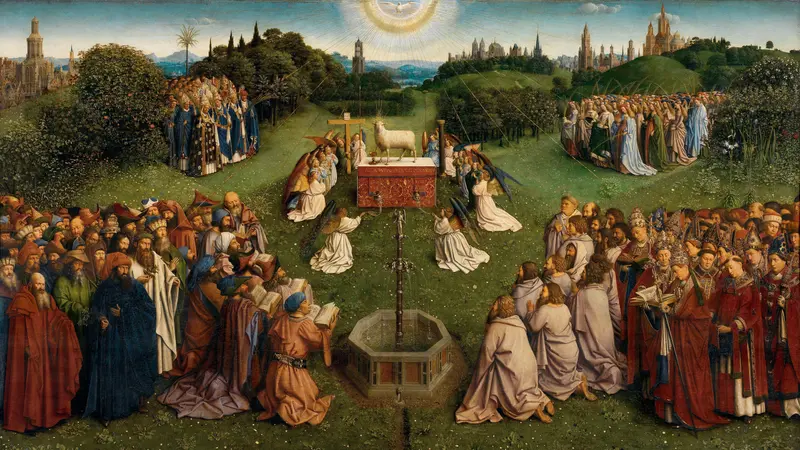
Adoration of the Lamb from the Ghent Altarpiece
Jan van Eyck





