
The Waterseller of Seville — History & Facts
A weathered man in a brown cloak stands at the right, his face illuminated by a shaft of light that reveals deep wrinkles and a contemplative expression. He holds a large, rounded water jug in his left hand, its clay surface glistening with droplets that catch the light, while his right hand extends a glass of water toward a boy. The boy, positioned at the left, wears a dark jacket with a white collar and gazes downward at the clear glass he receives, his expression reserved and his gaze averted from the older man.
Between them, a second, smaller jug sits on a wooden ledge, its surface marked with dents and stains, and a fig floats in the water within the glass, a detail that adds freshness to the drink. In the dim background, a third figure emerges from the shadows, holding a cup to his lips, his features softened and partially obscured by darkness. The composition is tightly framed, with the three figures forming a diagonal line from left to right, and the large vessels in the foreground almost protruding into the viewer’s space.
The light enters from the left, modeling the forms with strong contrasts and emphasizing the textures of the clay pots, the glass, and the rough fabric of the seller’s cloak. The palette is subdued, dominated by earth tones and muted browns, with subtle highlights on the faces, hands, and vessels. Brushwork is precise and controlled, especially in the rendering of the water droplets and the reflective surfaces of the glass and jugs.
The figures do not interact through gaze or gesture; each is absorbed in his own world, contributing to the quiet, contemplative mood of the scene. The Waterseller of Seville was painted by Diego Velázquez around 1620, during his early years in Seville. The subject is a waterseller, a familiar figure in seventeenth-century Seville, shown here engaged in his daily trade with a young customer. The painting is often classified as a bodegón, a Spanish genre that focuses on scenes of everyday life and the depiction of food and drink.
Art historians note that the scene is not a commissioned work but rather a study of humble life, rendered with remarkable realism and attention to detail. The restrained color range and the careful observation of still objects connect this painting to the broader tradition of Spanish still life in the seventeenth century.
Sources: Wikidata Q2627810 · Wikipedia: The Waterseller of Seville · Image source (Wikimedia Commons)
More Artworks by Diego Velázquez

Las Meninas
Diego Velázquez
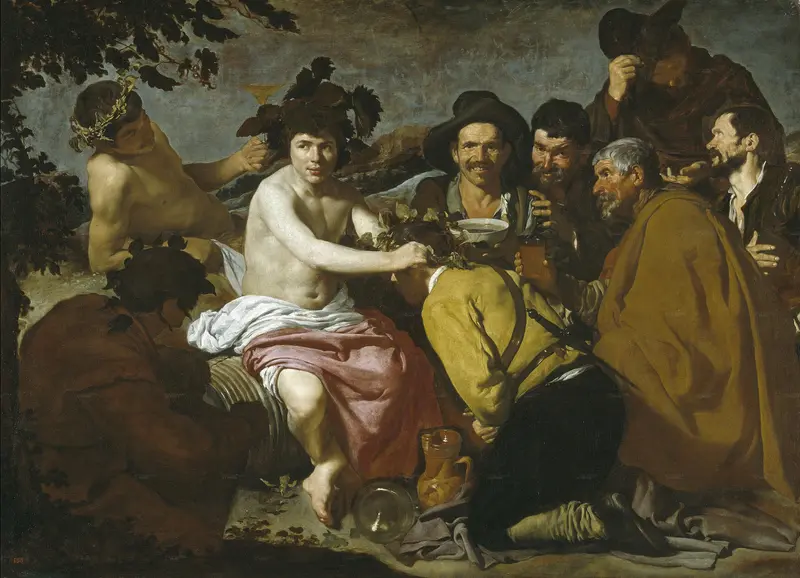
The Triumph of Bacchus
Diego Velázquez
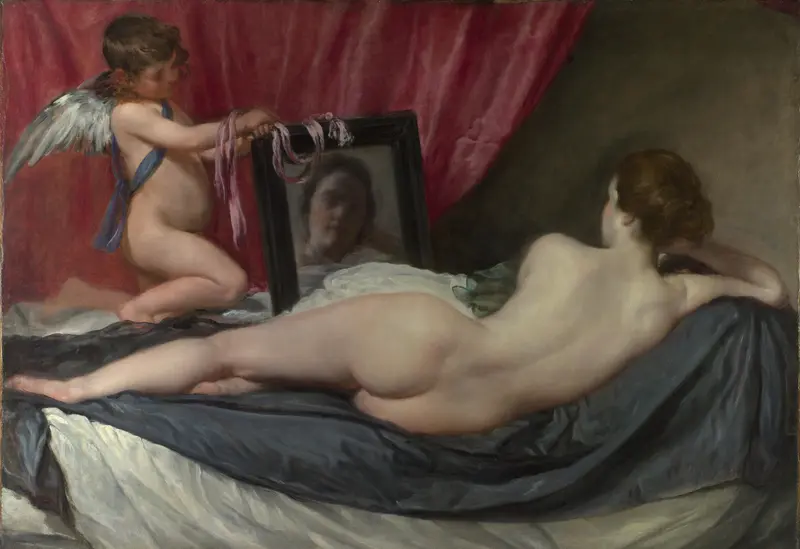
Rokeby Venus
Diego Velázquez
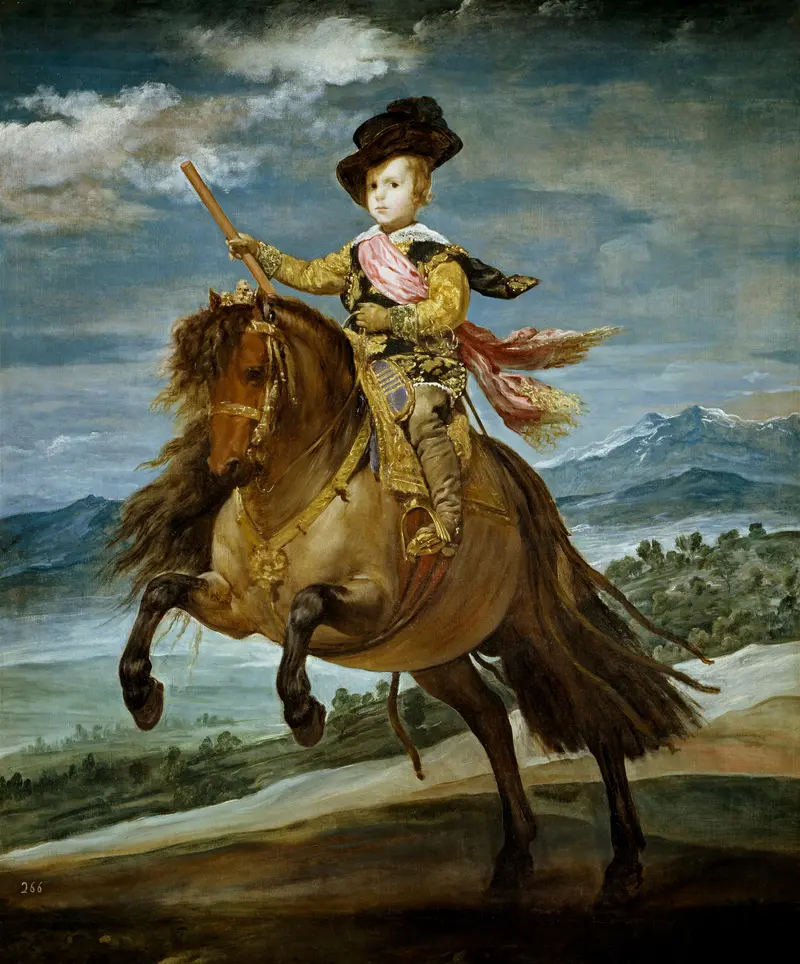
Equestrian Portrait of Prince Balthasar Charles
Diego Velázquez
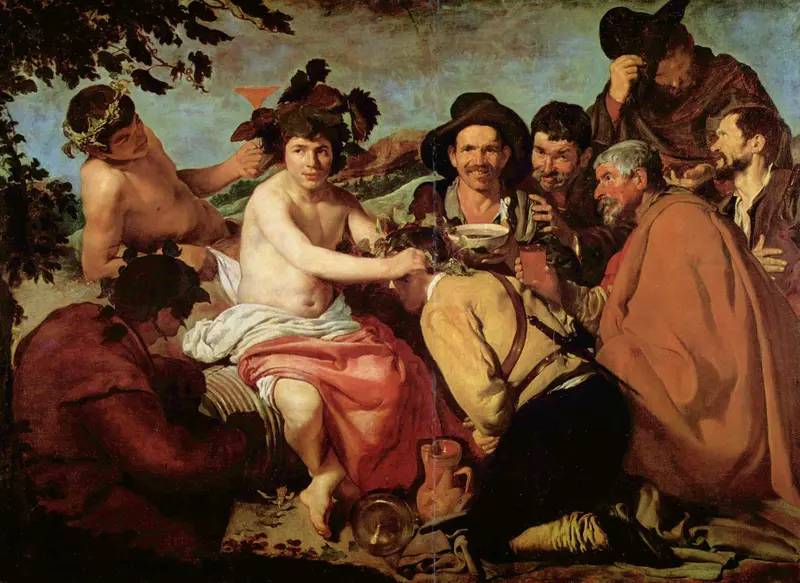
Bacchus
Diego Velázquez
Don Gaspar de Guzmán (1587–1645), Count-Duke of Olivares
Diego Velázquez
El príncipe Baltasar Carlos de Austria
Diego Velázquez
Equestrian Portrait of Philip III
Diego Velázquez
Equestrian Portrait of Margarita of Austria
Diego Velázquez
Las Hilanderas
Diego Velázquez
More Genre Scene Art

Banquet of the Officers of the St George Civic Guard
Frans Hals

Rembrandt and Saskia in the Scene of the Prodigal Son
Rembrandt van Rijn

Bal du moulin de la Galette
Pierre-Auguste Renoir

Quadrille at the Moulin Rouge
Henri de Toulouse-Lautrec

A Burial at Ornans
Gustave Courbet

When Will You Marry?
Paul Gauguin