
Theodore Gericault 110 (27956517889) — History & Facts
When Théodore Géricault exhibited his paintings in Paris in the early 1820s, he was already infamous for his daring subject matter and unflinching realism. The work known as Theodore Gericault 110 (27956517889) dates from 1820, a year after the scandalous debut of The Raft of the Medusa. While the precise subject of this piece remains uncertain due to the lack of documentation and the unknown medium, it is widely recognized as belonging to a period when Géricault was obsessed with the human figure, often painting studies of the marginalized and the suffering, sometimes even in the morgue. Here, the artist’s focus is razor-sharp: a single figure, rendered with the dramatic contrasts and anatomical precision that mark Géricault’s mature style.
The sitter’s gaze is intense, meeting the viewer with a mixture of defiance and exhaustion—qualities that recall the artist’s studies of the insane and the condemned. The strong, directional light carves out the planes of the face and hands, while the background recedes into shadow, isolating the subject in a psychological space. This approach differs from the more heroic, idealized figures of Jacques-Louis David, Géricault’s predecessor, emphasizing instead the raw, unvarnished reality of the individual. The later history of Theodore Gericault 110 (27956517889) is somewhat obscure, as is often the case with Géricault’s lesser-known portraits and studies.
It is not clear who commissioned the work or how it was circulated in the years after its creation, though it likely remained in private hands for much of the nineteenth century. Today, it stands as a testament to Géricault’s relentless pursuit of truth in art, bridging the gap between the grand narratives of Neoclassicism and the more personal, psychological focus that would come to define Romanticism. The painting’s current location and medium are not definitively recorded, but its style and subject matter place it firmly within the artist’s most innovative and searching years.
More Artworks by Théodore Géricault
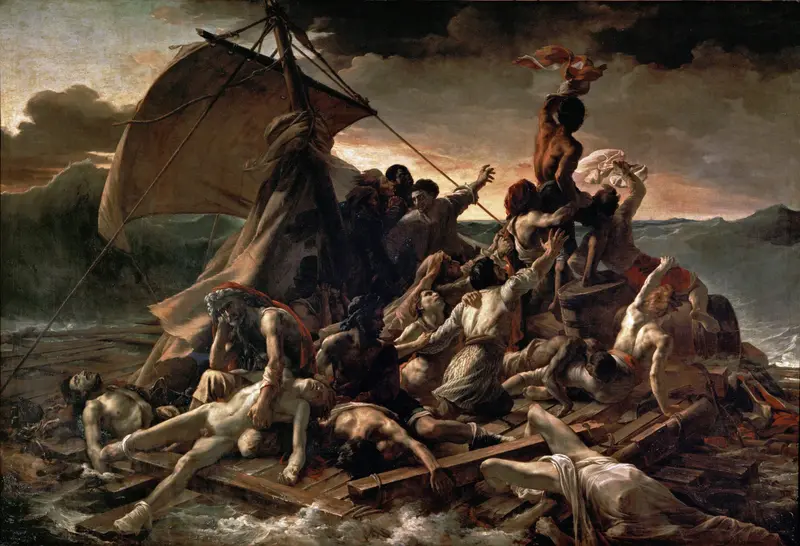
The Raft of the Medusa
Théodore Géricault

Géricault - Le naufrage du radeau de la Méduse, MBA 790
Théodore Géricault
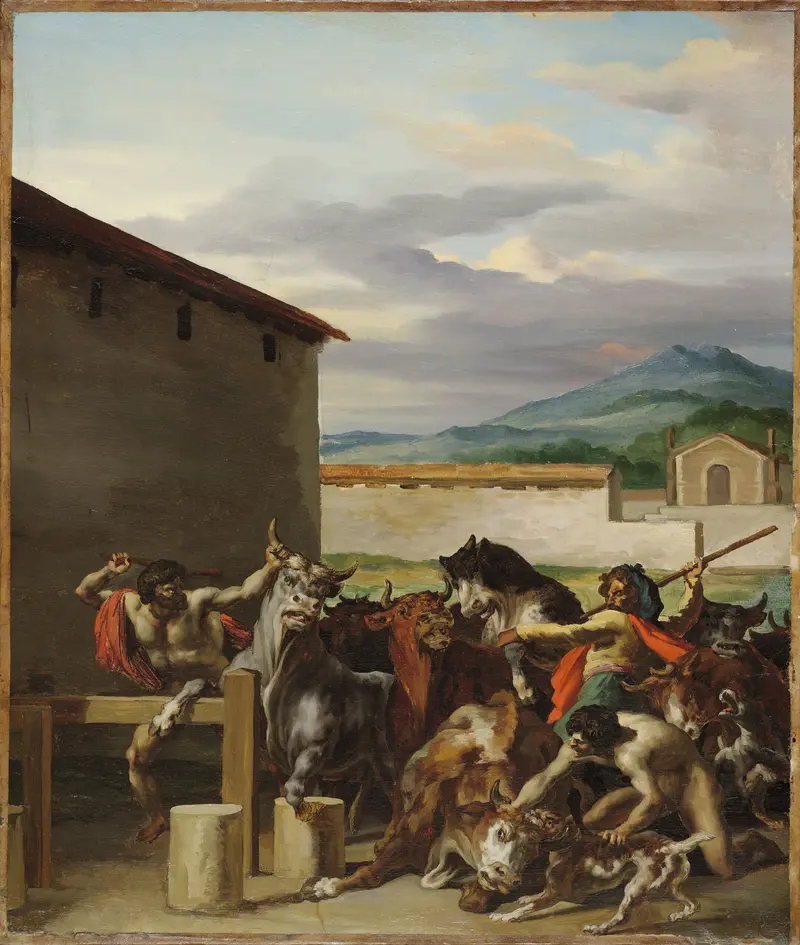
Cattle Market
Théodore Géricault
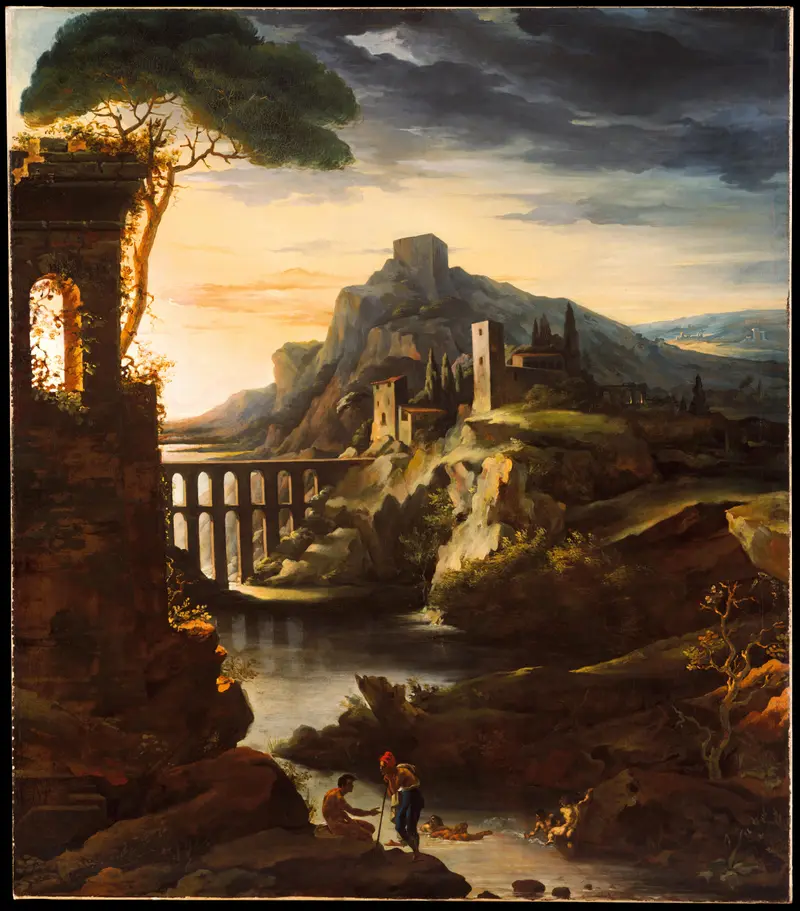
Evening; Landscape with an Aqueduct
Théodore Géricault
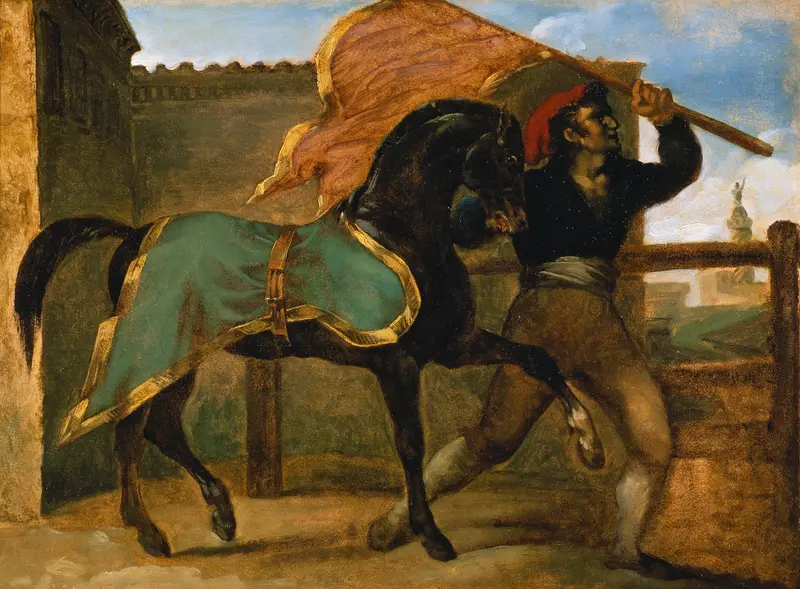
Horse Race
Théodore Géricault

Horses Standing in a Mews
Théodore Géricault
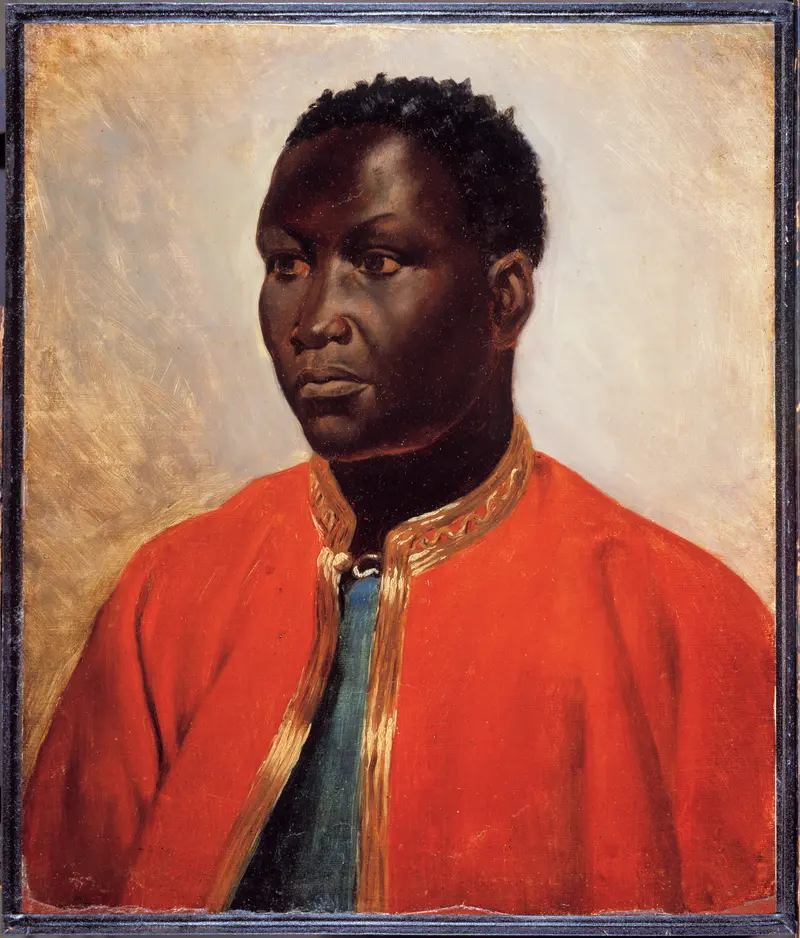
Portrait of a Negro
Théodore Géricault
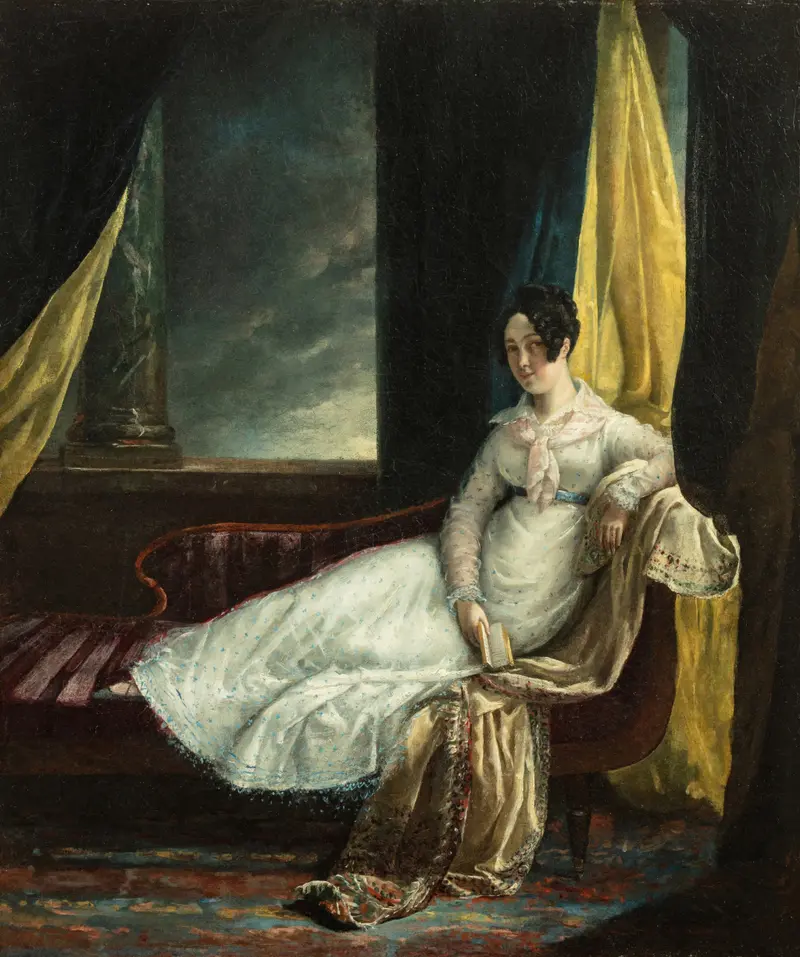
Portrait of Zoë Elmore
Théodore Géricault
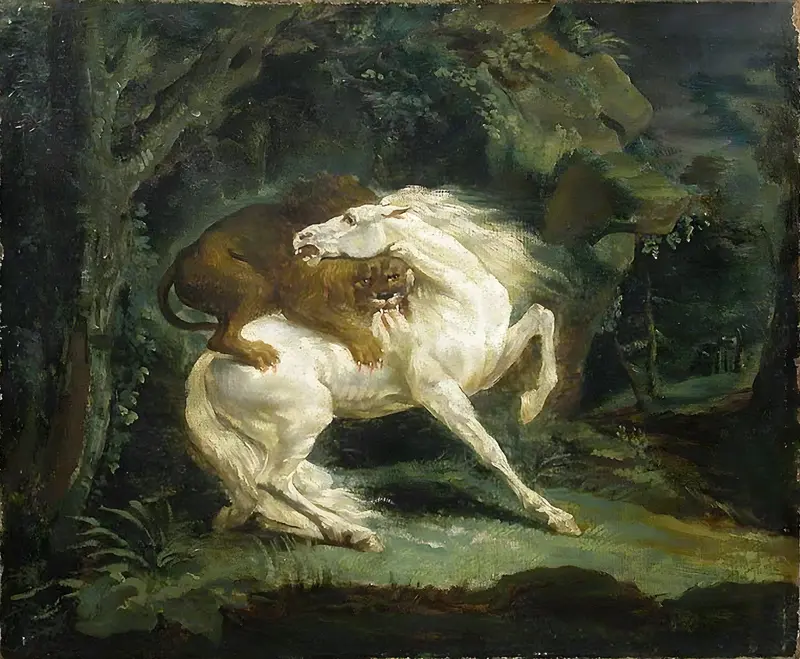
Cheval attaqué par un lion
Théodore Géricault
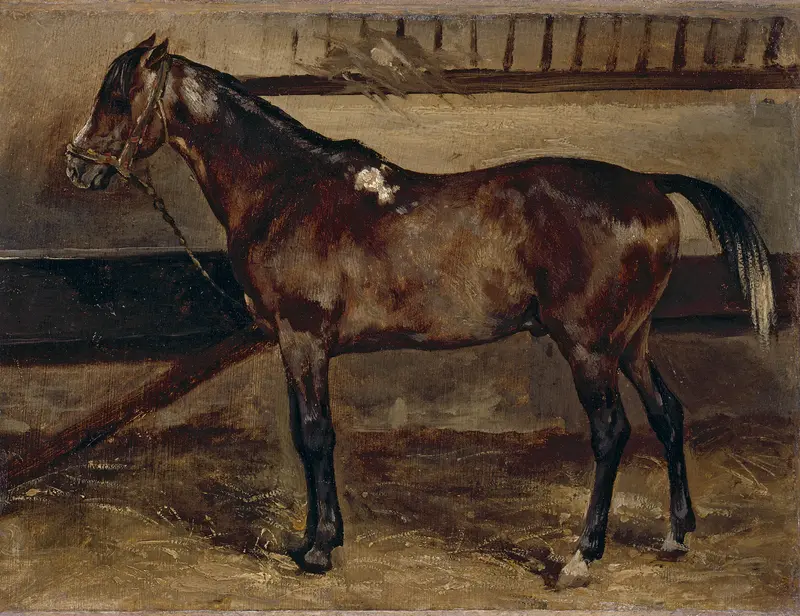
Cheval brun à l'écurie
Théodore Géricault





