
Tramways à impériale dans une avenue de Paris, en 1901 — History & Facts
Can paint confess what words never could? In Tramways à impériale dans une avenue de Paris, en 1901, a world of dreams unfolds, where vibrant hues and fluid brushstrokes capture the bustling essence of a time long gone. Look to the center where the tram glides gracefully along the avenue, a metallic serpent weaving through life. Notice the soft palette, with warm golds and deep greens merging harmoniously, evoking a sense of nostalgia. The play of light dapples across the scene, illuminating the faces of the passengers and pedestrians alike, each absorbed in their own stories.
The composition draws the eye along the avenue, creating a rhythm that echoes the pulse of the city. Hidden within the layers of paint are contrasts that pulse with emotional resonance. The juxtaposition of the lively tram against the stillness of the surrounding trees speaks to the tension between progress and nature. Each figure, caught in a moment of time, reflects the collective dreams of early 20th-century Paris—a city on the brink of modernization yet steeped in its artistic legacy.
The scene hints at a hidden dialogue between the past and the future, inviting the viewer to linger in this transient moment. Frédéric Houbron painted this piece in 1900, amidst a period of great change in Paris. The city was electrifying, with trams becoming a symbol of modernity and innovation. As art movements flourished around him, Houbron found inspiration in the daily life of the bustling metropolis, capturing the essence of a world in flux, where every street and avenue buzzed with potential.
More Artworks by Frédéric Houbron
Browse all →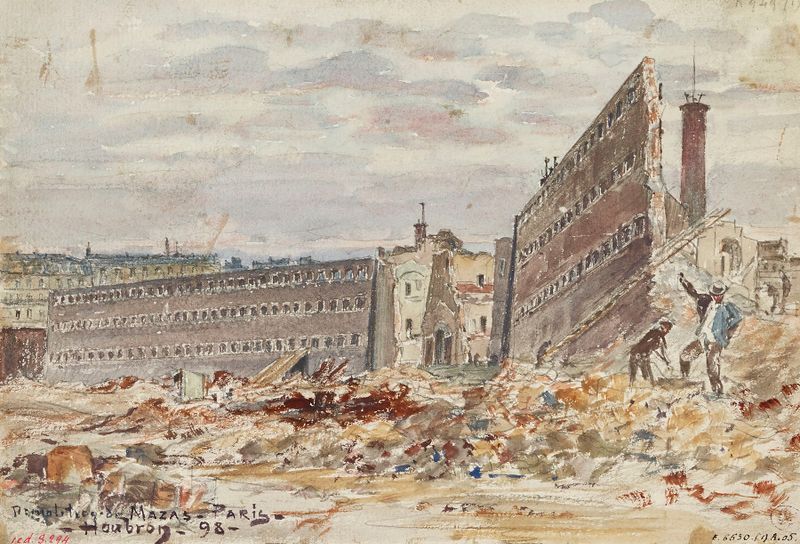
Démolition de la prison Mazas, 23, 25 boulevard Diderot (ancien boulevard Mazas)
Frédéric Houbron
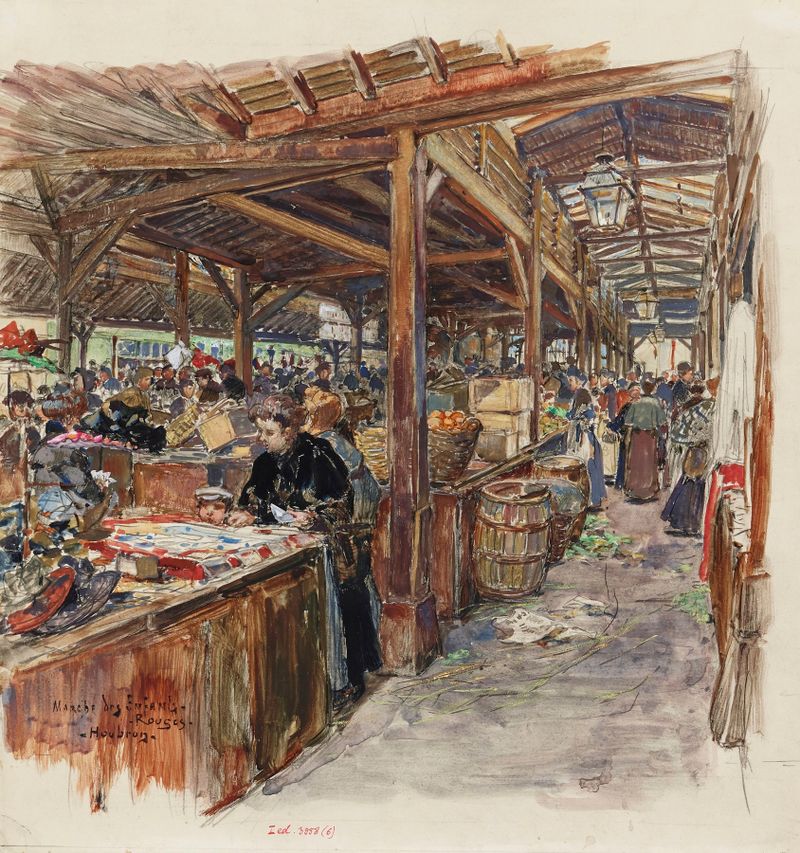
Intérieur du Marché des Enfants Rouges. 3ème arrondissement
Frédéric Houbron
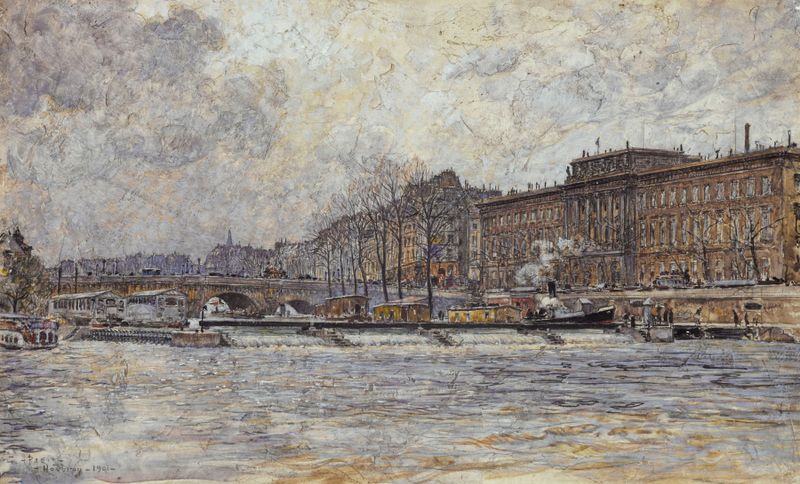
L’Hôtel de la Monnaie et le Pont-Neuf
Frédéric Houbron

Quai des Orfèvres. Paris. 1906
Frédéric Houbron
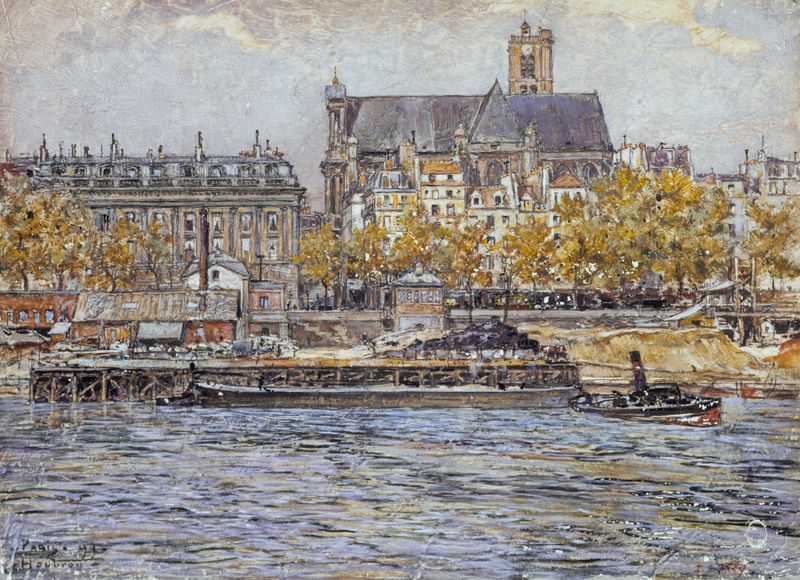
Le quai de l’Hôtel-de-Ville et l’église Saint-Gervais-Saint-Protais
Frédéric Houbron
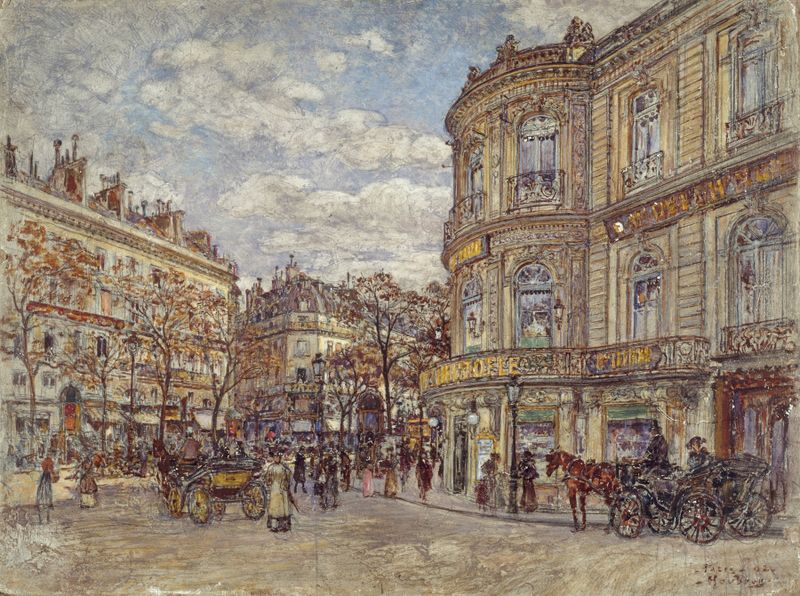
Le Pavillon de Hanovre, rue Louis-le-Grand
Frédéric Houbron

La rue du Chevalier-de-la-Barre, avec le Sacré-Cœur en construction
Frédéric Houbron
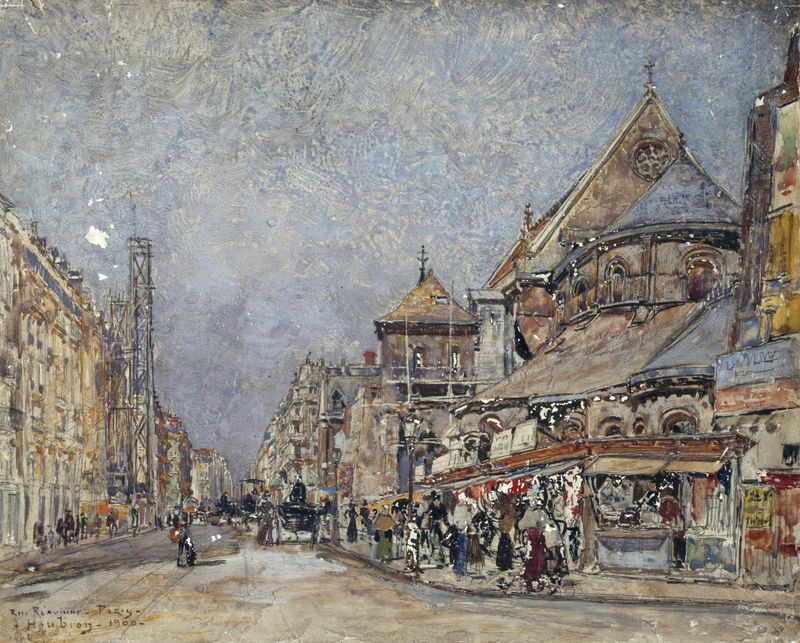
La rue Réaumur et le chevet de l’église Saint-Martin-des-Champs
Frédéric Houbron
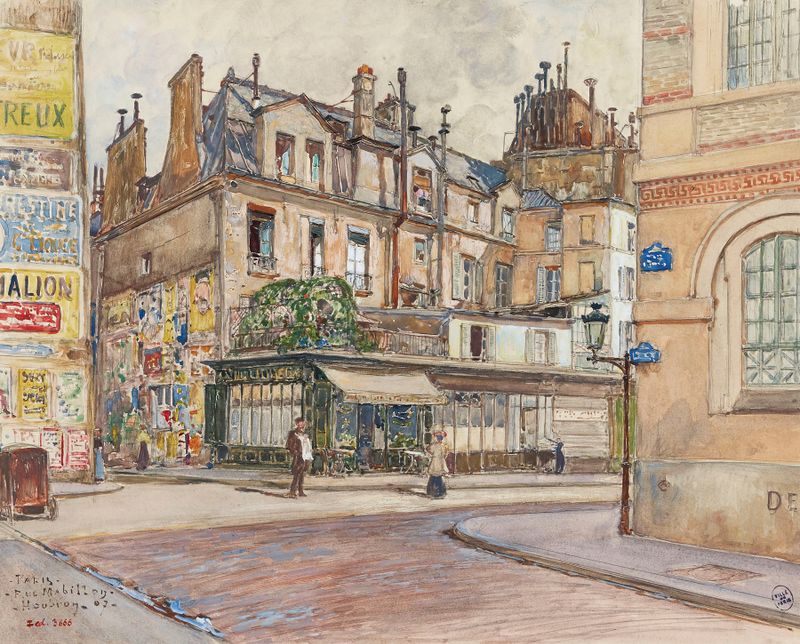
Angle rue Mabillon et rue Clément, en 1907. 5ème et 6ème arrondissements
Frédéric Houbron
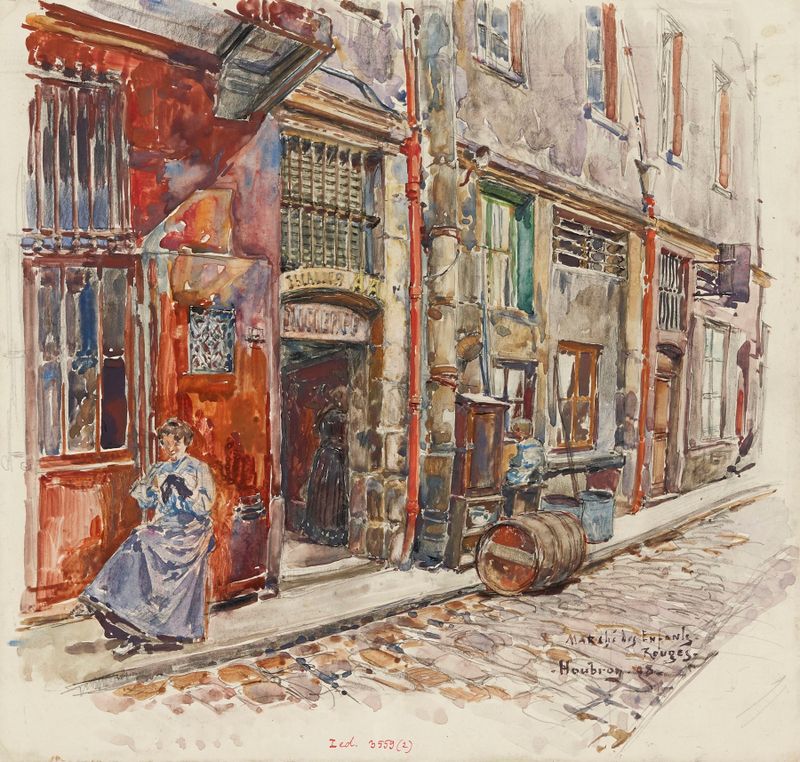
Entrée escalier A du Marché des Enfants-Rouges, en 1908. 3ème arrondissement
Frédéric Houbron





