
Two Young Men Eating at a Humble Table — History & Facts
No other work by Diego Velázquez from his early Seville years has provoked as much debate as Two Young Men Eating at a Humble Table. For decades, its attribution was uncertain, with some scholars seeing the raw naturalism as too bold for a painter barely twenty years old. Yet technical analysis and comparison with Velázquez’s signed bodegones have confirmed its place in his youthful output, revealing the artist’s early fascination with scenes of ordinary life—what the Spanish called “bodegón” painting—before his move to Madrid and the royal court. At a battered wooden table, two young men share a meager meal: a loaf of bread, a few onions, and a jug of wine.
Velázquez captures them mid-conversation, one gesturing animatedly, the other listening, his hand paused above the food. The raking light from the left carves out their faces and rough clothing, emphasizing the honesty of their poverty and the immediacy of their world. Every detail—the chipped crockery, the torn crust—insists on the dignity and reality of humble existence.
Unlike Caravaggio’s theatrical Supper at Emmaus, which uses similar lighting for dramatic effect, Velázquez’s approach is quieter, more intimate, inviting the viewer to join the table rather than merely observe. The painting’s early history is obscure; no patron is recorded, and its medium remains a matter of scholarly discussion, though it is likely oil on canvas. It is thought to have remained in Seville for many years, possibly passing through private hands before entering public collections. Today, Two Young Men Eating at a Humble Table is valued as a key work in understanding Velázquez’s beginnings—his commitment to realism, his empathy for the poor, and his technical daring.
It stands as a testament to the artist’s roots in the bustling, earthy world of early seventeenth-century Seville, before his transformation into the court painter of Spain.
More Artworks by Diego Velázquez

Las Meninas
Diego Velázquez
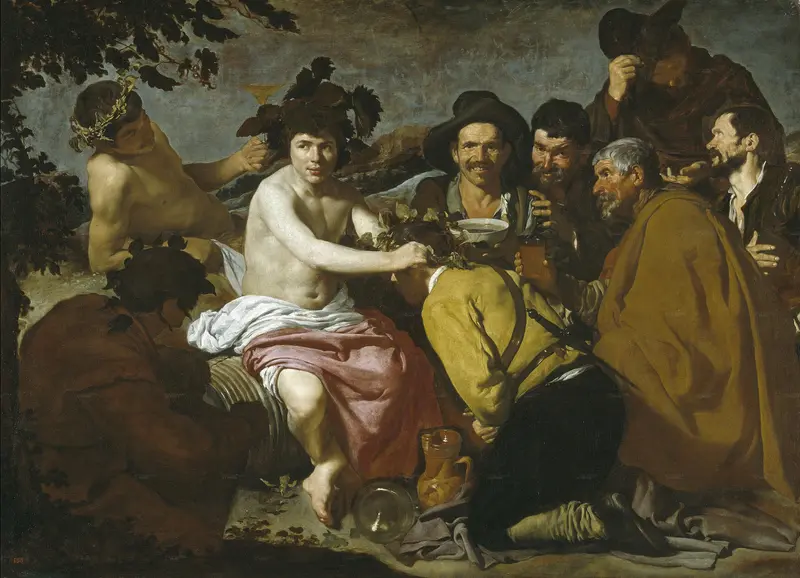
The Triumph of Bacchus
Diego Velázquez
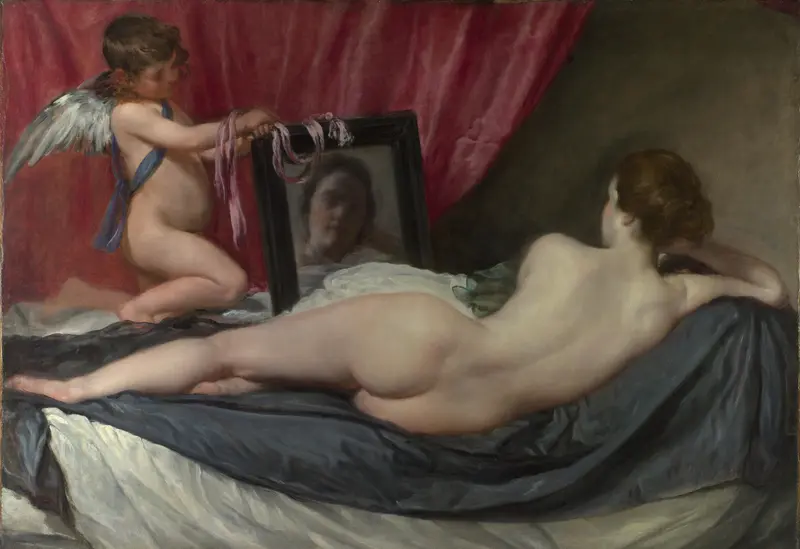
Rokeby Venus
Diego Velázquez
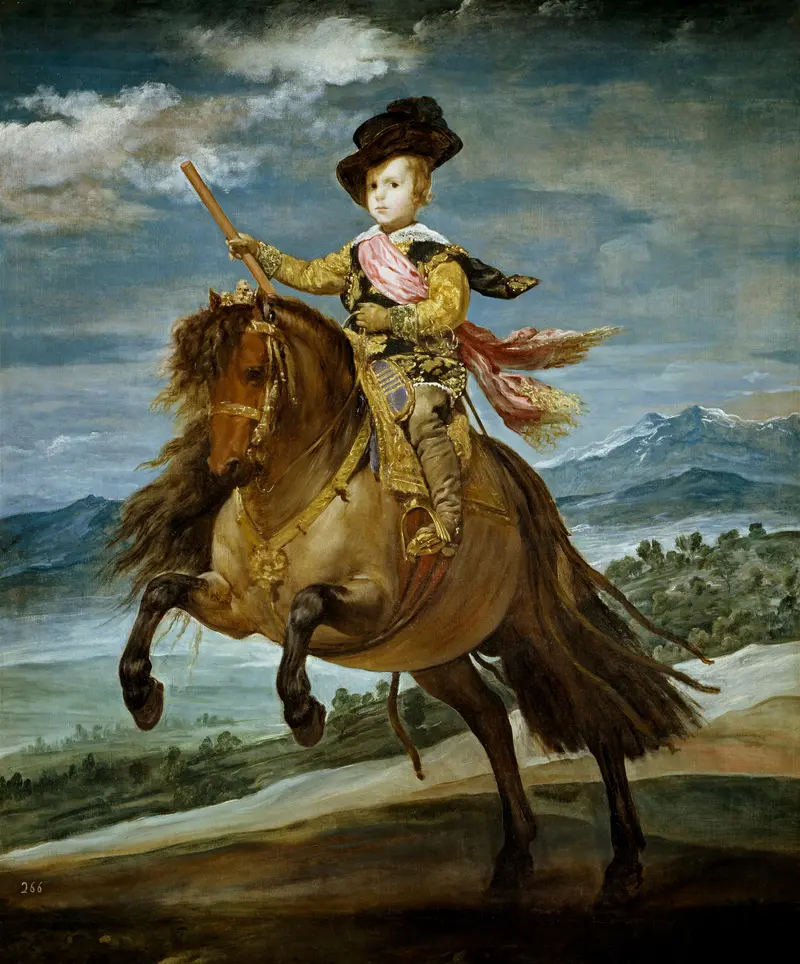
Equestrian Portrait of Prince Balthasar Charles
Diego Velázquez
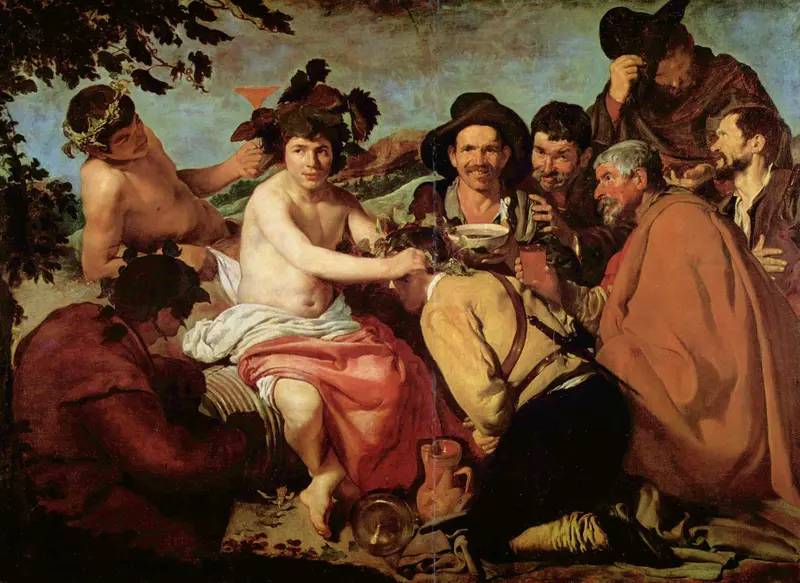
Bacchus
Diego Velázquez
Don Gaspar de Guzmán (1587–1645), Count-Duke of Olivares
Diego Velázquez
El príncipe Baltasar Carlos de Austria
Diego Velázquez
Equestrian Portrait of Philip III
Diego Velázquez
Equestrian Portrait of Margarita of Austria
Diego Velázquez
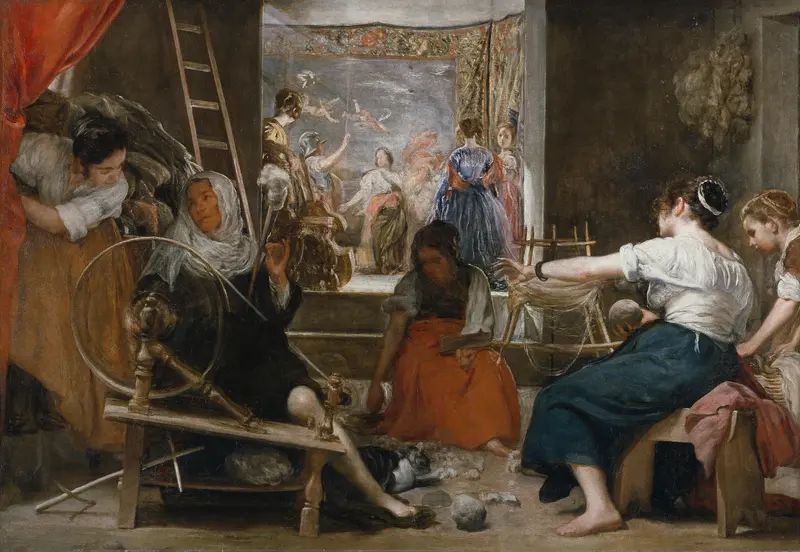
Las Hilanderas
Diego Velázquez
More Genre Scene Art

Banquet of the Officers of the St George Civic Guard
Frans Hals

Rembrandt and Saskia in the Scene of the Prodigal Son
Rembrandt van Rijn

Bal du moulin de la Galette
Pierre-Auguste Renoir

Quadrille at the Moulin Rouge
Henri de Toulouse-Lautrec

A Burial at Ornans
Gustave Courbet

When Will You Marry?
Paul Gauguin