
Virgin Mary in the Glory with Saints — History & Facts
When Giovanni Bellini painted Virgin Mary in the Glory with Saints in 1510, he was nearing the end of a career that had shaped Venetian painting for half a century. This work stands as one of his final altarpieces, created at a time when the artist was over eighty and had recently witnessed the passing of his younger rival, Giorgione. It is remarkable for the way it bridges two generations: Bellini’s own, rooted in the traditions of the Renaissance, and the new, atmospheric style that would soon be championed by Titian.
The painting’s authorship has never been in doubt, but its exact original location remains uncertain, adding an air of mystery to its story. The scene unfolds in a celestial vision: the Virgin Mary, radiant and enthroned, is lifted above the earthly plane, surrounded by a golden mandorla and a company of saints. Each saint is rendered with careful individuality—Saint Peter with his keys, Saint Catherine with her wheel, and Saint Sebastian with arrows at his feet—signs that help viewers identify their stories and virtues. Bellini chooses the moment of Mary’s glorification, her serene gaze meeting the viewer as the saints look upward in reverence.
The composition draws the eye upward, from the richly colored robes and the saints’ gestures, to the luminous sky that bathes the Virgin in light. Compared to Raphael’s more symmetrical and idealized Madonna di Foligno, Bellini’s saints are grounded, their presence a bridge between the divine and the human. The physical history of Virgin Mary in the Glory with Saints is less documented than some of Bellini’s other works, but its style and scale suggest it was intended for a Venetian church, likely as a high altarpiece. Over the centuries, many such paintings were moved or dispersed, especially during the Napoleonic suppression of religious institutions.
Today, the painting is celebrated as one of Bellini’s last great statements, combining his lifelong devotion to color and light with a new, softer approach to figures and landscape. In the final years of his life, Bellini’s art became a touchstone for younger painters, and this work, with its serene grandeur, marked the closing of one era and the dawn of another in Venetian painting.
More Artworks by Giovanni Bellini
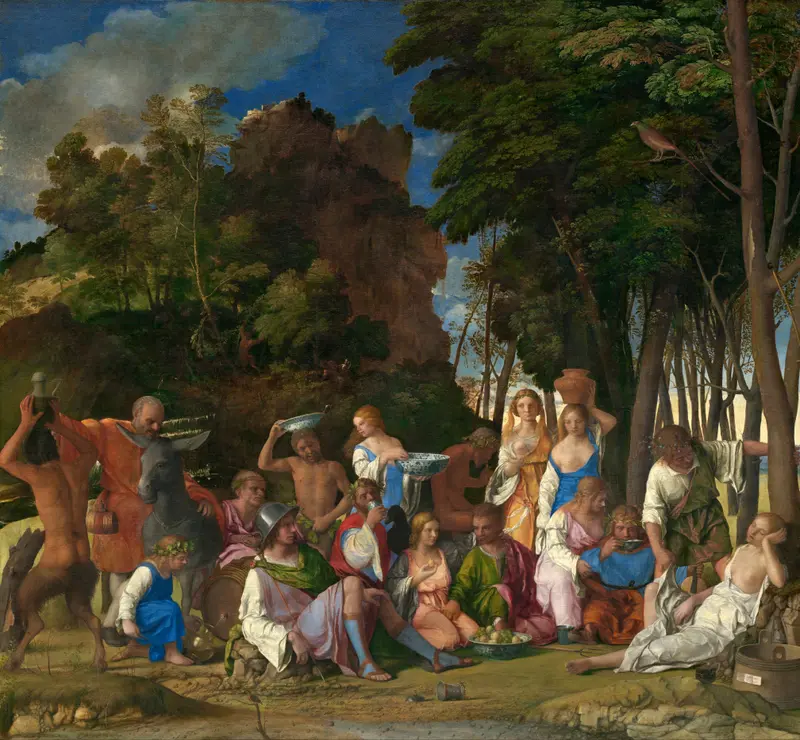
The Feast of the Gods
Giovanni Bellini

Madonna and Child enthroned with Saints and Angels
Giovanni Bellini
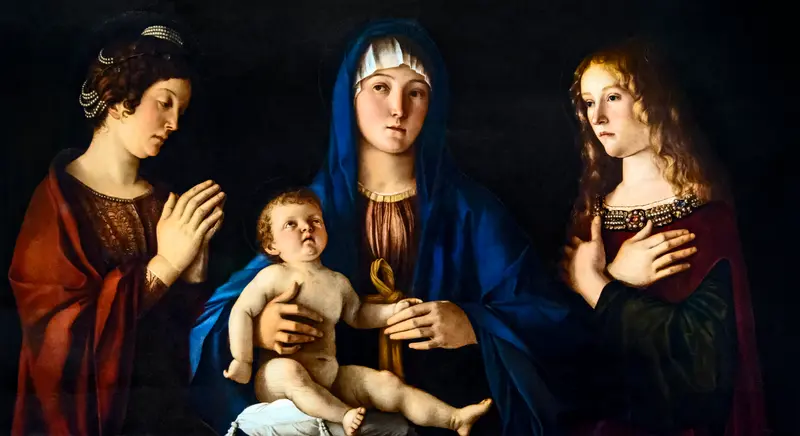
Madonna and Child between Saints Catherine and Mary Magdalene
Giovanni Bellini
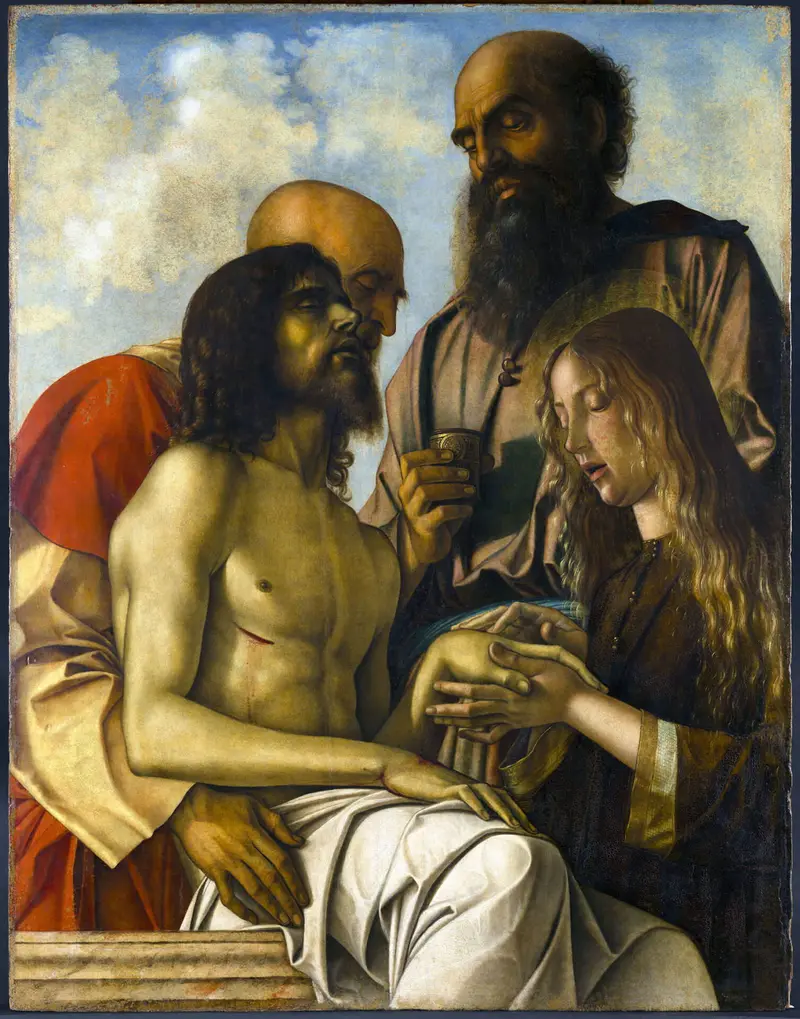
Lamentation over the Dead Christ
Giovanni Bellini
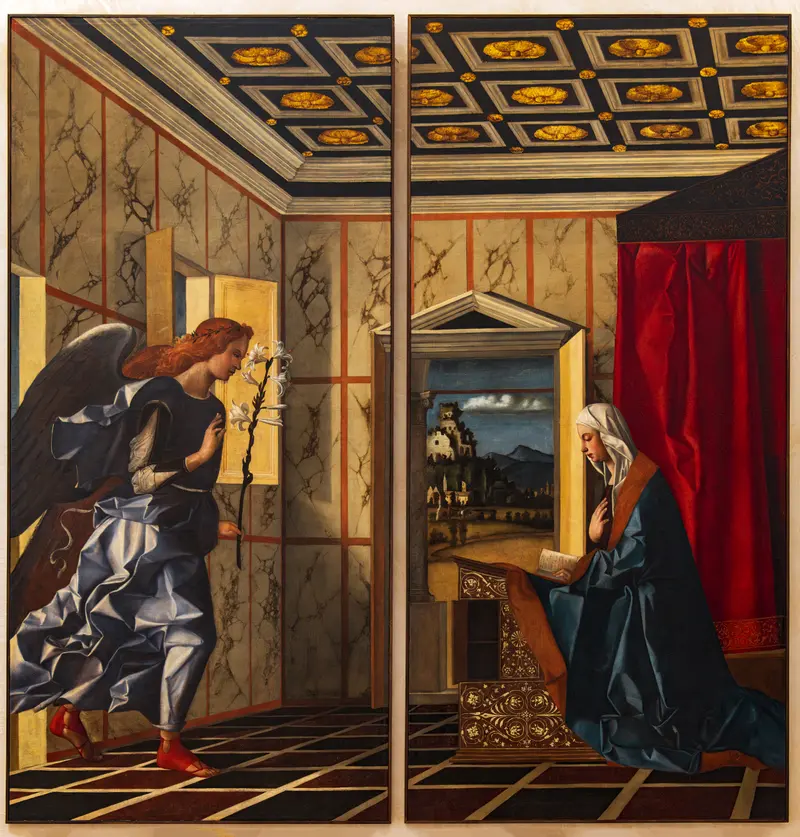
Annunciation
Giovanni Bellini
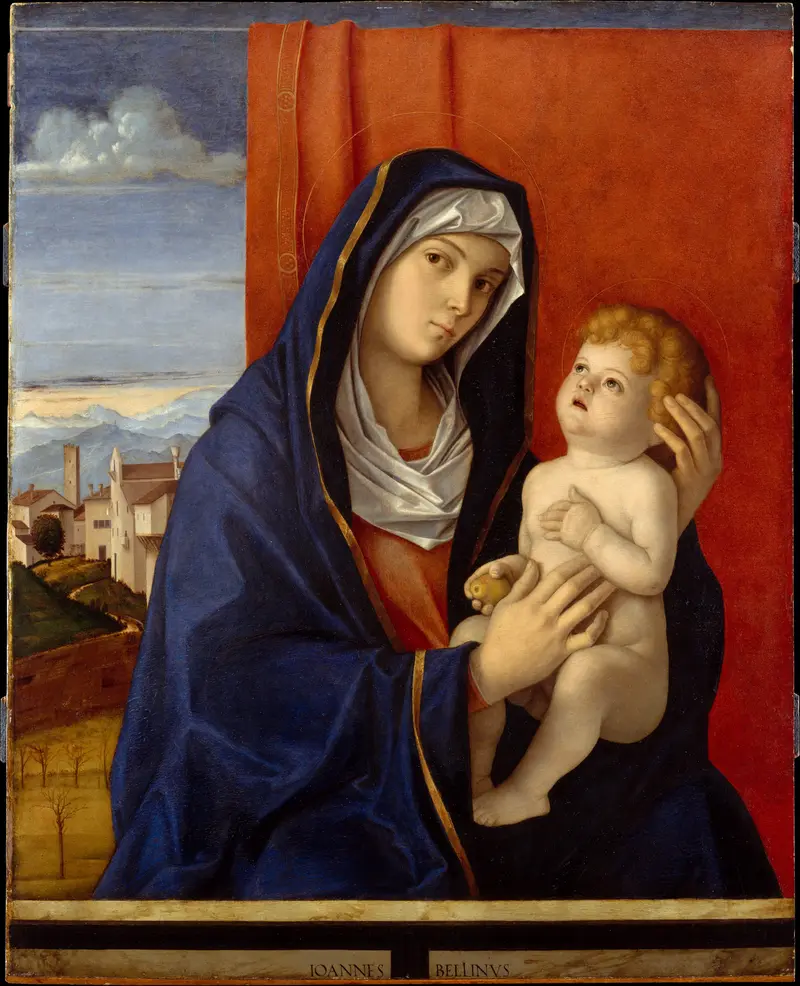
Madonna and Child
Giovanni Bellini
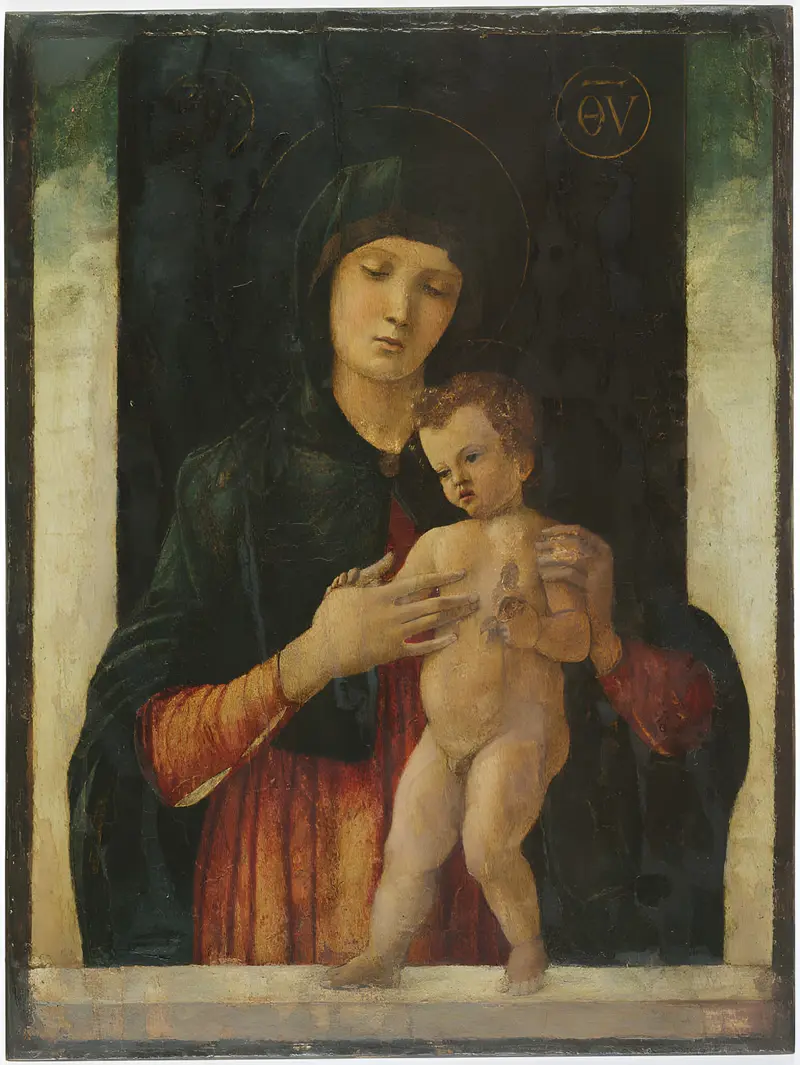
The Virgin and Child
Giovanni Bellini
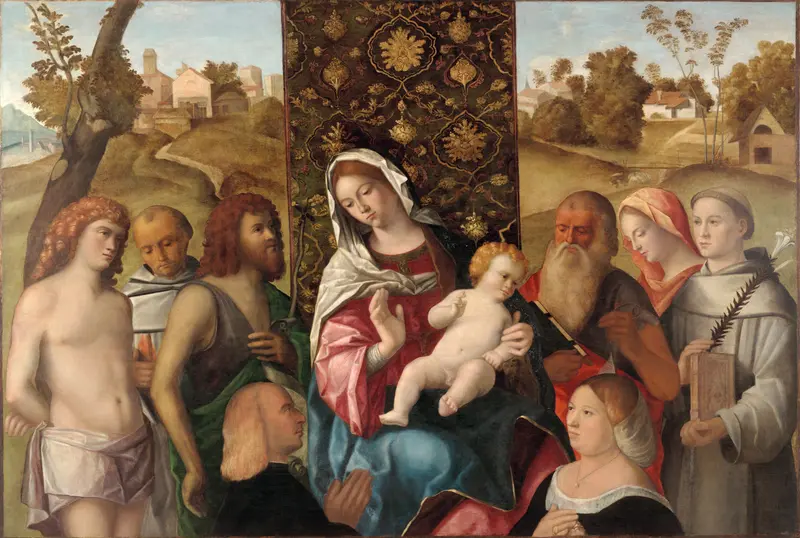
Virgin and Child with Saints Sebastian, Francis, John the Baptist, Jerome, an unidentified female saint, Saint Anthony of Padua and two donors
Giovanni Bellini
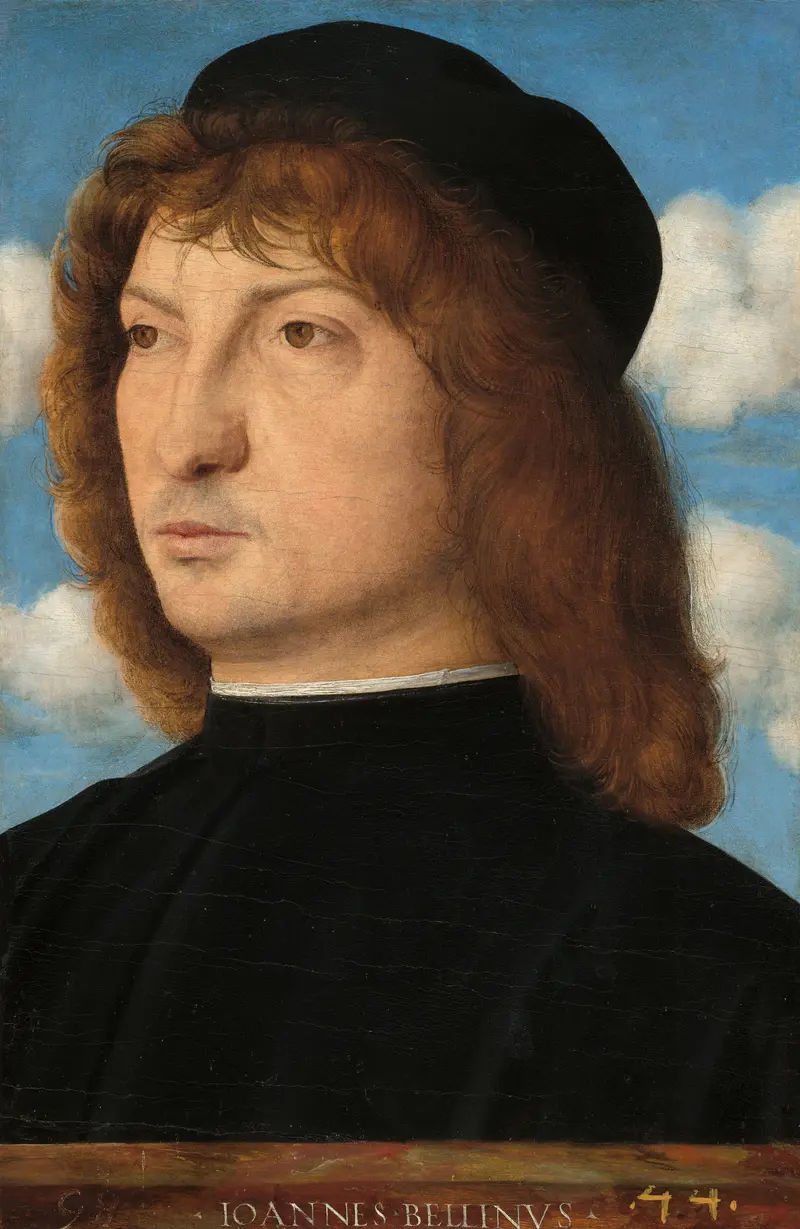
Portrait of a Venetian Gentleman
Giovanni Bellini
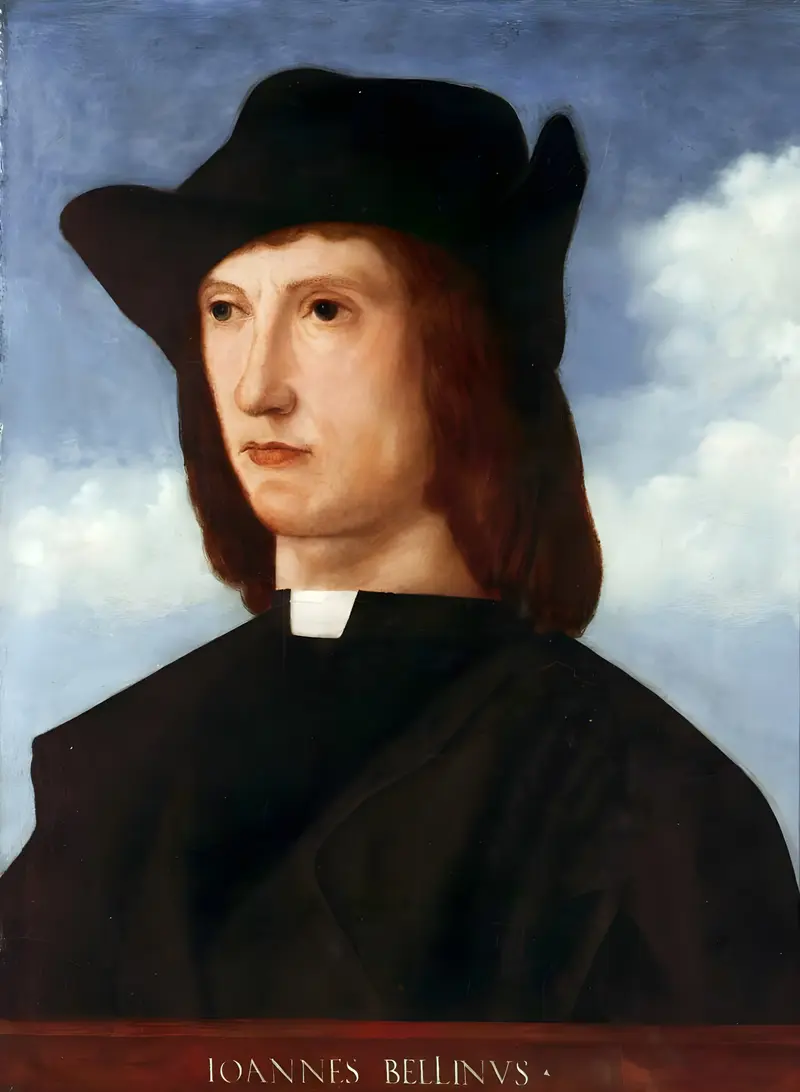
Portrait of a Young Man
Giovanni Bellini





