
Walking Courtesan — History & Facts
When Walking Courtesan appeared around 1850, it was part of a striking late series by Katsushika Hokusai, who was then in his ninetieth year and still experimenting with new subjects. The precise medium of this work is uncertain—some experts suspect it may be a rare surviving painting rather than a woodblock print, which adds to its intrigue. This period in Hokusai's life is often called his "mad old age," when he claimed, "From the age of six, I had a mania for drawing the shapes of things." The artwork stands out because it offers an unusually intimate and dynamic view of a courtesan in motion, a departure from the more static, idealized images common in Edo-period bijin-ga. The scene captures a courtesan mid-stride, her elaborate kimono swirling around her ankles, one hand lifting the hem just enough to reveal lacquered geta sandals.
Her gaze is cast downward, but her posture is proud, suggesting both the burdens and the dignity of her profession. The intricate patterns on her robe—waves and chrysanthemums—signal her high rank and the seasonal sophistication expected of Yoshiwara's elite. The hairpins and combs, rendered with meticulous care, are not mere decoration but status symbols, each one denoting a stage in her career.
Unlike the serene, static beauties of Utamaro, Hokusai's courtesan is caught in a fleeting moment, her movement lending the scene a sense of immediacy and humanity. The provenance of Walking Courtesan is somewhat obscure, as is often the case with works from late Edo Japan, especially those that straddle the line between painting and print. No formal commission is recorded, and it is likely the piece was intended for a private collector or as an experimental work for Hokusai’s own satisfaction. Surviving examples from this late period are rare, partly due to the artist's peripatetic lifestyle and the fragile nature of the materials he used.
Today, the work is preserved in an online collection, where it stands as a testament to Hokusai's restless creativity and his ability to find new life in familiar themes, even at the very end of his long career.
More Artworks by Katsushika Hokusai

The Great Wave off Kanagawa
Katsushika Hokusai
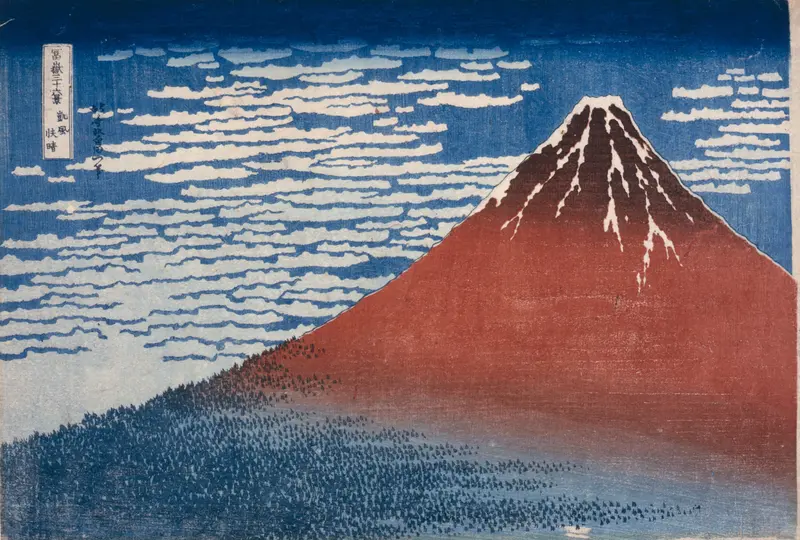
Fine Wind, Clear Morning (Red Fuji)
Katsushika Hokusai
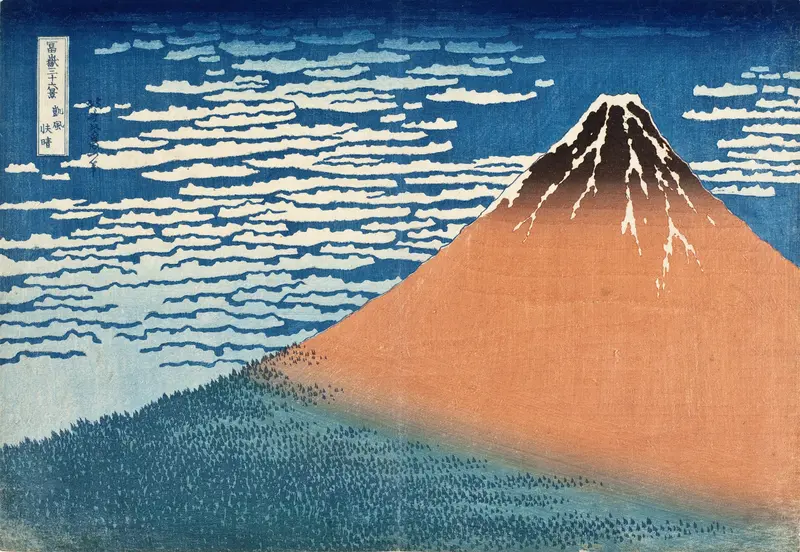
South Wind, Clear Dawn
Katsushika Hokusai
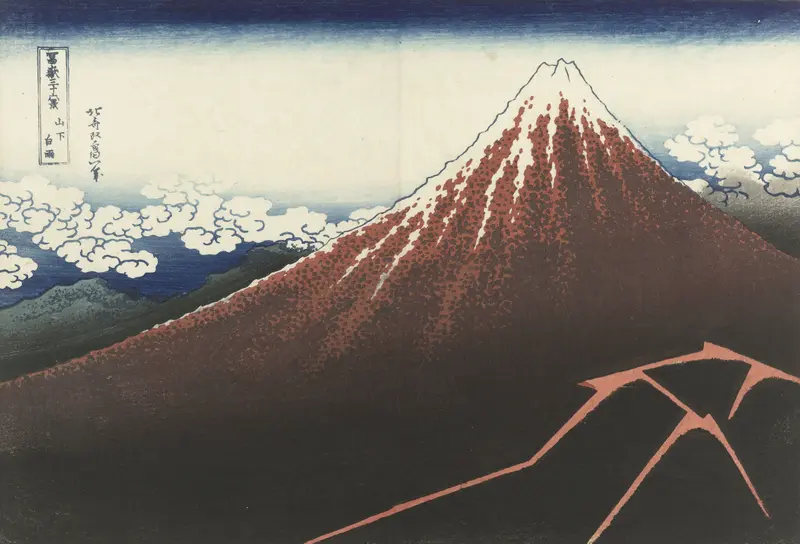
Rainstorm Beneath the Summit
Katsushika Hokusai
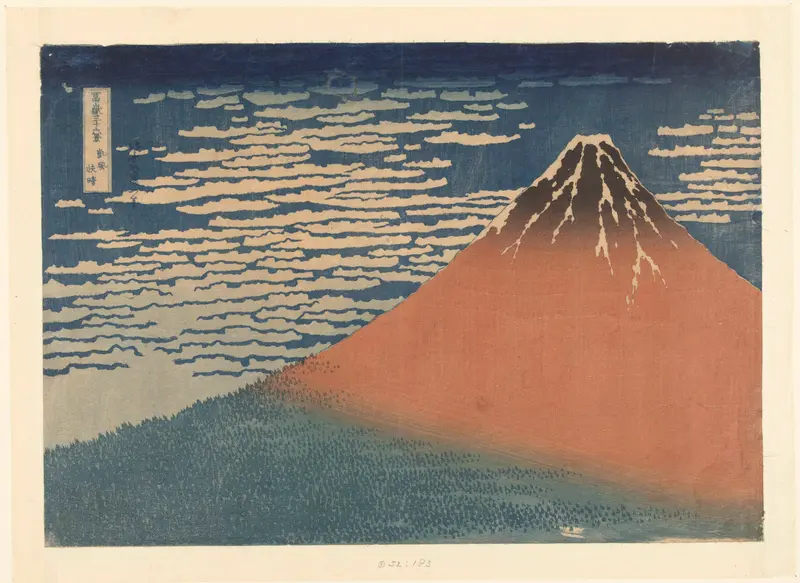
Clear Weather with a Southerly Wind
Katsushika Hokusai
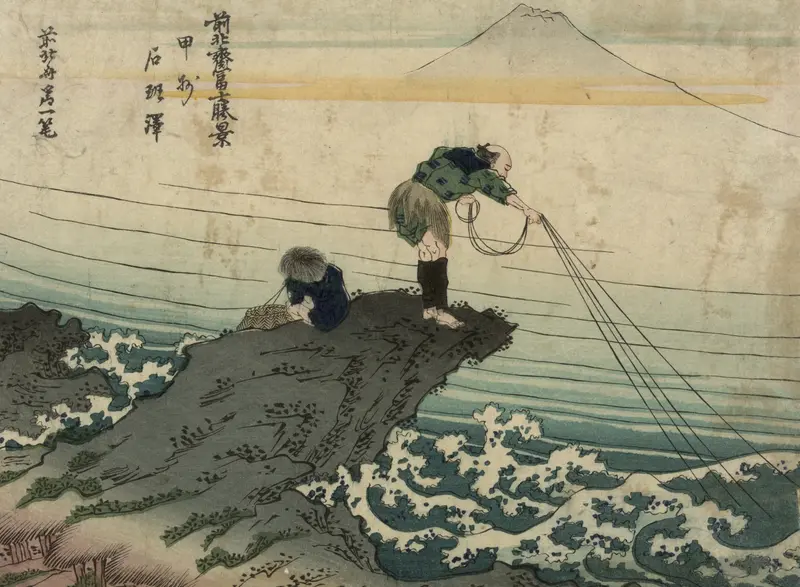
Kōshū kajikazawa
Katsushika Hokusai
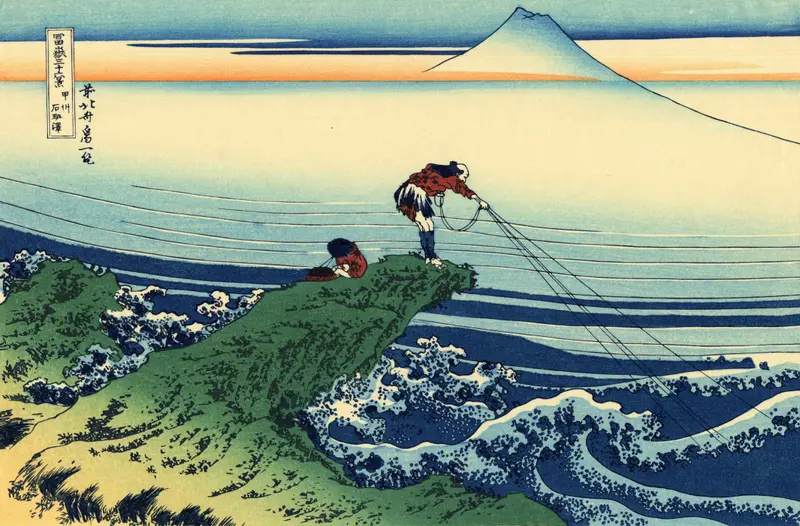
Kōshū kajikazawa 2
Katsushika Hokusai
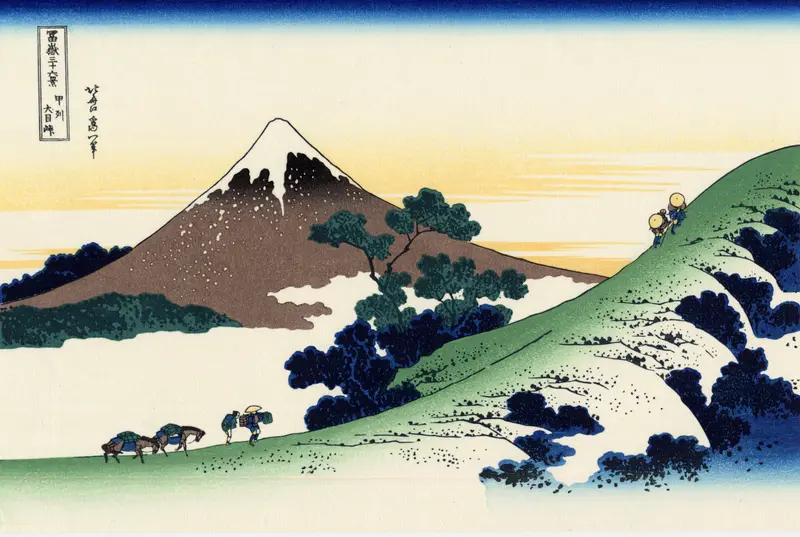
Inume Pass in Kai Province (Kôshû inume-tôge)
Katsushika Hokusai

Yoro Falls in Mino Province (Mino no Yoro no taki), from the series "A Tour of Waterfalls in Various Provinces (Shokoku taki meguri)"
Katsushika Hokusai
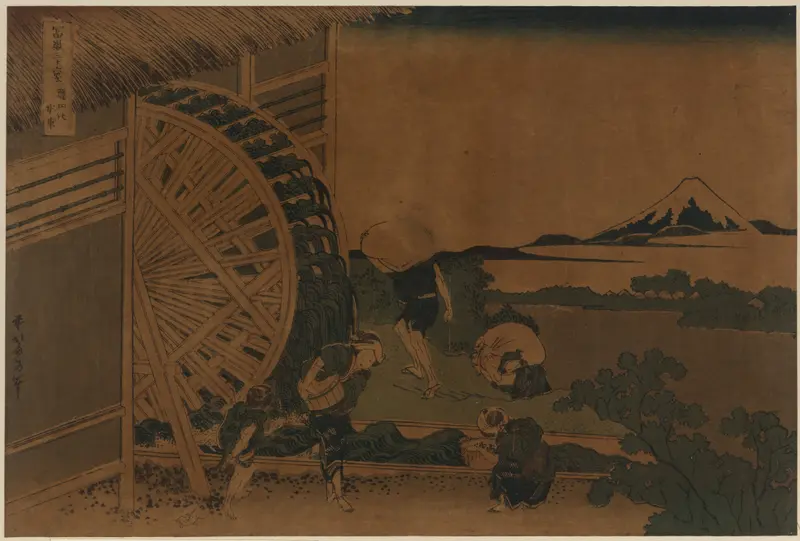
Onden no suisha
Katsushika Hokusai
More Genre Scene Art

Banquet of the Officers of the St George Civic Guard
Frans Hals

Rembrandt and Saskia in the Scene of the Prodigal Son
Rembrandt van Rijn

Bal du moulin de la Galette
Pierre-Auguste Renoir

Quadrille at the Moulin Rouge
Henri de Toulouse-Lautrec

A Burial at Ornans
Gustave Courbet

When Will You Marry?
Paul Gauguin