
Women and Cherubs in a Glen — History & Facts
What first catches the eye in Women and Cherubs in a Glen is not a single figure but the sense of movement and mystery that ripples through the foliage and figures alike. The women, barely emerging from the dappled shadows, seem to be caught mid-conversation or ritual, their gestures half-glimpsed through a veil of brushwork. In the foreground, two cherubs tumble together, their pale forms a lively contrast to the earthy richness that surrounds them.
The light here is restless, flickering across faces and leaves, pulling the viewer’s gaze from the playful innocence below to the enigmatic gathering above. Monticelli’s loose, almost tactile handling of paint invites the eye to linger, searching for stories in the thicket of color and form. Works like this, painted by Adolphe Joseph Thomas Monticelli in the later nineteenth century, belong to a world in flux. Monticelli, admired by Van Gogh and others for his daring palette and improvisational technique, was part of a generation that blurred the boundaries between fantasy and reality, between the academic and the experimental.
Scenes of mythic or pastoral leisure—women, nymphs, or cherubs at play in imagined glades—were popular with collectors seeking escape from modern life, and Monticelli’s approach, more atmospheric than descriptive, was both admired and misunderstood. Now housed in the collection of the Museum of Fine Arts, Boston, this painting stands as a testament to an era when artists and audiences alike were searching for new ways to see—and to dream. Look again at the painting, and let its half-seen world draw you in.
More Artworks by Adolphe Monticelli

Portrait of a Lady
Adolphe Monticelli
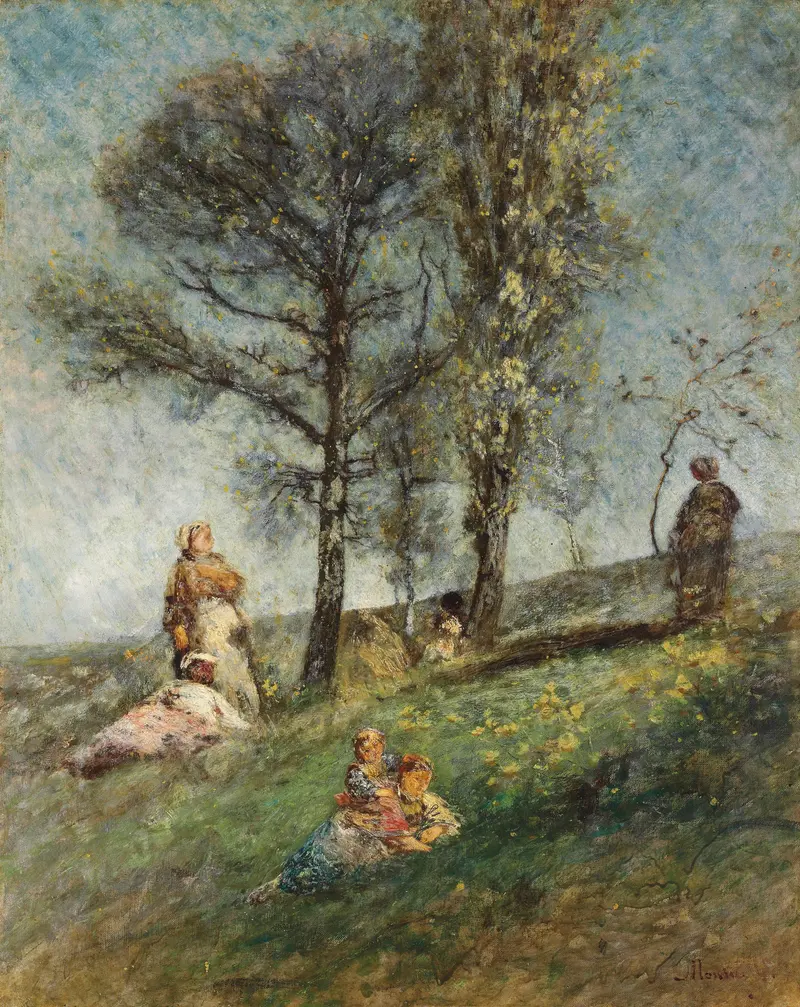
A Young Family Under Trees On A Hill
Adolphe Monticelli

Fête d'Après-Midi
Adolphe Monticelli
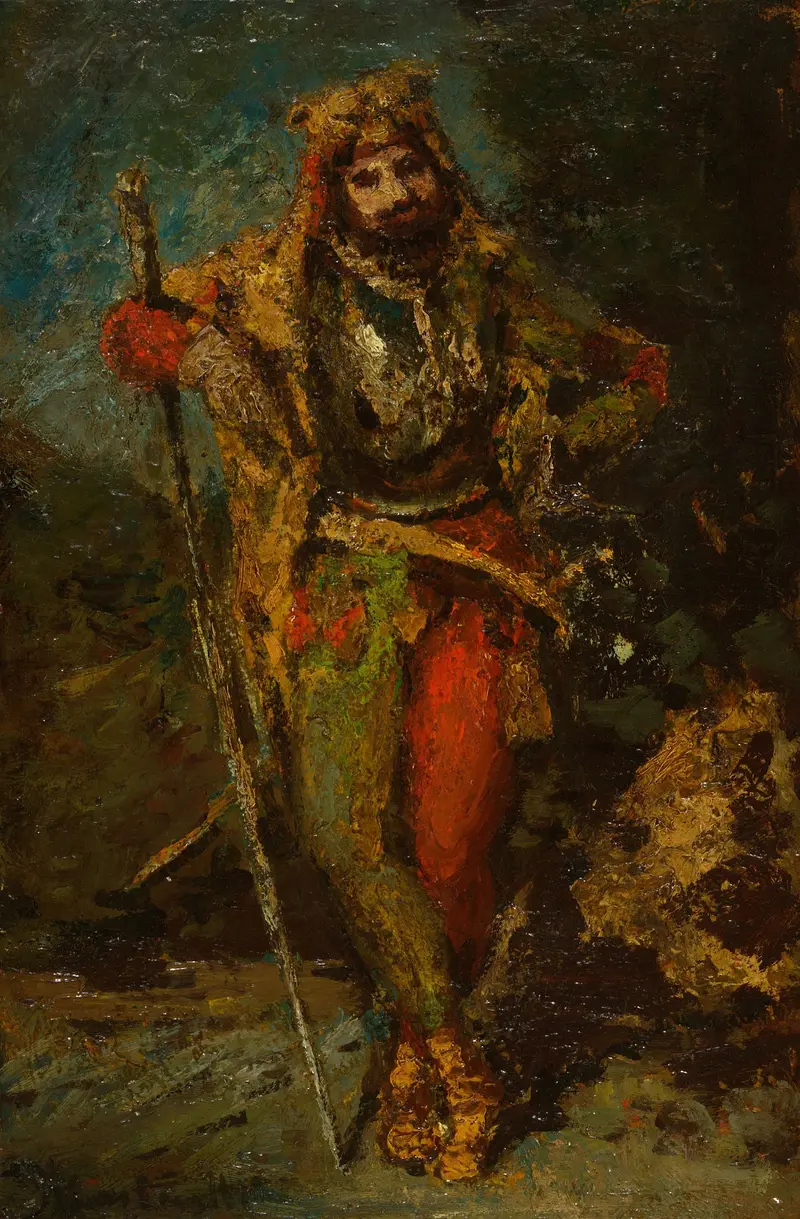
Mephisto from the Opera Faust
Adolphe Monticelli
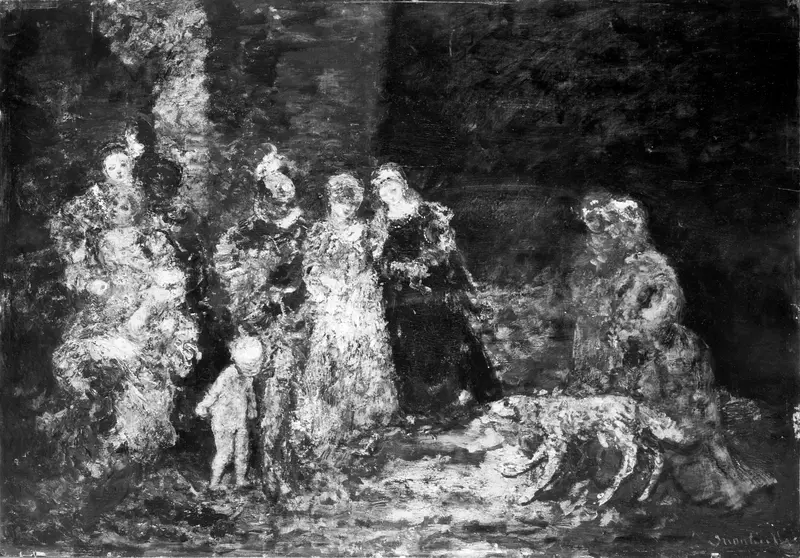
The Fairies
Adolphe Monticelli
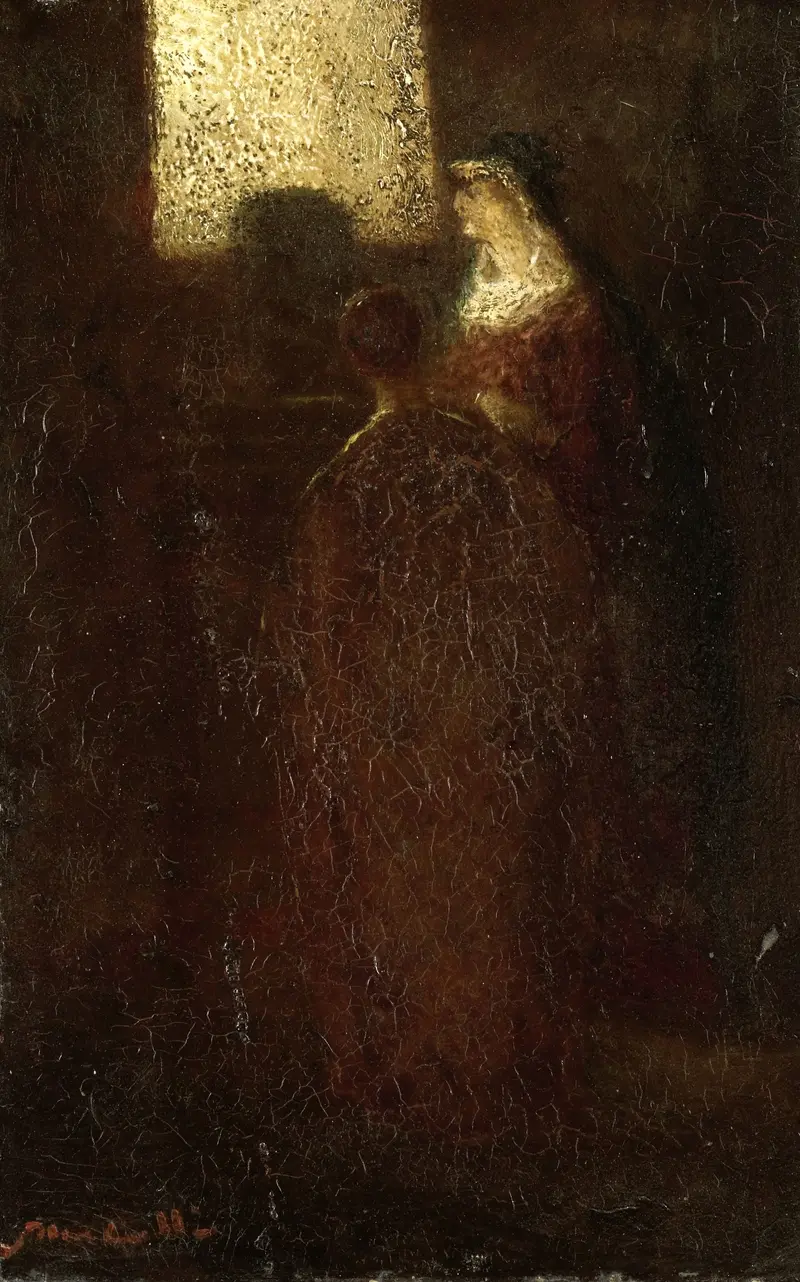
Aan het altaar
Adolphe Monticelli
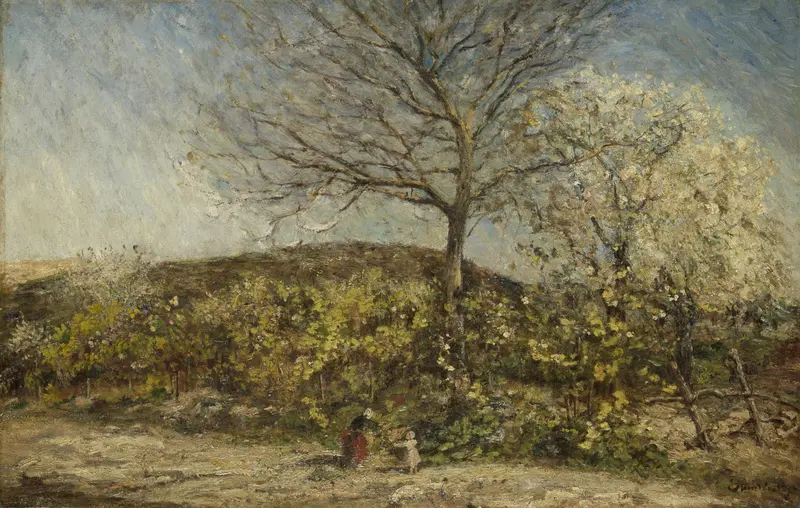
Landschap met bloeiende boomgaard
Adolphe Monticelli
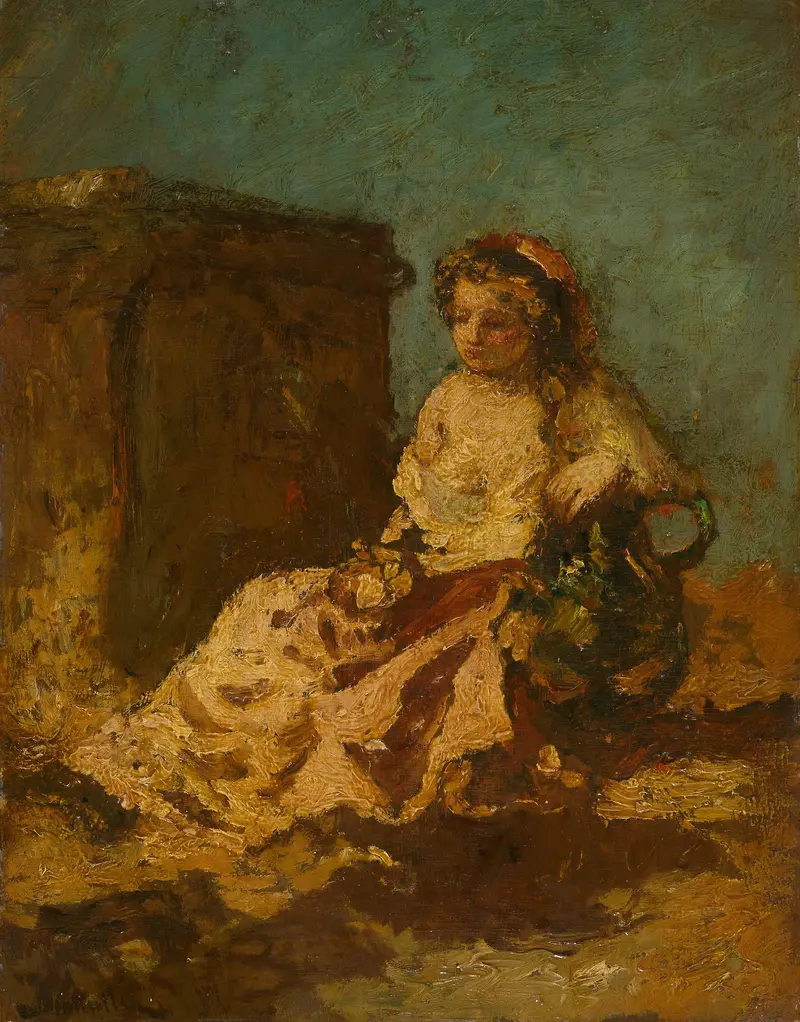
Meditation (Seated Woman)
Adolphe Monticelli
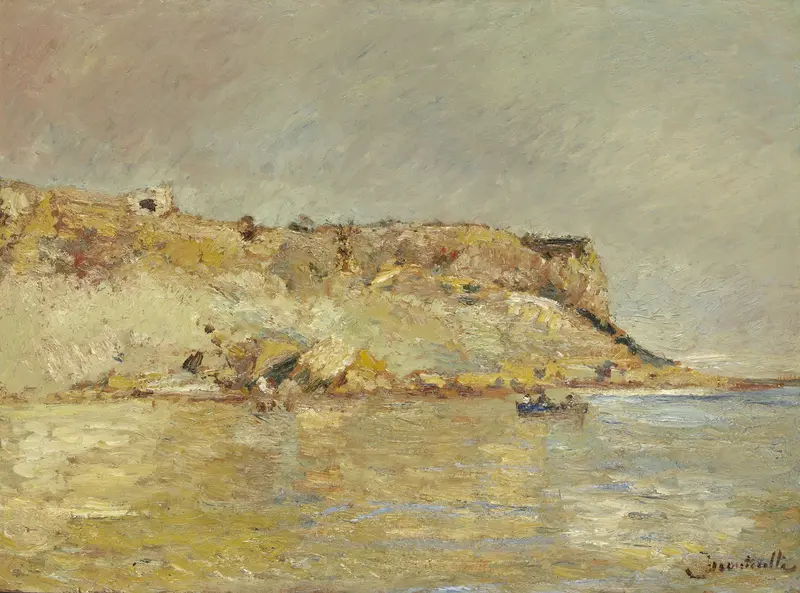
Coastal Mountains
Adolphe Monticelli
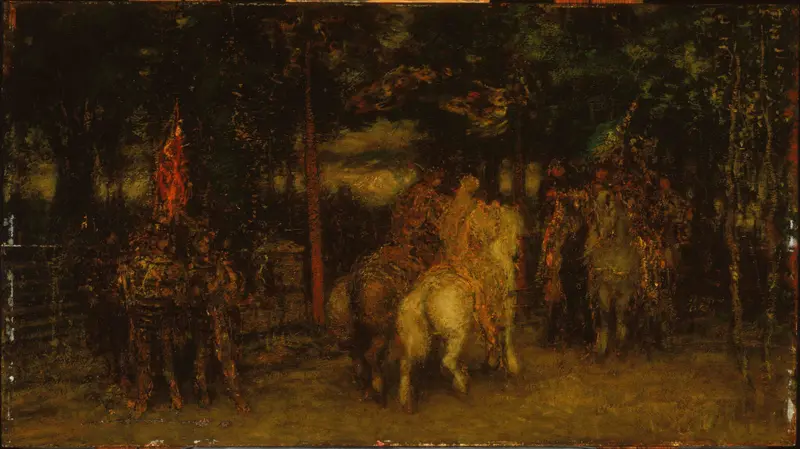
Landscape with Figures
Adolphe Monticelli





