
Agony in the Garden — History & Facts
Giovanni Bellini painted The Agony in the Garden in about 1458–1460, shortly after his brother-in-law Andrea Mantegna finished his own version of the subject, and he deliberately imitated Mantegna’s chiseled rocks and crisp folds of drapery. It shows Christ’s solitary struggle in Gethsemane on the night before the Crucifixion. The moment Bellini chooses is the night before the Crucifixion, when Christ, kneeling apart from his sleeping disciples, prays for deliverance as an angel appears bearing the cup of suffering. The rocky landscape is rendered with careful attention to detail, each twisted olive tree and distant city wall drawing the viewer into the narrative.
Christ’s hands are clasped, his expression resigned yet hopeful, while Peter, James, and John lie oblivious in the foreground, their vulnerability underscored by their scattered postures. The soft, cool light that bathes the scene hints at dawn, a symbol of both impending betrayal and ultimate redemption. Compared to Andrea Mantegna’s more rigid and sculptural Agony in the Garden, Bellini’s version is gentler, suffused with a quiet melancholy. Look beyond the river: Judas is already leading a group of soldiers toward Christ.
A spiked fence post set directly beneath the chalice hints at the crown of thorns he will wear. The painting, in egg tempera on wood, measures 80.4 × 127 cm and hangs in the National Gallery, London.
More Artworks by Giovanni Bellini
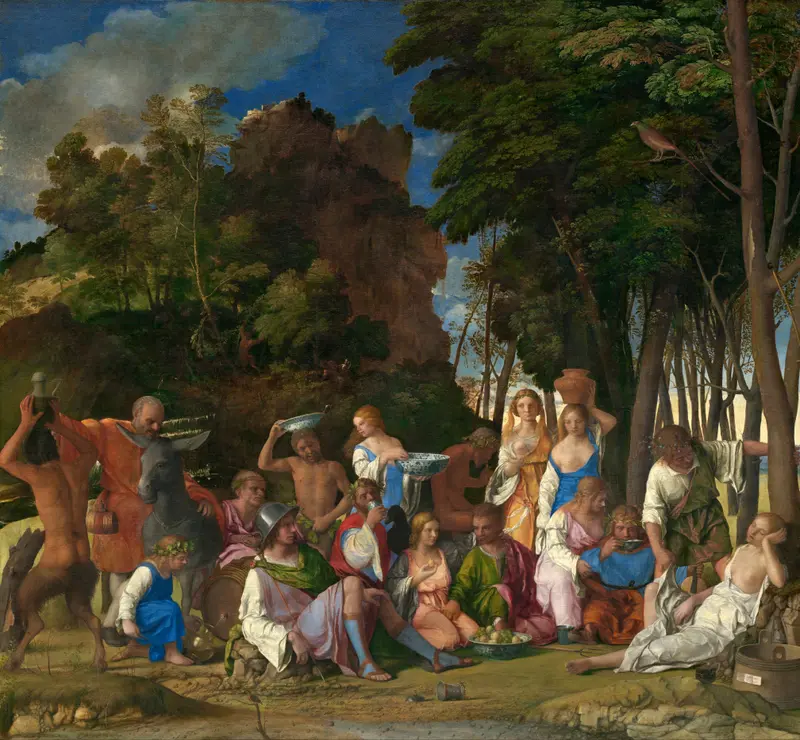
The Feast of the Gods
Giovanni Bellini

Madonna and Child enthroned with Saints and Angels
Giovanni Bellini
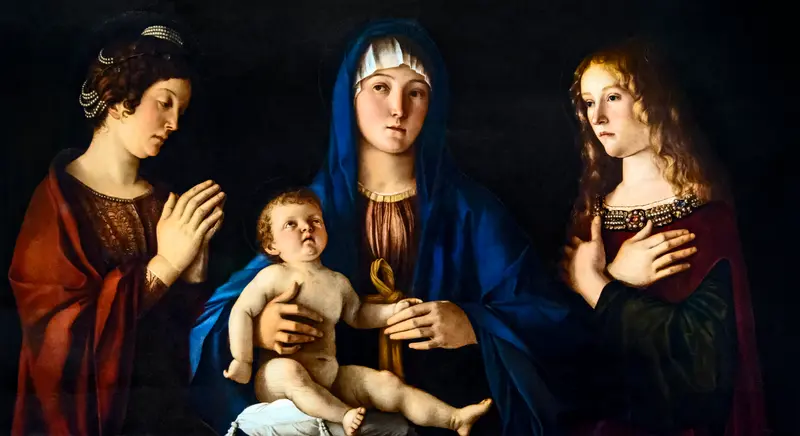
Madonna and Child between Saints Catherine and Mary Magdalene
Giovanni Bellini
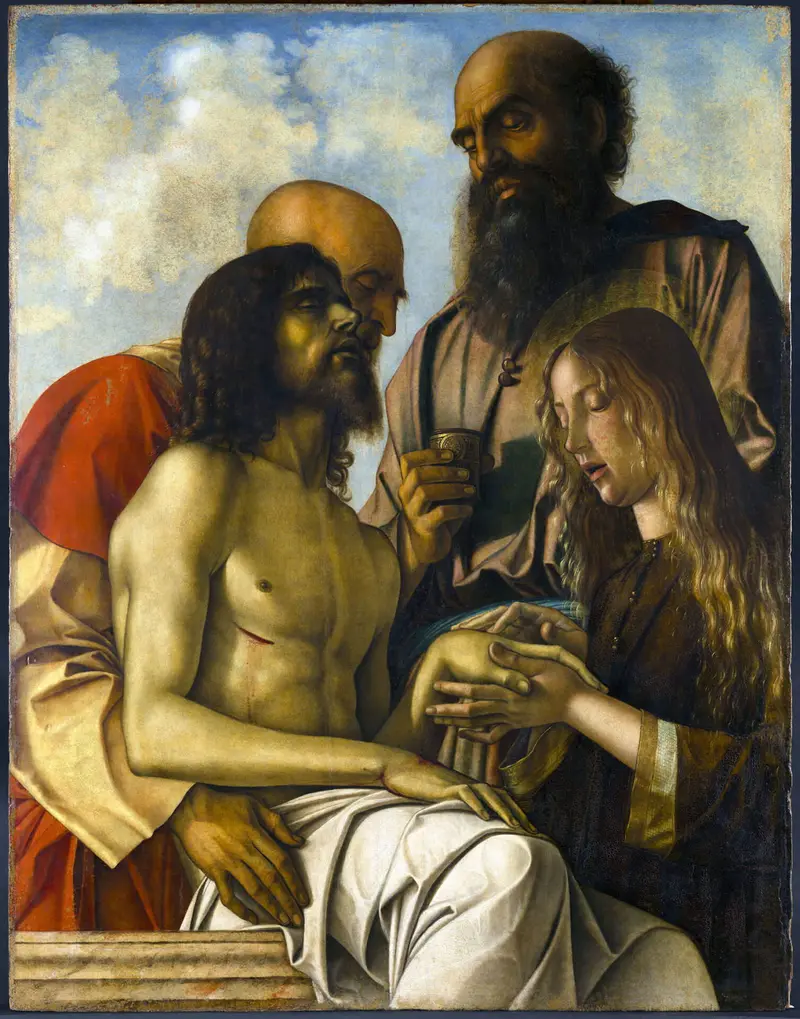
Lamentation over the Dead Christ
Giovanni Bellini
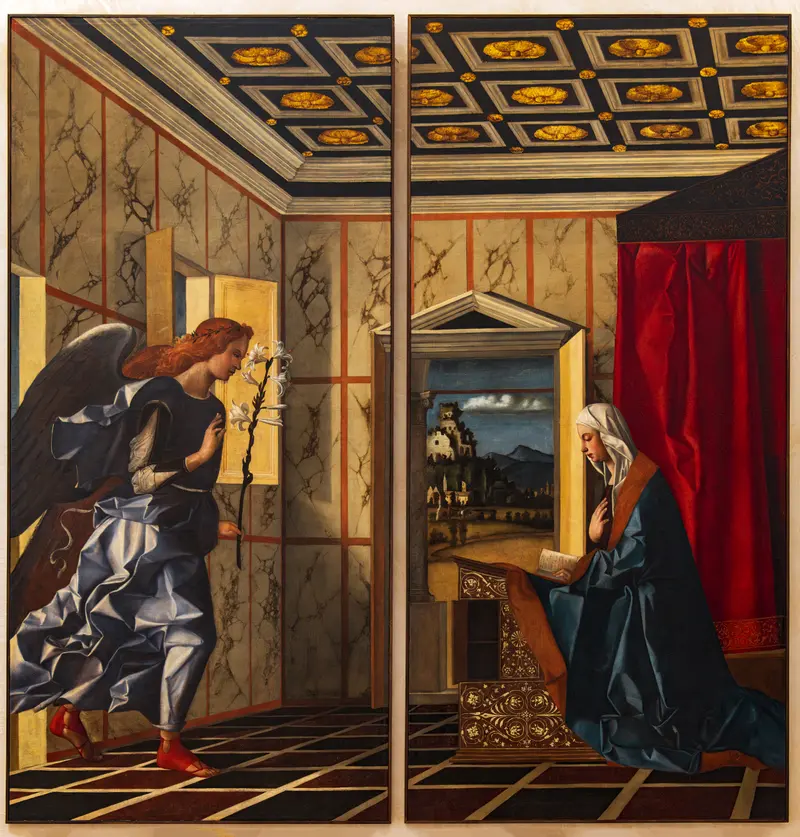
Annunciation
Giovanni Bellini
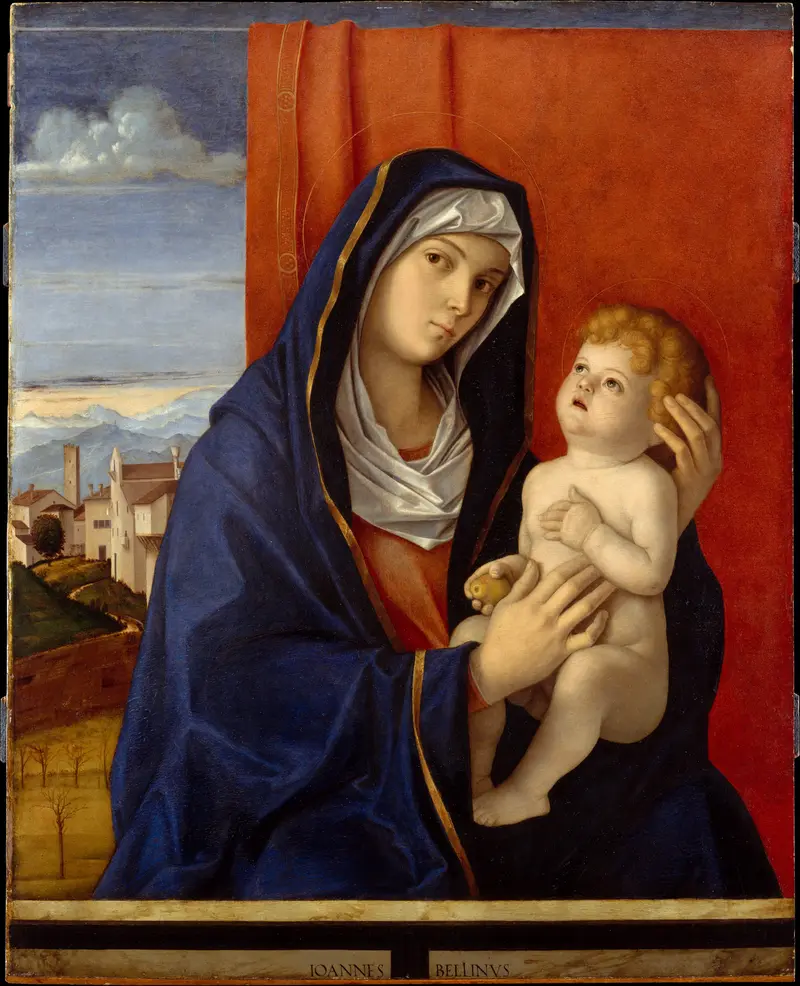
Madonna and Child
Giovanni Bellini
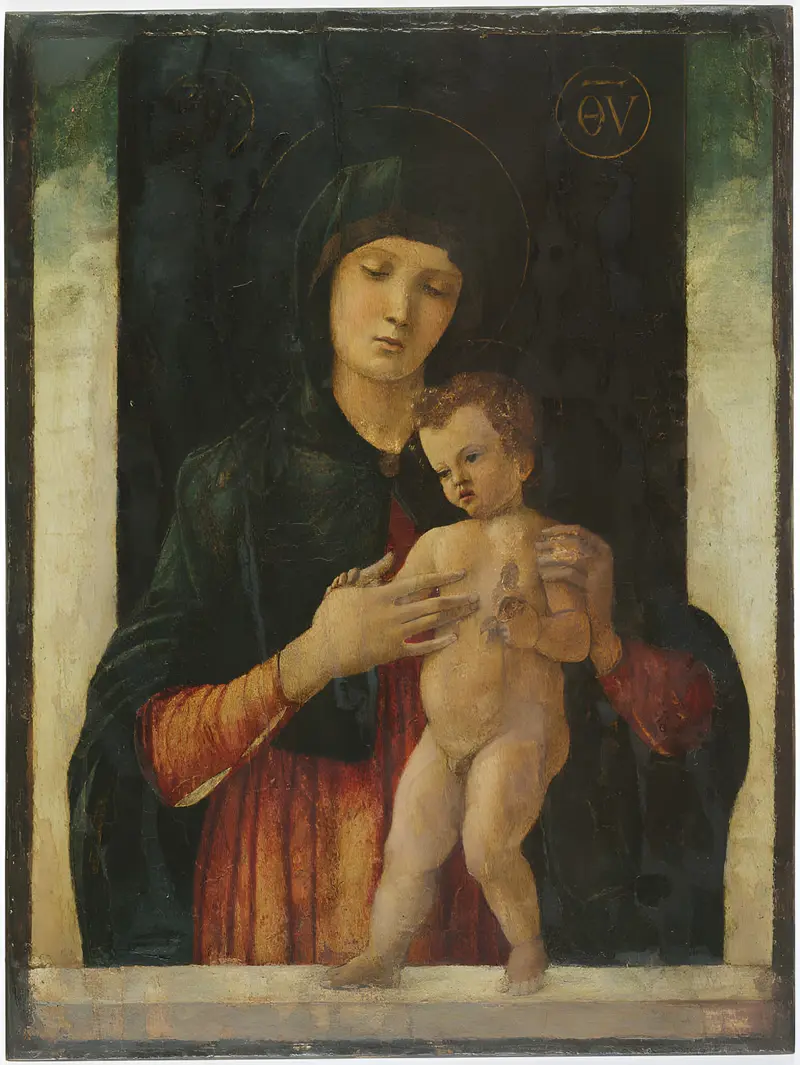
The Virgin and Child
Giovanni Bellini
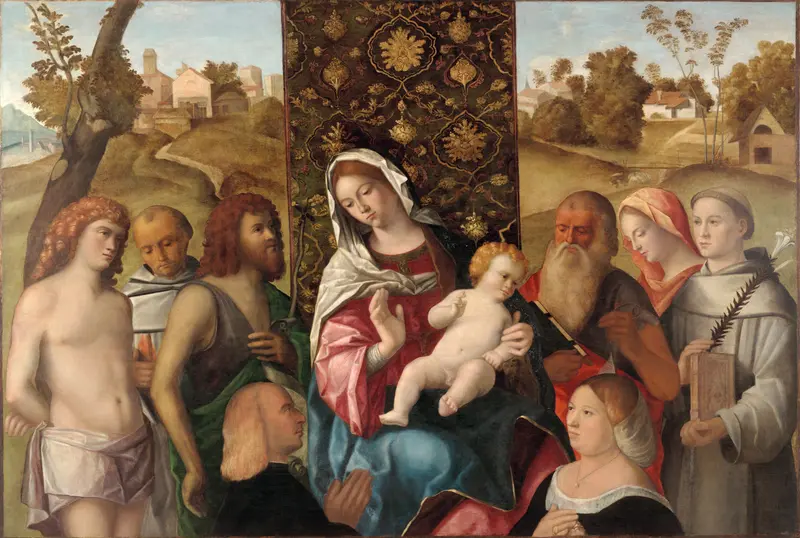
Virgin and Child with Saints Sebastian, Francis, John the Baptist, Jerome, an unidentified female saint, Saint Anthony of Padua and two donors
Giovanni Bellini
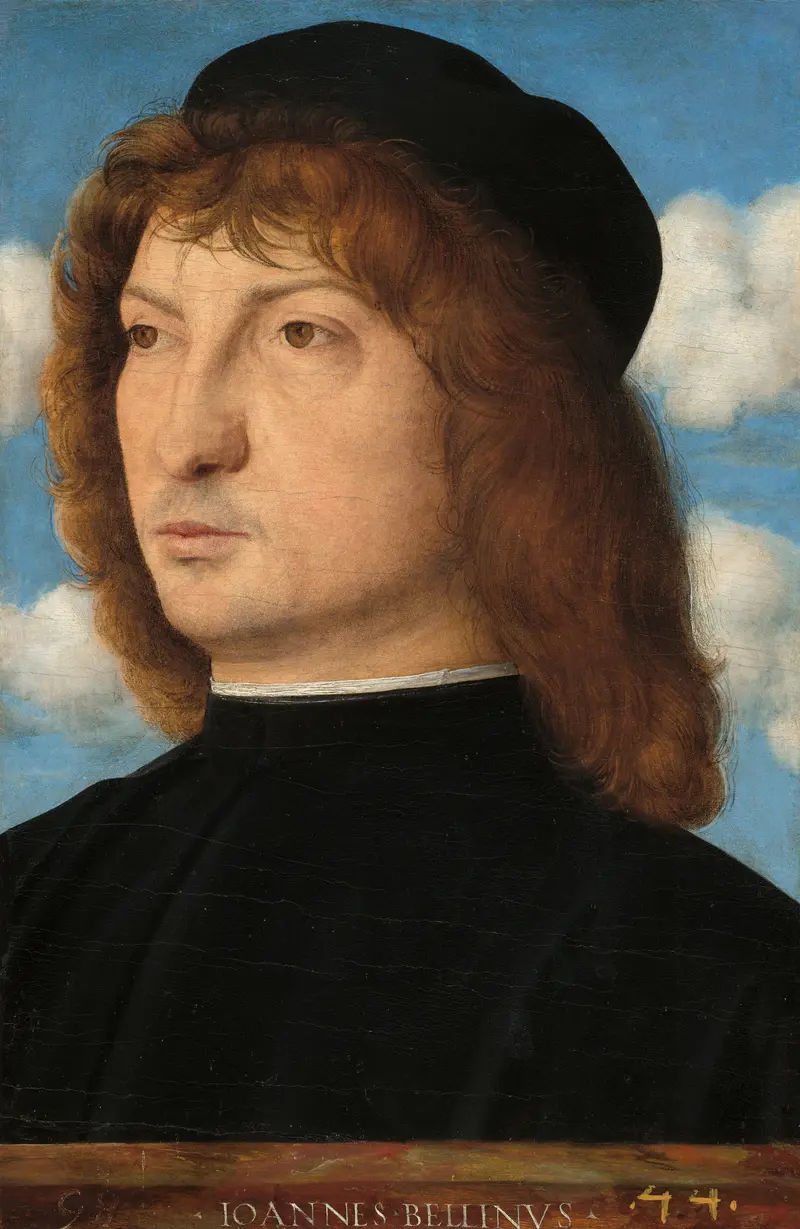
Portrait of a Venetian Gentleman
Giovanni Bellini
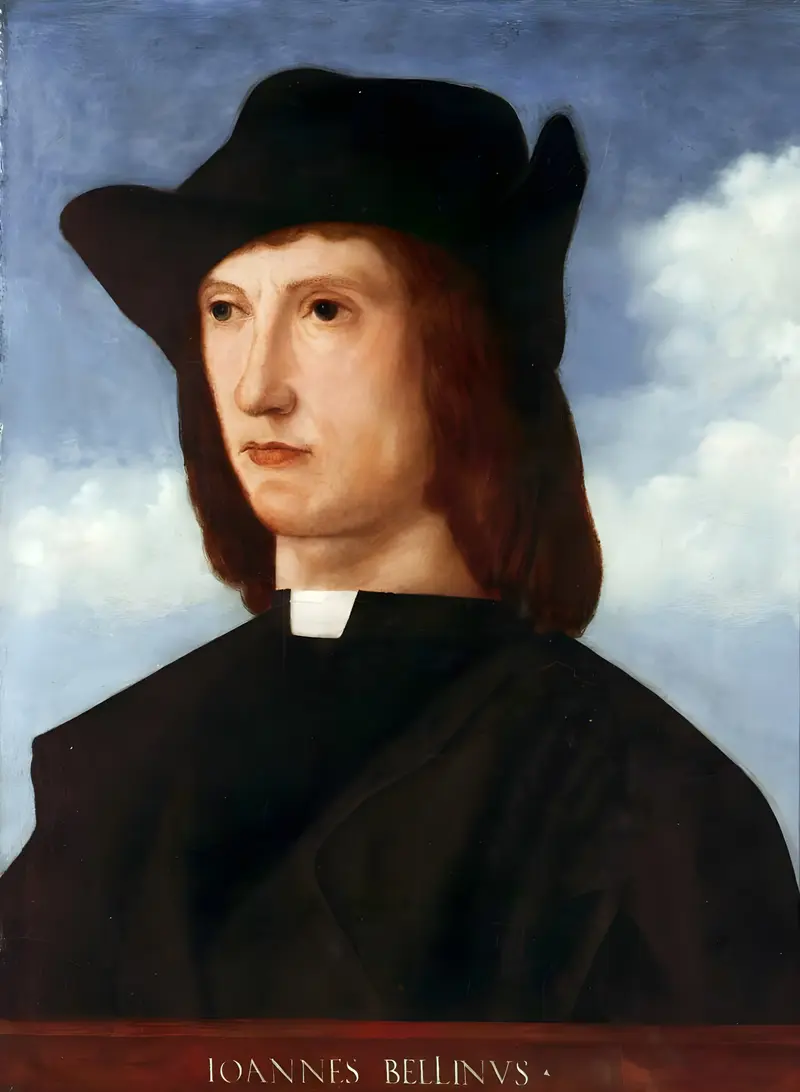
Portrait of a Young Man
Giovanni Bellini





