
Allegory of Salvation with the Virgin and Christ Child, St. Elizabeth, the Young St. John the Baptist and Two Angels — History & Facts
Few works by Rosso Fiorentino have sparked as much debate as Allegory of Salvation with the Virgin and Christ Child, St. Elizabeth, the Young St. John the Baptist and Two Angels.
The painting’s origins are shrouded in mystery: its date, patron, and even original location remain unknown, a rarity for an artist whose Florentine and French commissions are otherwise well documented. Scholars have long puzzled over whether this panel was intended for private devotion or as part of a larger altarpiece, and its unusual combination of figures has prompted speculation about its intended message. The painting has been described as “enigmatic” by generations of art historians, who see in it a personal and unconventional meditation on redemption. At the heart of the scene, the Virgin Mary cradles the Christ Child, while St.
Elizabeth, her cousin, gazes upon them with a mixture of awe and maternal affection. The young St. John the Baptist, identifiable by his camel-hair tunic and reed cross, gestures toward Christ, foreshadowing his future role as herald of the Messiah.
Two angels flank the group, their vivid expressions and dynamic poses characteristic of Rosso Fiorentino’s distinctively restless style. The composition pulses with energy: elongated limbs, sharp contrasts of light and shadow, and a palette of acidic reds and greens lend the scene a sense of urgency and drama. Unlike Raphael’s serene Madonna groups, Rosso’s figures seem caught in a moment of revelation, emphasizing the human emotions at the core of the Christian story. The painting’s physical journey is largely undocumented, a fate not uncommon for works by Rosso Fiorentino outside his major commissions.
Its style and subject suggest it was painted during his Florentine period, before his departure for France in 1530 to join the court of Francis I. Over the centuries, the work has been attributed to various hands, reflecting the fluid boundaries between Mannerist artists in early sixteenth-century Italy. Today, it stands as a testament to Rosso’s experimental spirit and his ability to infuse traditional religious subjects with psychological intensity.
Its uncertain provenance only adds to its fascination, inviting each new viewer to enter the puzzle anew.
More Artworks by Rosso Fiorentino
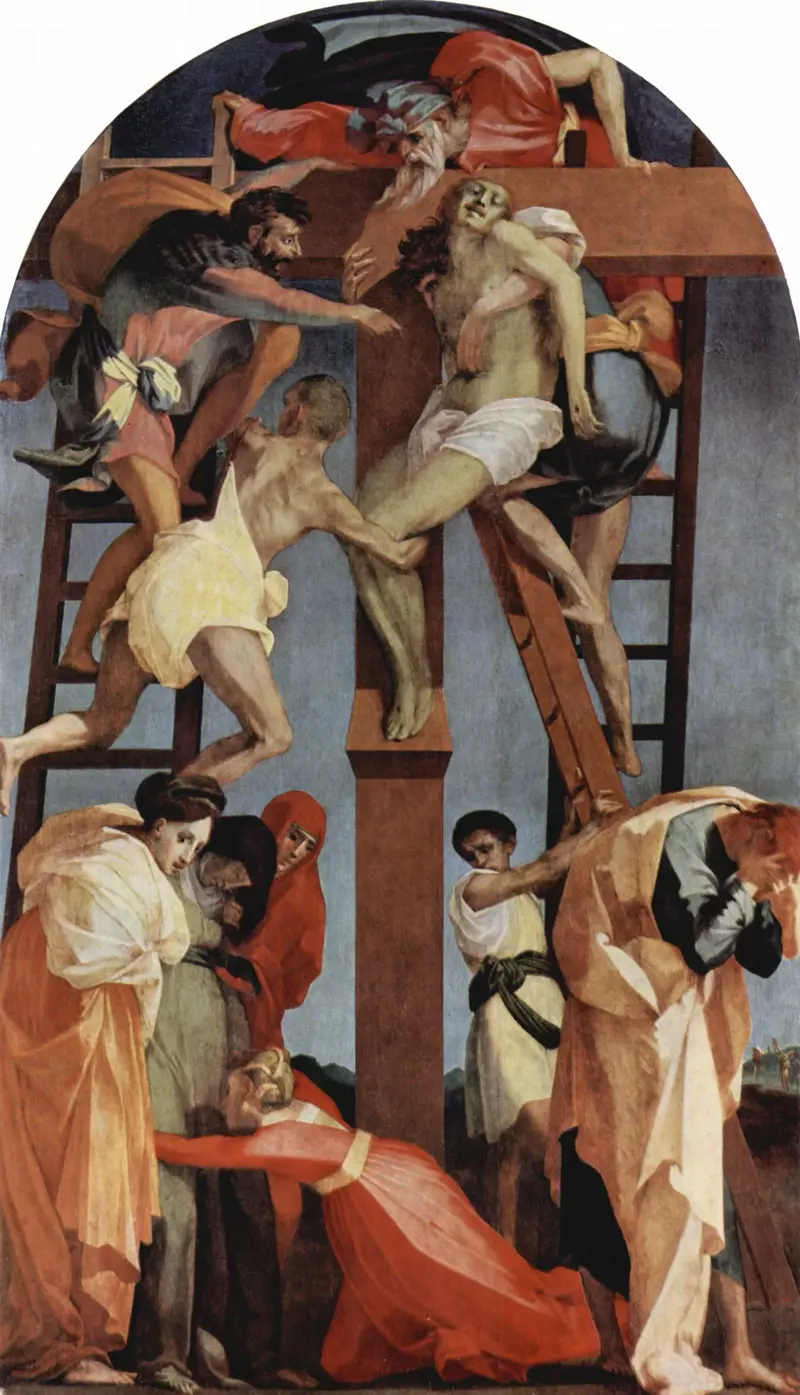
Deposition from the Cross
Rosso Fiorentino
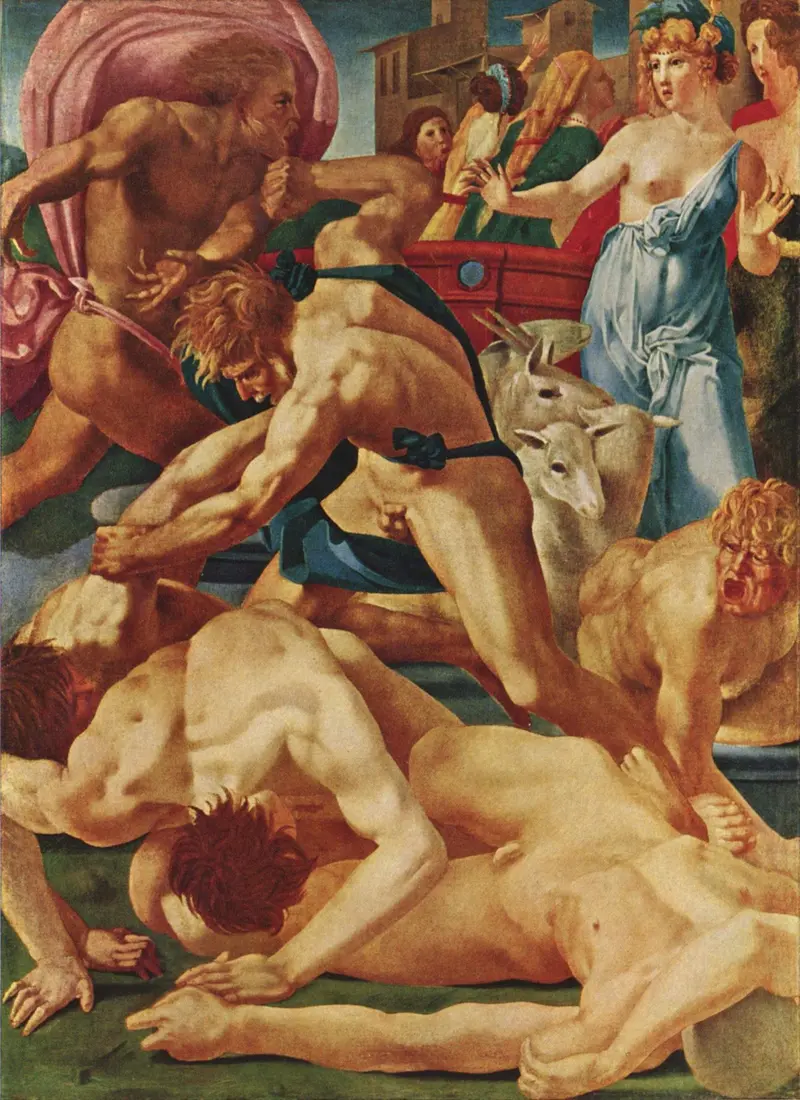
Moses Defending the Daughters of Jethro
Rosso Fiorentino

Judith with the Head of Holofernes
Rosso Fiorentino
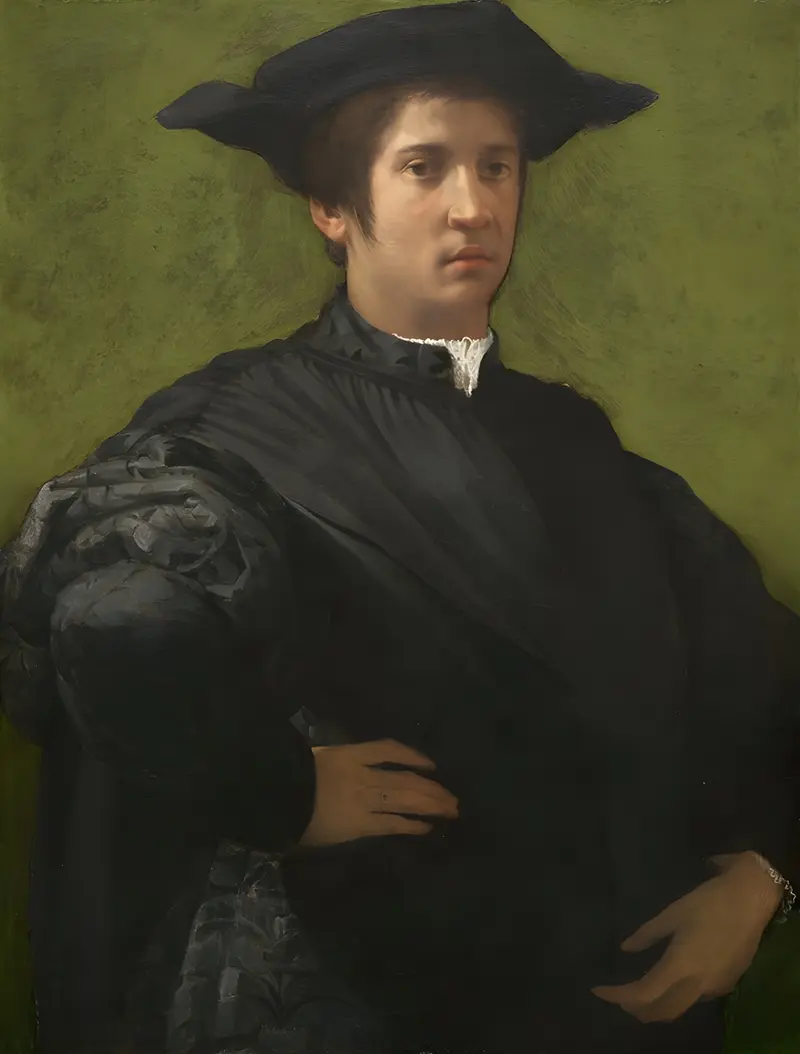
Portrait of a Man
Rosso Fiorentino
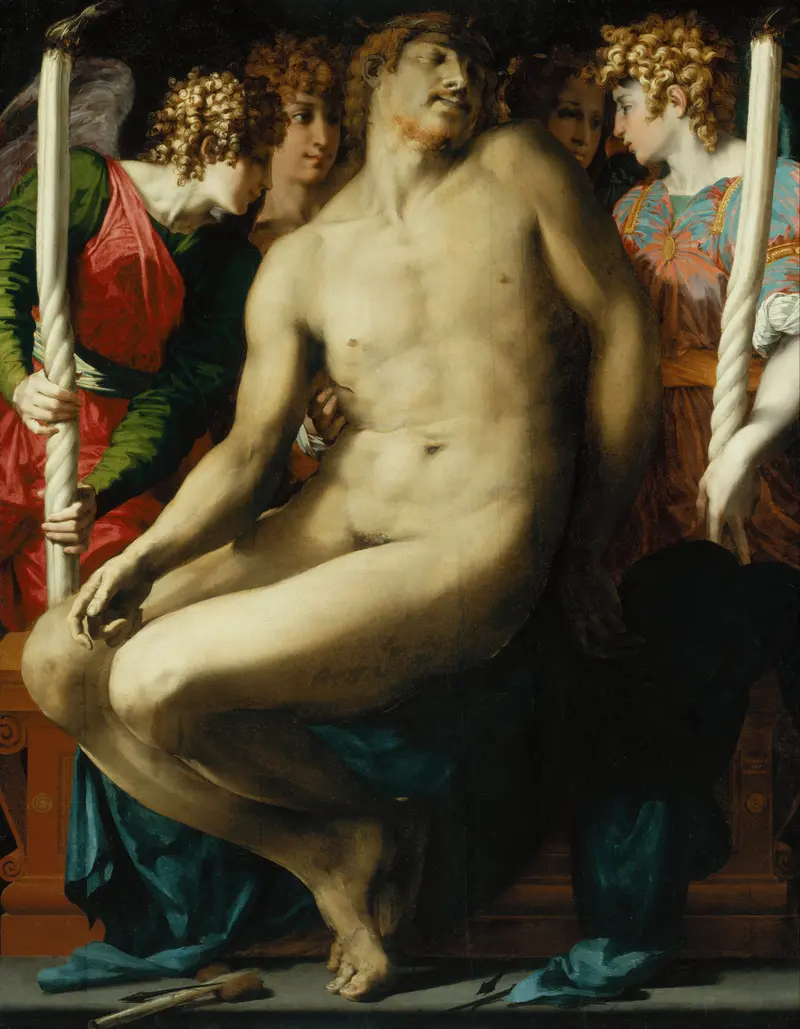
The Dead Christ with Angels
Rosso Fiorentino
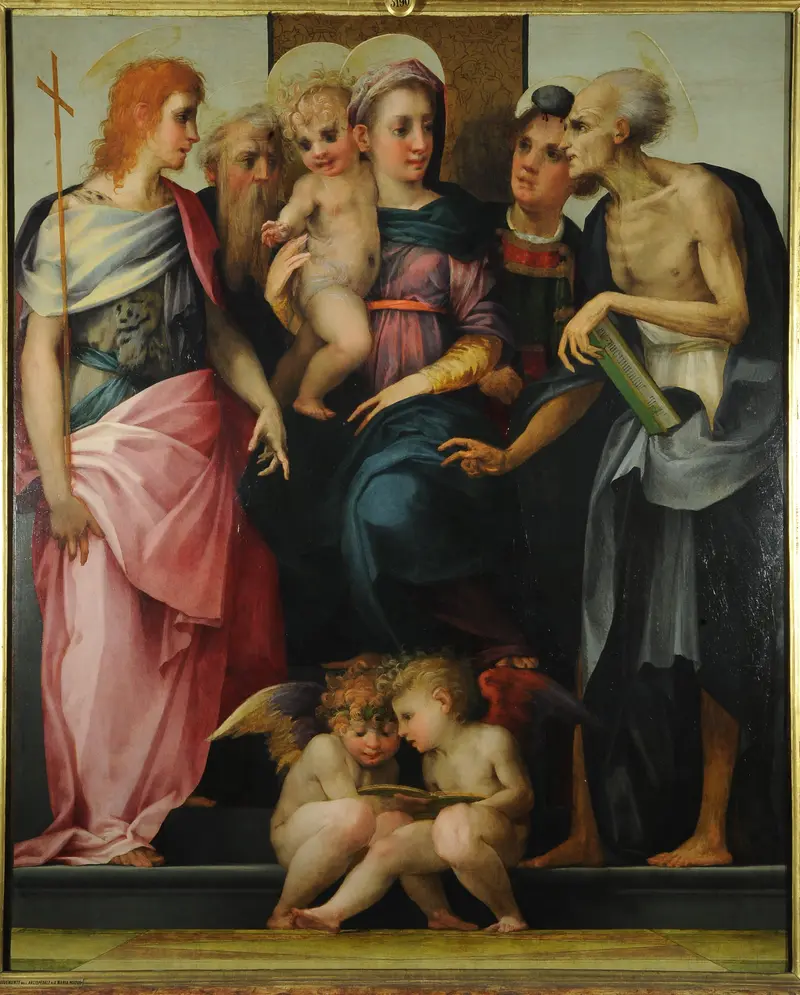
Sacred conversation with musical angels
Rosso Fiorentino
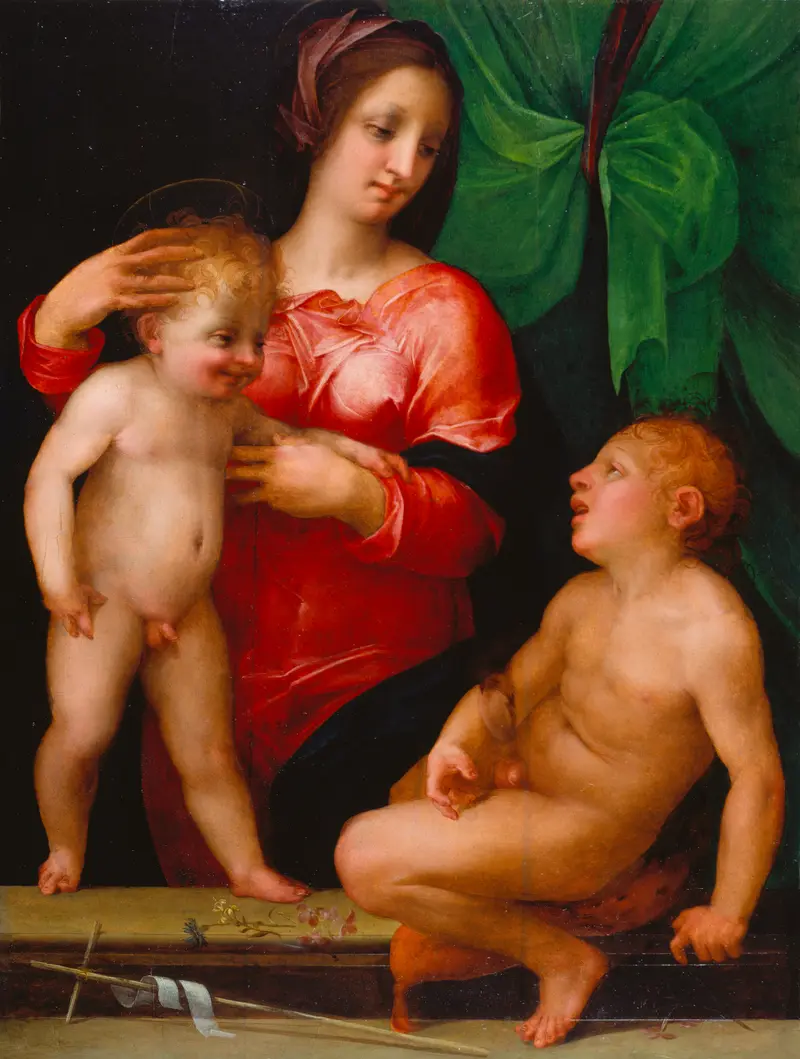
Madonna and Child with the Infant St. John
Rosso Fiorentino
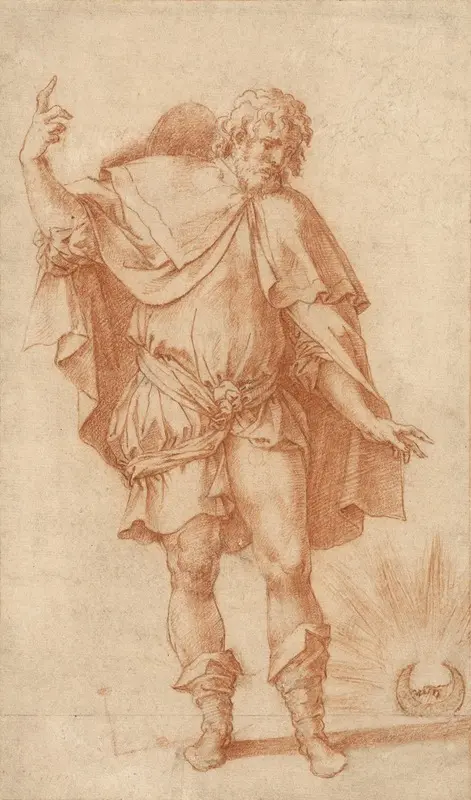
Study of a Male Figure (Empedocles or Saint Roch)
Rosso Fiorentino
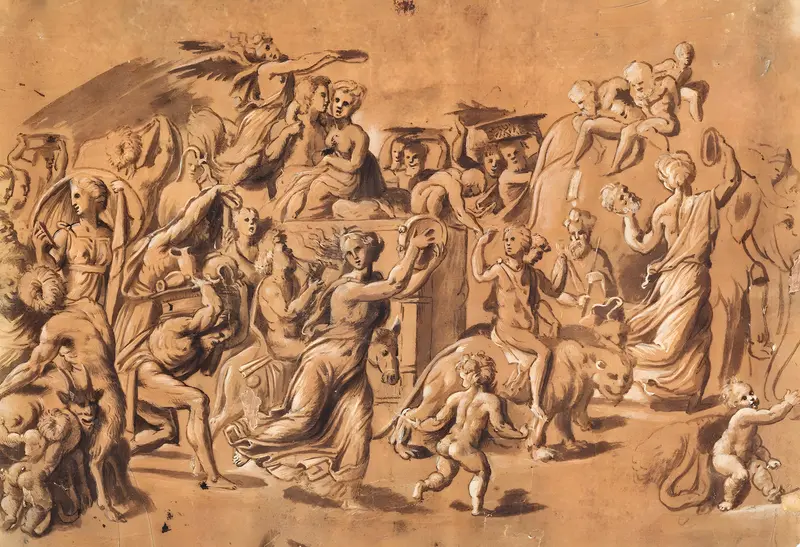
Bacchus’ triumf
Rosso Fiorentino
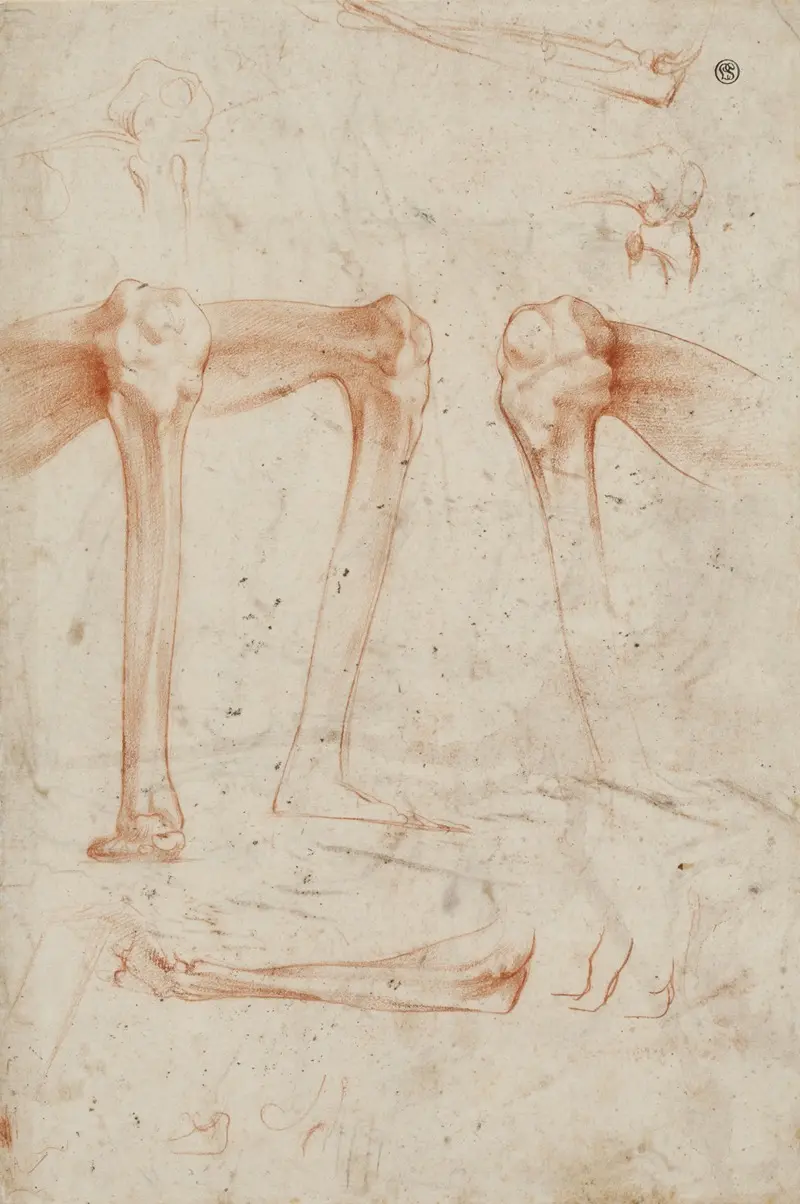
Studies of legs, knees and arms
Rosso Fiorentino





