
An Augustinian Nun (Saint Monica) — History & Facts
When Piero della Francesca painted An Augustinian Nun (Saint Monica) around 1454, he was working on a set of portraits for the polyptych at the church of Sant’Agostino in Sansepolcro—an ambitious commission that would become a landmark of Renaissance portraiture. The panels were later dispersed, and today, each figure stands alone, their original unity lost to time. The identity of the nun has long been debated, but she is widely accepted as Saint Monica, revered mother of Saint Augustine.
The painting’s survival as a fragment, and its journey from a sacred ensemble to an isolated portrait, has made it a focus of both scholarly interest and mystery. Saint Monica is caught in a moment of quiet contemplation, her eyes cast downward, hands gently folded in prayer. The severe white wimple and black veil mark her as an Augustinian, while the delicate modeling of her face and the clarity of light across her features reveal Piero della Francesca’s fascination with geometry and human presence. The absence of elaborate attributes draws the viewer’s attention to her inner life—a marked contrast to the more ornate depictions of saints by contemporaries like Fra Angelico.
Here, Monica’s humility and steadfastness are rendered through restraint: the muted palette, the careful symmetry, and the almost architectural calm of her pose. The original polyptych was commissioned by the Augustinian order for their high altar, and Piero della Francesca’s panels were completed between 1454 and 1469. Over the centuries, the altarpiece was dismantled, its parts scattered across collections in Europe and America. The panel of Saint Monica eventually entered the Museo di Sansepolcro, not far from where it was first painted.
Though the medium remains uncertain, the painting’s clarity and preservation have made it a touchstone for understanding Piero della Francesca’s early style—a style that would soon transform Italian painting with its quiet rigor and devotion to the human figure.
More Artworks by Piero Della Francesca

Portrait of the Duchess of Urbino, Battista Sforza
Piero Della Francesca

Portrait of Federico da Montefeltro
Piero Della Francesca

Federico da Montefeltro, Duke of Urbino
Piero Della Francesca
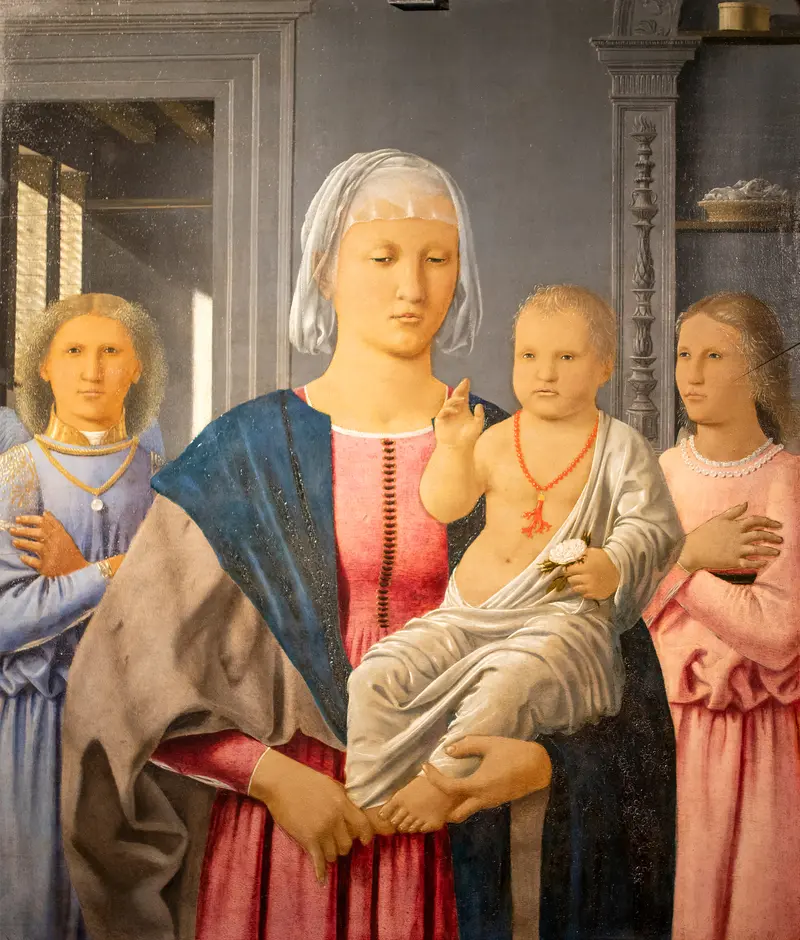
Madonna di Senigallia
Piero Della Francesca
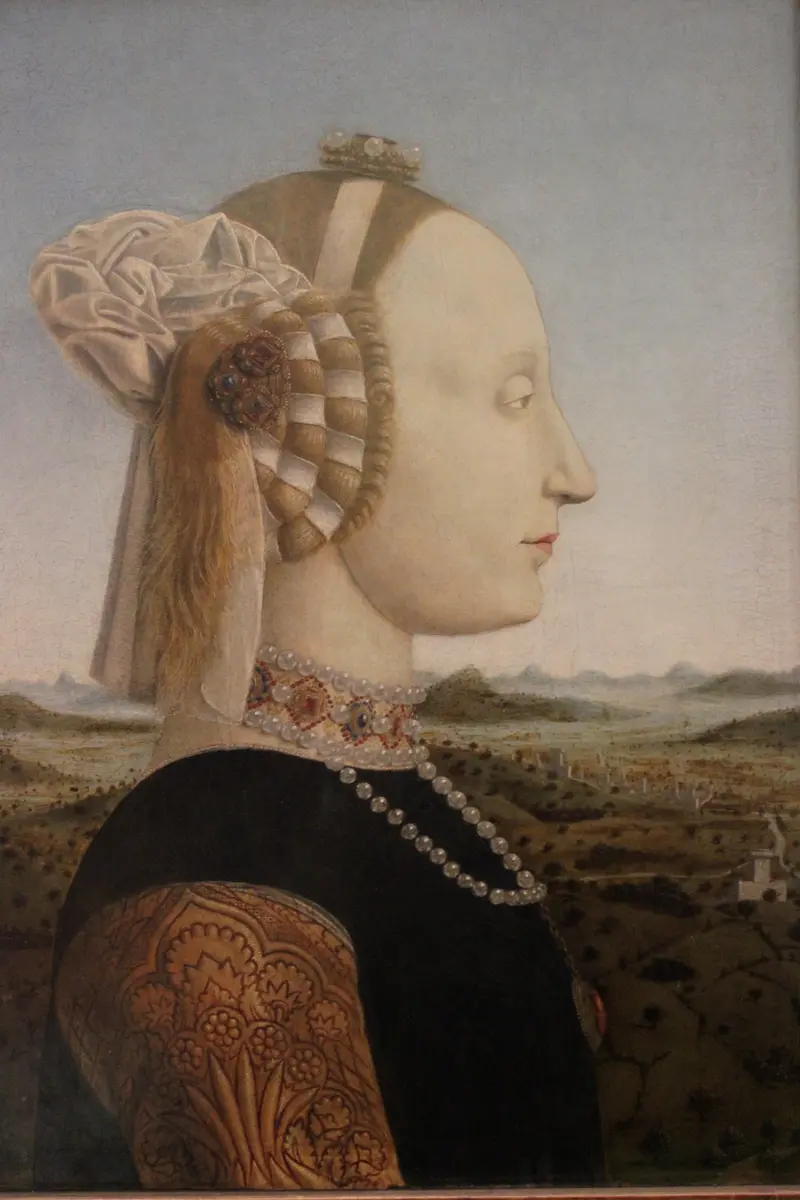
Portrait of Battista Sforza
Piero Della Francesca
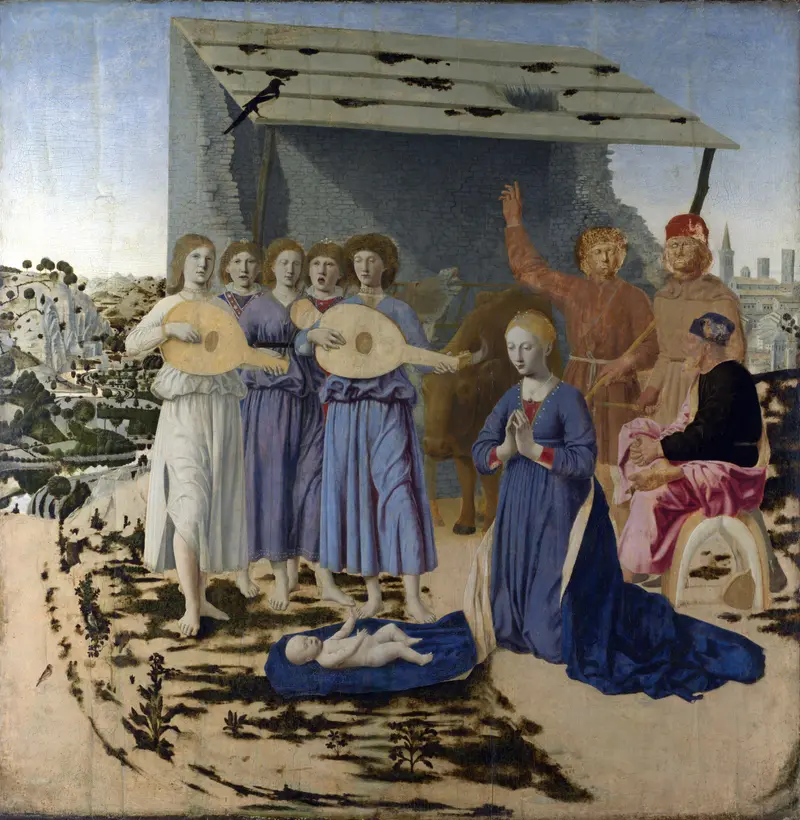
The Nativity
Piero Della Francesca
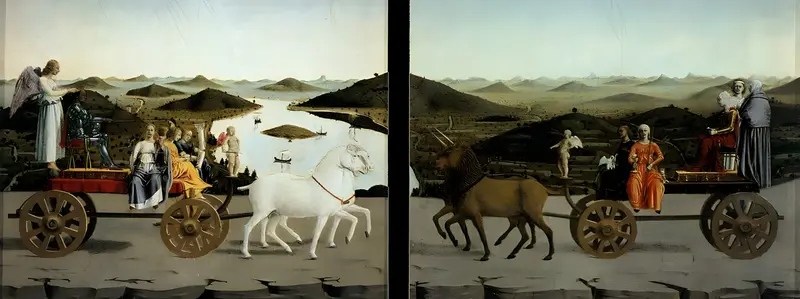
Diptych of Federico da Montefeltro and Battista Sforza
Piero Della Francesca
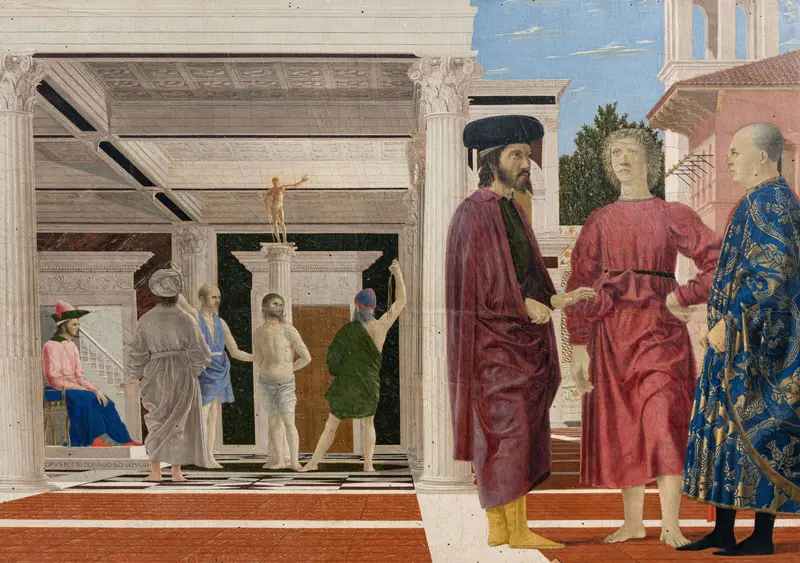
Flagellation of Christ
Piero Della Francesca
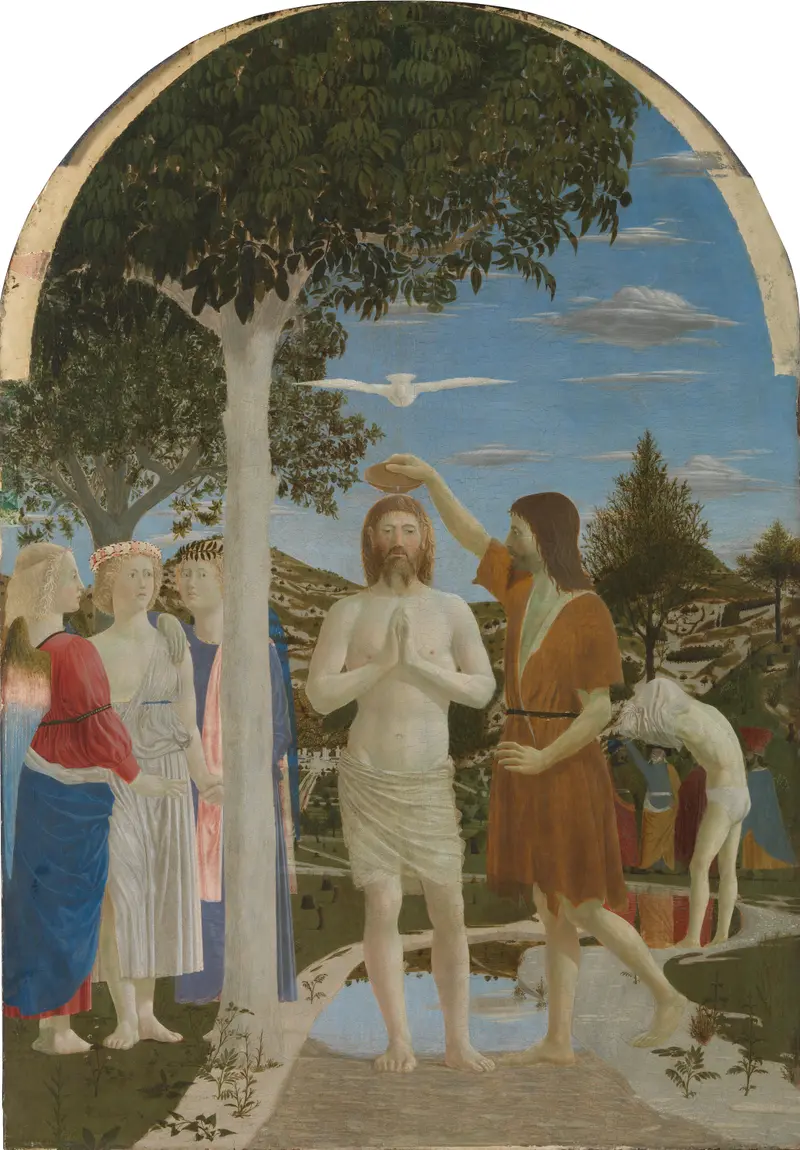
The Baptism of Christ
Piero Della Francesca
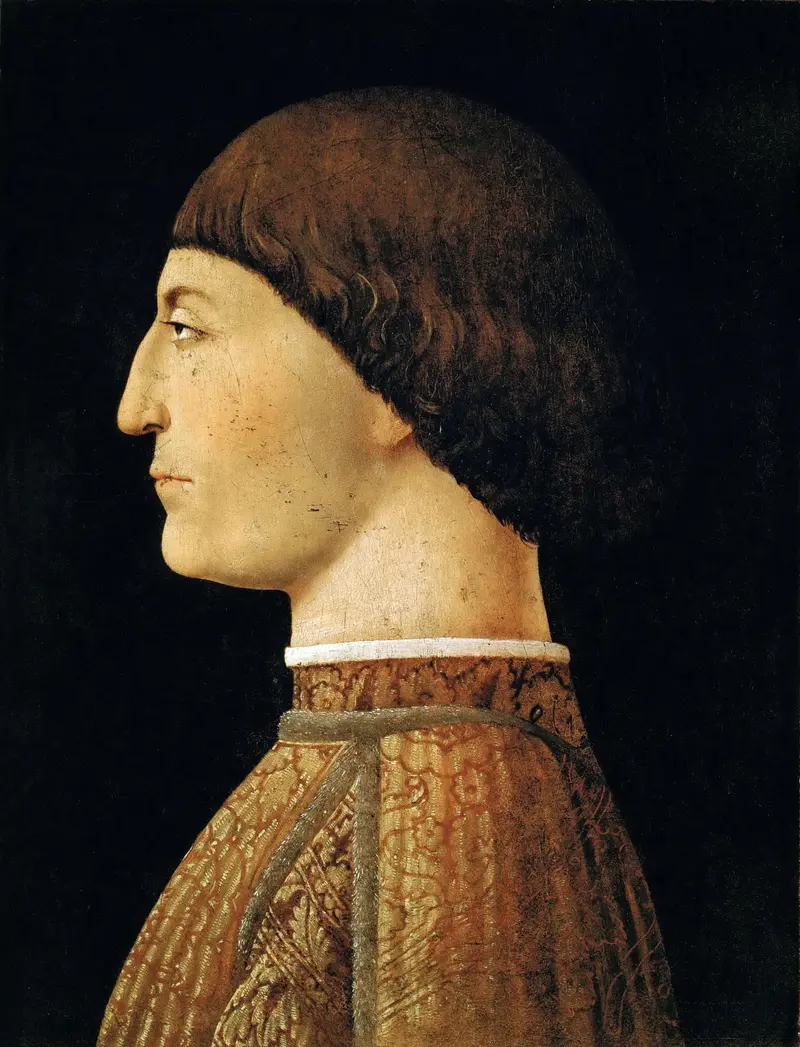
Portrait of Sigismondo Pandolfo Malatesta
Piero Della Francesca





