
Auf einer Wolke sitzender Putto in Untersicht — History & Facts
No one knows for certain for what purpose Auf einer Wolke sitzender Putto in Untersicht was created, but its unusual viewpoint—looking up at a cherub perched on a cloud—has long intrigued scholars. Some believe it was intended as a preparatory study for a larger fresco, perhaps destined for the dome of a church or a noble’s palace, where such heavenly figures would float above the viewer’s head. The ambiguity surrounding its original context has only added to its fascination, as it offers a rare glimpse into Correggio’s inventive approach to perspective and illusion. In this image, a putto—a plump, winged child from classical mythology—sits comfortably atop a cloud, his limbs relaxed and face caught in a moment of gentle contemplation.
The artist’s choice to present the figure from below invites the viewer to imagine themselves beneath the heavens, as if witnessing a celestial vision. The soft modeling of the flesh, the delicate curls of hair, and the subtle play of light across the cloud all reveal Correggio’s sensitivity to atmosphere and form. Unlike the more static cherubs of Raphael, here the putto seems caught in motion, the foreshortening lending a sense of immediacy and presence. The precise origins and early history of this work remain uncertain, as neither a patron nor a commission is securely documented.
It is likely that Auf einer Wolke sitzender Putto in Untersicht was created in the 1520s or 1530s, during the height of Correggio’s activity in Parma, where he was renowned for his illusionistic ceiling paintings. Over the centuries, the piece has been admired as a testament to the artist’s skill in rendering the human form and his pioneering use of perspective. Today, it is recognized as a study that bridges the intimacy of drawing with the ambition of monumental decoration, a small window into the grand visions that defined Correggio’s contribution to the High Renaissance.
More Artworks by Correggio
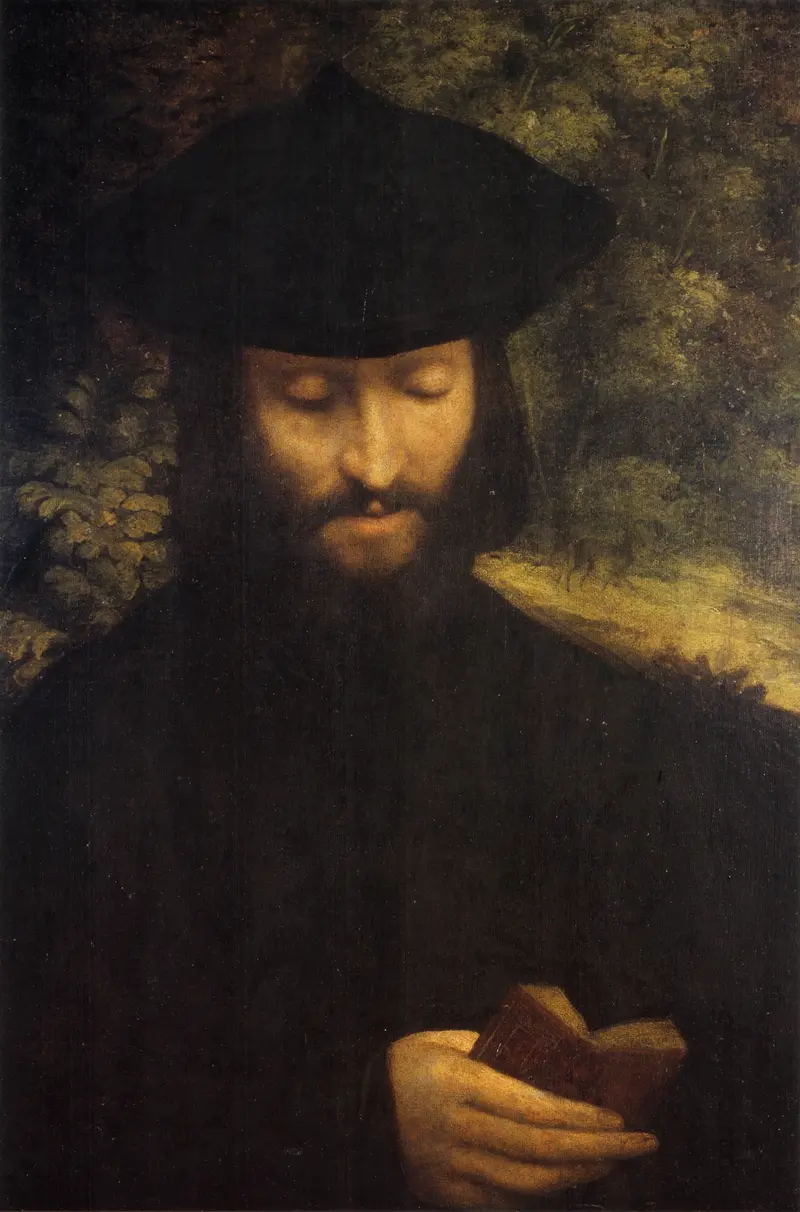
Portrait of a Man with a Book
Correggio

Holy Family with the Infant St. John
Correggio
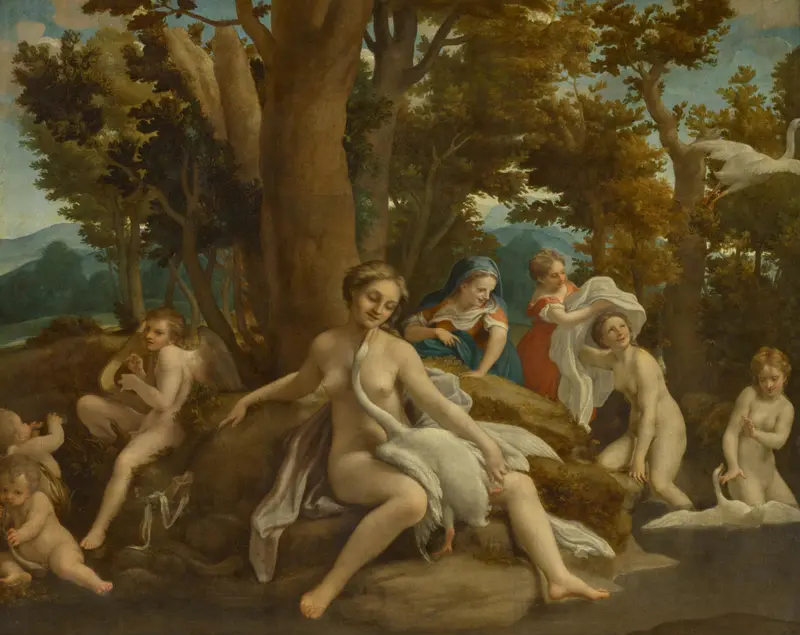
Leda and the Swan
Correggio

Madonna and Child with the Infant Saint John the Baptist
Correggio
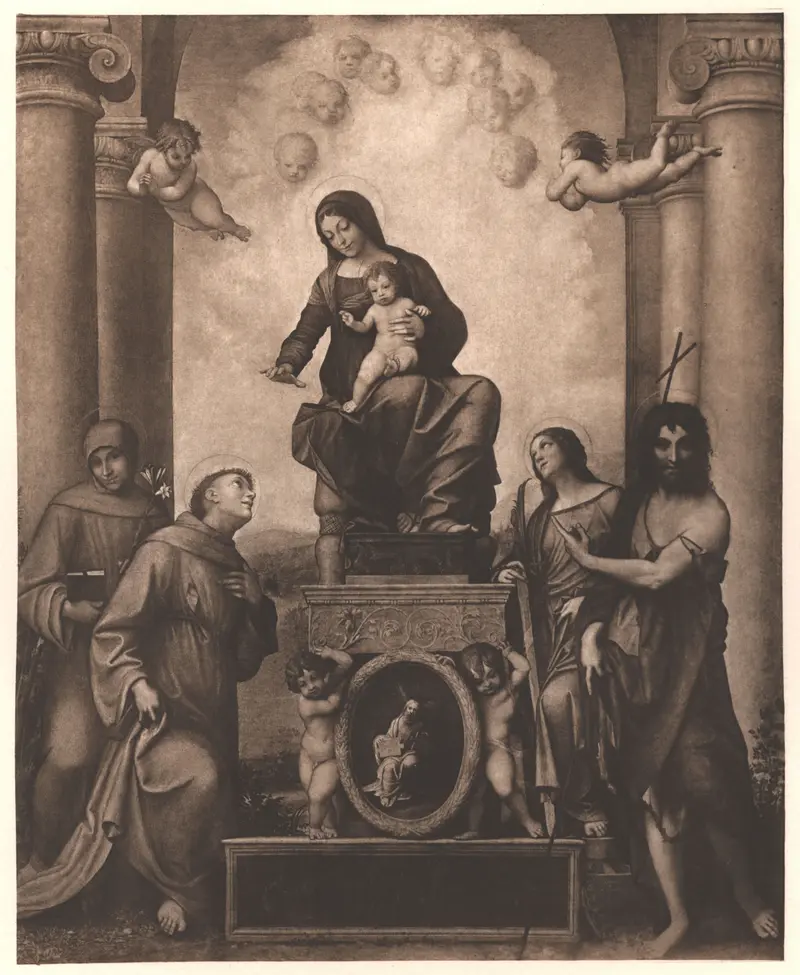
Madonna with St. Francis
Correggio
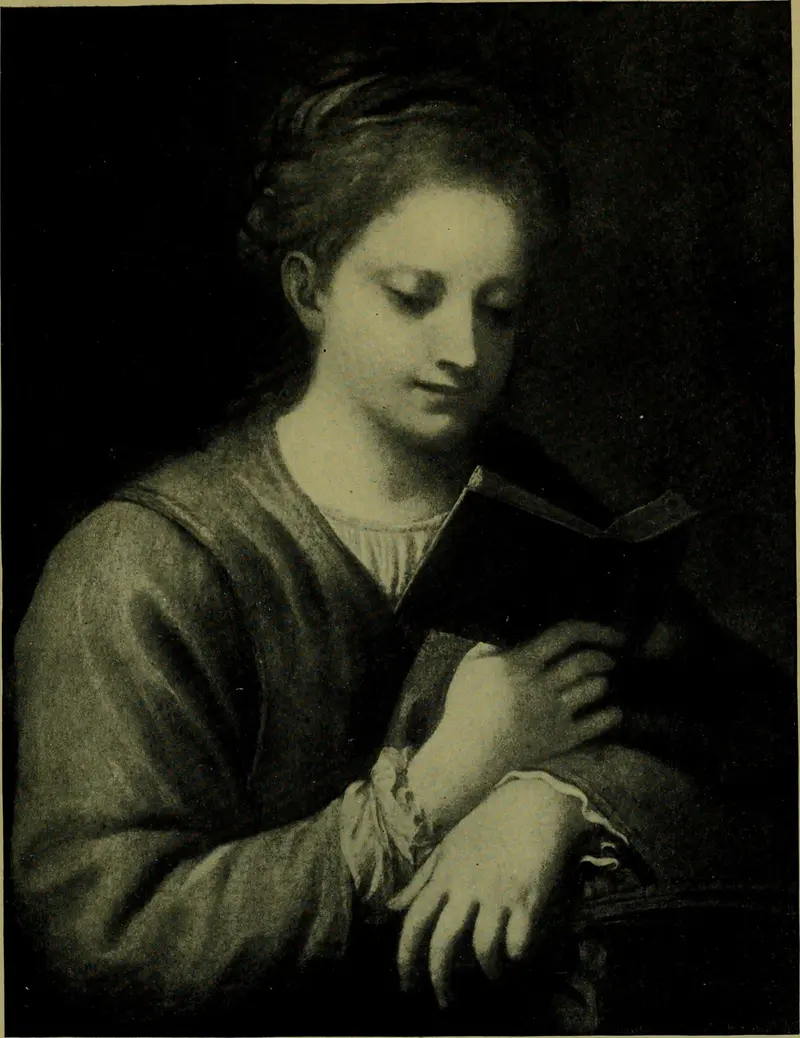
Saint Catherine Reading
Correggio

The Holy Night
Correggio
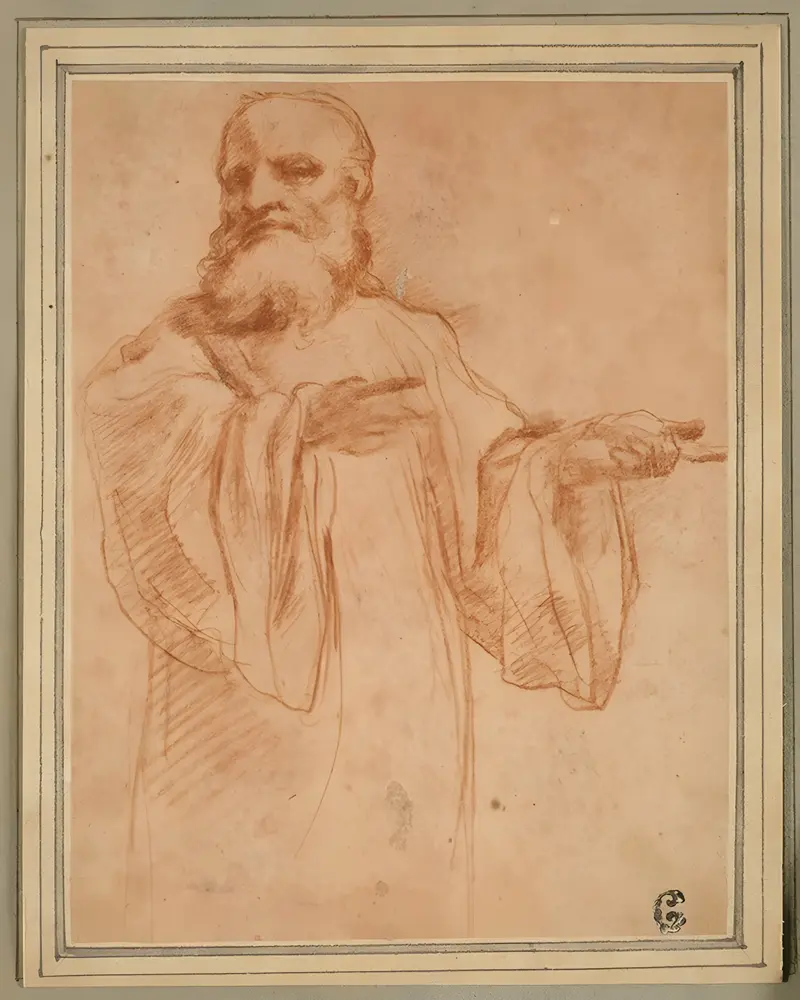
St. Benedict Gesturing to the Left; Study for the Coronation of the Virgin
Correggio
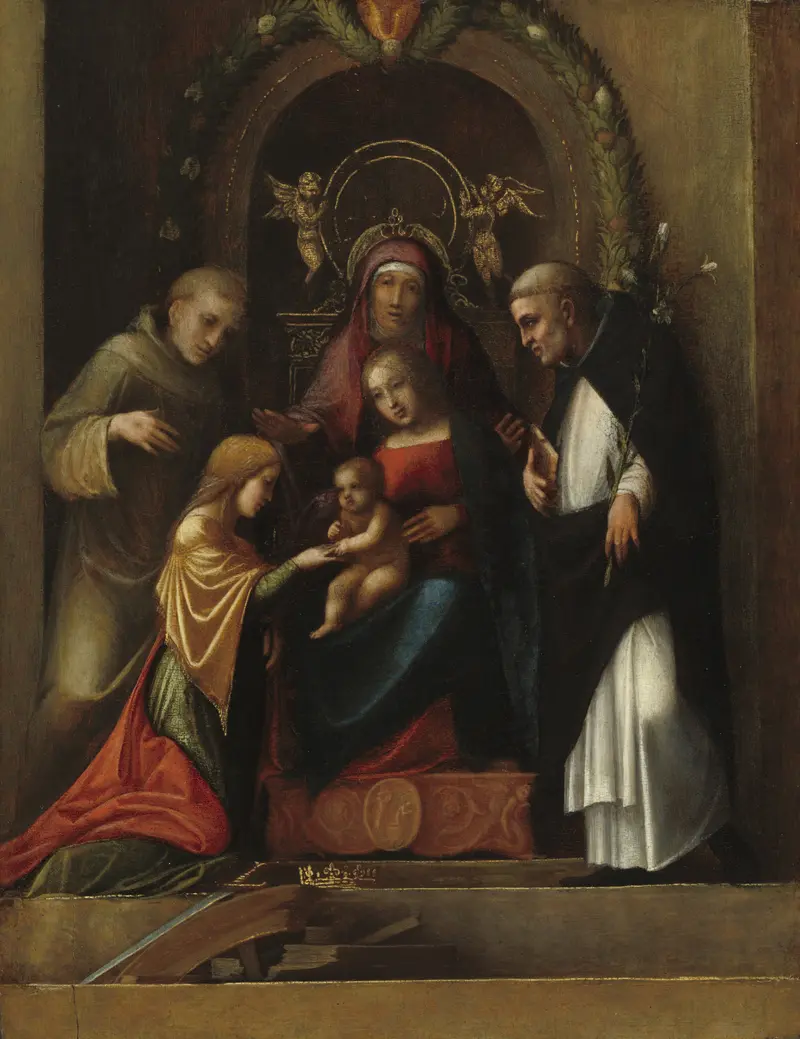
The Mystic Marriage of Saint Catherine
Correggio
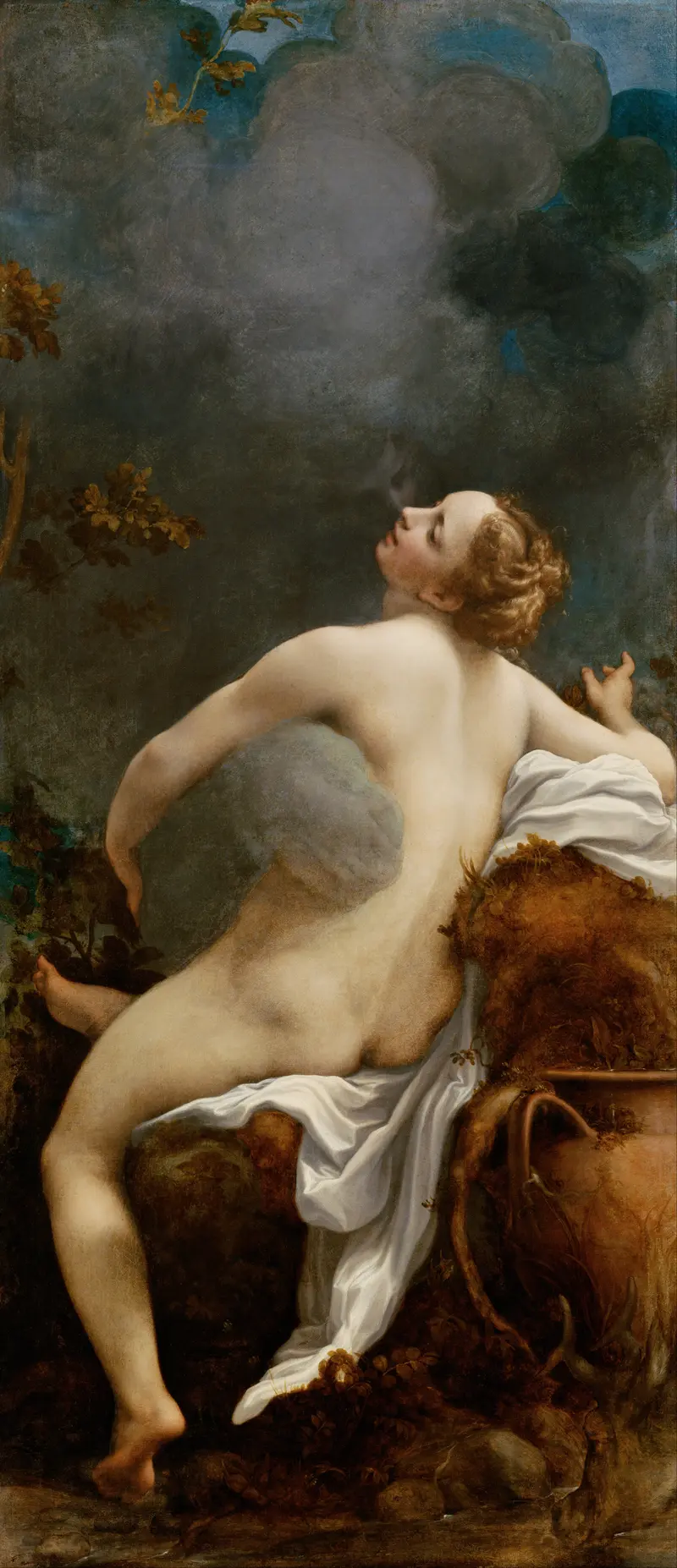
Jupiter and Io
Correggio





