
Curfew Hour — History & Facts
When Curfew Hour was first exhibited in 1882, it stood out for its haunting atmosphere, prompting one critic to remark on its "strange, mournful beauty"—a phrase that would echo through later discussions of Albert Pinkham Ryder’s work. Unlike many of his contemporaries, Ryder rarely dated or signed his paintings, and the exact circumstances of Curfew Hour’s creation remain uncertain. What is clear is that this painting marks an early example of Ryder’s fascination with twilight scenes and the emotional resonance of dusk, a theme he would return to throughout his career. The scene captures the moment when the last rays of daylight fade and a solitary figure, lantern in hand, makes their way across a shadowed landscape.
The curfew bell has sounded, signaling the end of daily activity and the onset of night—a tradition rooted in medieval towns, where bells marked the hour when fires must be extinguished and doors shut. Ryder’s use of deep, velvety darkness, pierced only by the warm glow of the lantern, draws the viewer’s eye to the figure’s uncertain journey. The indistinct forms of trees and distant rooftops evoke a sense of isolation, while the heavy sky presses down, amplifying the painting’s mood.
Where Jean-François Millet’s The Angelus finds comfort in rural ritual, Ryder’s interpretation lingers on the loneliness and mystery of the hour. The physical history of Curfew Hour is not fully documented, a common fate for many of Ryder’s early works, which often changed hands quietly among collectors in New York. The medium remains uncertain, though Ryder frequently experimented with layered oils and unconventional materials, contributing to the unique surface textures and the conservation challenges his paintings present today. Curfew Hour is now recognized as a key example of Ryder’s early style, foreshadowing the more abstract, visionary landscapes of his later years.
Today, the painting is held in a private collection, rarely seen by the public, but it remains a touchstone for scholars tracing the evolution of Albert Pinkham Ryder’s singular vision in American art.
More Artworks by Albert Pinkham Ryder

The Toilers of the Sea
Albert Pinkham Ryder
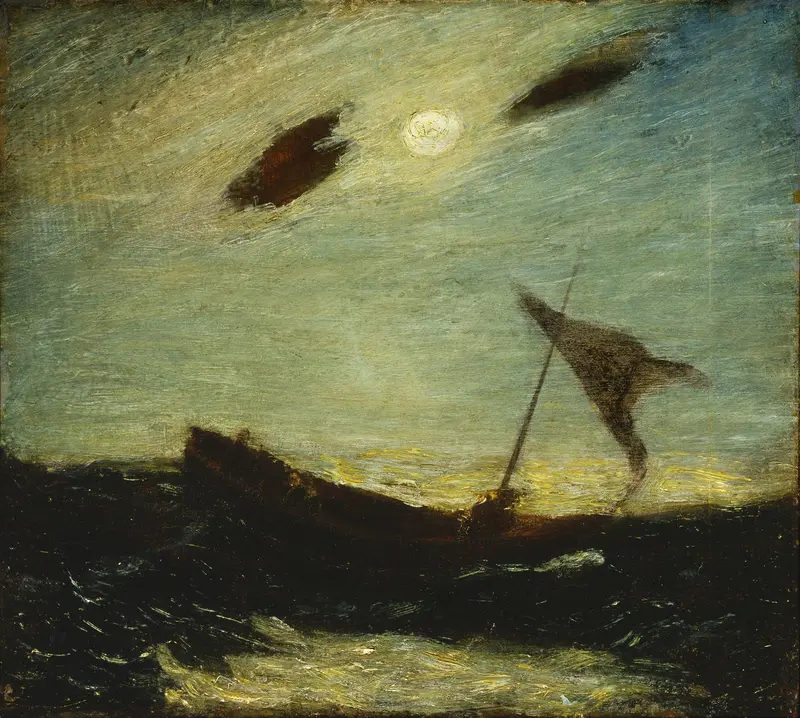
Moonlight
Albert Pinkham Ryder
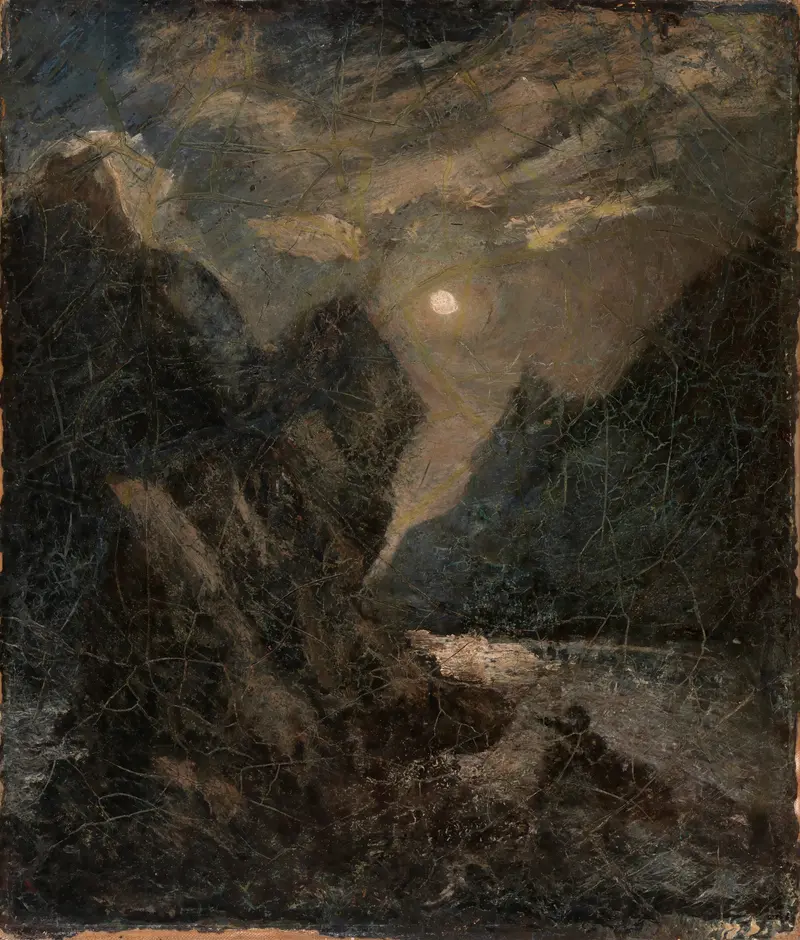
The Lorelei
Albert Pinkham Ryder
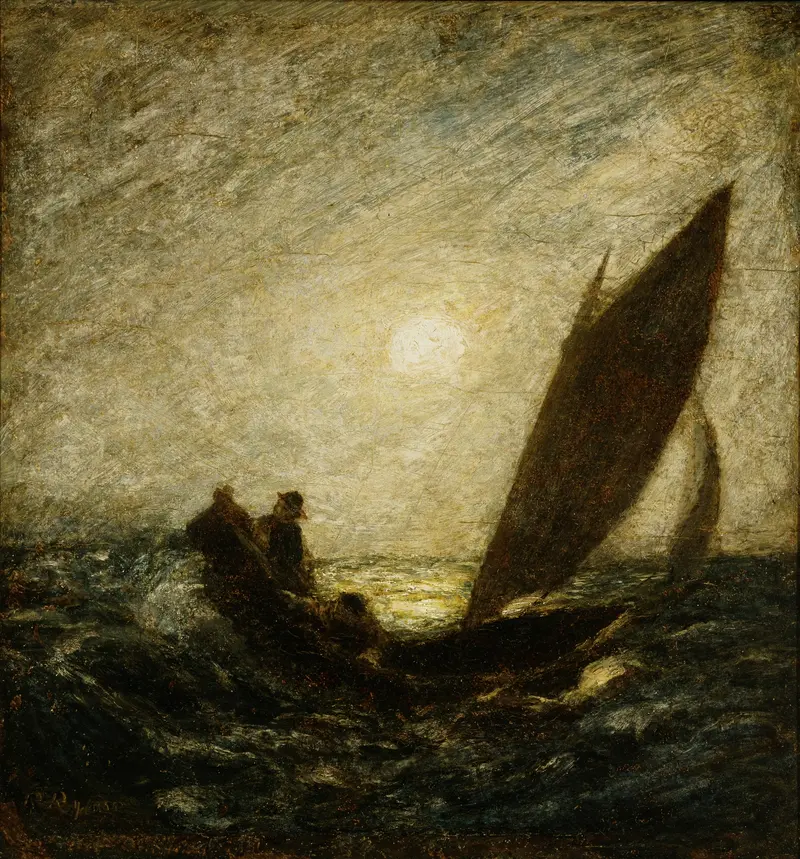
With Sloping Mast And Dipping Prow
Albert Pinkham Ryder
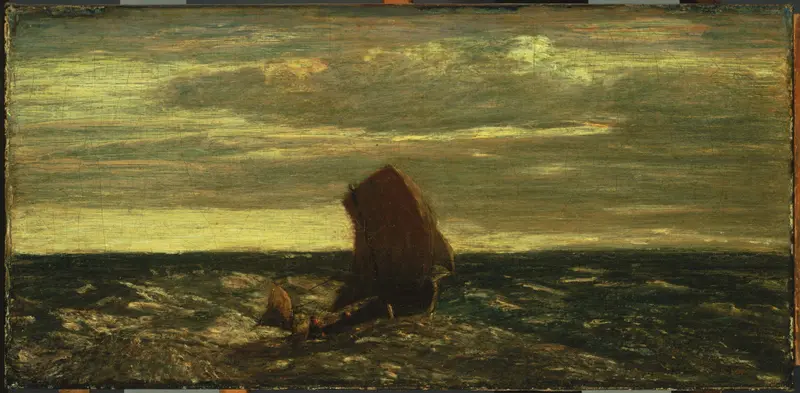
Homeward Bound
Albert Pinkham Ryder
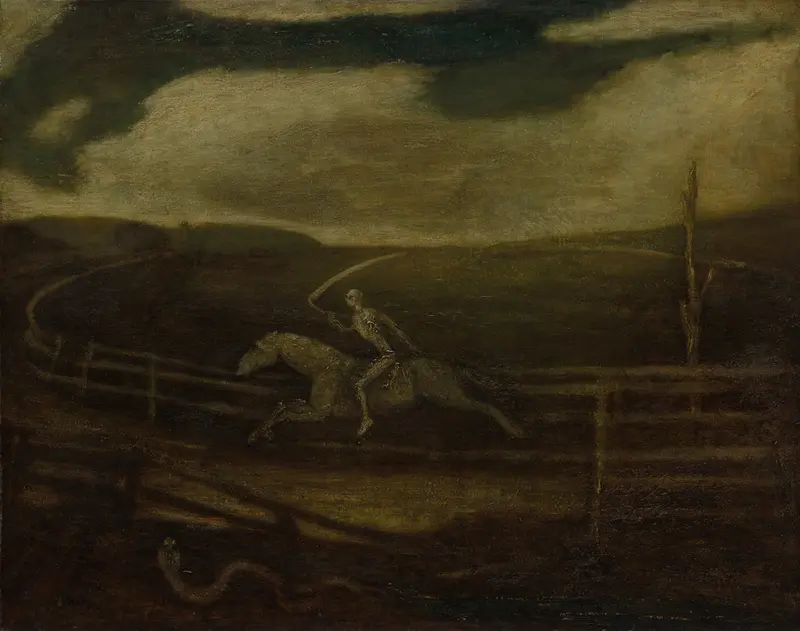
The Race Track (Death on a Pale Horse)
Albert Pinkham Ryder
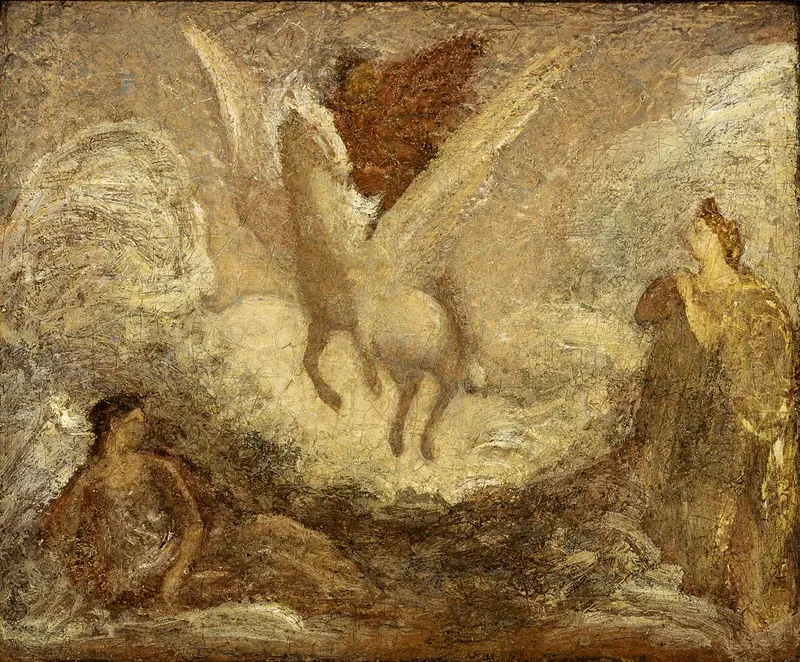
Pegasus Departing
Albert Pinkham Ryder
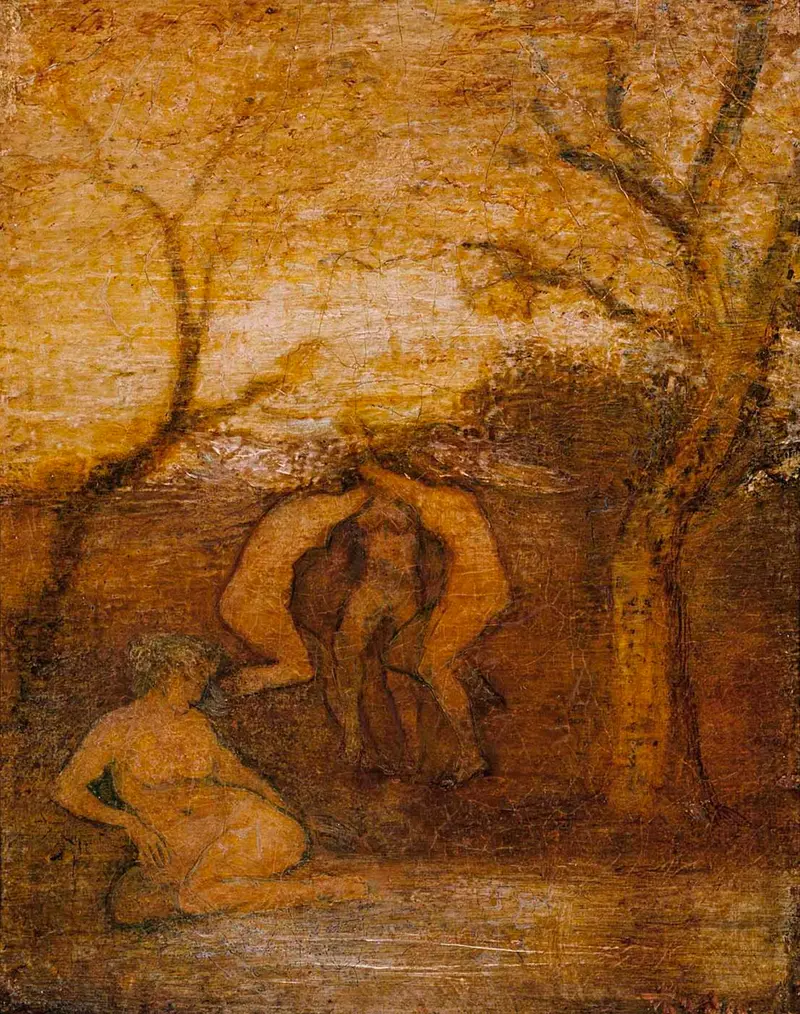
Dancing Dryads
Albert Pinkham Ryder
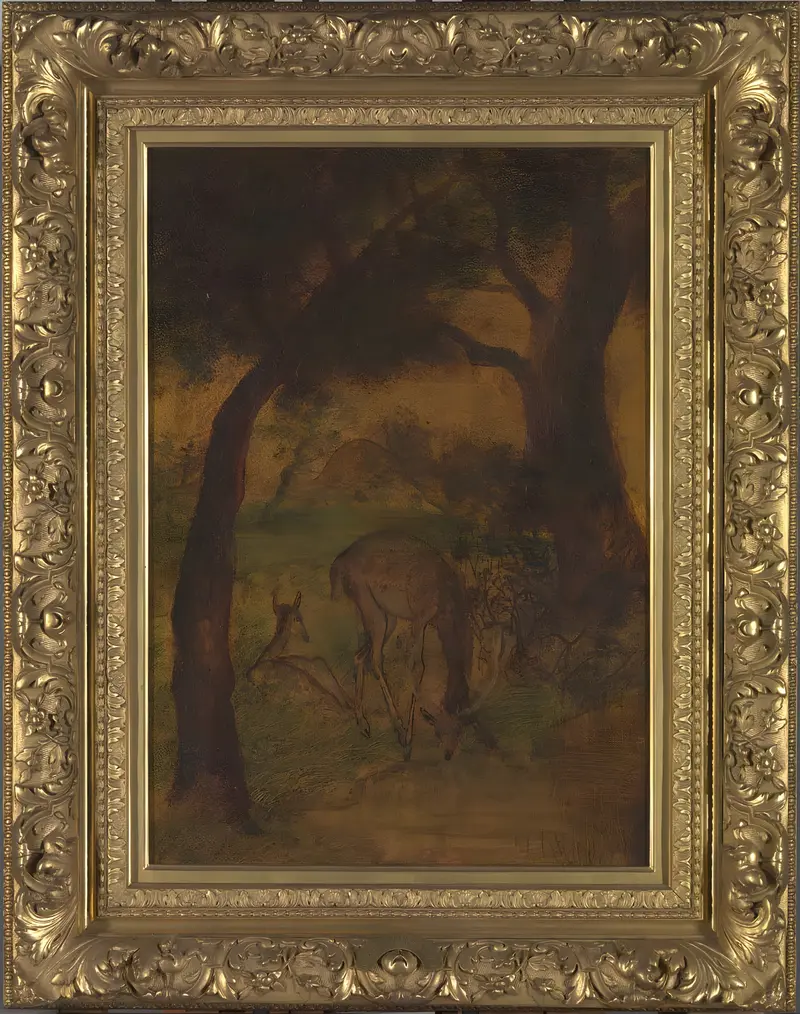
A Stag Drinking
Albert Pinkham Ryder
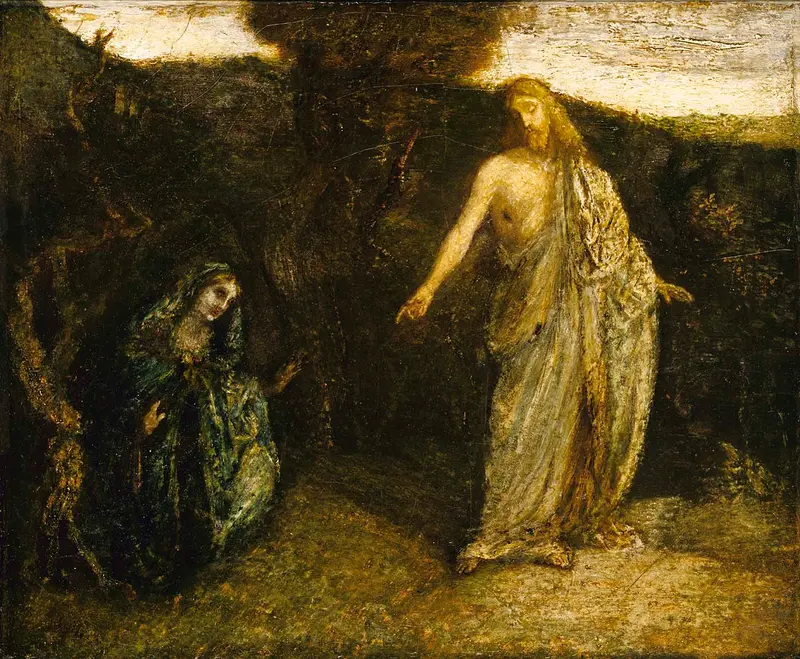
Christ Appearing to Mary
Albert Pinkham Ryder
More Landscape Art

The Starry Night
Vincent van Gogh

View of Delft
Johannes Vermeer

Water Lilies
Claude Monet

The Grand Canal, Venice, looking north-west from the Ca' Corner to the Ca' Contarini degli Scrigni, with the campanile of Santa Maria della Carità
Canaletto

Windsor Castle
Canaletto

The Grand Canal looking North-East from the Palazzo Dolfin-Manin to the Rialto Bridge
Canaletto