
Eve Tempted by the Serpent — History & Facts
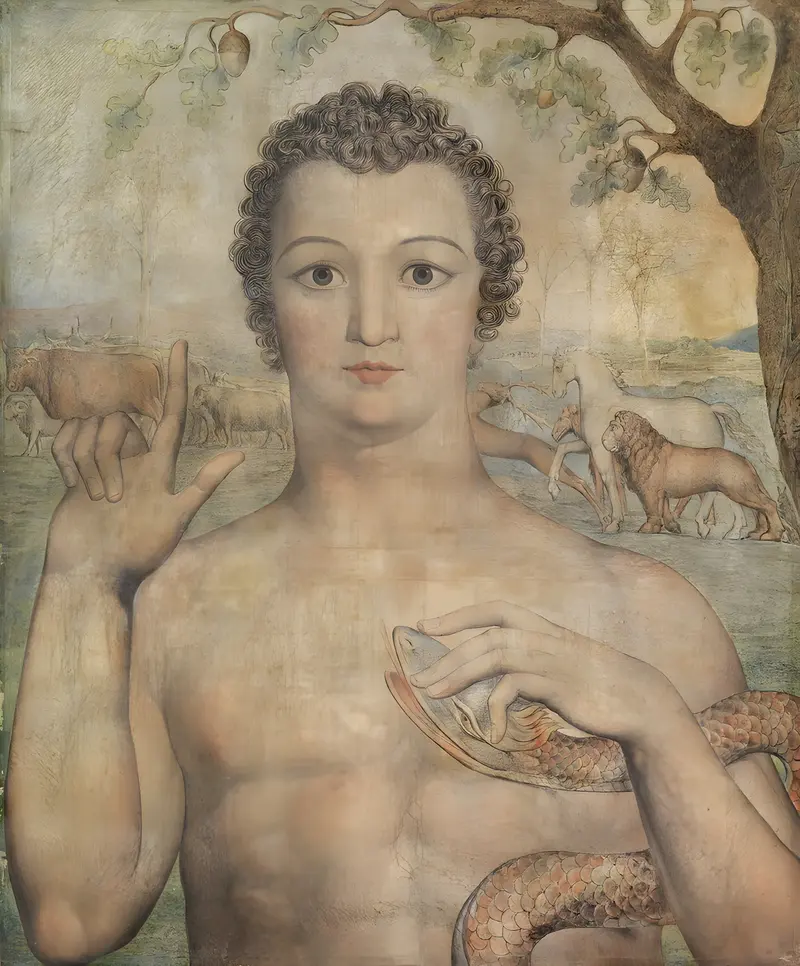
When William Blake exhibited Eve Tempted by the Serpent in 1800, he was already known for his radical interpretations of biblical themes, but this work stands out for its daring depiction of the serpent not as a mere animal, but as a hybrid creature with a human face. This unsettling choice was noted by his contemporaries, some of whom found it "singularly disturbing," as recorded in an 1800 review in the Analytical Review. The painting is one of several Blake created during his time at Felpham, a period marked by intense spiritual visions and creative experimentation.
Unlike more traditional treatments of the subject, Blake’s version sparked debate about the nature of evil and temptation, and whether the serpent’s human features pointed to a deeper, more psychological reading of the Fall. At the heart of the image, Eve stands in a lush, shadowed garden, her gaze fixed on the serpent coiled around the Tree of Knowledge. Blake catches the instant before the fateful bite: Eve’s hand hovers, uncertain, as the serpent—its face eerily human—leans forward, offering the forbidden fruit. The intertwining forms of woman and serpent blur the line between tempter and tempted, suggesting complicity and shared desire.
The light falls sharply on Eve’s face and arm, isolating her in a moment of moral crisis. Unlike Michelangelo’s muscular, idealized Eve in the Sistine Chapel, Blake’s figure is fragile, her vulnerability heightened by the serpent’s uncanny familiarity. The medium of Eve Tempted by the Serpent is not definitively known, though it is often assumed to be watercolor or tempera, techniques favored by Blake for their luminous effects. The painting’s early history is somewhat obscure; it was likely created for one of Blake’s private patrons, possibly William Hayley, during his productive years in Sussex.
Over time, the work passed through several English collections before entering the public eye in the late 19th century, as interest in Blake’s visionary art revived. Today, it is held in a major British institution, where it stands as a testament to Blake’s unique blend of poetic imagination and radical theology. The painting marks a turning point in Blake’s career, embodying his move toward ever more personal and symbolic interpretations of sacred stories.
More Artworks by William Blake
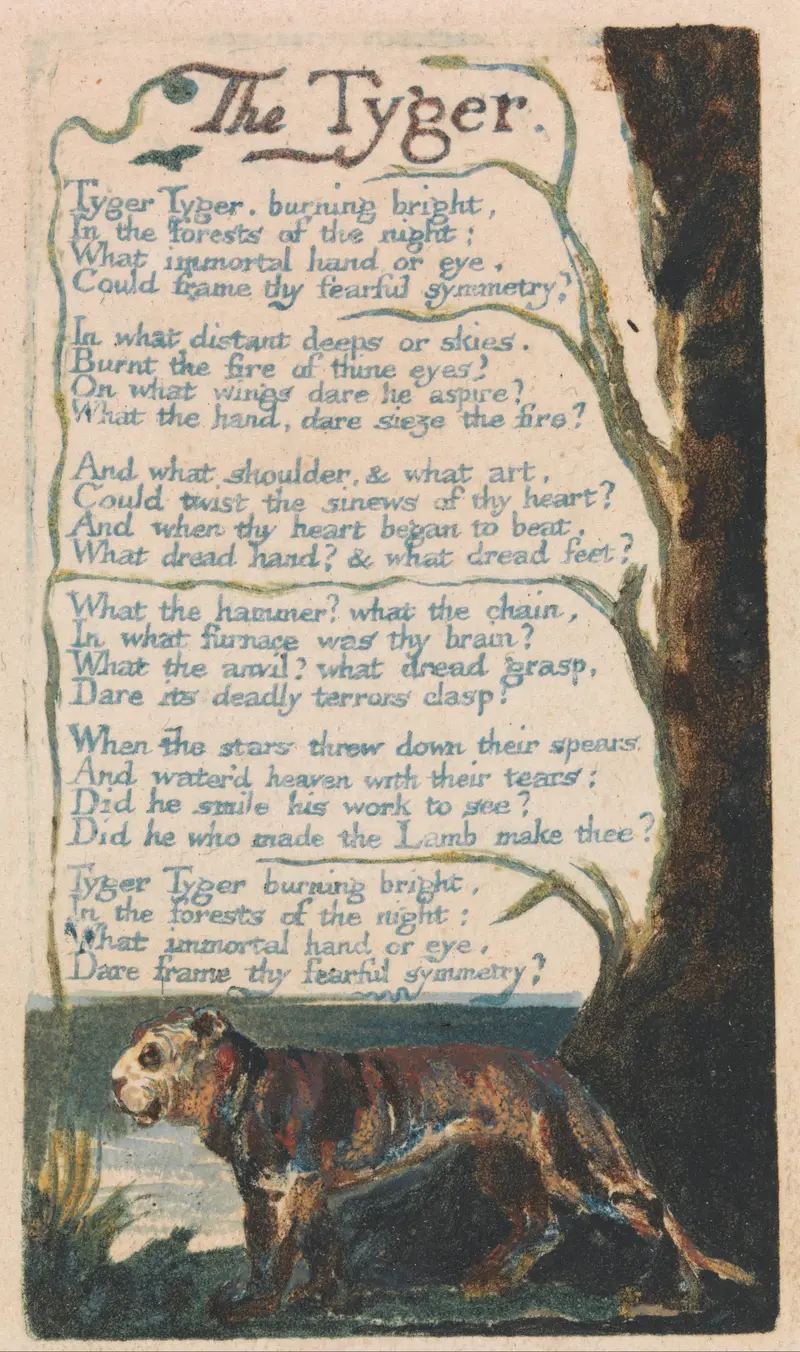
The Tyger
William Blake

Christ Blessing
William Blake
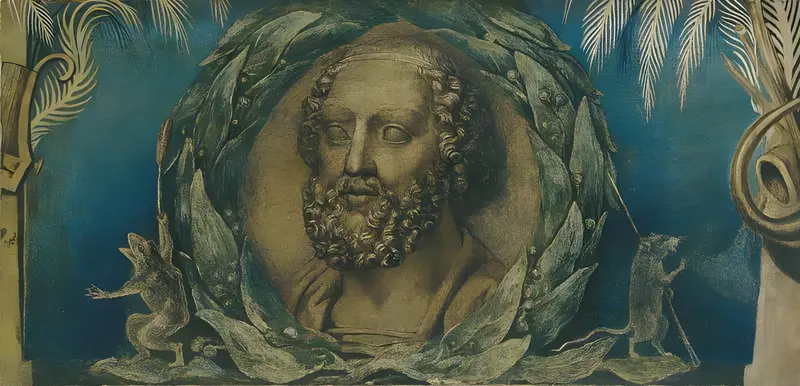
Homer
William Blake
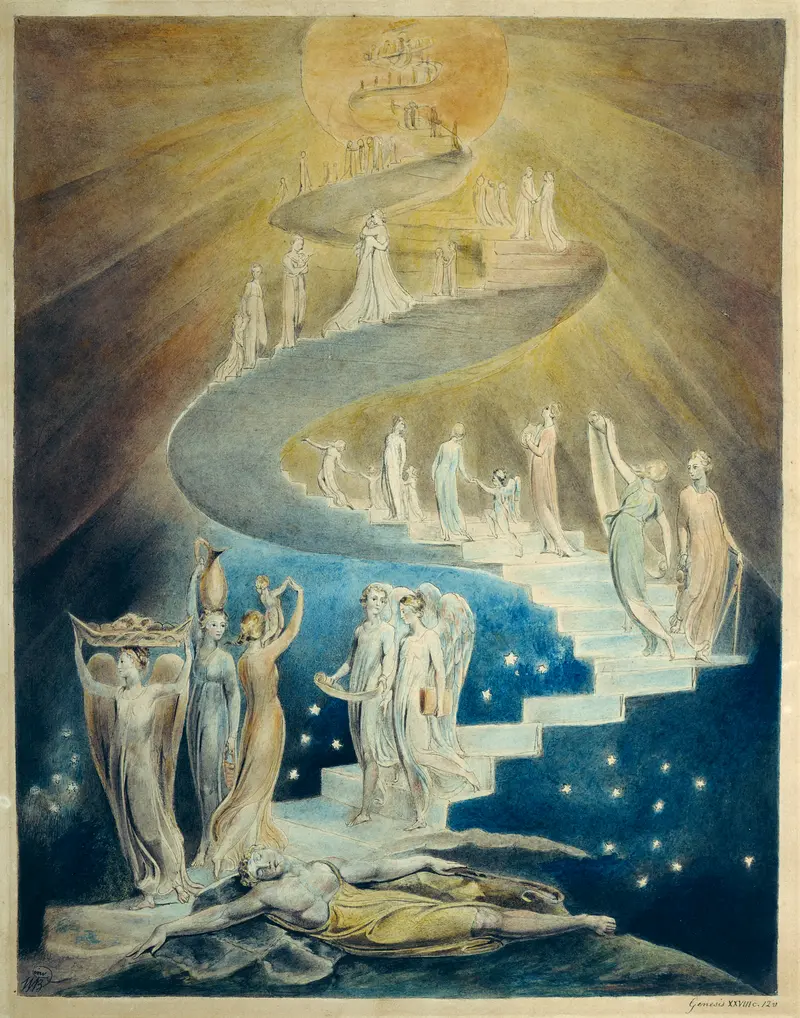
Jacob's Ladder
William Blake
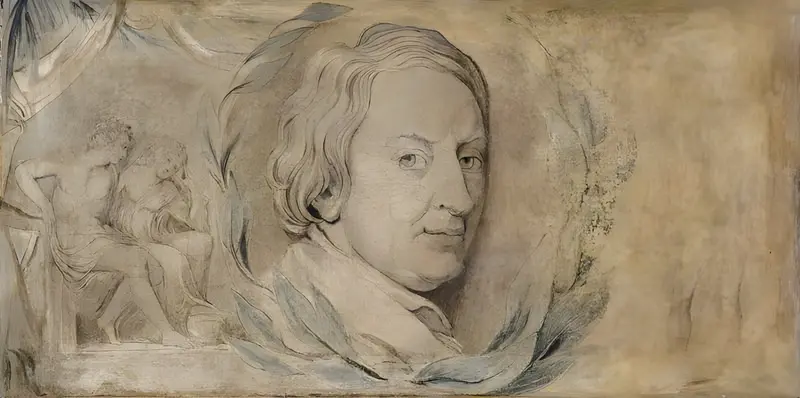
John Dryden (1631–1700)
William Blake
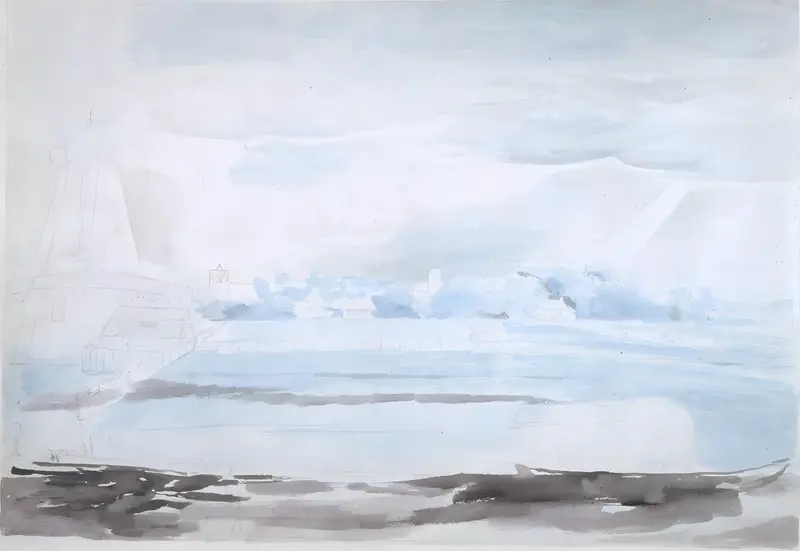
Landscape near Felpham
William Blake
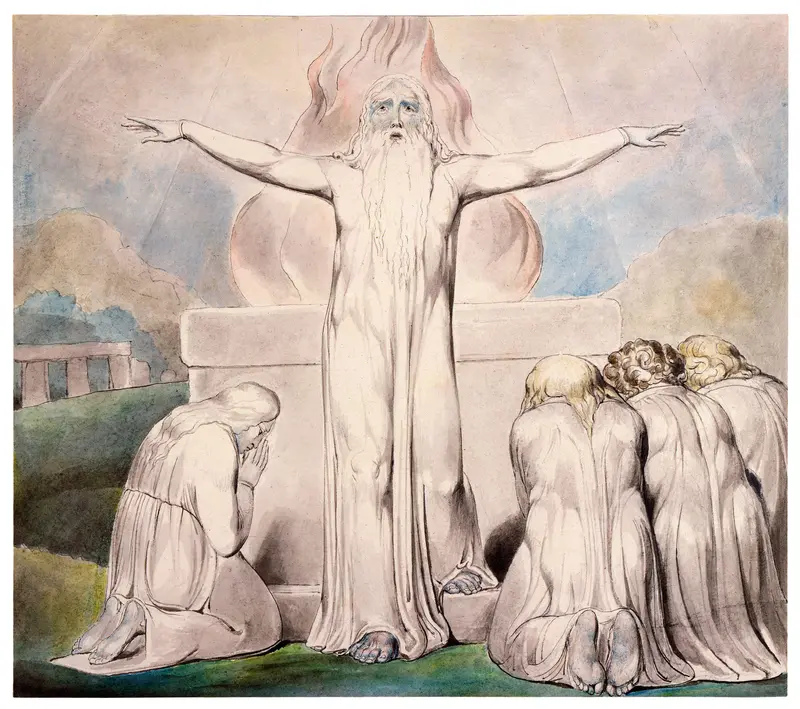
Sacrifice of Job
William Blake
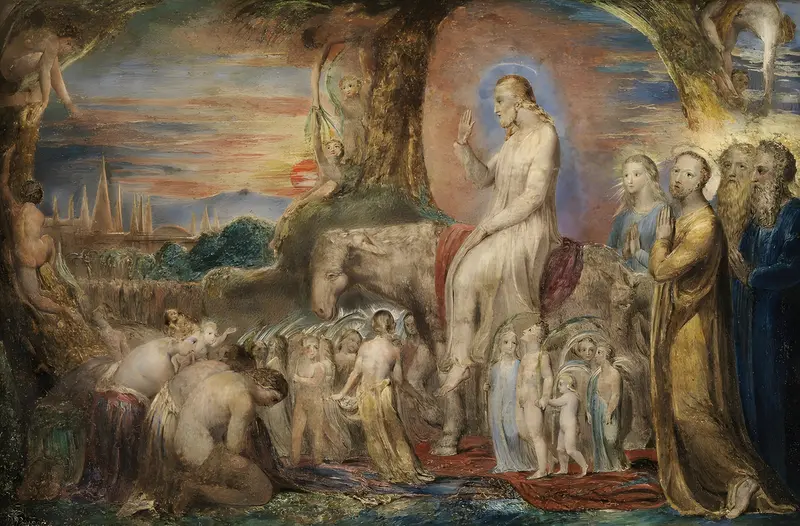
Christ's Entry into Jerusalem
William Blake
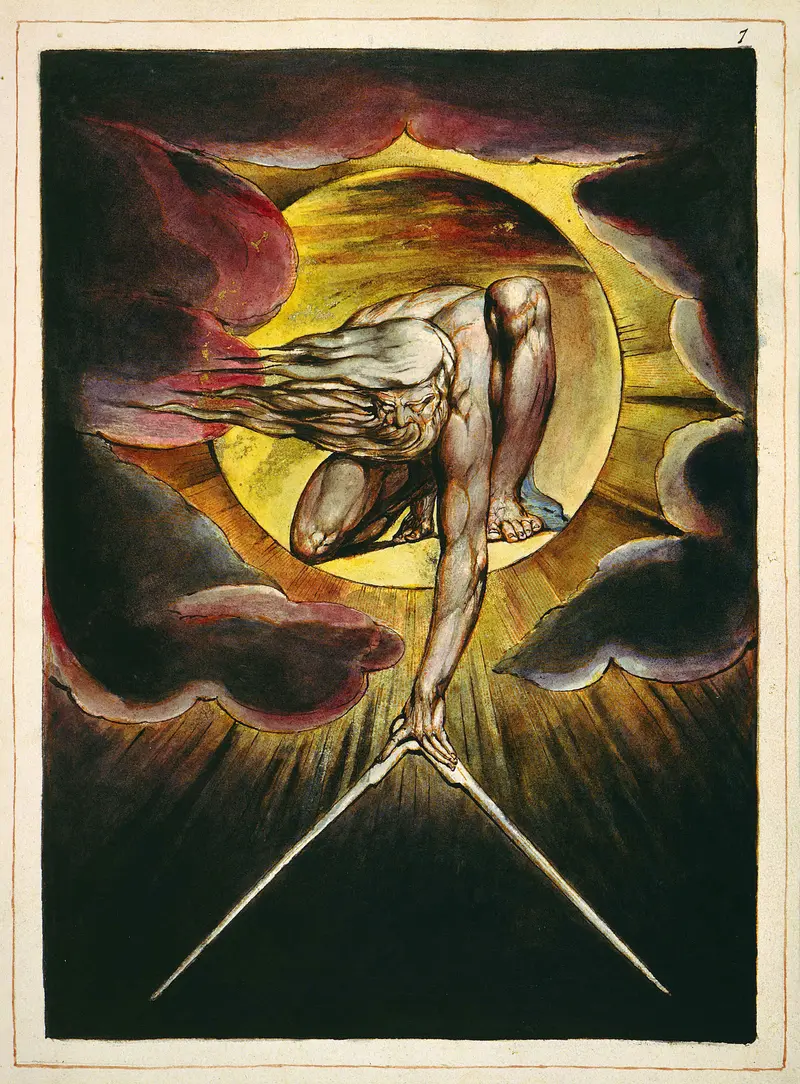
The Ancient of Days
William Blake
Adam Naming the Beasts
William Blake





