
Ezekiel's Wheels — History & Facts
When Ezekiel's Wheels first appeared among the visionary works of William Blake around 1800, it immediately puzzled and fascinated viewers with its wild energy and unorthodox imagery. No other artist of his time dared to interpret the prophet Ezekiel’s famous vision with such intensity, and Blake’s own friends found the work both “terrible and beautiful” (as noted by his patron Thomas Butts). The painting is part of a larger group of biblical illustrations that Blake produced for private patrons, but this particular subject—Ezekiel’s chariot of wheels within wheels—was rarely attempted in British art before him. At the heart of the scene is the moment from the Book of Ezekiel when the prophet beholds a chariot of fire in the sky, its wheels intersecting and alive, guided by four angelic figures.
Blake renders the wheels as overlapping, almost organic forms, their rims studded with eyes, echoing the biblical description that “the spirit of the living creature was in the wheels.” The prophet himself, wide-eyed and awestruck, gestures upward, while the fiery chariot blazes above him, suspended in a luminous cloud. Unlike earlier artists such as Raphael, who treated Ezekiel’s vision with classical restraint, Blake’s version is charged with movement and spiritual force, the composition swirling around the prophet’s encounter with the divine. The exact medium of Ezekiel's Wheels remains uncertain—some suggest watercolor, others tempera—but its bold lines and glowing colors are unmistakably Blake’s. The work was likely created for Thomas Butts, the civil servant who supported Blake during his most experimental years.
While many of Blake’s biblical illustrations remained in private hands or were dispersed after his death, Ezekiel’s Wheels survives as a testament to his unique vision and his willingness to challenge artistic conventions. Today, it stands as a rare example of early 19th-century British spiritual art, bridging the gap between personal revelation and public display.
More Artworks by William Blake
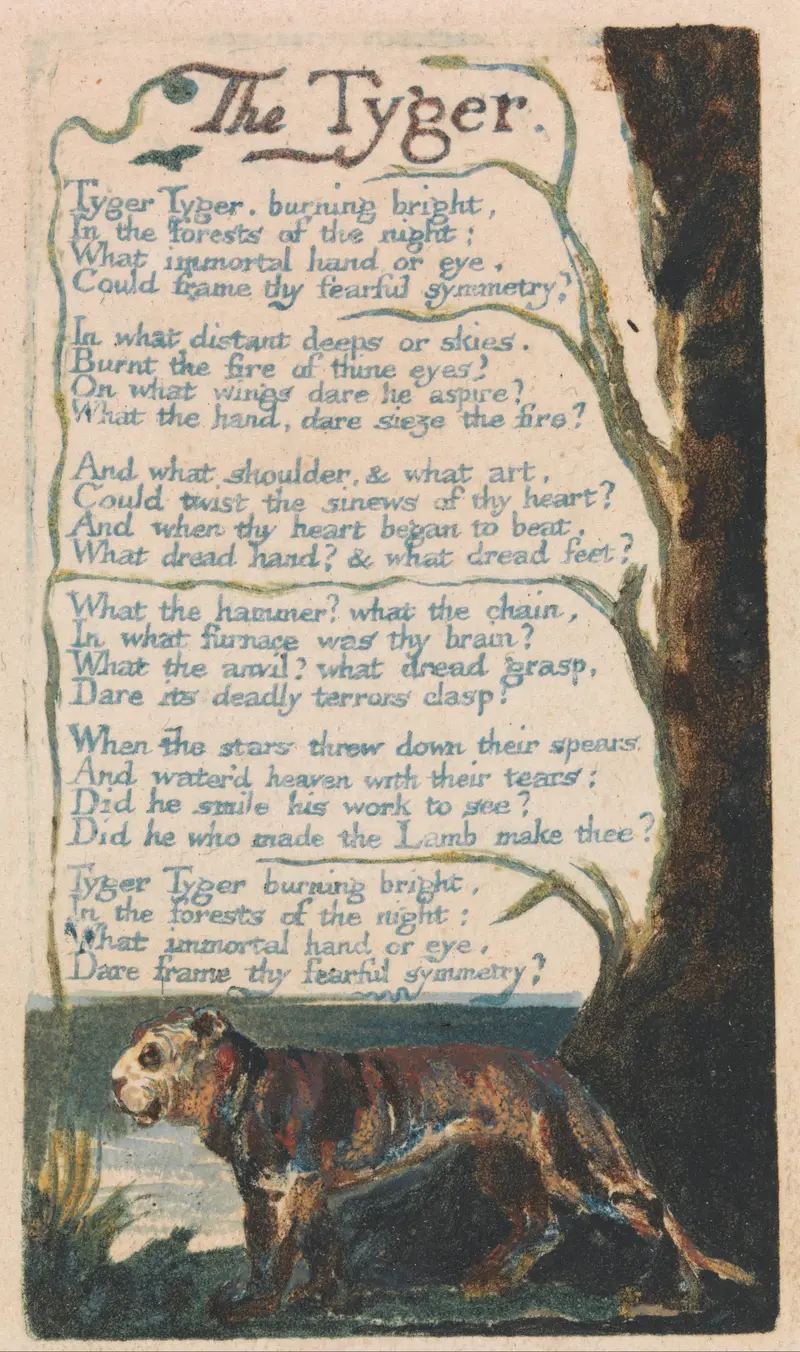
The Tyger
William Blake

Christ Blessing
William Blake
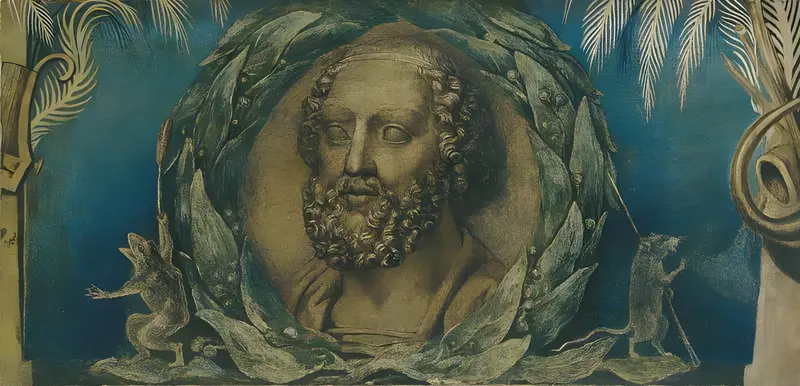
Homer
William Blake
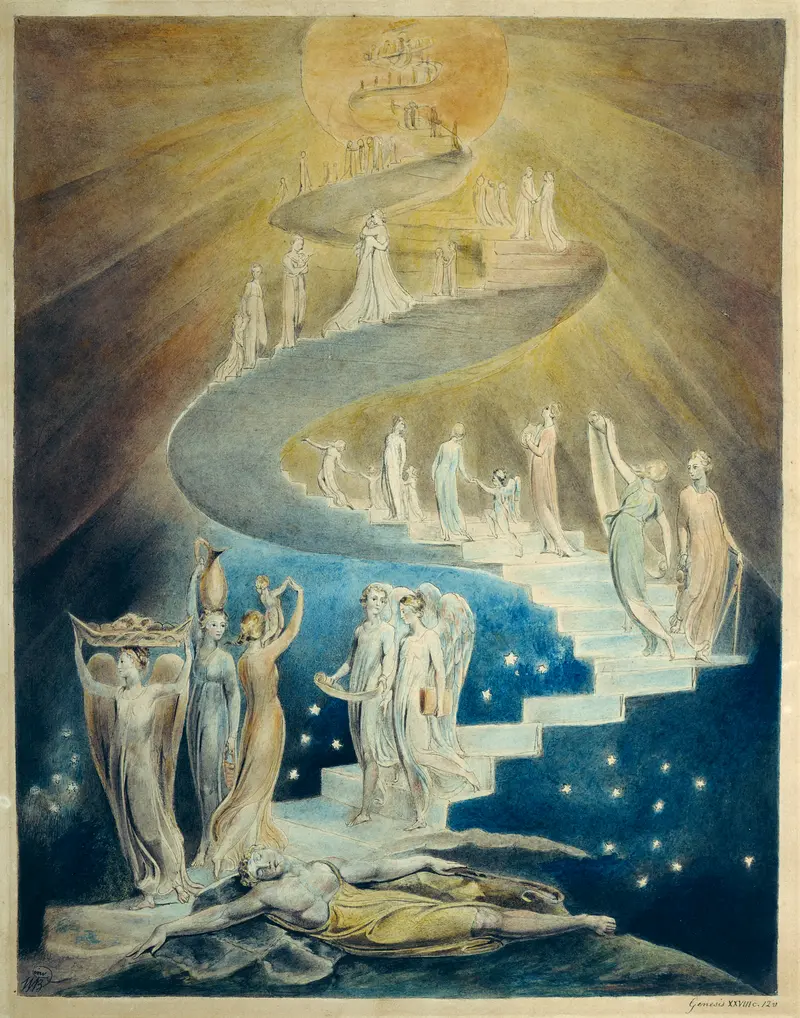
Jacob's Ladder
William Blake
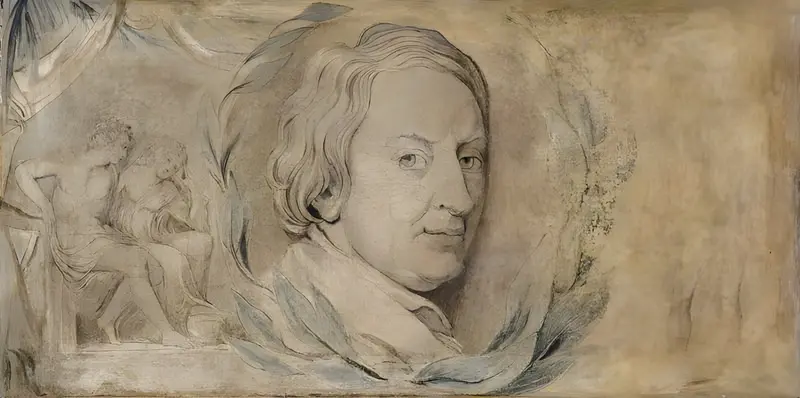
John Dryden (1631–1700)
William Blake
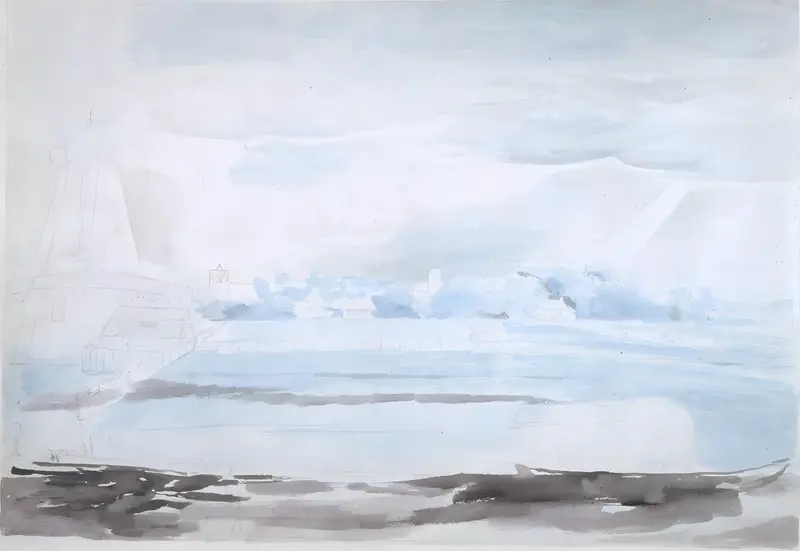
Landscape near Felpham
William Blake
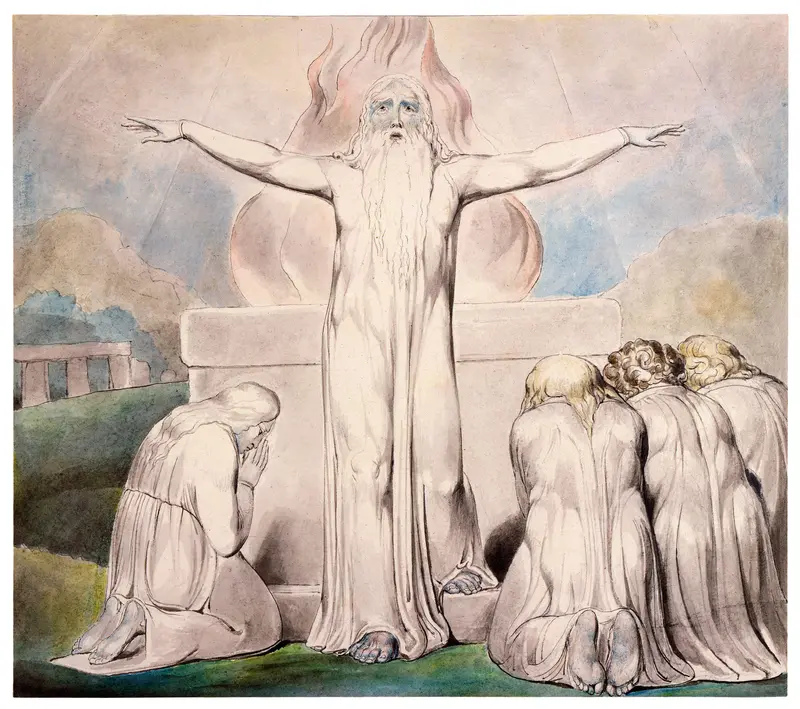
Sacrifice of Job
William Blake
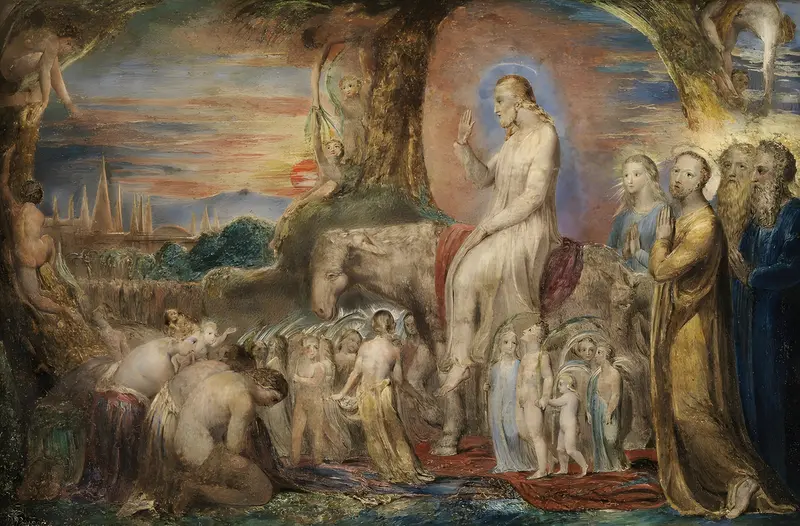
Christ's Entry into Jerusalem
William Blake
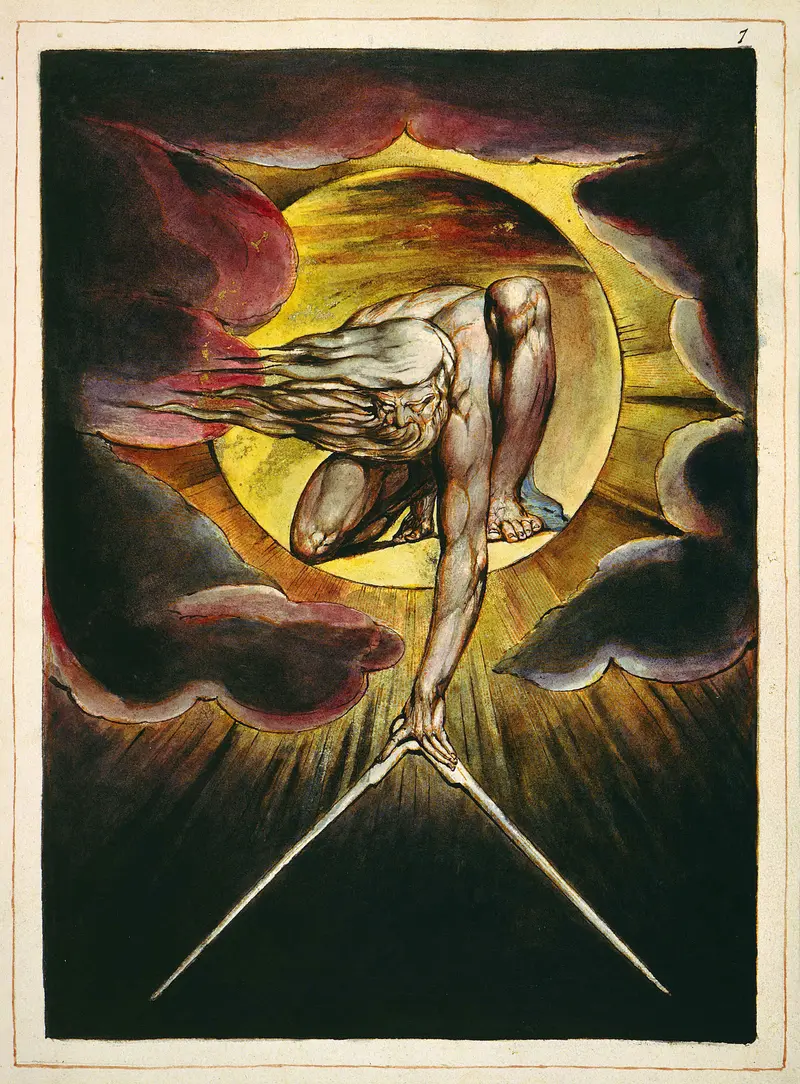
The Ancient of Days
William Blake
Adam Naming the Beasts
William Blake





