
Fan Peddler — History & Facts
When Fan Peddler appeared in 1799, it marked a turning point not only for Katsushika Hokusai but for the entire world of Japanese printmaking. This was the first time Hokusai signed his work with the name “Hokusai,” signaling a new artistic identity after years of working under different pseudonyms. The print belongs to a period when Hokusai was experimenting restlessly, seeking to break free from the conventions of his teachers and peers.
Its subject—a humble street vendor—was a radical choice at a time when most artists still favored samurai, courtesans, or actors as their models. The scene captures a fleeting moment: a traveling merchant pauses, his pack brimming with folded fans, as he calls out to potential customers. His posture—slightly stooped, one hand raised in mid-gesture—suggests both the fatigue and hope of daily labor. The fans themselves, painted with delicate patterns, are not just wares but symbols of summer, festivity, and the quick passage of time.
Hokusai’s keen eye for everyday life, and his ability to turn a street scene into a quietly charged encounter, sets him apart from his contemporaries like Utamaro, who often idealized their subjects. Here, the merchant’s weathered face and practical clothing ground the image in reality. The exact medium of Fan Peddler is uncertain, though it is likely a woodblock print, the dominant technique in late 18th-century Edo. Its early provenance is not well documented, as was typical for prints of this kind, which were sold cheaply and widely, destined for the hands of common people rather than collectors.
Today, surviving impressions are rare, and the work is recognized as a key example of Hokusai’s early style, foreshadowing the humanism and keen observation that would later define his most famous series, Thirty-Six Views of Mount Fuji. Fan Peddler stands as a testament to Hokusai’s lifelong fascination with ordinary people and the rhythms of daily life.
More Artworks by Katsushika Hokusai

The Great Wave off Kanagawa
Katsushika Hokusai
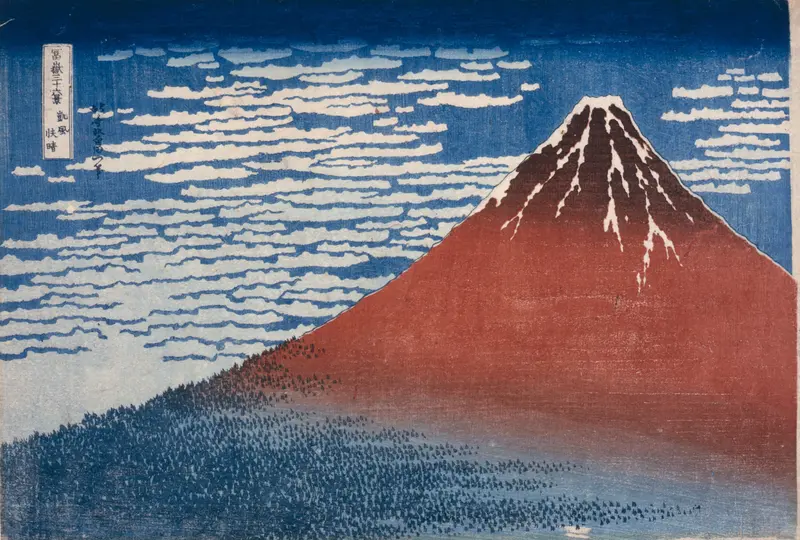
Fine Wind, Clear Morning (Red Fuji)
Katsushika Hokusai
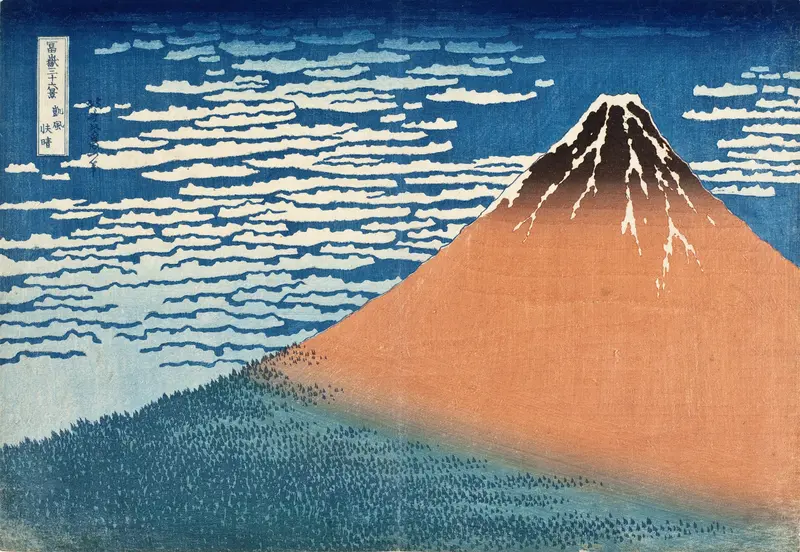
South Wind, Clear Dawn
Katsushika Hokusai
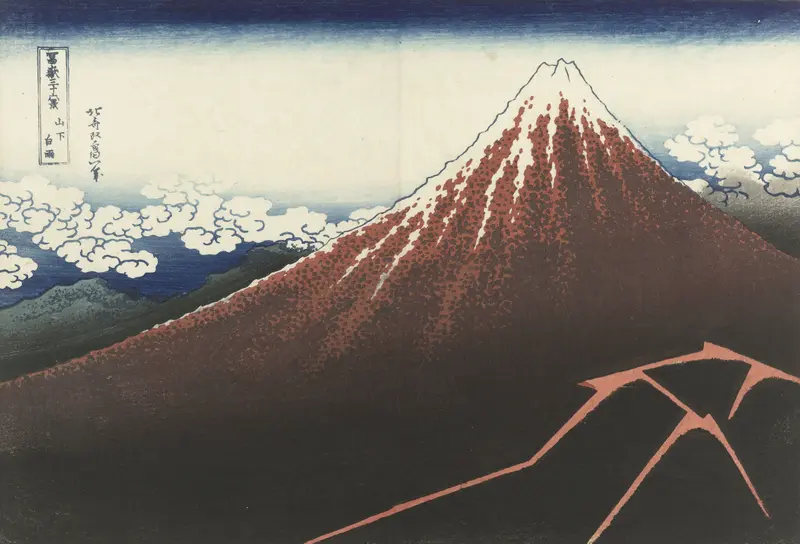
Rainstorm Beneath the Summit
Katsushika Hokusai
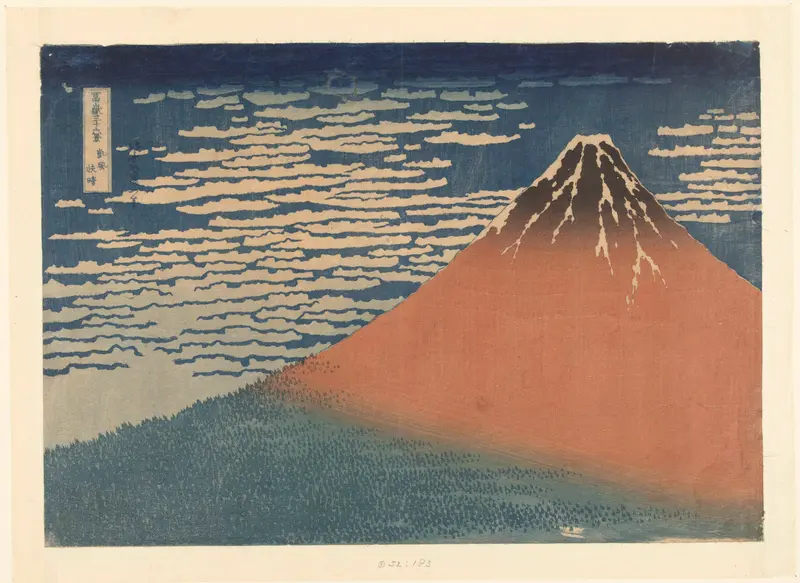
Clear Weather with a Southerly Wind
Katsushika Hokusai
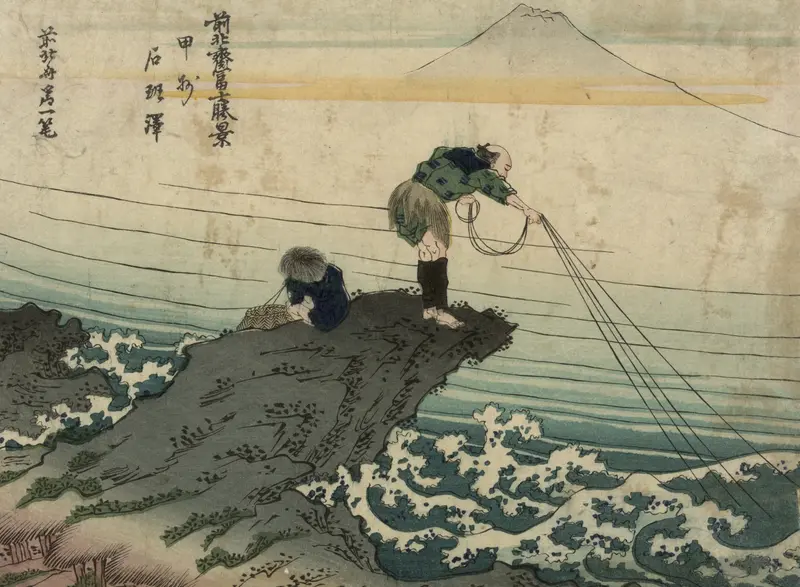
Kōshū kajikazawa
Katsushika Hokusai
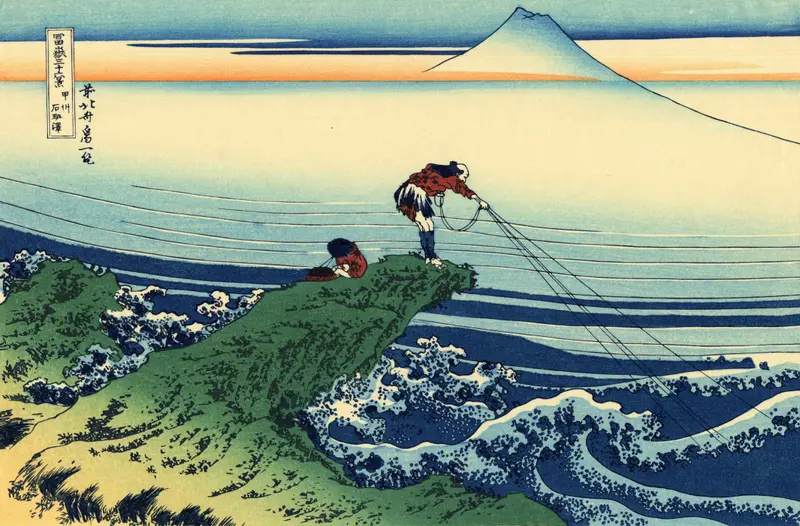
Kōshū kajikazawa 2
Katsushika Hokusai
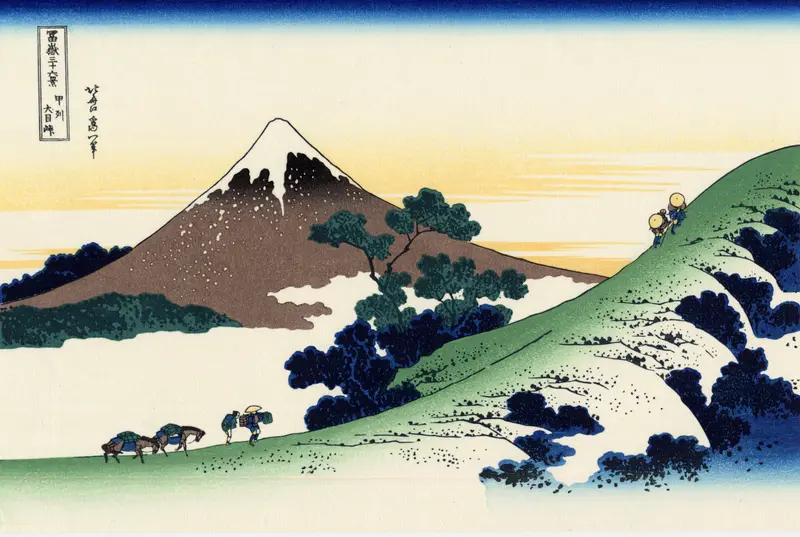
Inume Pass in Kai Province (Kôshû inume-tôge)
Katsushika Hokusai

Yoro Falls in Mino Province (Mino no Yoro no taki), from the series "A Tour of Waterfalls in Various Provinces (Shokoku taki meguri)"
Katsushika Hokusai
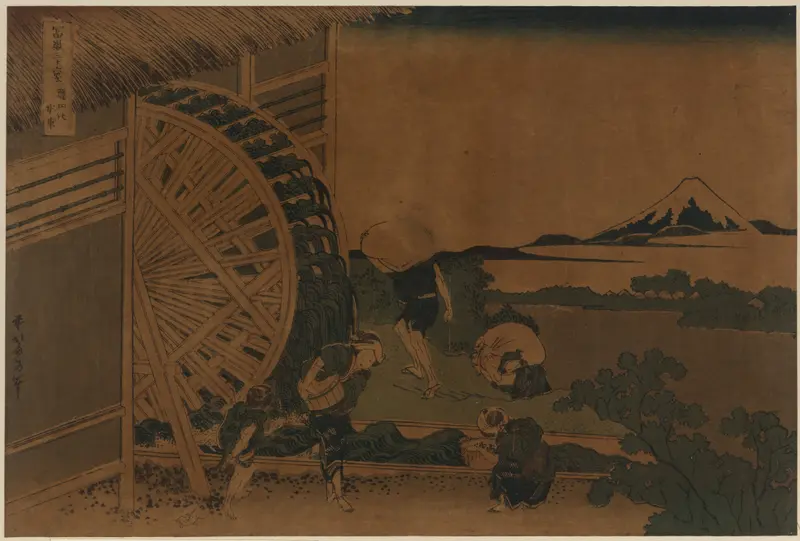
Onden no suisha
Katsushika Hokusai
More Genre Scene Art

Banquet of the Officers of the St George Civic Guard
Frans Hals

Rembrandt and Saskia in the Scene of the Prodigal Son
Rembrandt van Rijn

Bal du moulin de la Galette
Pierre-Auguste Renoir

Quadrille at the Moulin Rouge
Henri de Toulouse-Lautrec

A Burial at Ornans
Gustave Courbet

When Will You Marry?
Paul Gauguin