
Farmer or Evening — History & Facts
Few paintings by Gustave Van de Woestijne have sparked as much debate as Farmer or Evening, whose very title hints at the ambiguity that surrounds it. Scholars still puzzle over whether the work is best understood as a portrait of rural labor or as a meditation on the close of day, and its date and medium remain uncertain. This air of mystery is heightened by the fact that, unlike many of his contemporaries, Van de Woestijne rarely annotated his canvases, leaving viewers to decipher his intentions from the image alone. The painting captures a solitary figure—broad-shouldered, hands roughened by work—set against the deepening hues of dusk.
The farmer’s gaze is steady, almost resigned, as the last light slips behind the horizon, casting long shadows across the fields. The muted palette and heavy outlines recall the influence of Symbolism, a movement with which Van de Woestijne is often associated, and evoke the quiet dignity of rural life. The stillness in the figure’s pose, paired with the enveloping twilight, invites comparison to Jean-François Millet’s The Angelus, though Van de Woestijne’s farmer is less sentimental, more enigmatic—caught between toil and contemplation. As with many works by Gustave Van de Woestijne, the provenance of Farmer or Evening is not fully documented, reflecting the artist’s modest reputation outside Belgium during his lifetime.
The painting’s journey from studio to collection is largely unrecorded, and it is not clear whether it was ever publicly exhibited in Van de Woestijne’s day. Today, it stands as a testament to the artist’s fascination with rural subjects and his subtle, psychological approach to portraiture, which set him apart from the more overtly social realism of his peers. Farmer or Evening remains a quietly powerful piece in the artist’s oeuvre, inviting viewers to linger in its uncertain hour.
More Artworks by Gustave Van de Woestijne
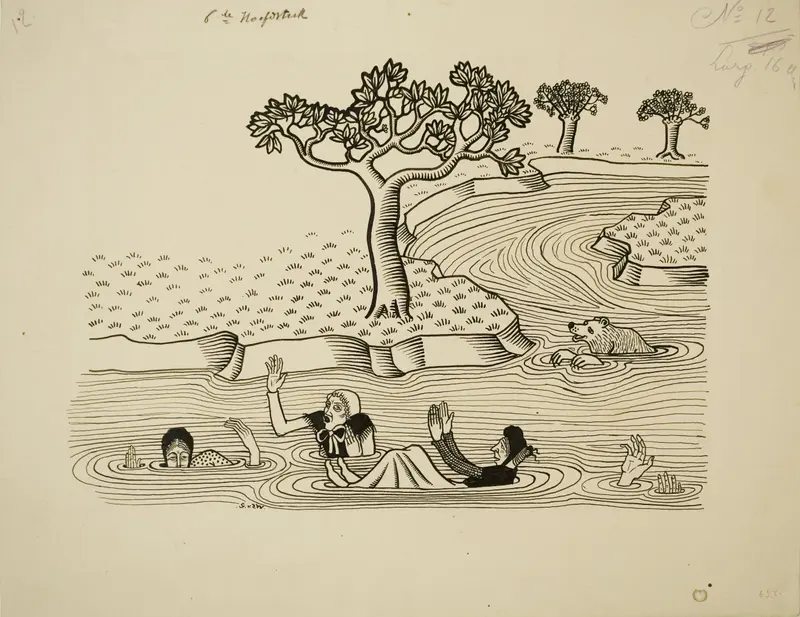
How Brown went out with Reynard where he thought he was eating honey and how he was caught by head and feet and suffered further misfortune
Gustave Van de Woestijne
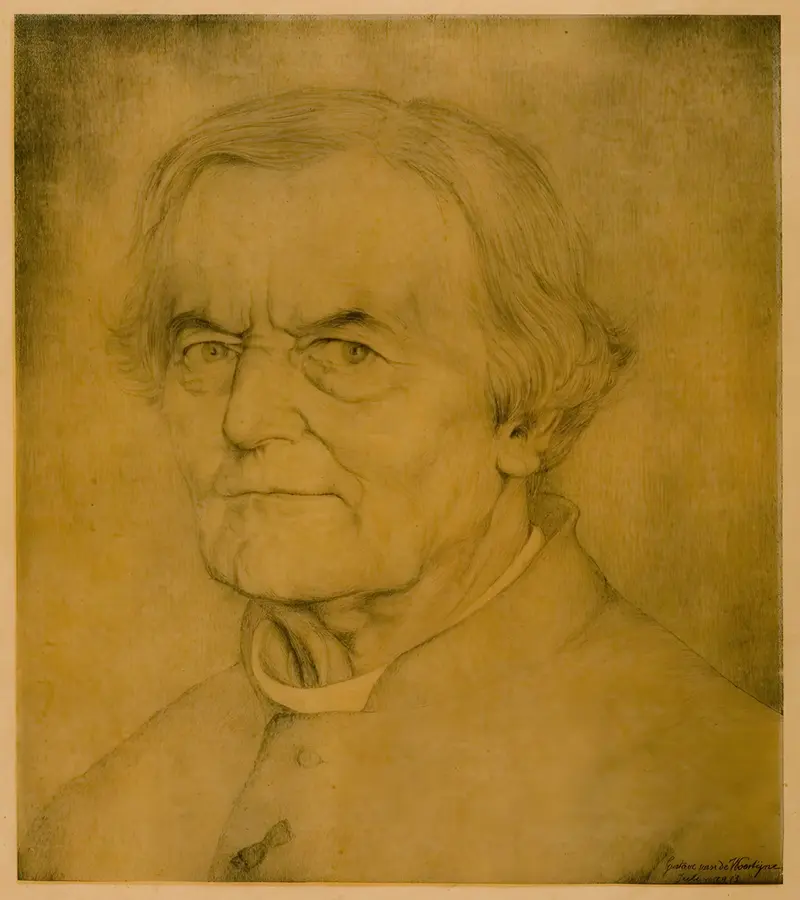
Portrait of Hugo Verriest
Gustave Van de Woestijne
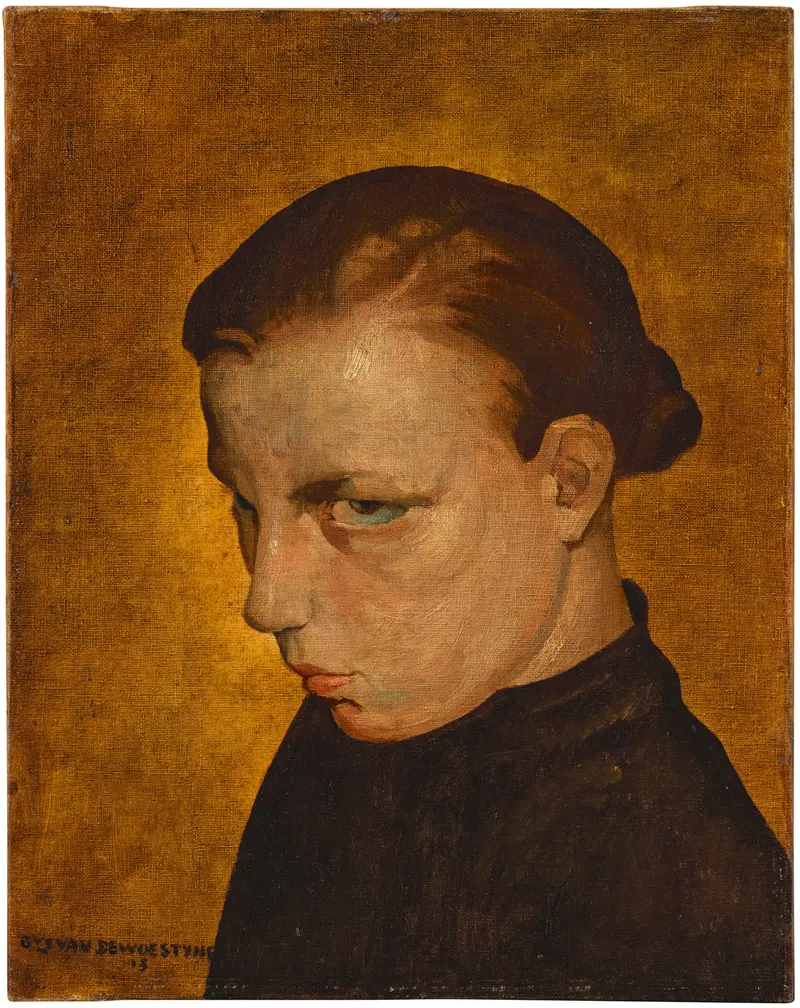
Angèle
Gustave Van de Woestijne
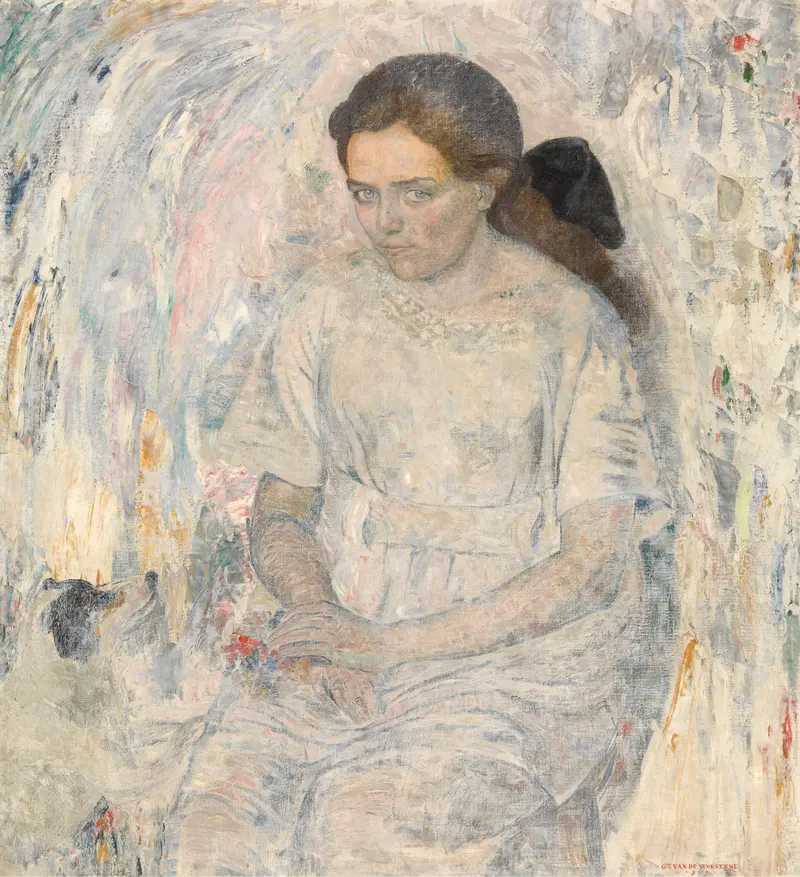
Adrienne
Gustave Van de Woestijne
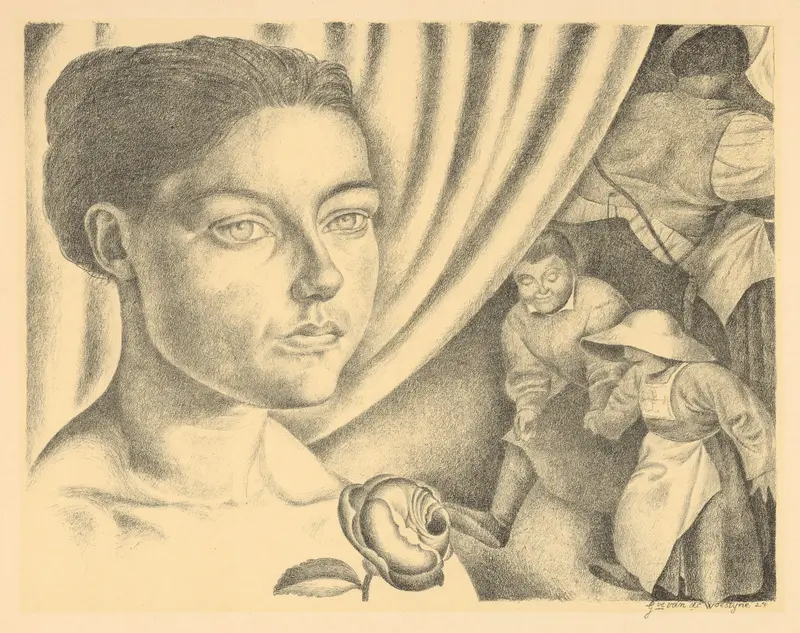
Jeune Femme
Gustave Van de Woestijne
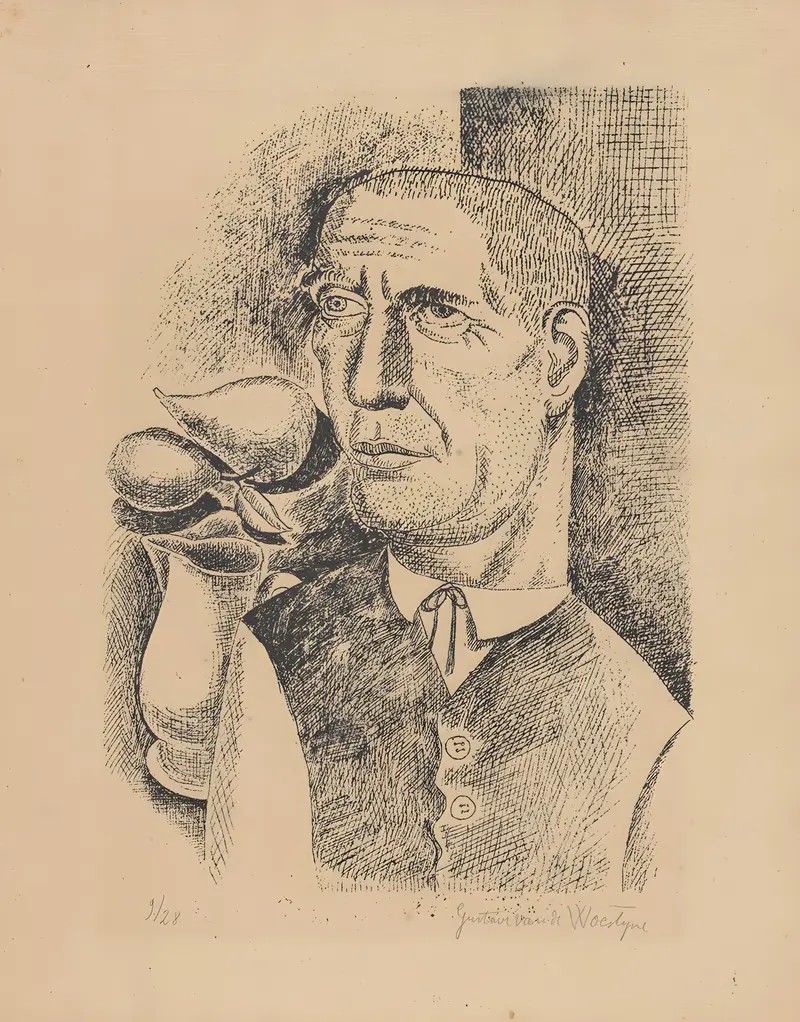
Boer op zijn zondags (Paysan endimanché)
Gustave Van de Woestijne
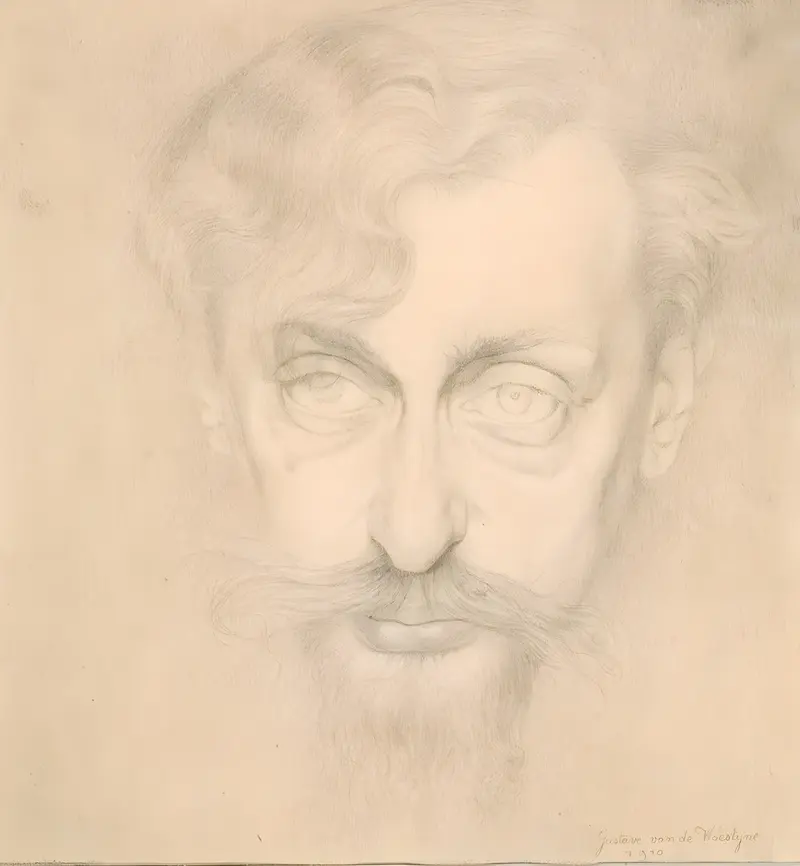
Portrait of the Writer Karel van de Woestijne
Gustave Van de Woestijne
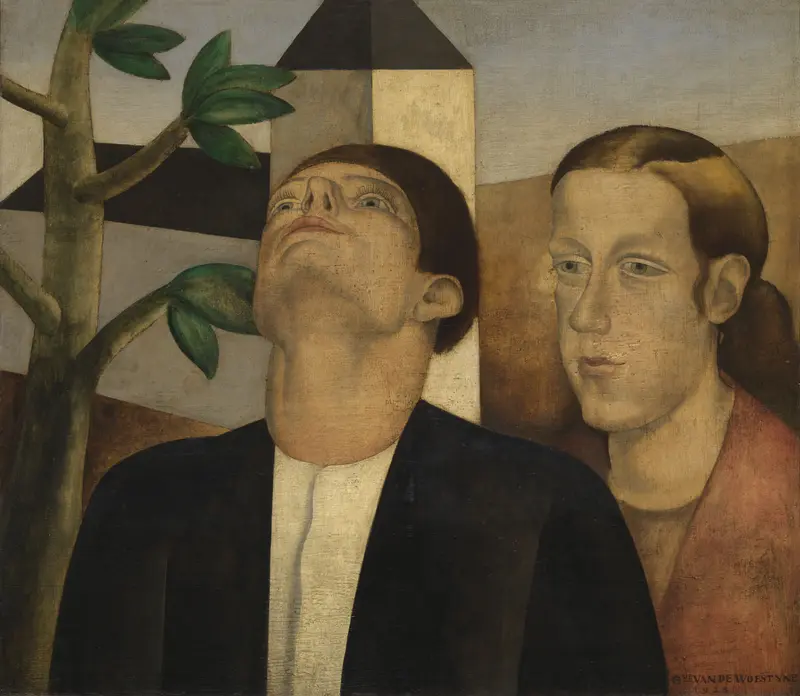
Azure
Gustave Van de Woestijne
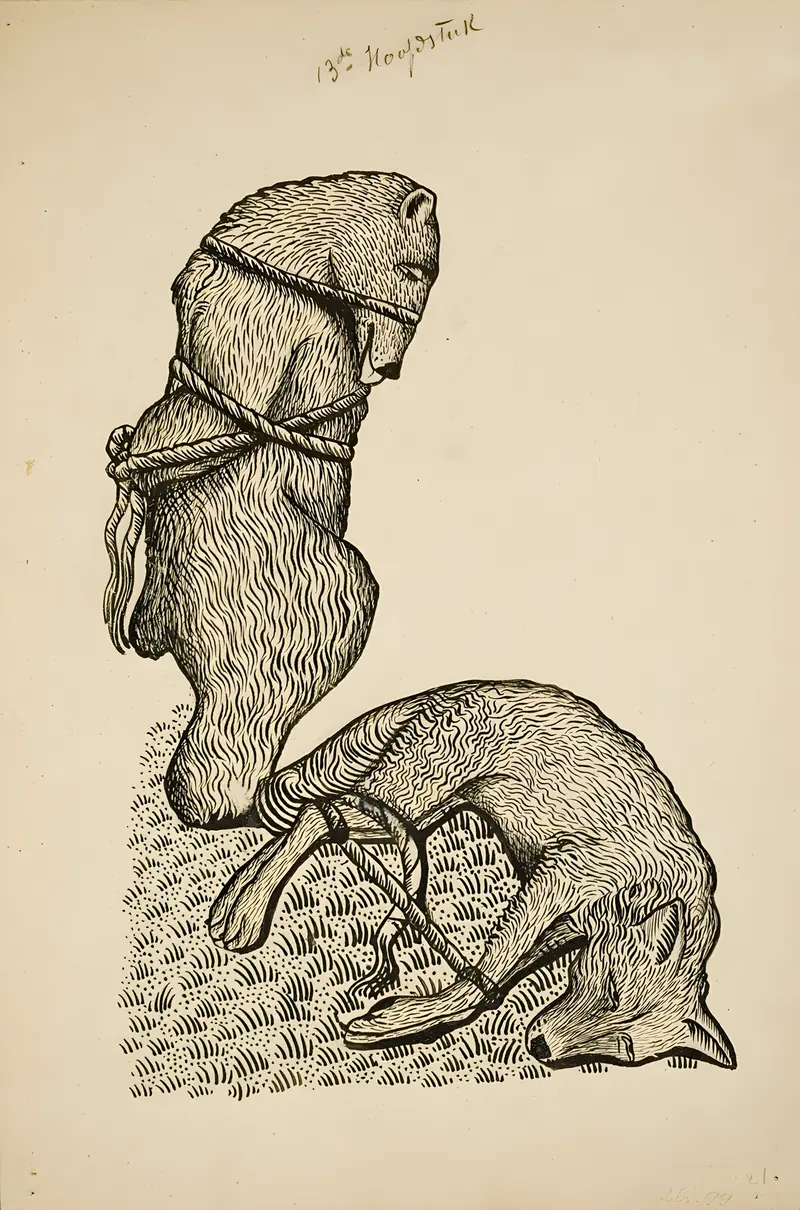
How Reinaert devises a new trick to get free and exterminate his enemies
Gustave Van de Woestijne
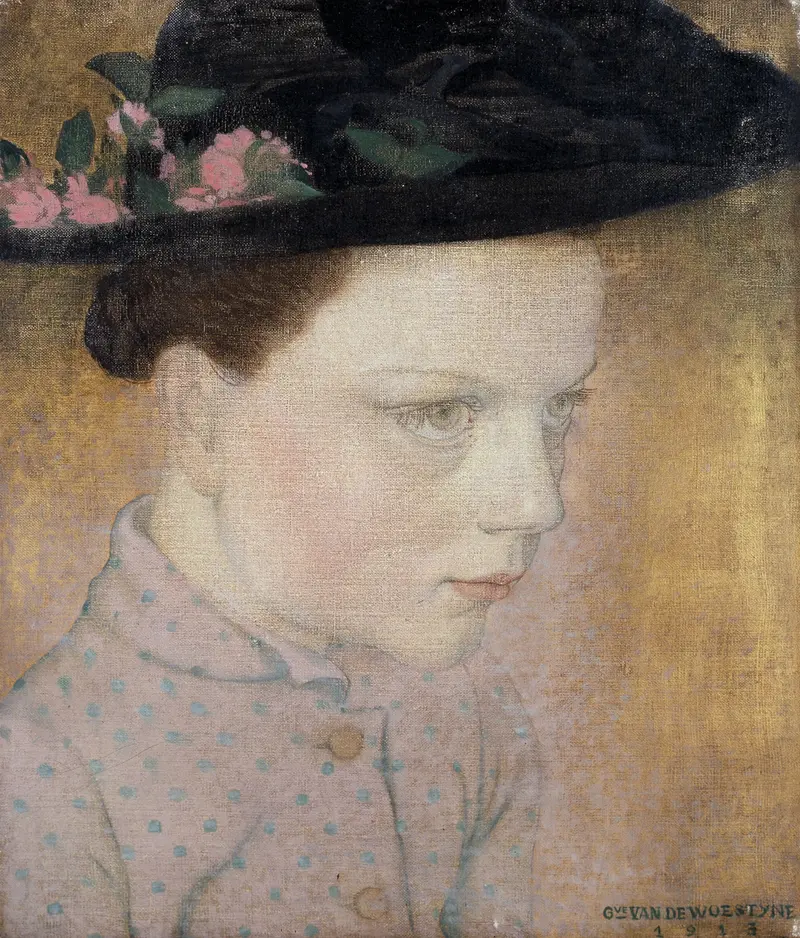
Country Girl
Gustave Van de Woestijne
More Genre Scene Art

Banquet of the Officers of the St George Civic Guard
Frans Hals

Rembrandt and Saskia in the Scene of the Prodigal Son
Rembrandt van Rijn

Bal du moulin de la Galette
Pierre-Auguste Renoir

Quadrille at the Moulin Rouge
Henri de Toulouse-Lautrec

A Burial at Ornans
Gustave Courbet

When Will You Marry?
Paul Gauguin