
Flying Dutchman — History & Facts
No painting by Albert Pinkham Ryder has sparked more speculation than Flying Dutchman, a work that has become as shrouded in mystery as the ghost ship it portrays. Created around 1887, this painting is the artist’s only known treatment of the legendary maritime tale, and its medium remains uncertain—Ryder was notorious for his experimental and sometimes unstable mixtures of oil, resin, and varnish. The painting’s shadowy surface and haunting atmosphere have led some conservators to debate whether the work we see today is what Ryder originally intended, or a product of his famously unpredictable materials aging over time. The legend of the Flying Dutchman tells of a spectral ship doomed to sail the oceans forever, unable to make port, its crew cursed for eternity.
Ryder captures the story at the moment the ghostly vessel emerges from the gloom, its sails tattered and hull aglow with an unnatural light, as if illuminated from within. The sea churns black and green beneath a storm-laden sky, while a single, almost imperceptible figure stands at the helm—perhaps Captain van der Decken himself, condemned for his blasphemy. Unlike the crisp, dramatic clarity of Turner’s stormy seascapes, Ryder’s vision is all shadow and suggestion, the ship half-swallowed by mist, its fate uncertain.
The painting’s brooding palette and rough, almost sculptural brushwork draw the viewer into the myth’s atmosphere of dread and awe. Flying Dutchman was never exhibited in Ryder’s lifetime and, like many of his paintings, was kept in his studio for years as he reworked and layered the surface. After Ryder’s death in 1917, the painting passed through private collections before entering a museum, where it remains a highlight of his small but influential body of work. Ryder’s obsessive technique—sometimes using as many as forty layers of paint and glaze—has made the conservation of his paintings a challenge, and Flying Dutchman is no exception.
Today, the painting stands as a testament to Ryder’s fascination with the supernatural and the unknown, and to his singular place in American art at the turn of the twentieth century.
More Artworks by Albert Pinkham Ryder

The Toilers of the Sea
Albert Pinkham Ryder
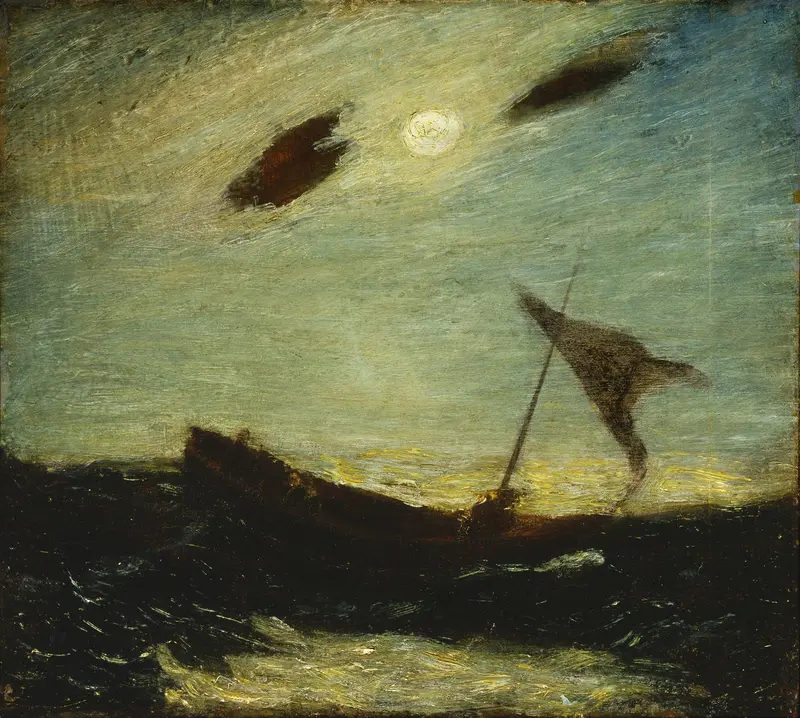
Moonlight
Albert Pinkham Ryder
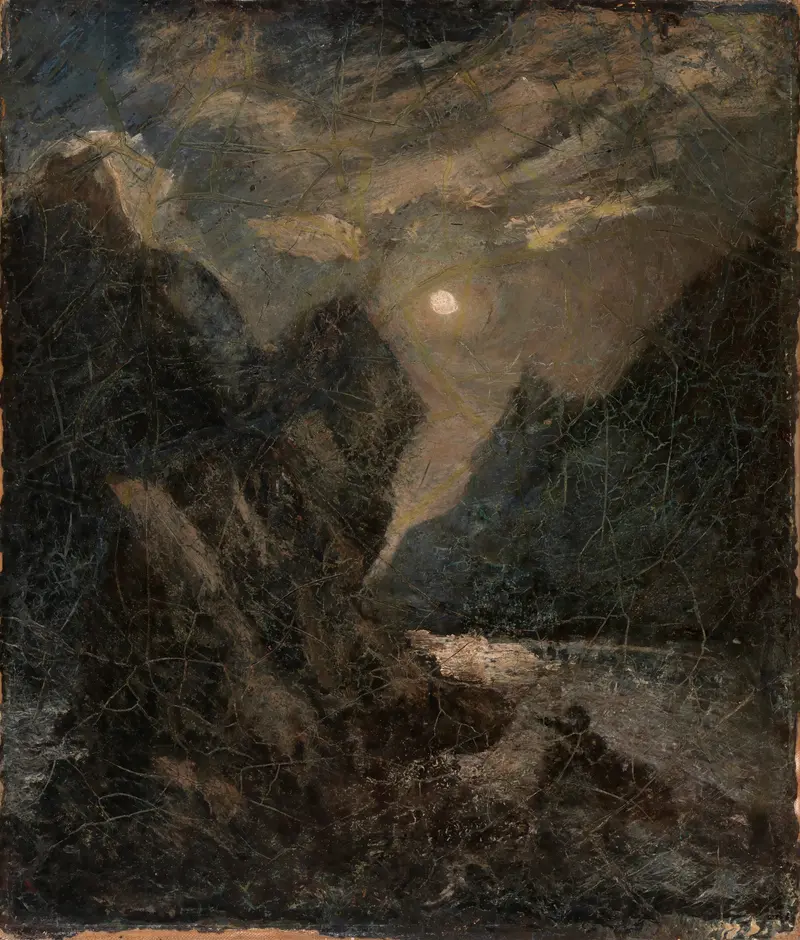
The Lorelei
Albert Pinkham Ryder
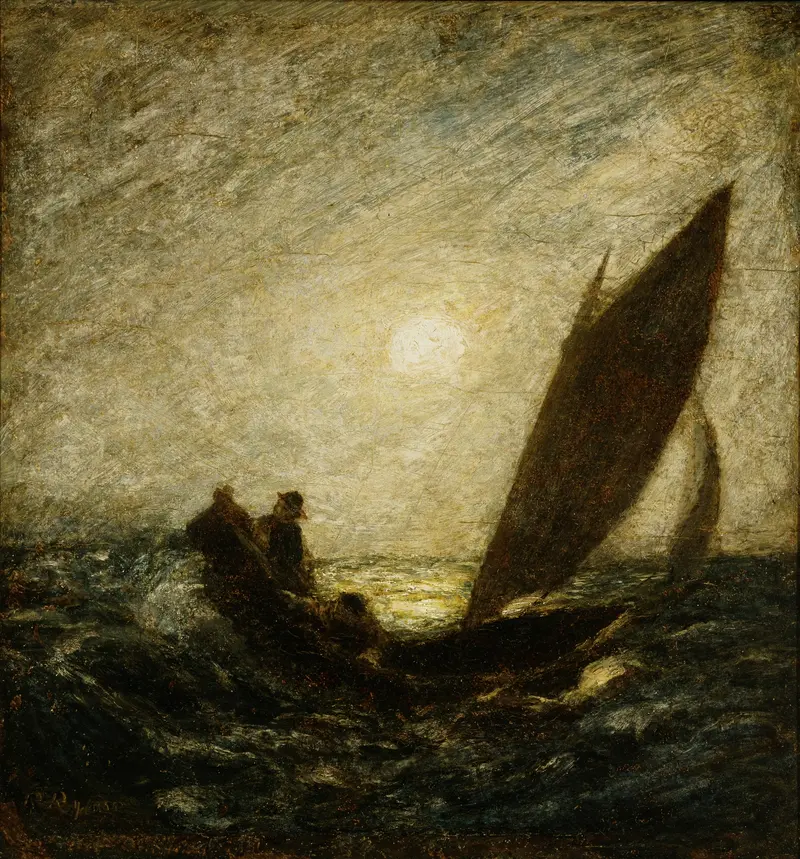
With Sloping Mast And Dipping Prow
Albert Pinkham Ryder
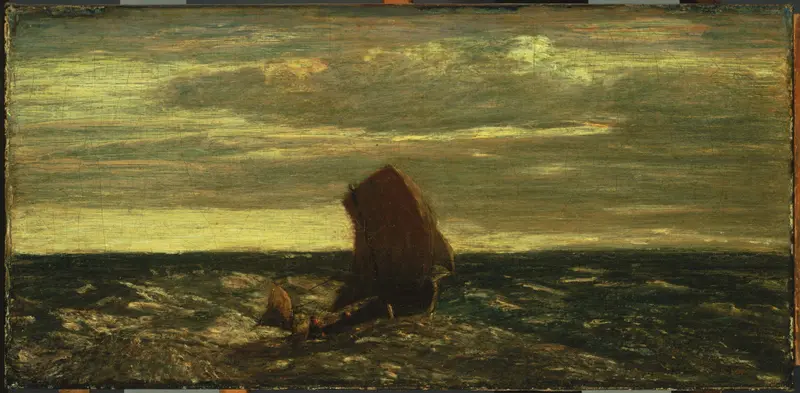
Homeward Bound
Albert Pinkham Ryder
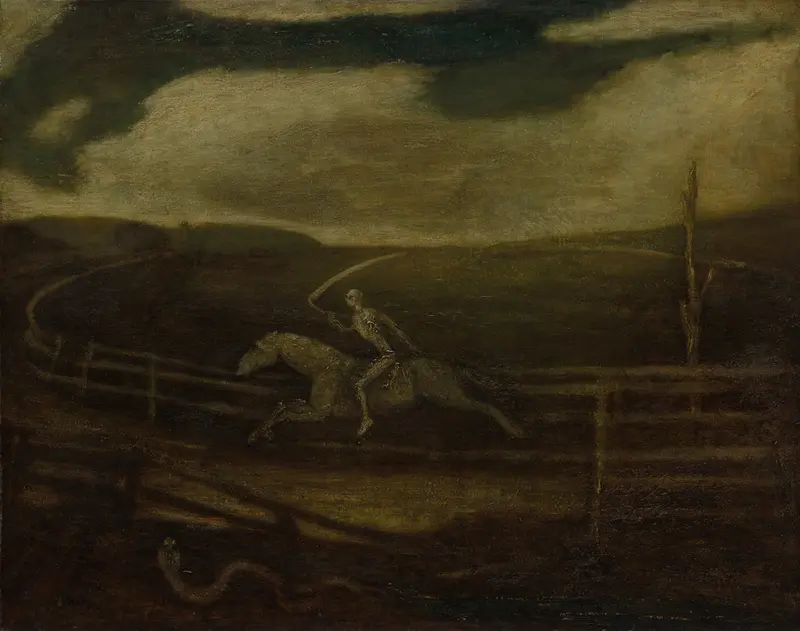
The Race Track (Death on a Pale Horse)
Albert Pinkham Ryder
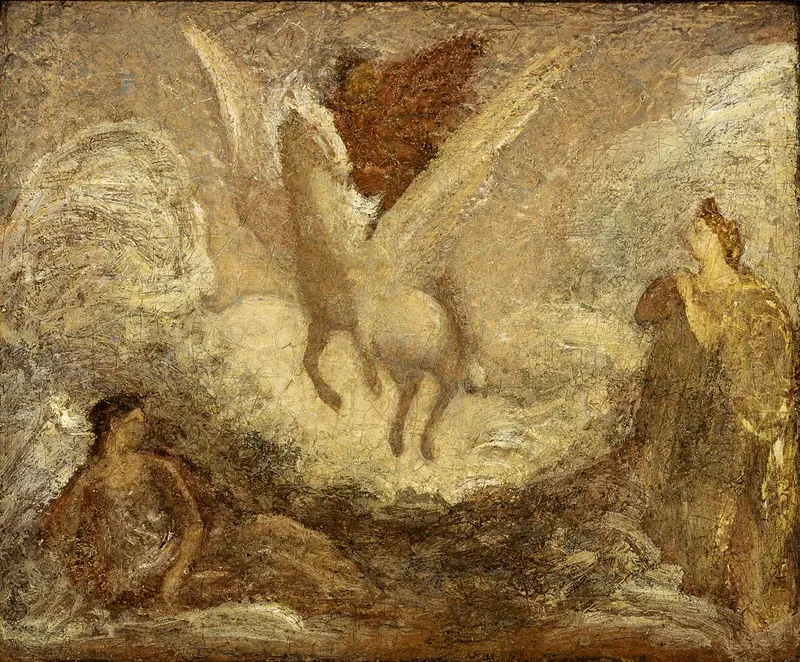
Pegasus Departing
Albert Pinkham Ryder
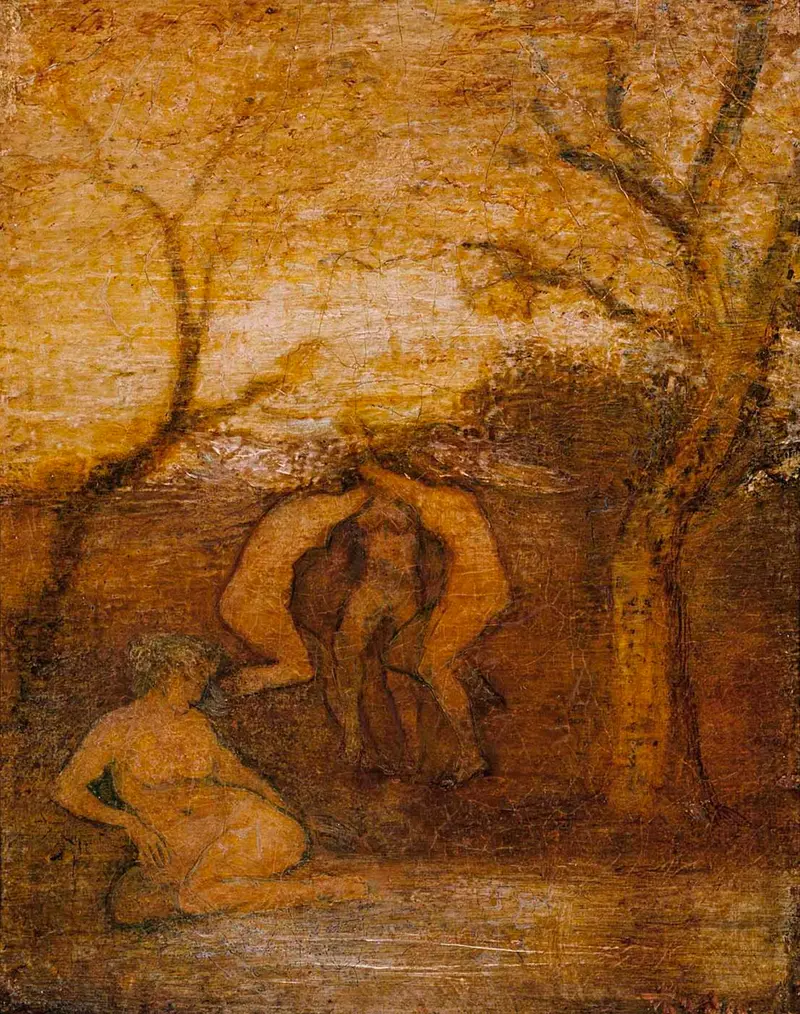
Dancing Dryads
Albert Pinkham Ryder
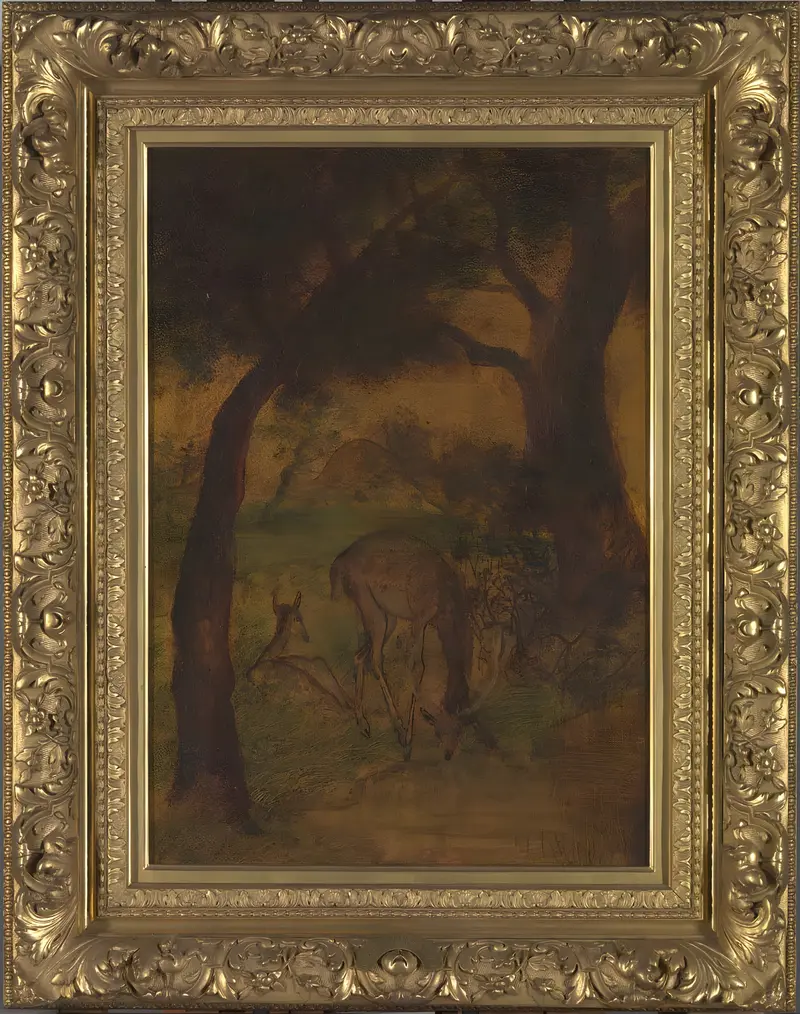
A Stag Drinking
Albert Pinkham Ryder
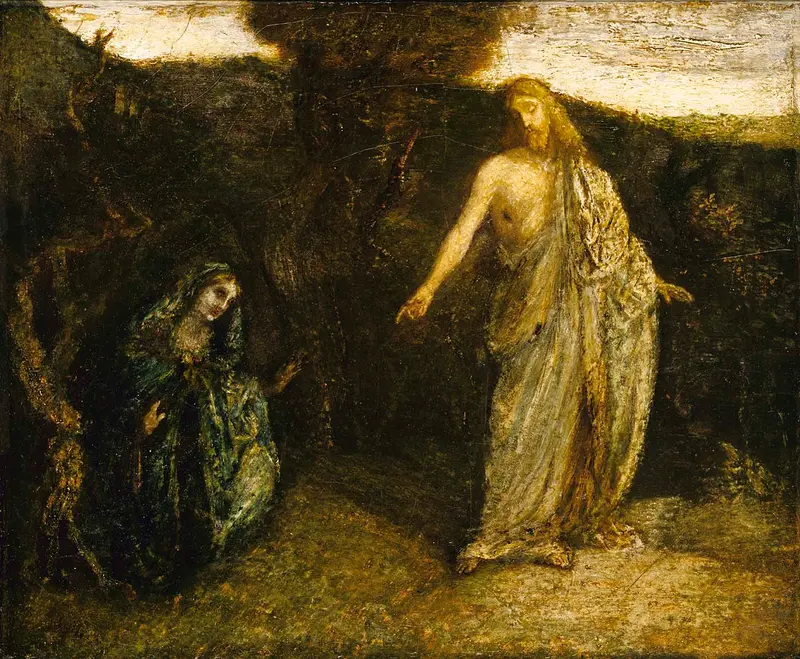
Christ Appearing to Mary
Albert Pinkham Ryder





