
Ghosts — History & Facts
When Katsushika Hokusai published Ghosts in 1799, he was already gaining a reputation for his fascination with the supernatural, a theme that would haunt his work for decades. This print belongs to a rare early series in which Hokusai explored yūrei—Japanese spirits of the restless dead—at a time when ghost stories were sweeping Edo (now Tokyo) in popular kabuki plays and illustrated books. The precise medium of Ghosts is uncertain, but prints like this were often produced as woodblock images, making them widely accessible to a public hungry for tales of the eerie and uncanny.
No fewer than three versions of this composition are known to exist, each with subtle differences, fueling debate among scholars about their sequence and intent. In Ghosts, Hokusai captures a chilling moment: a pale, elongated figure drifts through a shadowed interior, her hair loose and her kimono trailing like mist. The woman’s hands dangle limply from wrists bent at unnatural angles—a hallmark of yūrei iconography—while her feet fade into nothingness, signaling her otherworldly state. Around her, everyday objects—a lantern, a sliding door—are rendered with sharp clarity, heightening the contrast between the living world and the spectral.
Hokusai’s treatment is more intimate and psychological than the theatrical ghosts of Utagawa Kuniyoshi, who often depicted vengeful spirits in violent confrontation; here, the terror lies in silent presence and the thin veil between life and death. The provenance of Ghosts is not fully documented, as is often the case with ukiyo-e prints, which were produced in large numbers and circulated widely. It is likely that the work was sold through print shops in Edo, reaching both commoners and collectors eager for the latest supernatural sensation. Over time, many prints were lost or damaged, making surviving examples especially valuable to museums and scholars today.
Ghosts marks an early moment in Hokusai’s long engagement with the fantastic, predating his celebrated Thirty-six Views of Mount Fuji by more than two decades. Today, this rare print is preserved in a private collection, a fragile witness to the artist’s restless imagination and the haunted world of late eighteenth-century Japan.
More Artworks by Katsushika Hokusai

The Great Wave off Kanagawa
Katsushika Hokusai
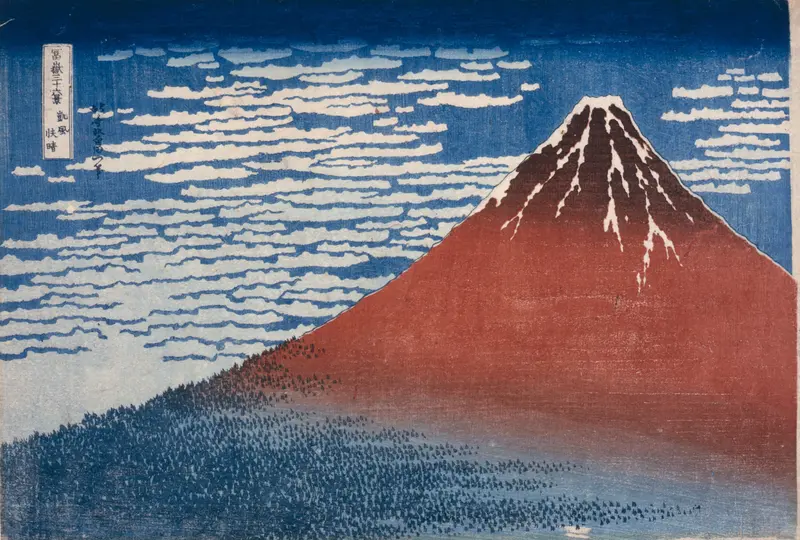
Fine Wind, Clear Morning (Red Fuji)
Katsushika Hokusai
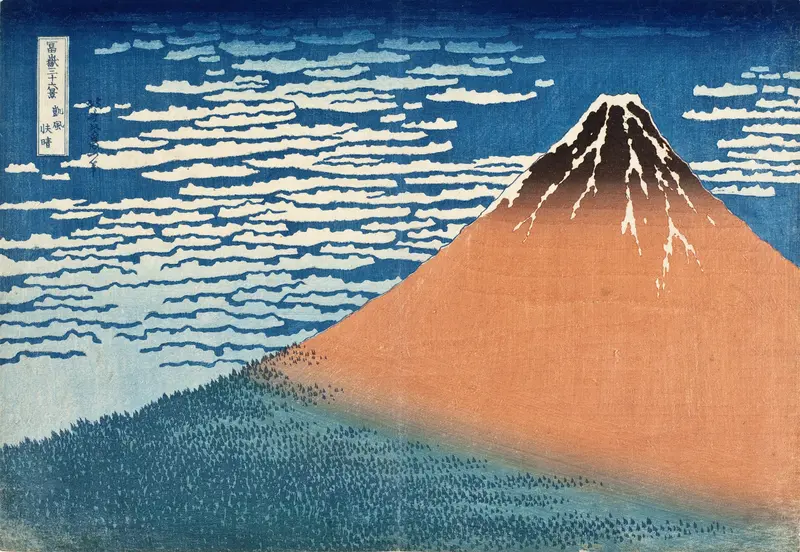
South Wind, Clear Dawn
Katsushika Hokusai
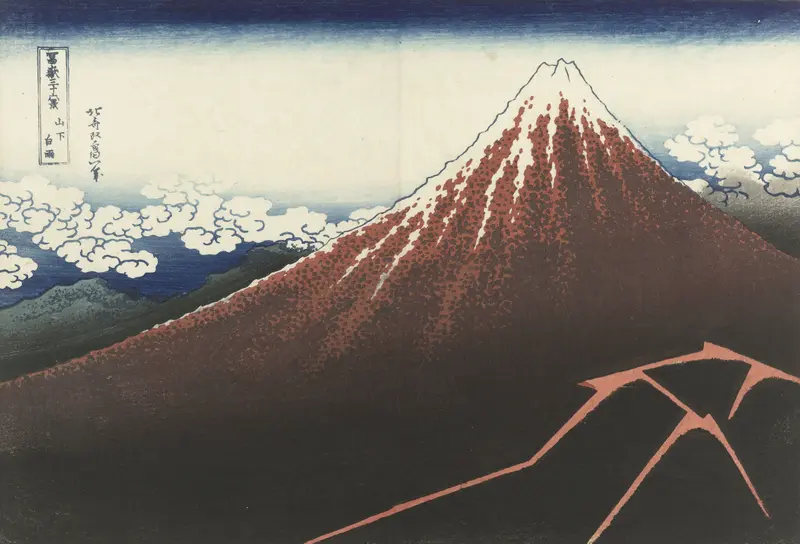
Rainstorm Beneath the Summit
Katsushika Hokusai
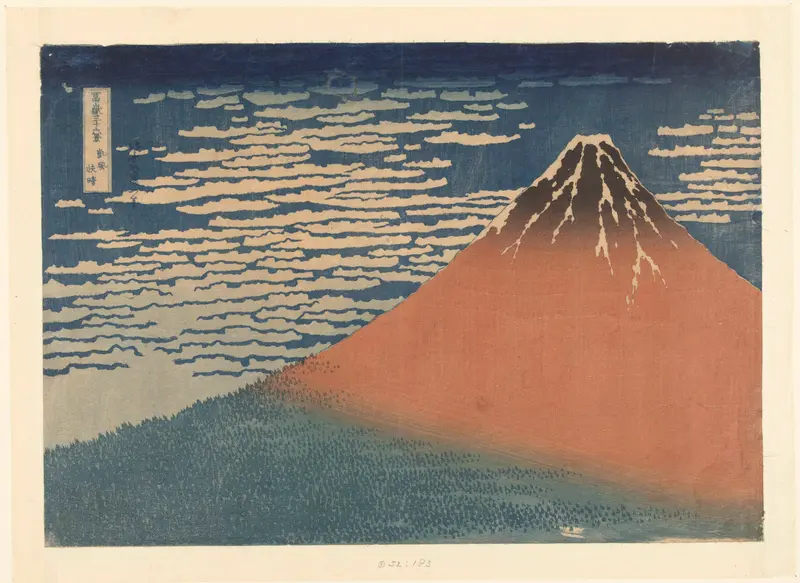
Clear Weather with a Southerly Wind
Katsushika Hokusai
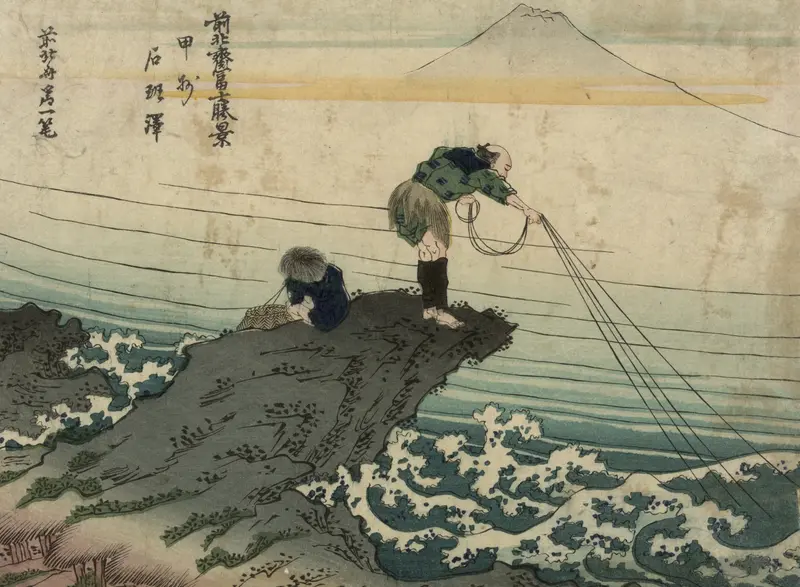
Kōshū kajikazawa
Katsushika Hokusai
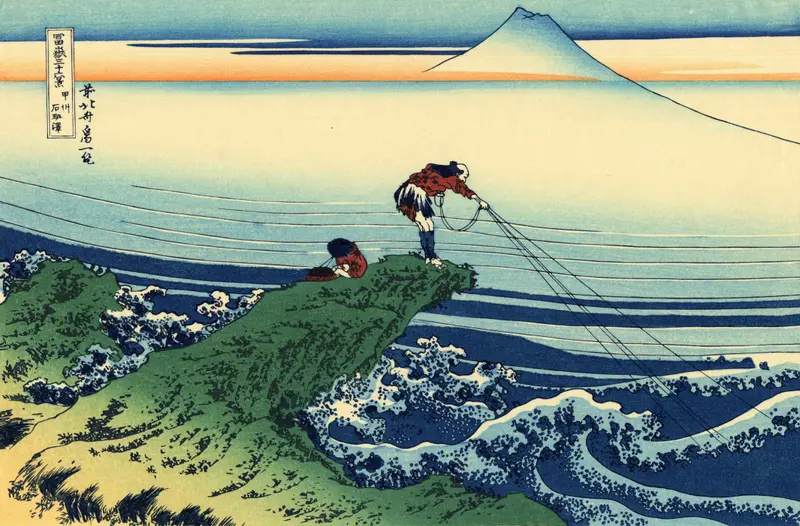
Kōshū kajikazawa 2
Katsushika Hokusai
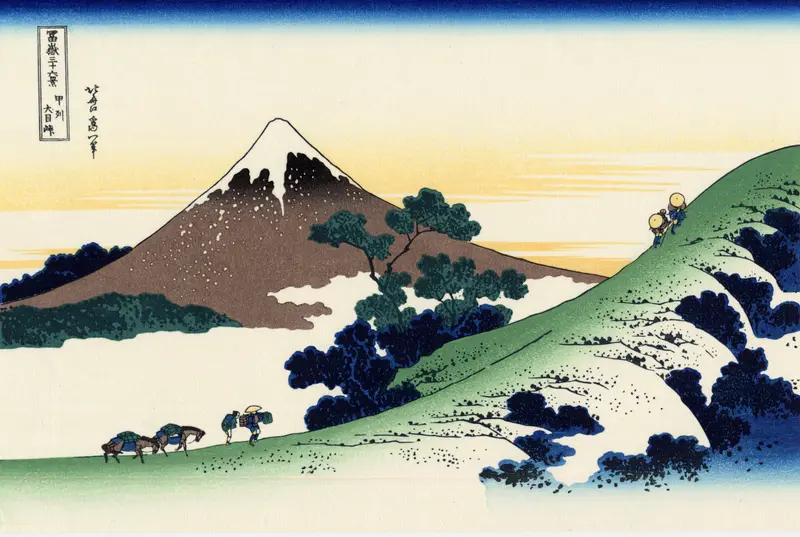
Inume Pass in Kai Province (Kôshû inume-tôge)
Katsushika Hokusai

Yoro Falls in Mino Province (Mino no Yoro no taki), from the series "A Tour of Waterfalls in Various Provinces (Shokoku taki meguri)"
Katsushika Hokusai
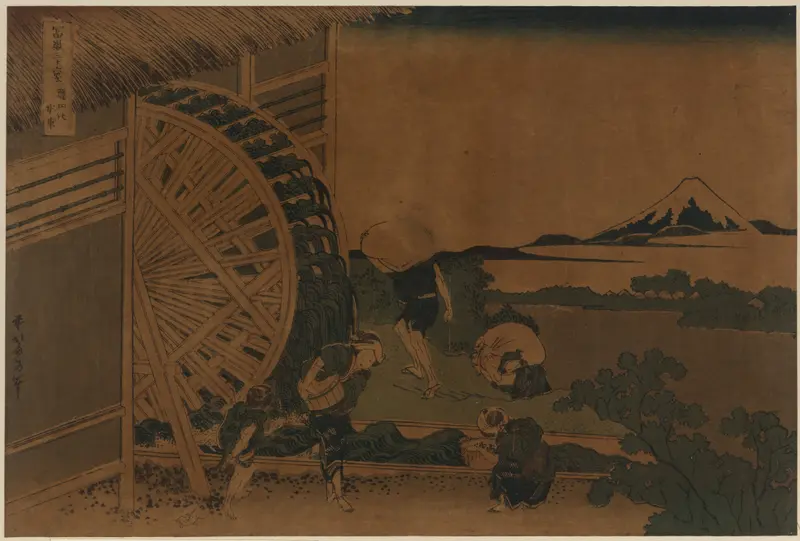
Onden no suisha
Katsushika Hokusai





