Koganei, Cherry Blossoms — History & Facts
Did the painter know this moment would outlive them? In Koganei, Cherry Blossoms, the ephemeral beauty of spring blossoms speaks to the transience of life, urging us to ponder our own mortality. Look to the left at the delicate clusters of cherry blossoms, their soft pink hues juxtaposed against a serene sky. The meticulous brushwork captures the fleeting moment, guiding your gaze along the gentle curves of each petal. Notice how the light bathes the scene, lending a luminescent quality to the flowers, while deep shadows beneath the branches evoke a sense of quiet longing, as if nature herself is revealing the bittersweet nature of existence. The contrast between the vibrant blossoms and the shadowed landscape highlights the fragility of beauty.
Each flower, in its moment of bloom, contains the weight of potential and loss—symbolizing both renewal and the inevitability of decay. The composition suggests a fleeting encounter, where joy and sorrow coalesce, inviting viewers to reflect on their own lives and the moments they cherish yet must eventually release. In 1896, Kobayashi Kiyochika painted this work during a time of great transformation in Japan, as the nation was transitioning from isolation to modernization. The cherry blossoms, deeply rooted in Japanese culture, symbolize not only beauty but the impermanence of life, resonating with a society grappling with rapid change.
This piece captures a moment that transcends time, offering solace and wisdom through its celebration of nature’s transient splendor.
More Artworks by Kobayashi Kiyochika
Browse all →
Thunder and Lightning at Oumaya Bridge
Kobayashi Kiyochika

Shinkyō, Sacred Bridge at Nikkō
Kobayashi Kiyochika

Daybreak at Shrine, Kanda
Kobayashi Kiyochika

The Great Fire at Ryōgoku Bridge, Viewed from Asakusa Bridge on the 26th of January, 1881
Kobayashi Kiyochika

The Moon At Shinagawa
Kobayashi Kiyochika
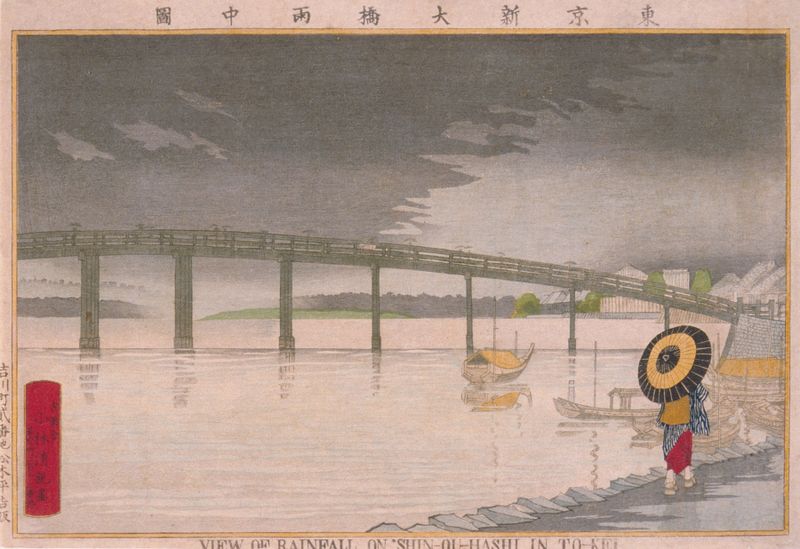
View of Rainfall on Shin-Ou-hashi in To-kei
Kobayashi Kiyochika

Evening at Tōshōgū Shrine, Ueno, Tokyo
Kobayashi Kiyochika

Snow at Ochanomizu
Kobayashi Kiyochika
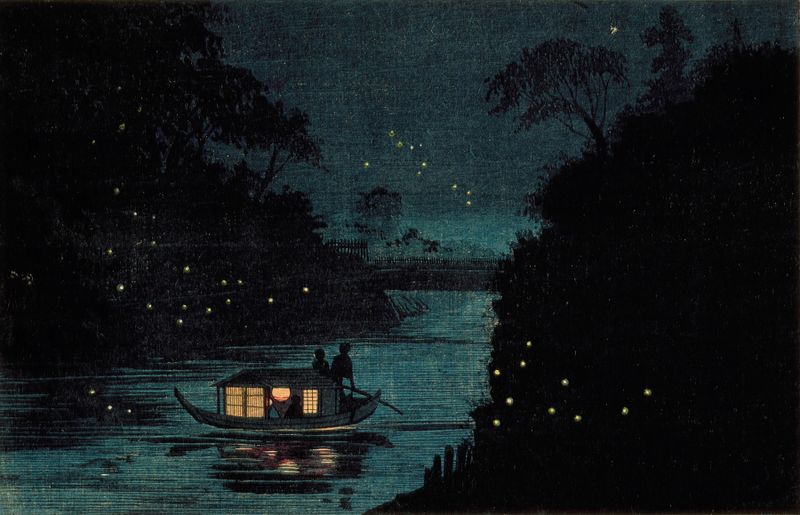
Fireflies at Ochanomizu
Kobayashi Kiyochika
The Island Enoshima
Kobayashi Kiyochika