
Ladies in a Garden — History & Facts
What first catches the eye in Ladies in a Garden is not a single figure or gesture, but the shimmering, almost feverish surface itself—an image that seems to hover between vision and memory. The scene is alive with the swirl of color and movement: dresses in pale blue, gold, and rose dissolve into the dappled ground, while the trees overhead are rendered as bursts of ochre and olive. The figures are less individuals than flickers of presence, their forms melting into one another, as if the painter is less concerned with who they are than with the sensation of their gathering.
Light pools in the center, drawing the viewer’s gaze into the heart of the assembly, then out again to the shadowed edges where detail gives way to suggestion. Painted in 1870, this work belongs to a moment when artists like Adolphe Joseph Thomas Monticelli were pushing the boundaries of what painting could do, favoring atmosphere and feeling over clarity and finish. Such garden scenes, often inspired by the fêtes galantes of the previous century, were popular among collectors who sought reminders of leisure and elegance. Yet, Monticelli’s approach is strikingly modern: his thick, impasto brushwork and glowing palette anticipate the Impressionists, who would soon make their own experiments with light and color.
History has kept few traces of the journey of this specific canvas, now preserved in a digital collection, but its restless energy invites us to linger and look again, searching for stories in the golden haze.
More Artworks by Adolphe Monticelli

Portrait of a Lady
Adolphe Monticelli
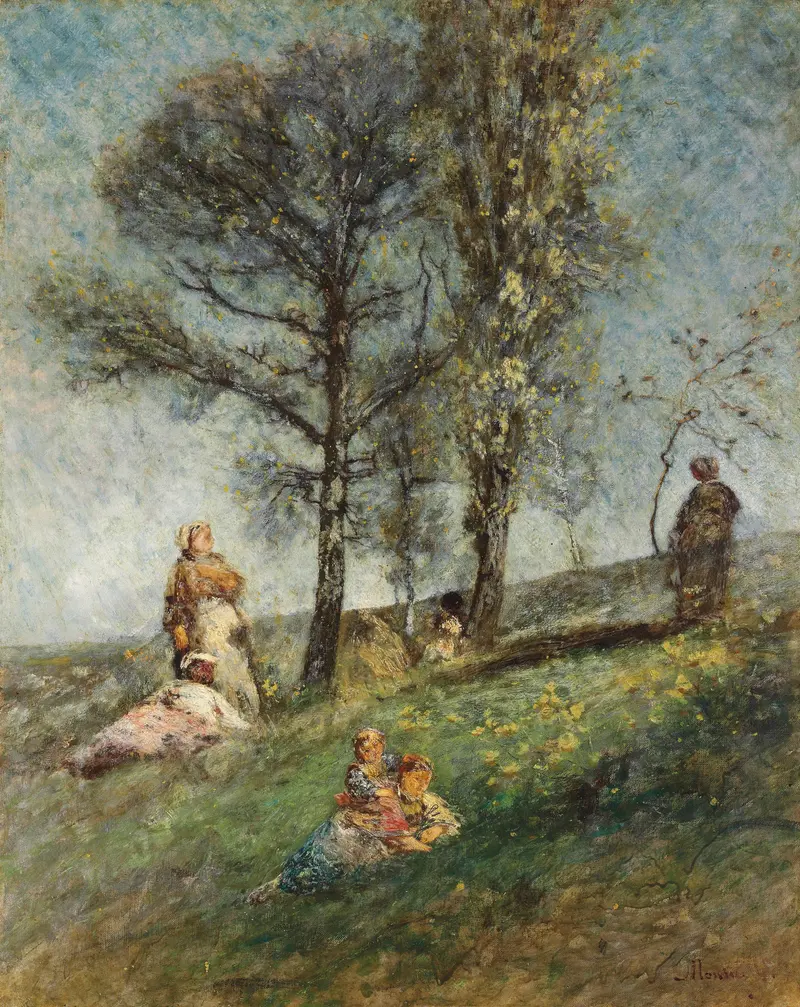
A Young Family Under Trees On A Hill
Adolphe Monticelli

Fête d'Après-Midi
Adolphe Monticelli
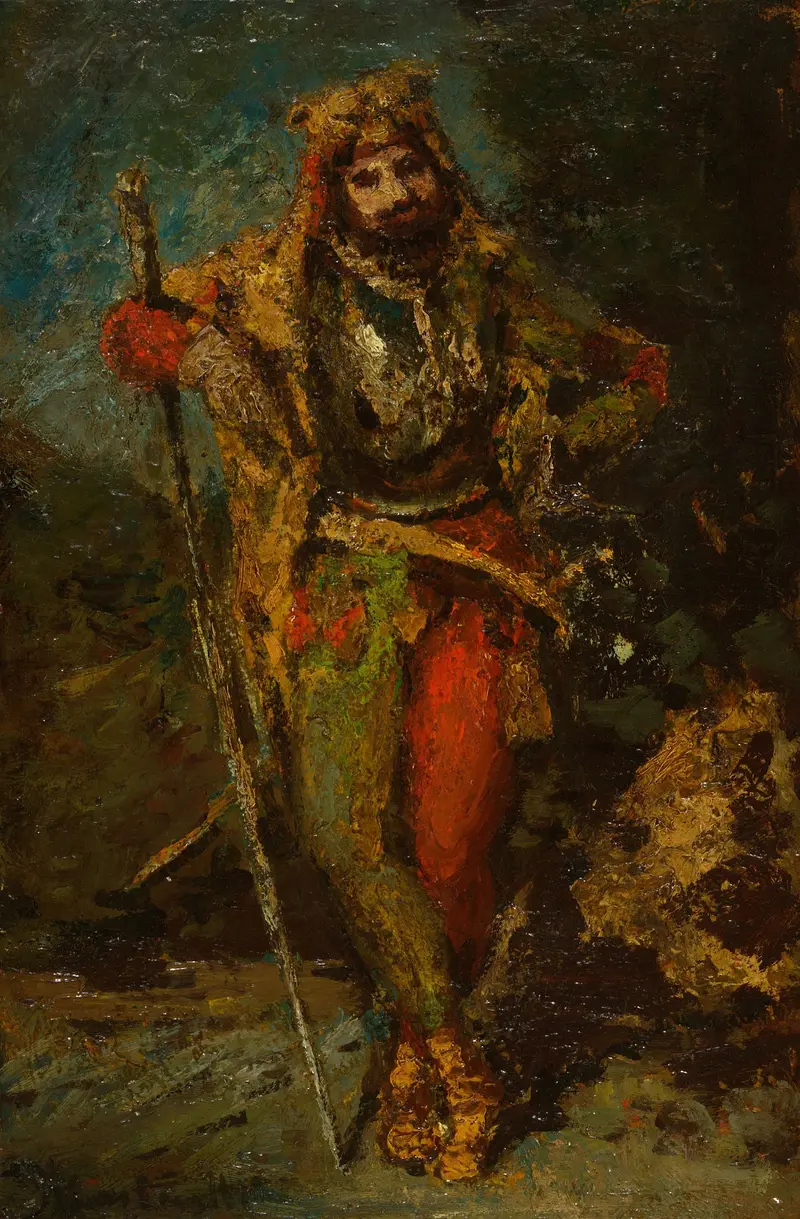
Mephisto from the Opera Faust
Adolphe Monticelli
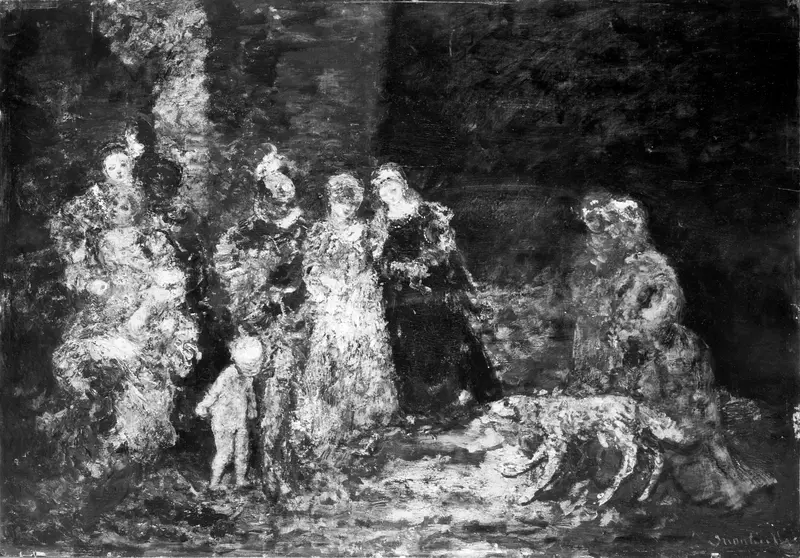
The Fairies
Adolphe Monticelli
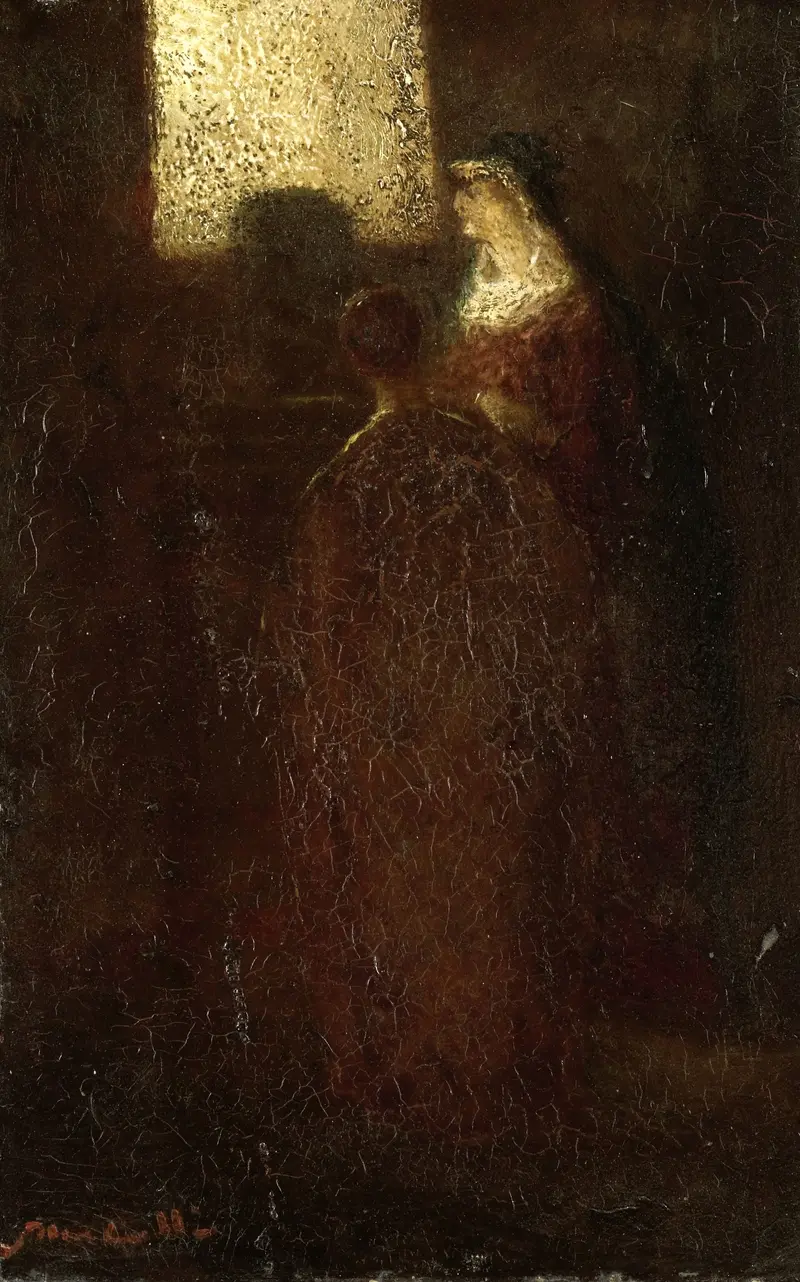
Aan het altaar
Adolphe Monticelli
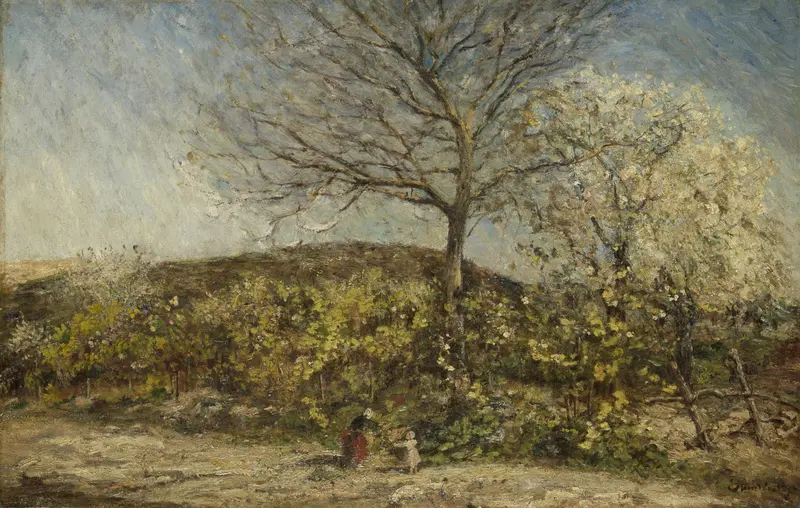
Landschap met bloeiende boomgaard
Adolphe Monticelli
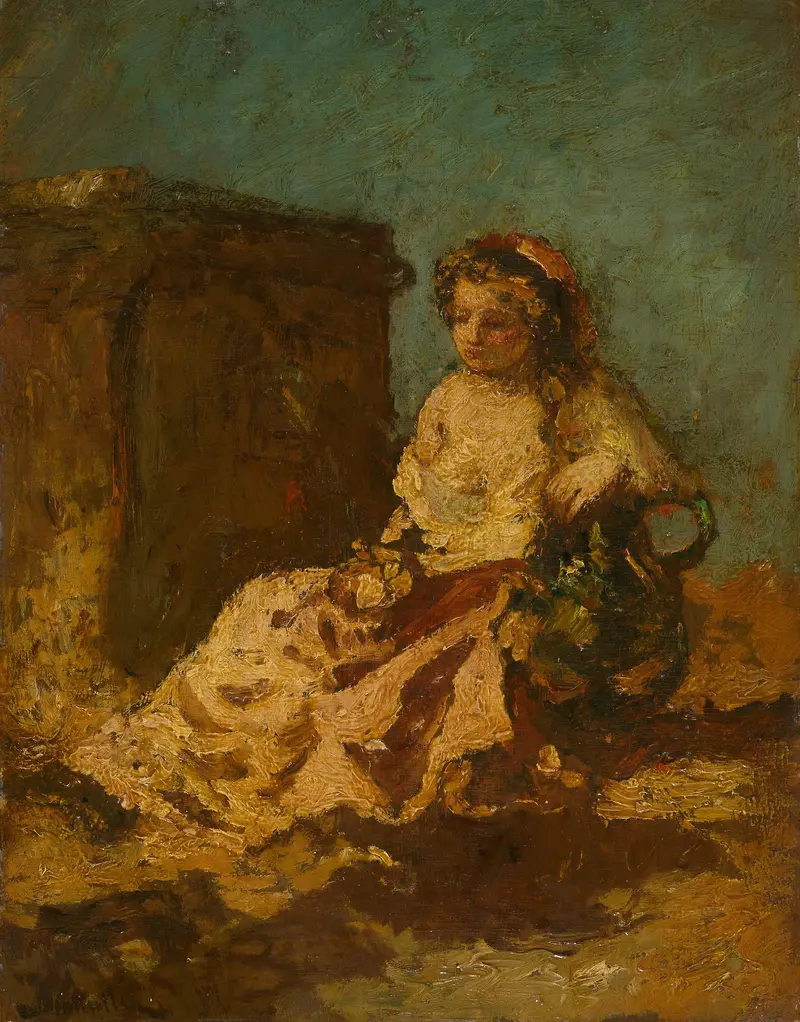
Meditation (Seated Woman)
Adolphe Monticelli
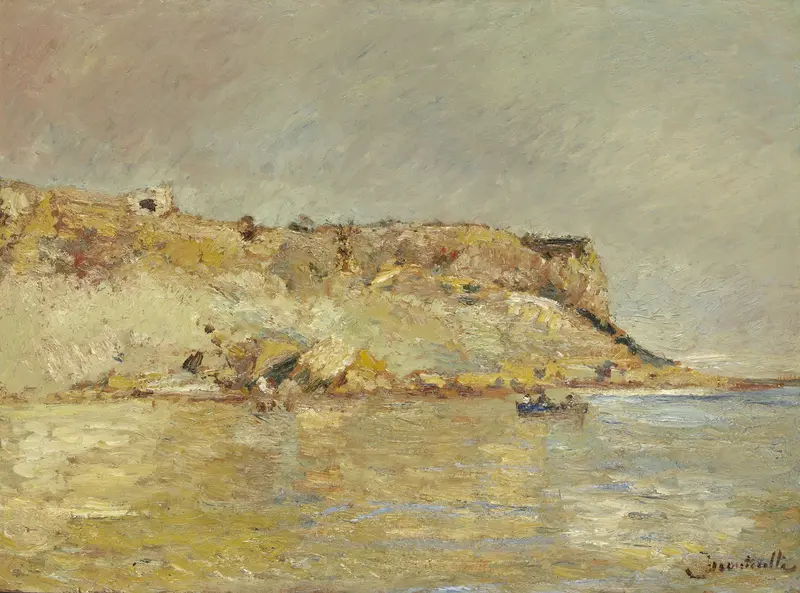
Coastal Mountains
Adolphe Monticelli
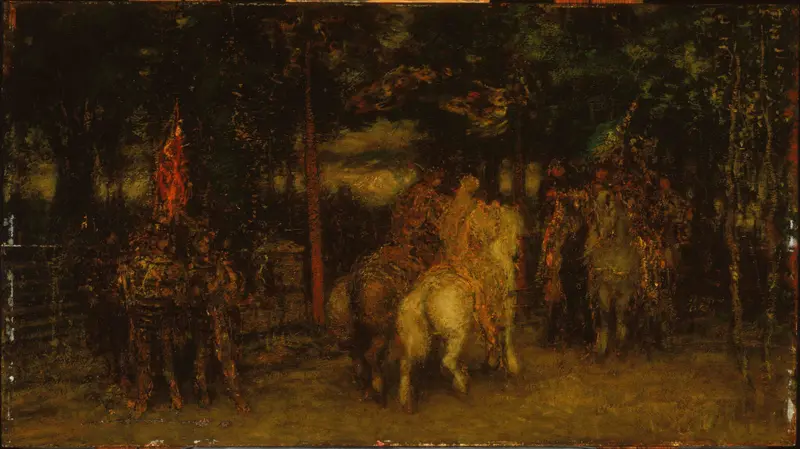
Landscape with Figures
Adolphe Monticelli
More Genre Scene Art

Banquet of the Officers of the St George Civic Guard
Frans Hals

Rembrandt and Saskia in the Scene of the Prodigal Son
Rembrandt van Rijn

Bal du moulin de la Galette
Pierre-Auguste Renoir

Quadrille at the Moulin Rouge
Henri de Toulouse-Lautrec

A Burial at Ornans
Gustave Courbet

When Will You Marry?
Paul Gauguin