
Liezi in the Wind — History & Facts
Few images from early nineteenth-century Japan have sparked as much curiosity as Liezi in the Wind by Katsushika Hokusai. The work stands out because it is one of the rare visual representations of the Daoist sage Liezi, a figure more often celebrated in literature than in art. Scholars have long debated the original medium of this piece—whether it was conceived as a painting, a print, or even a preparatory sketch—since no signed and dated version has survived, and references to it in Hokusai’s own writings are tantalizingly brief. At the heart of the image, the sage Liezi is caught mid-flight, riding the wind with effortless poise, his robes billowing and hair streaming behind him.
This moment is drawn from the Liezi, a Daoist classic, where the sage’s ability to ride the wind symbolizes harmony with nature and spiritual liberation. Hokusai’s energetic brushwork captures the swirling gusts beneath Liezi’s feet, while the sage’s calm expression contrasts with the wild movement around him, emphasizing his mastery over the elements. The motif recalls earlier Chinese ink paintings of immortals, but Hokusai’s dynamic lines and sense of motion set his vision apart from the more static compositions of, for example, Lu Zhi’s depictions of Daoist sages. The exact provenance of Liezi in the Wind remains uncertain, as no definitive record of its commission or early ownership has surfaced.
However, the work is generally dated to around 1811, a period when Hokusai was deeply engaged with Chinese themes and experimenting with new visual languages. Surviving examples, whether prints or painted scrolls, are scattered in collections in Japan and Europe, often attributed to Hokusai’s circle due to stylistic similarities. Today, the piece is valued not only as a testament to Hokusai’s fascination with Chinese philosophy but also as a vivid example of cross-cultural exchange in Edo-period art.
More Artworks by Katsushika Hokusai

The Great Wave off Kanagawa
Katsushika Hokusai
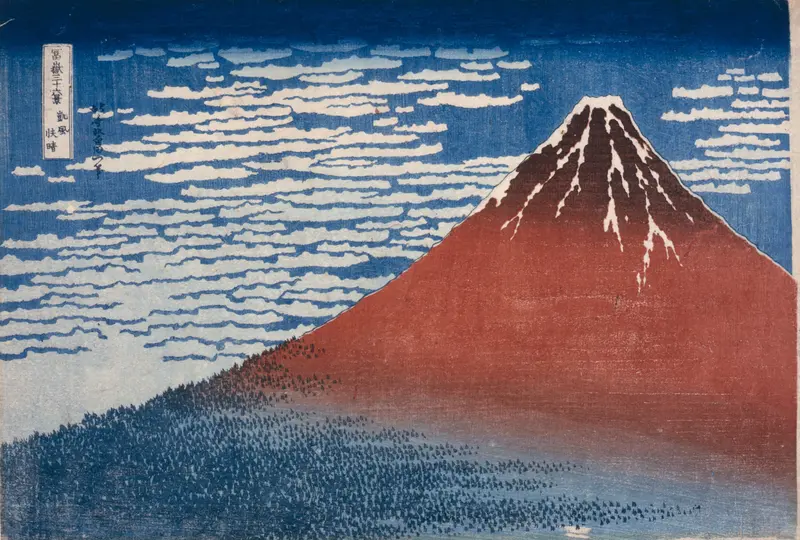
Fine Wind, Clear Morning (Red Fuji)
Katsushika Hokusai
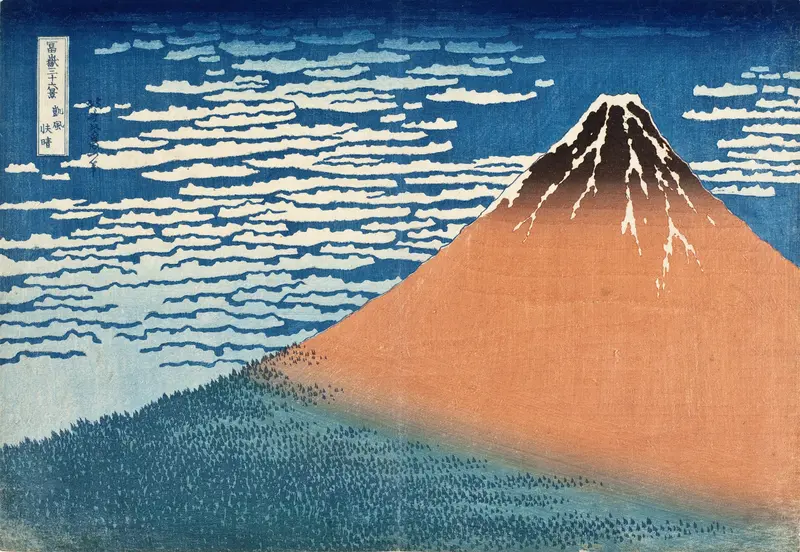
South Wind, Clear Dawn
Katsushika Hokusai
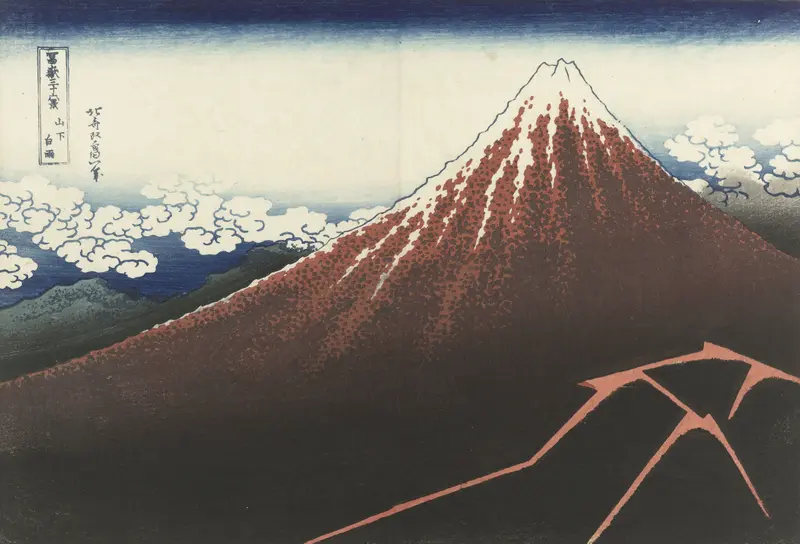
Rainstorm Beneath the Summit
Katsushika Hokusai
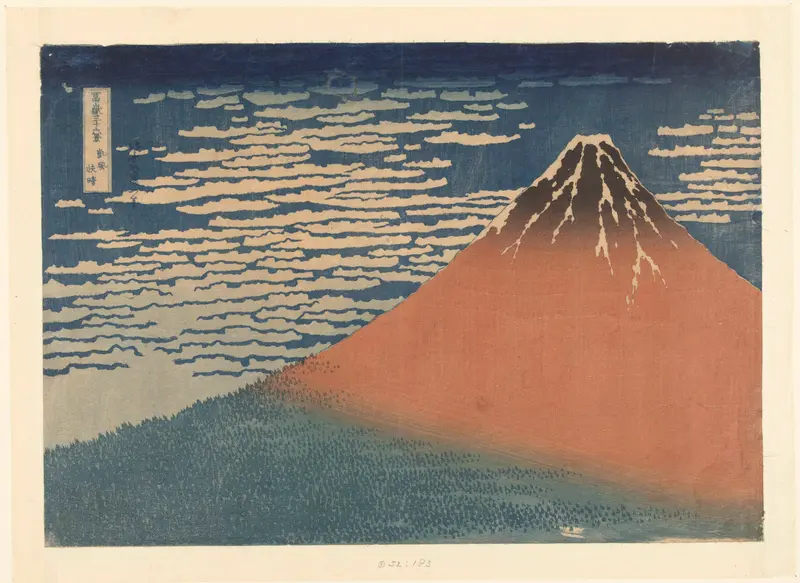
Clear Weather with a Southerly Wind
Katsushika Hokusai
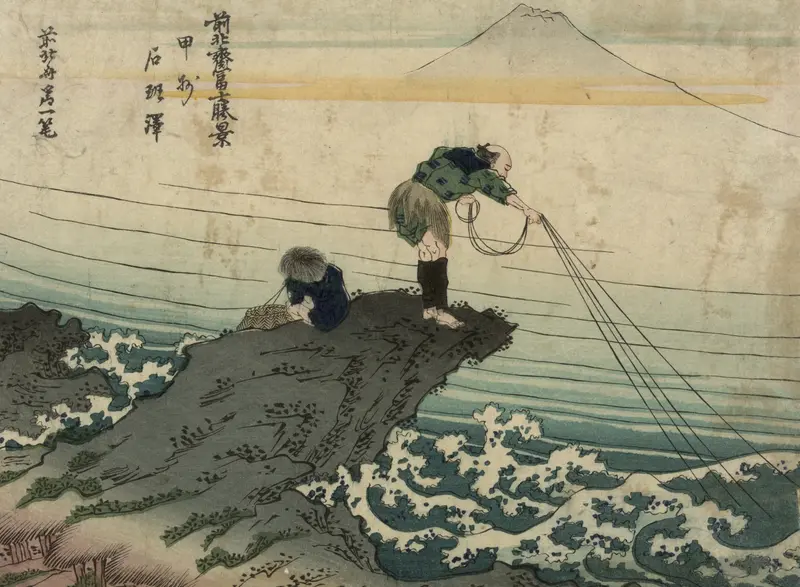
Kōshū kajikazawa
Katsushika Hokusai
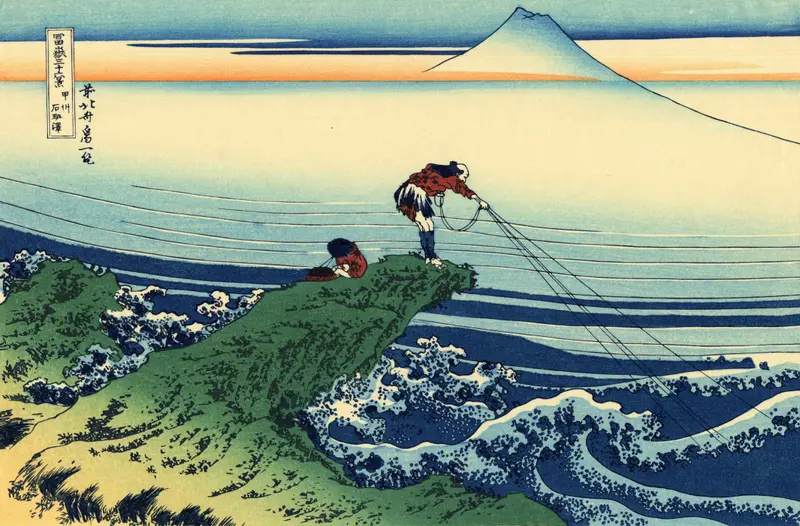
Kōshū kajikazawa 2
Katsushika Hokusai
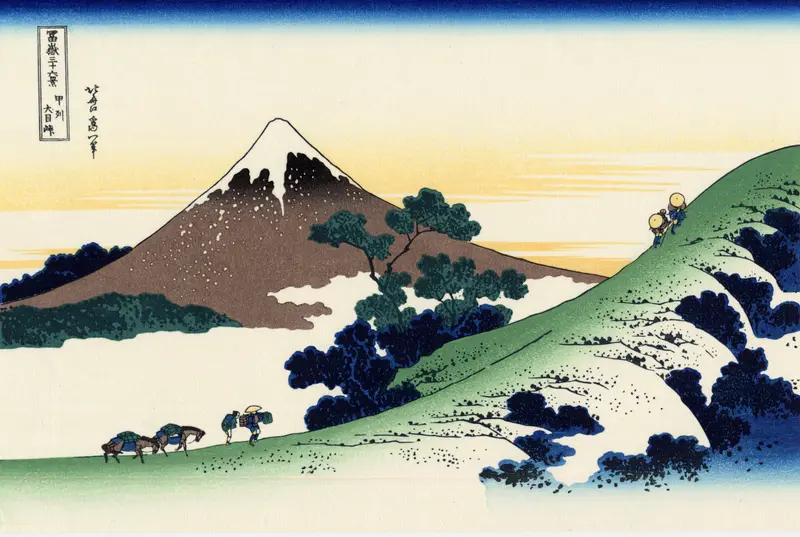
Inume Pass in Kai Province (Kôshû inume-tôge)
Katsushika Hokusai

Yoro Falls in Mino Province (Mino no Yoro no taki), from the series "A Tour of Waterfalls in Various Provinces (Shokoku taki meguri)"
Katsushika Hokusai
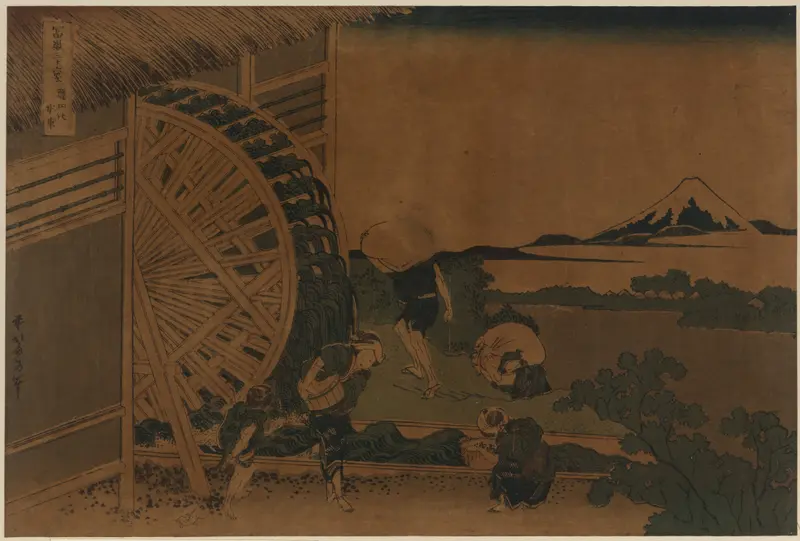
Onden no suisha
Katsushika Hokusai





