
Midsummer Night Dance in Courrières — History & Facts
When Midsummer Night Dance in Courrières was first shown at the Salon of 1876, critics were struck by its unusual celebration of rural festivity, a subject rarely treated with such grandeur in French academic painting of the time. The work drew crowds not only for its scale but for its depiction of a real event: the annual St. John's Eve dance in the northern French village of Courrières, where Jules Breton himself was born.
Rather than idealizing peasant life, Breton painted from direct observation, blending realism with a gentle lyricism that set him apart from both the urban Impressionists and the more sentimental academic painters. The painting was widely discussed in the press, with one reviewer in Le Figaro noting its "truthful poetry." The scene unfolds at dusk, as villagers—young and old—join hands in a circle on the open green, their faces lit by the last rays of midsummer sunlight. In the center, a fiddler stands atop a makeshift platform, his bow poised mid-air, while the dancers whirl around him in rhythmic unity.
The women's white bonnets and the men's dark jackets are rendered with careful attention to local costume, anchoring the scene in a specific time and place. The glowing sky and the flicker of lanterns hint at the fleeting nature of joy, a motif Breton often returned to. Unlike Jean-François Millet, whose peasants bear the weight of labor, Breton here captures a rare moment of communal delight, elevating everyday rural life to the level of history painting. The exact medium of Midsummer Night Dance in Courrières is not always listed in catalogues, but it is consistent with Breton's large-scale oil works of the 1870s.
The painting remained in the artist's possession for several years before entering private collections in France and, later, England. Today, it stands as a key example of Breton's mature style, bridging the gap between the realism of the Barbizon school and the emerging interest in regional identity. While not as widely reproduced as his iconic The Song of the Lark, this work endures as a testament to his lifelong attachment to his native Artois and his belief in the dignity of rural tradition.
More Artworks by Jules Breton

The Song of the Lark
Jules Breton
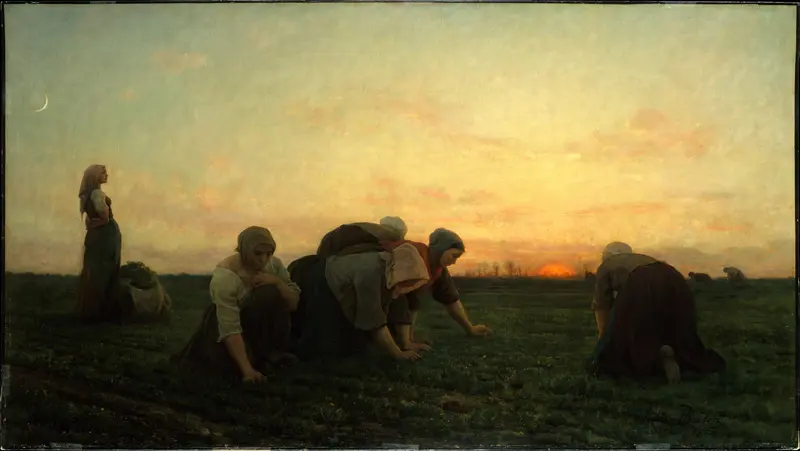
The Weeders
Jules Breton
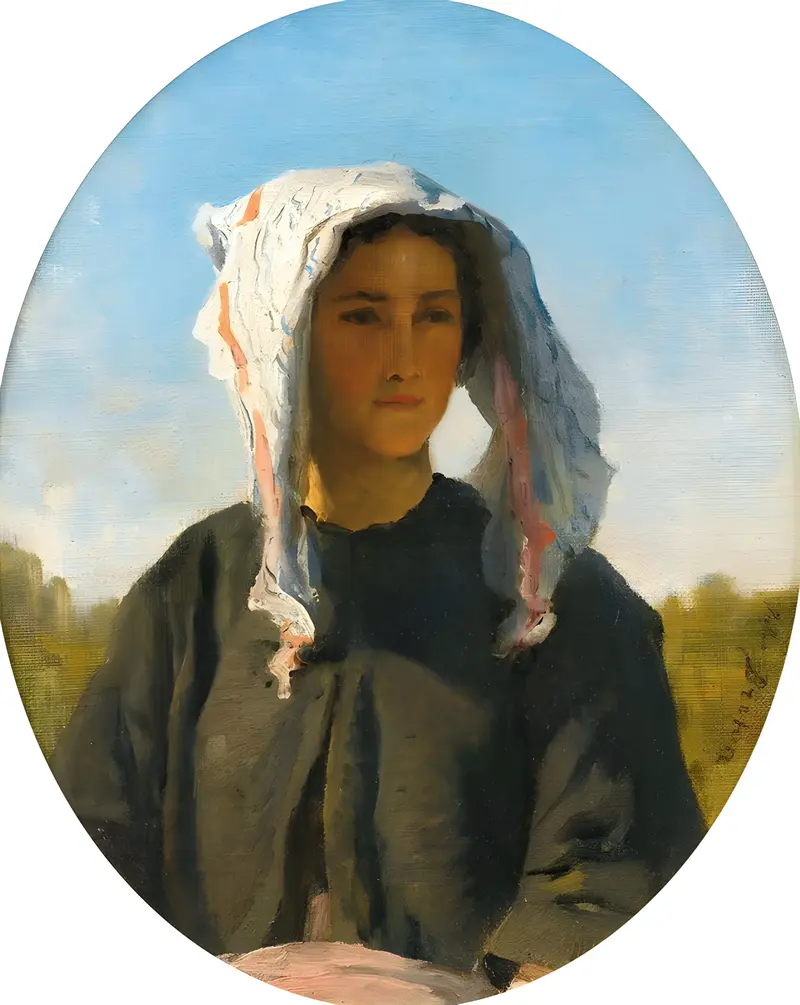
Portrait de jeune Paysanne Bordelaise
Jules Breton
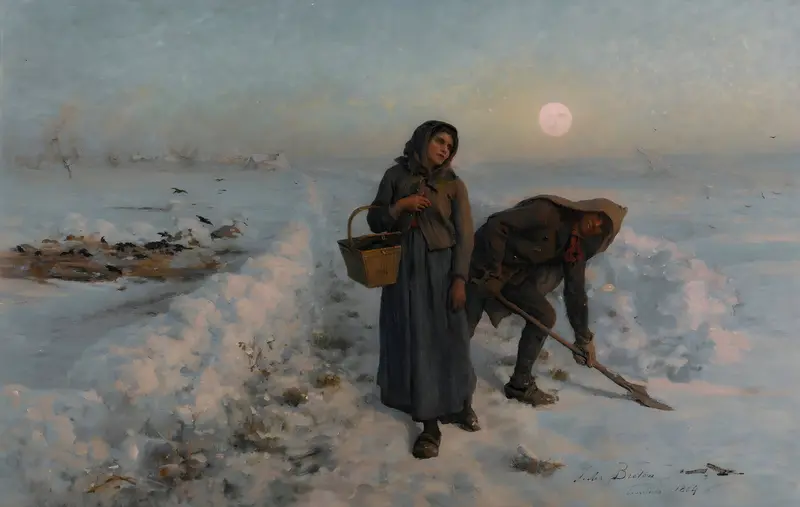
Sur la route en hiver; artois
Jules Breton
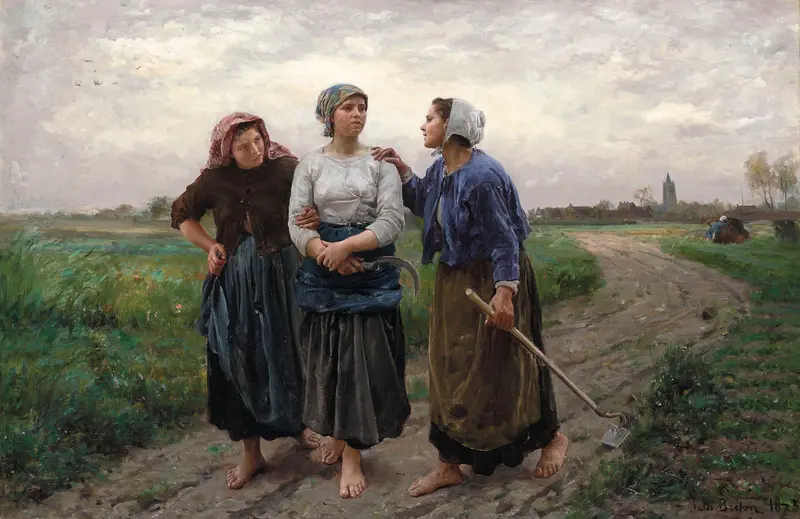
Les amies
Jules Breton
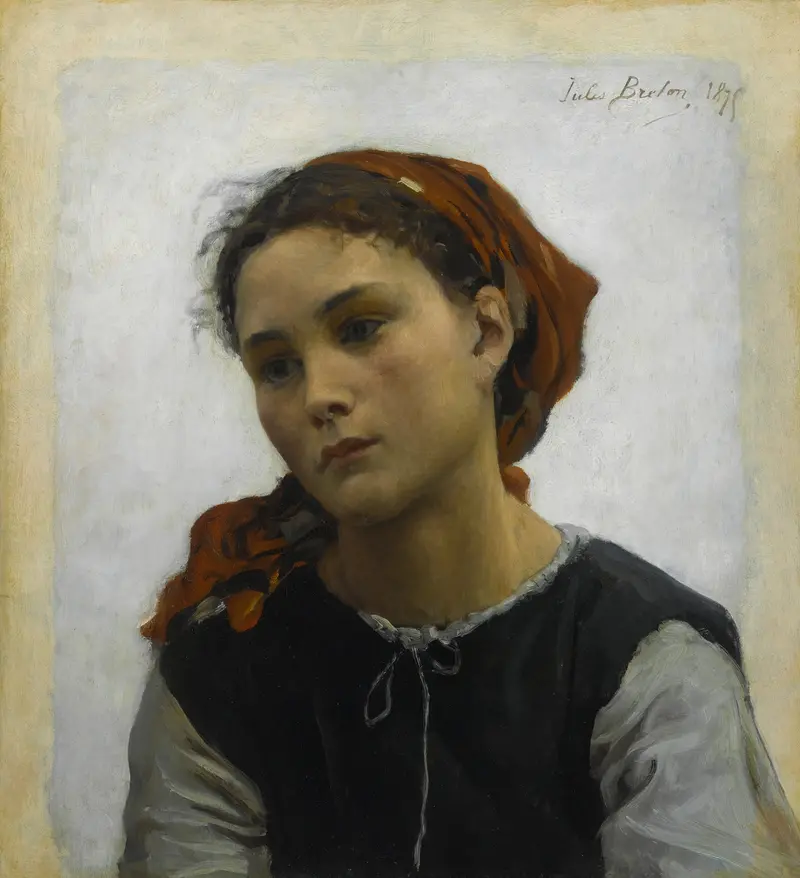
Innocente
Jules Breton
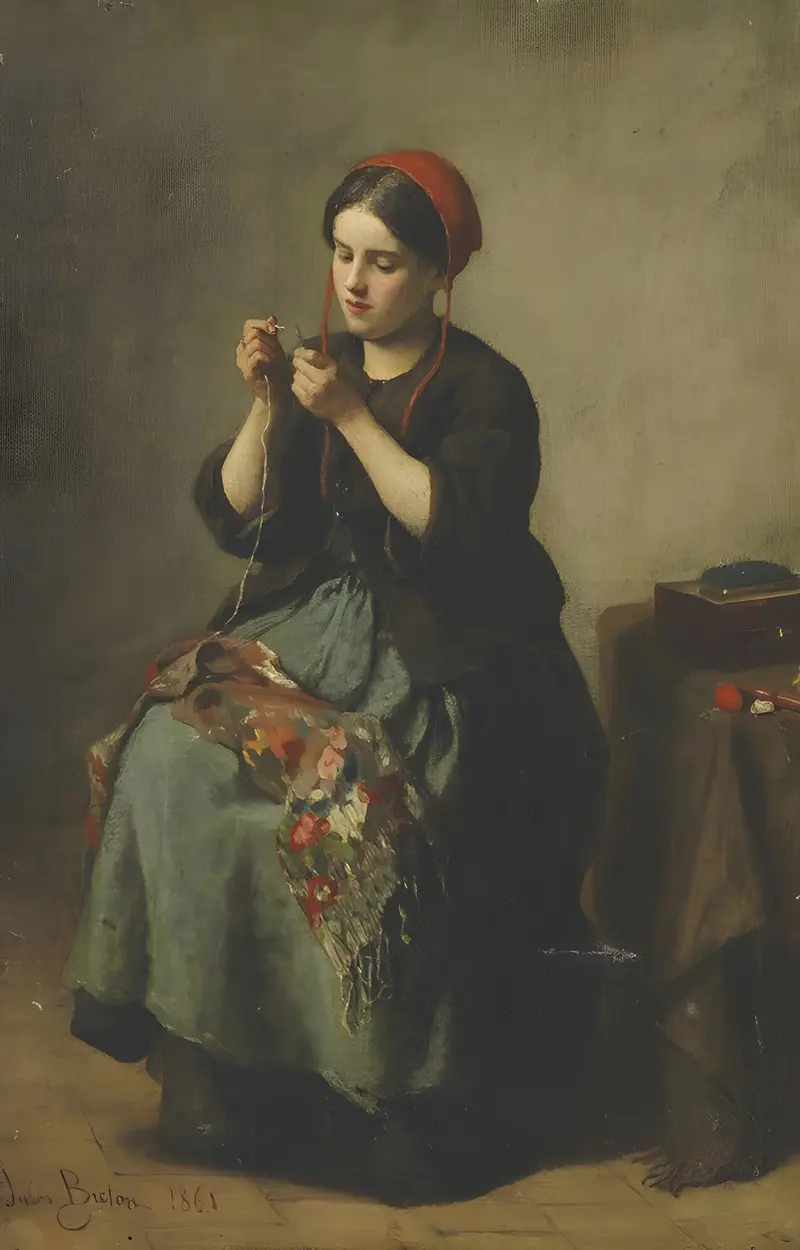
Peasant woman threading a needle
Jules Breton
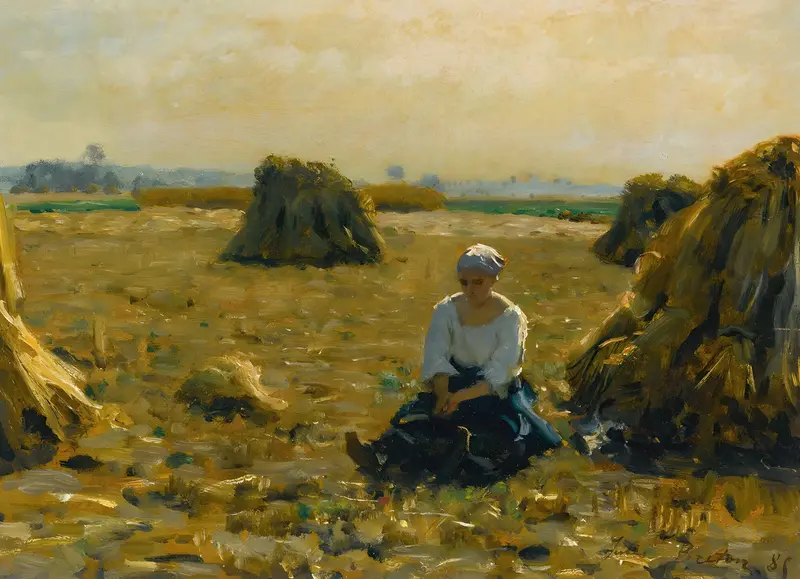
Jeune femme dans les champs
Jules Breton
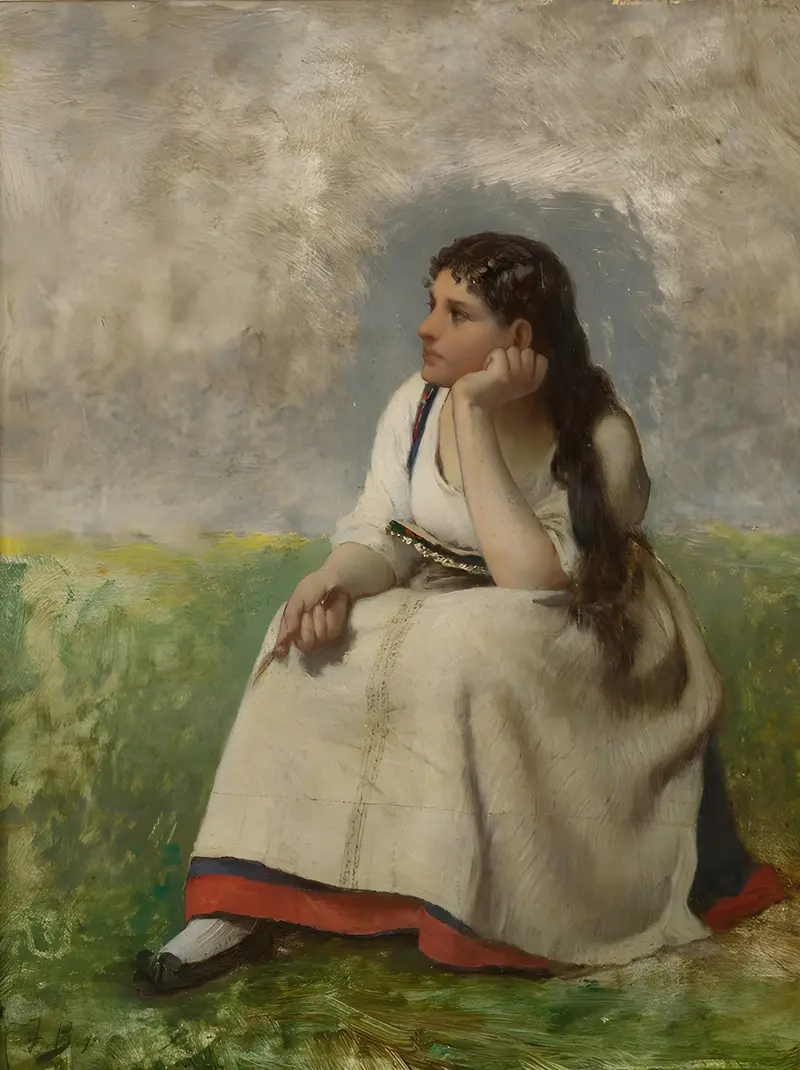
Jeune Fille Pensive
Jules Breton
Returning from the Fields
Jules Breton
More Genre Scene Art

Banquet of the Officers of the St George Civic Guard
Frans Hals

Rembrandt and Saskia in the Scene of the Prodigal Son
Rembrandt van Rijn

Bal du moulin de la Galette
Pierre-Auguste Renoir

Quadrille at the Moulin Rouge
Henri de Toulouse-Lautrec

A Burial at Ornans
Gustave Courbet

When Will You Marry?
Paul Gauguin