
music-making women — History & Facts
No written record survives to explain why Tintoretto chose to paint music-making women around 1580, but the work stands out for its rare focus on female musicians in Venetian art of the late Renaissance. Unlike the grand religious commissions that dominated his career, here Tintoretto turns his attention to the private world of music and domestic life, a subject seldom depicted by his contemporaries. The painting’s very existence has prompted debate: was it created for a patrician home, or perhaps as a tribute to the celebrated women musicians of Venice’s ospedali? The lack of documentation has left scholars guessing, but its composition and mood suggest an intimate setting rather than a public performance. At the heart of the scene, two women sit close together at a spinet, their hands poised above the keys, while a third holds a lute, her gaze meeting the viewer’s as if inviting us into their circle.
The light falls warmly on their faces and the polished surfaces of their instruments, drawing attention to the act of music-making as both a visual and social harmony. The richly patterned fabrics and the careful rendering of the musical scores evoke the wealth and sophistication of Venetian society. Unlike Veronese’s grand banquets or Titian’s mythologies, Tintoretto here chooses a moment of concentration and camaraderie, emphasizing the women’s agency and skill.
The absence of male figures is striking, turning the painting into a quiet celebration of female accomplishment. The journey of music-making women through history is as enigmatic as its subject. The painting’s provenance before the 19th century remains unclear, and its attribution to Tintoretto was only firmly established in the early 20th century after careful stylistic comparison with his other late works. Today, it is housed in a major European collection, where it offers a rare glimpse into the private lives of women in Renaissance Venice.
The painting stands as a testament to Tintoretto’s versatility in both subject and mood, and continues to spark discussion about gender, music, and daily life in the artist’s world.
More Artworks by Tintoretto
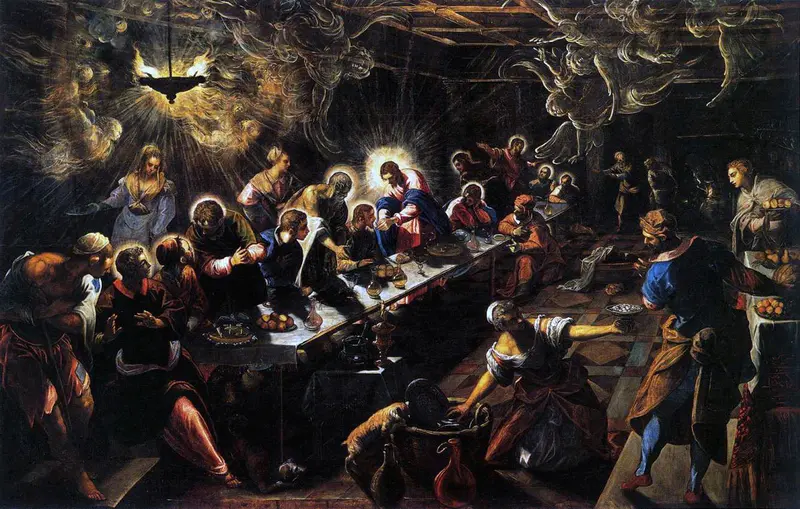
The Last Supper
Tintoretto
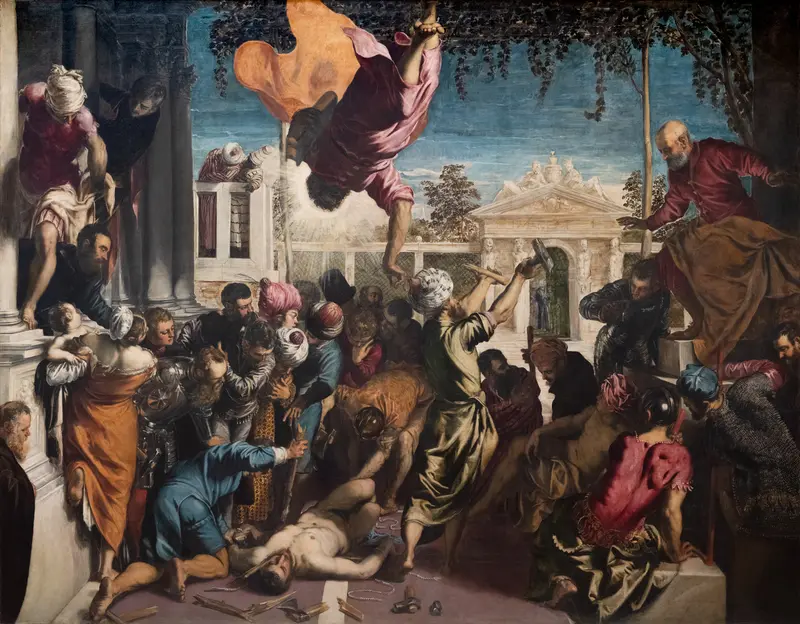
The Miracle of the Slave
Tintoretto
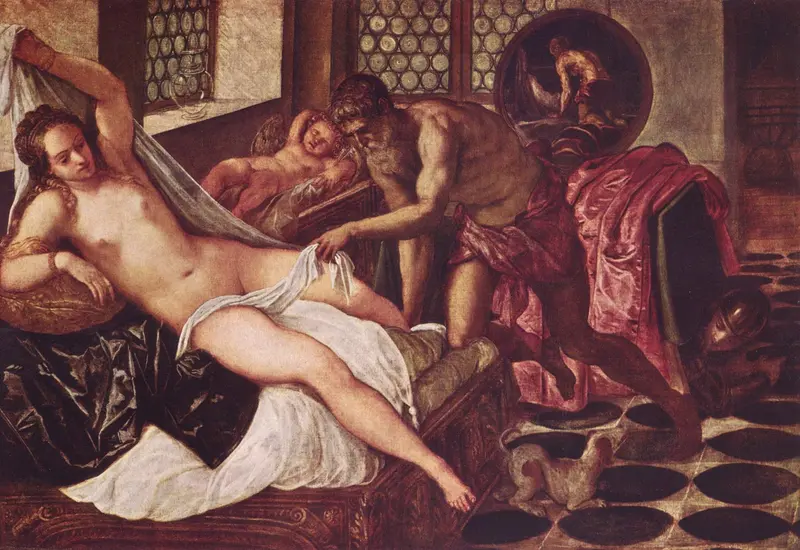
Venus and Mars Surprised by Vulcan
Tintoretto

Adoration of the Shepherds
Tintoretto
Adoration of the Magi
Tintoretto
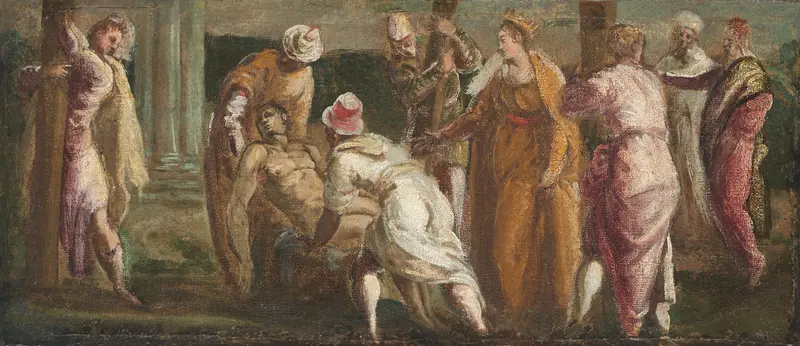
Saint Helen Testing the True Cross
Tintoretto
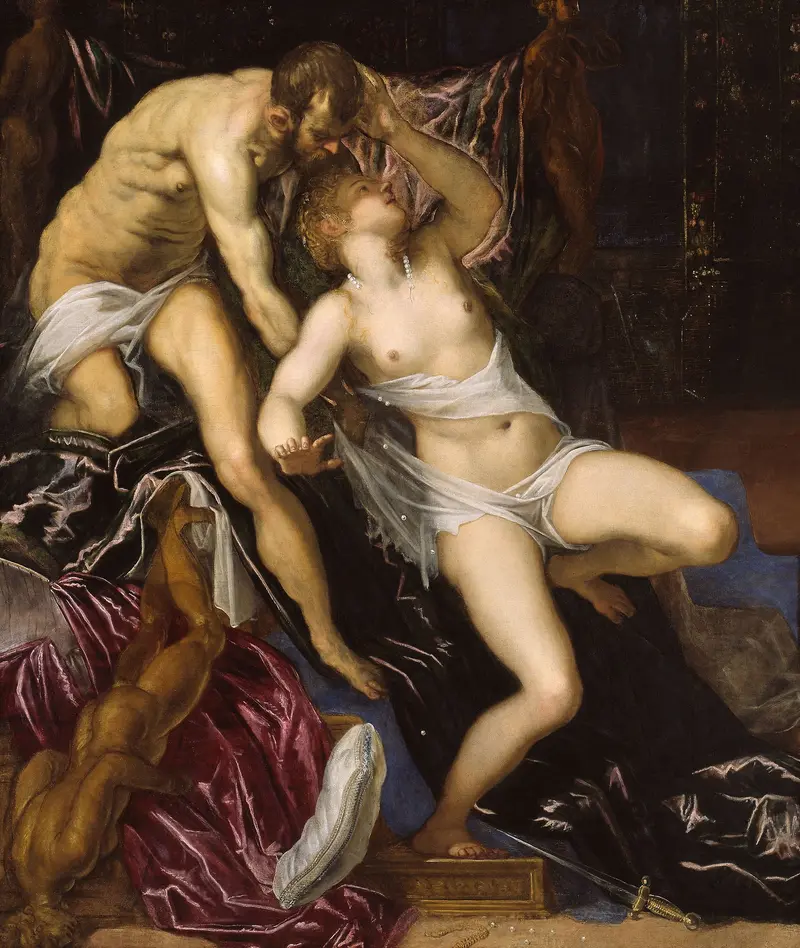
Tarquin and Lucretia
Tintoretto
Two Male Figures in Motion (verso)
Tintoretto
A Female Nude [verso]
Tintoretto
Veduta Kopra
Tintoretto
More Genre Scene Art

Banquet of the Officers of the St George Civic Guard
Frans Hals

Rembrandt and Saskia in the Scene of the Prodigal Son
Rembrandt van Rijn

Bal du moulin de la Galette
Pierre-Auguste Renoir

Quadrille at the Moulin Rouge
Henri de Toulouse-Lautrec

A Burial at Ornans
Gustave Courbet

When Will You Marry?
Paul Gauguin